| More Information: |
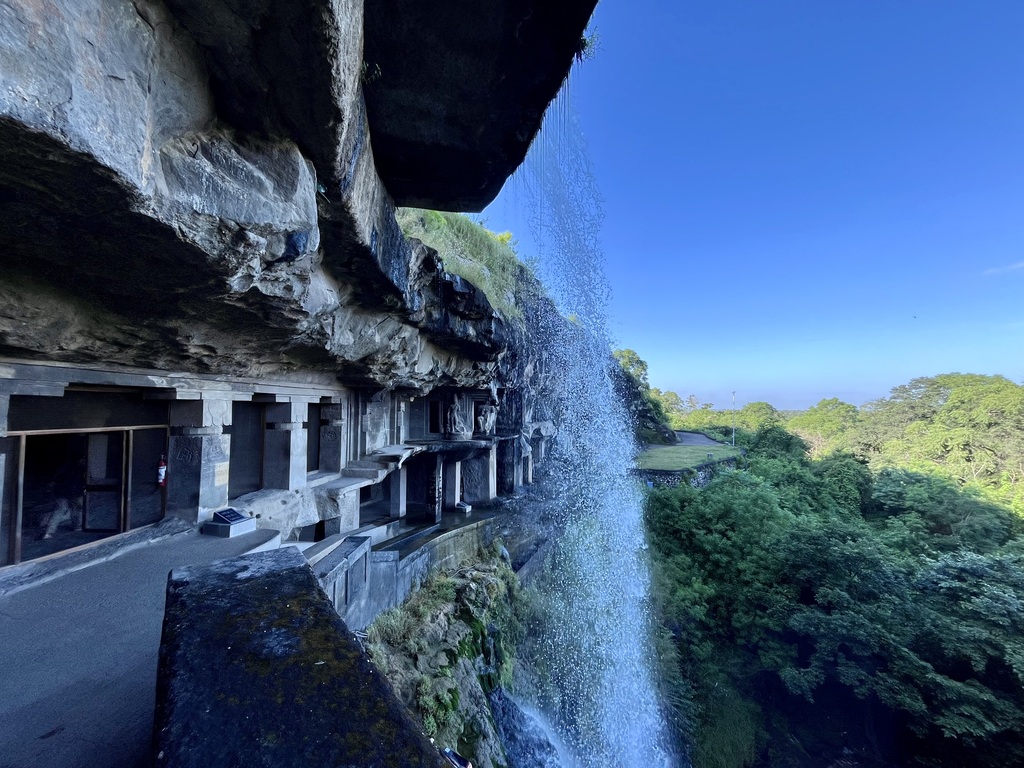
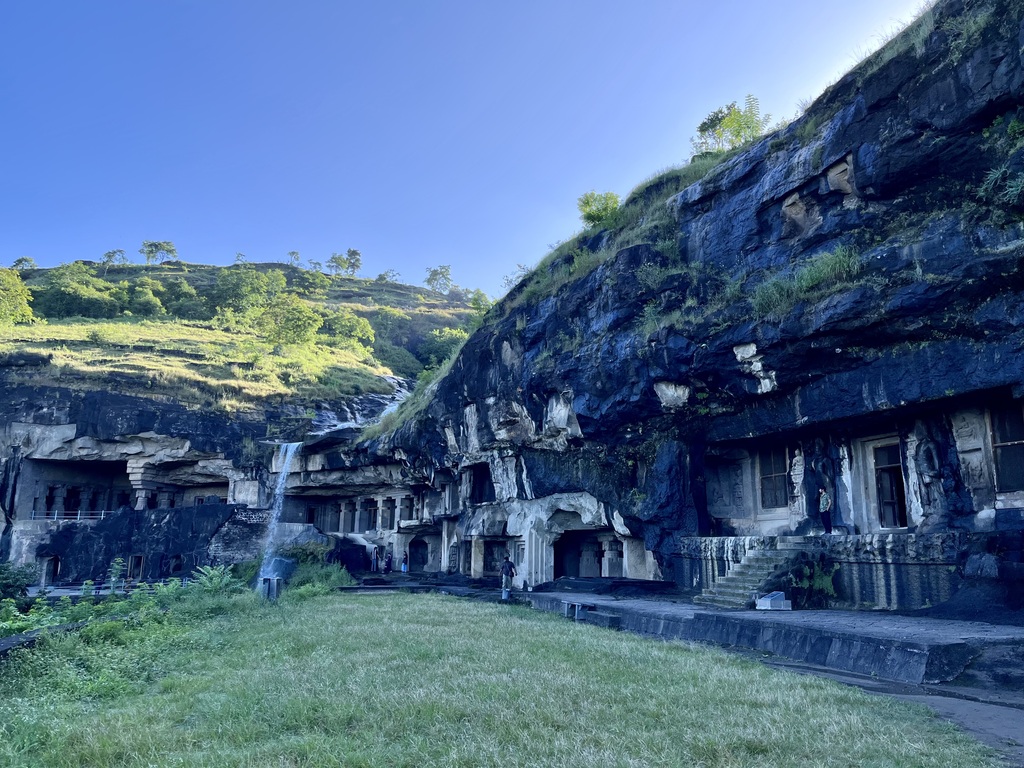
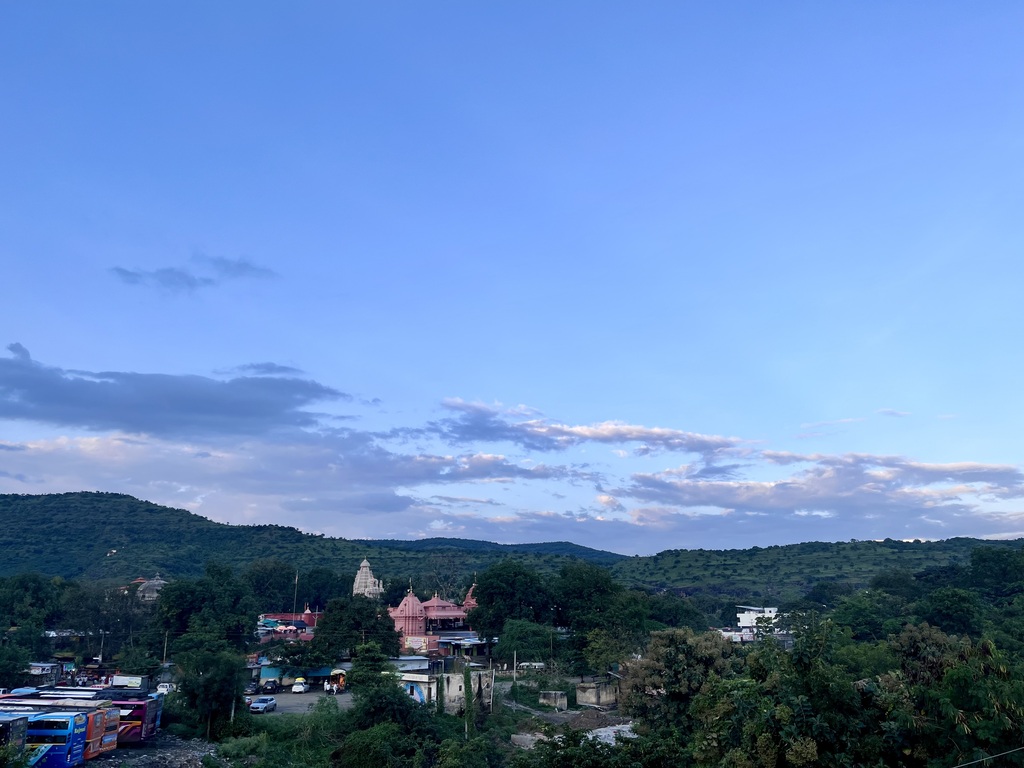
Ellora Caves is not just a historical place. It feels like a journey. A journey through time, faith, and human effort. It is located near Aurangabad in Maharashtra, about 30 kilometers away. At first, you only see a long rocky hill. But slowly, as you move closer, something amazing starts to appear. The mountain is not natural anymore. It is shaped. It is carved. It is alive.
Every cave here is cut from hard basalt rock. Nothing was built by adding stone. Everything was created by removing stone. This itself is hard to imagine. But what makes Ellora truly special is not just the technique. It is the idea behind it. In one single place, three different religions exist together. Buddhism, Hinduism, and Jainism. No conflict. No separation. Just expression of faith in different forms.
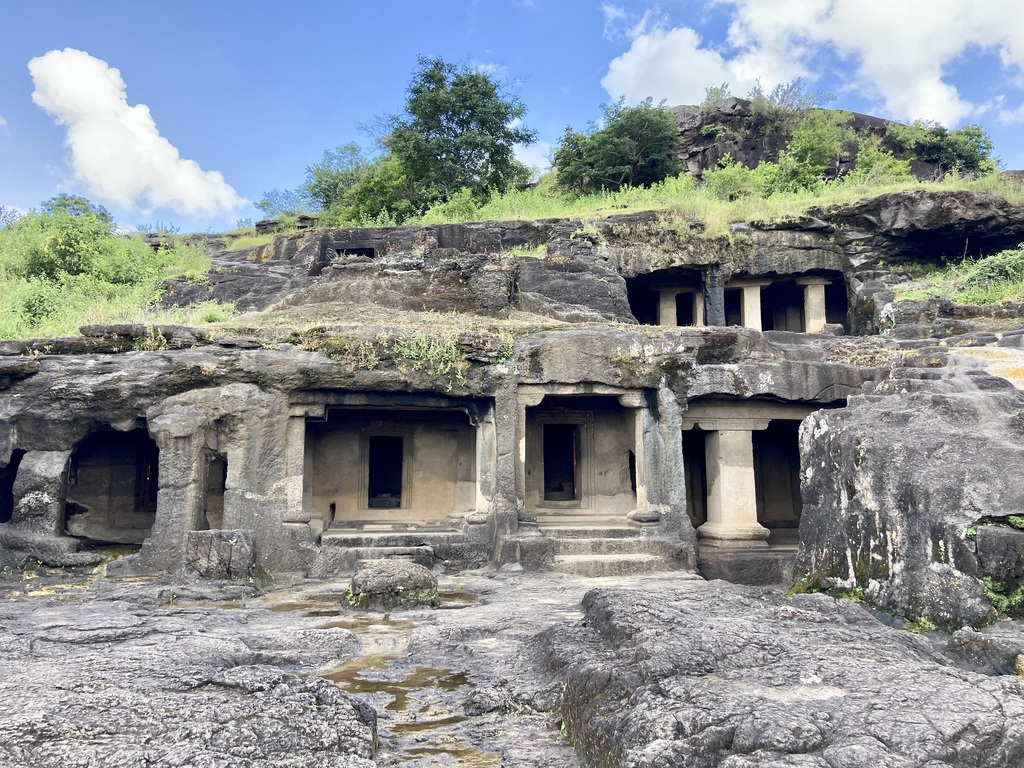
The caves were created over many centuries. Different dynasties supported this work. The early Buddhist caves came first. Then the grand Hindu caves. And finally, the detailed Jain caves. Each phase added something new. Each group of artists brought new ideas. That is why Ellora does not feel like one project. It feels like a living timeline carved in stone.
The Buddhist Caves – A World of Silence and Compassion
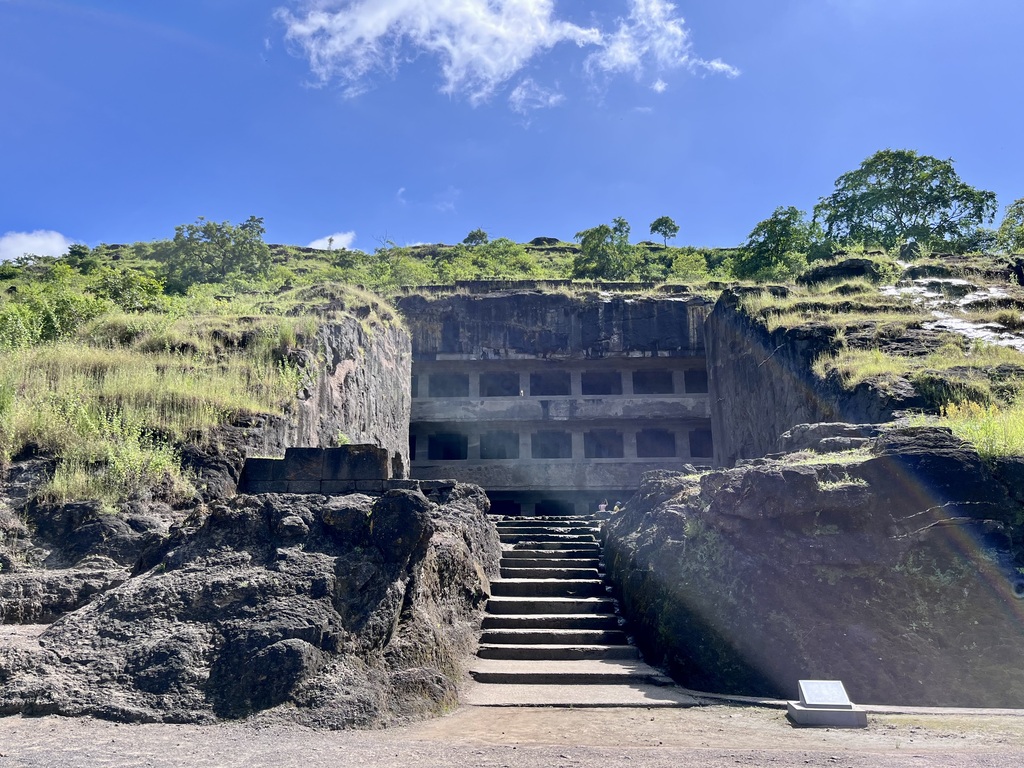
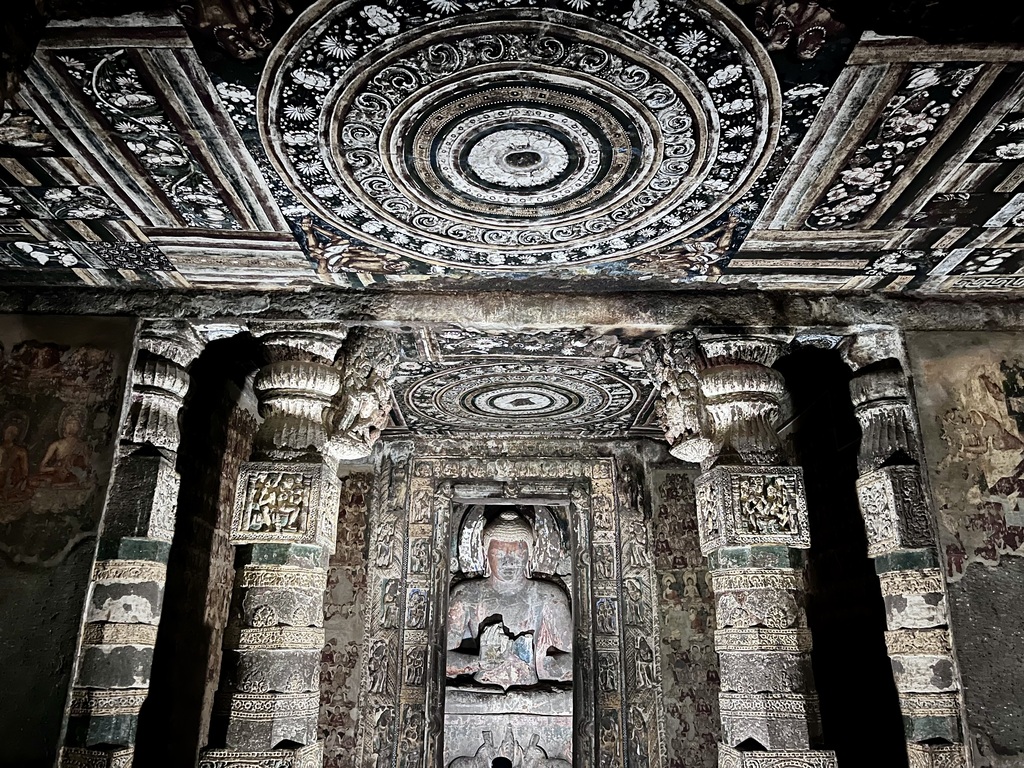
The first twelve caves belong to Buddhism. These are the oldest caves in Ellora. As you enter this section, the mood changes immediately. Everything feels calm. Quiet. Peaceful. These caves were mainly used by monks. They lived here. They studied. They meditated.
Cave 1
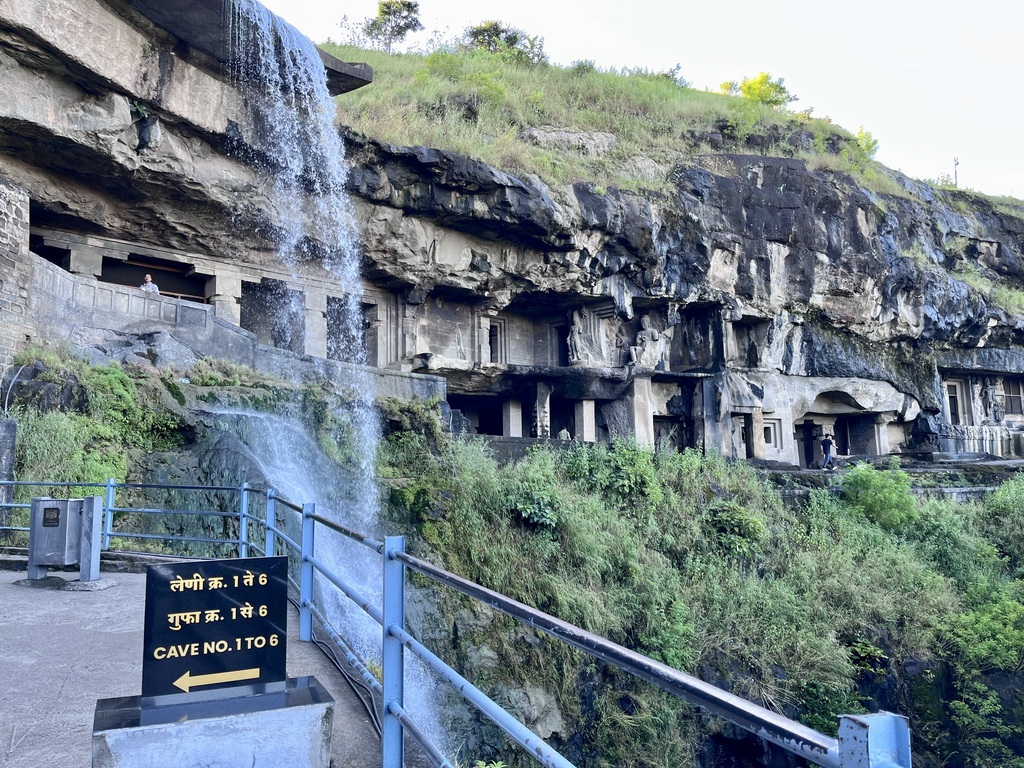
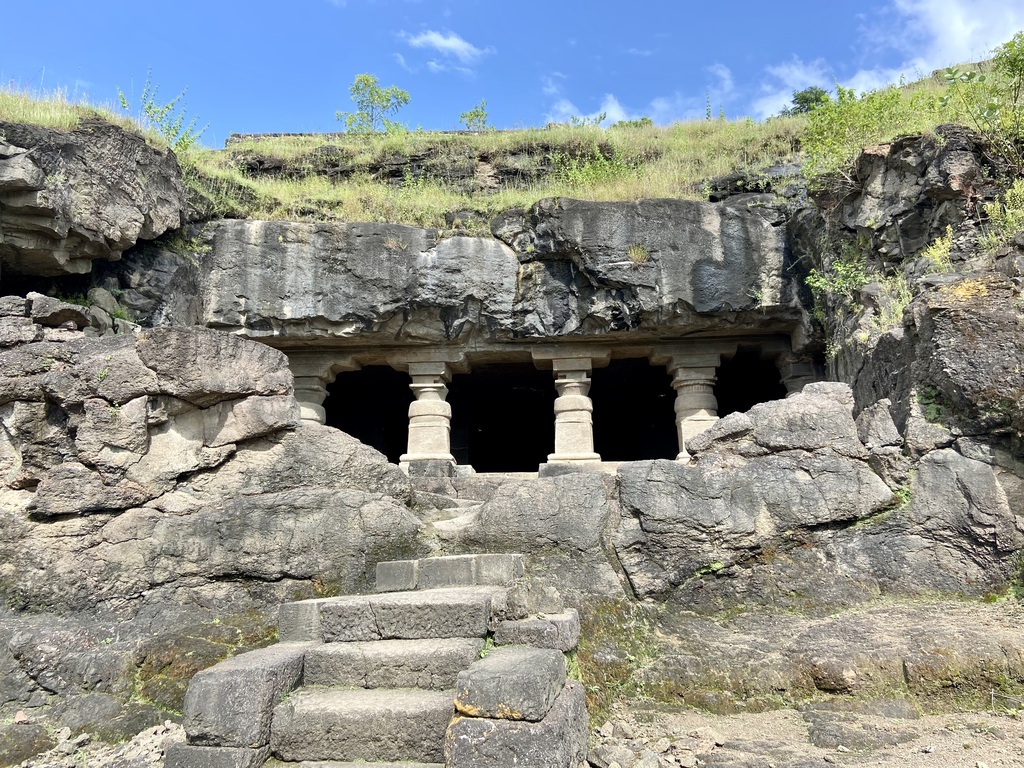
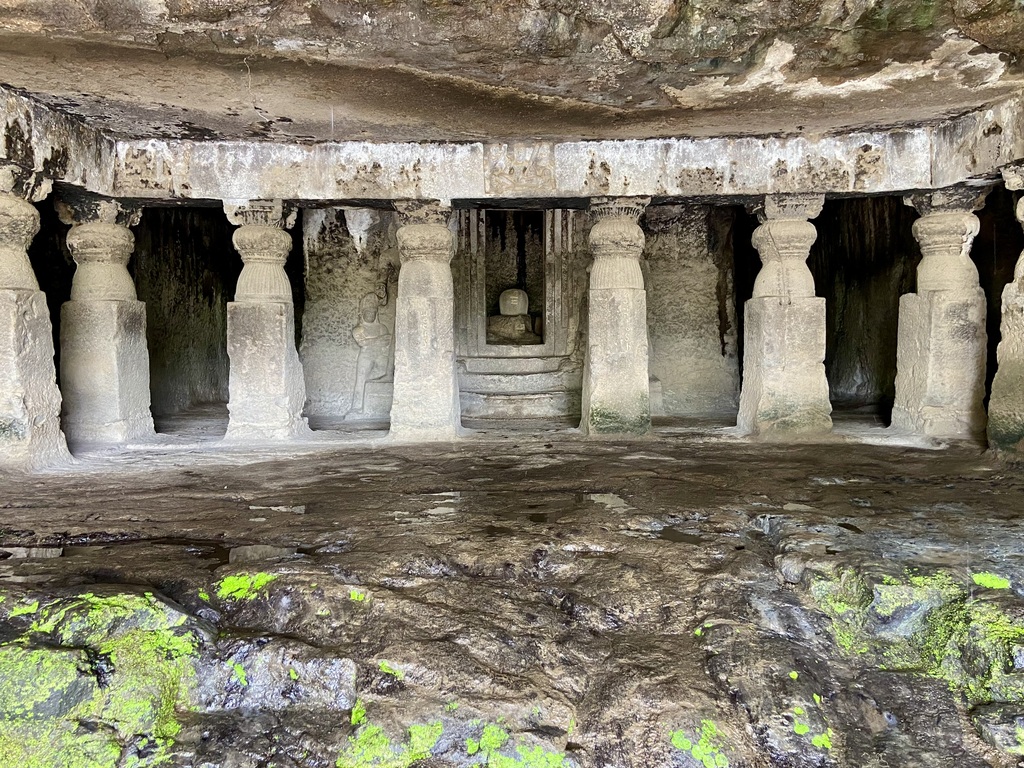
The first cave is a simple vihāra with eight small cells arranged around a plain hall, and as you step inside, it quietly tells a story of simplicity and purpose, suggesting that it was mostly used for monks’ residence or storage, where daily life was calm, disciplined, and focused on basic needs rather than decoration or grandeur.
Cave 2
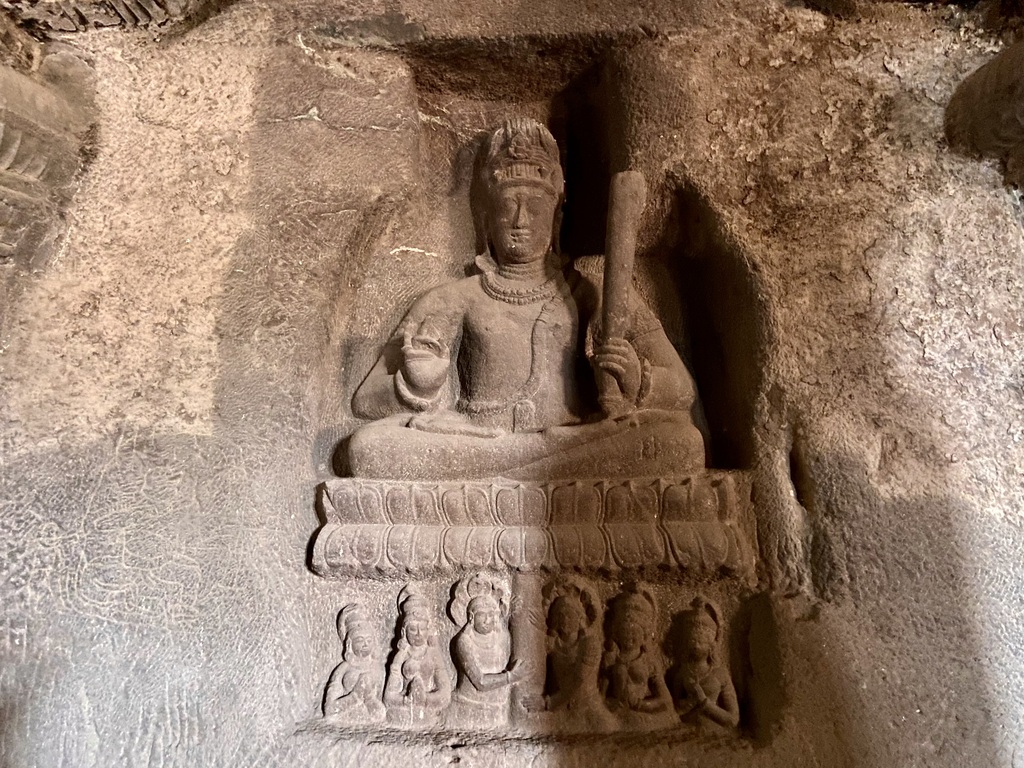
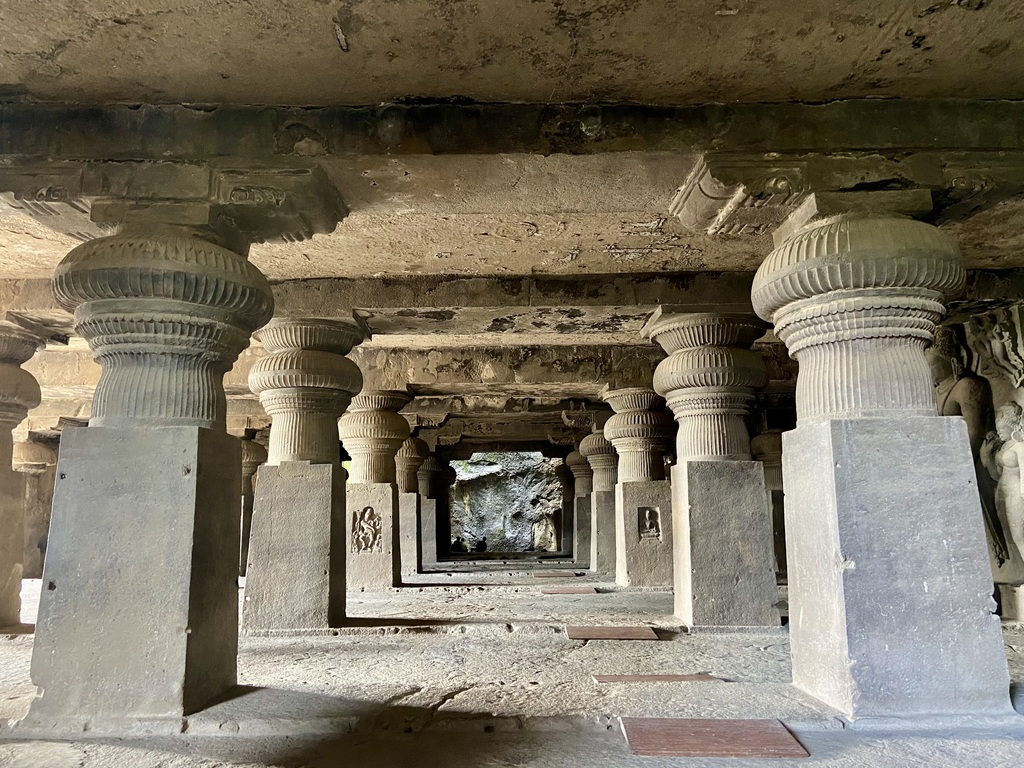
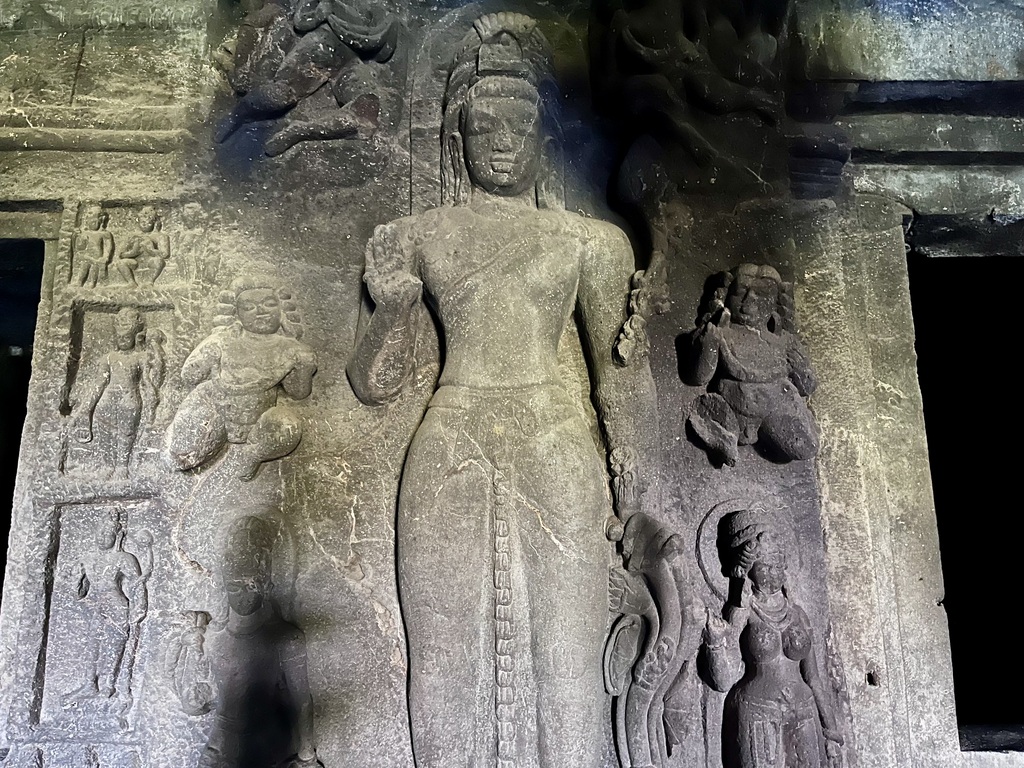
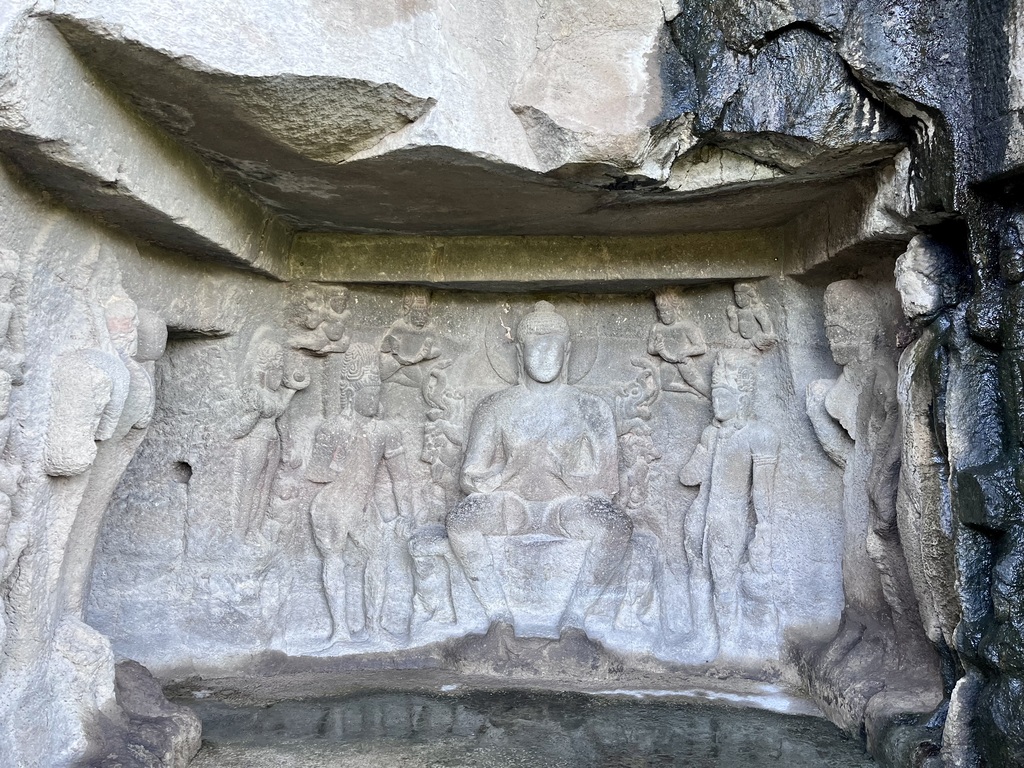
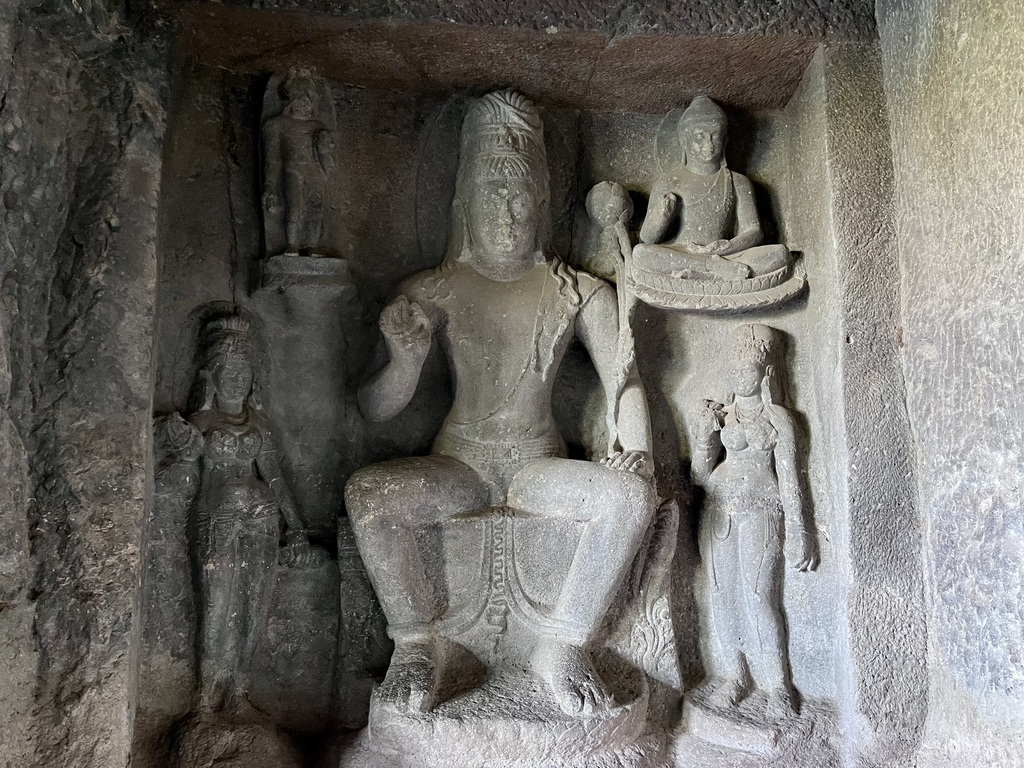
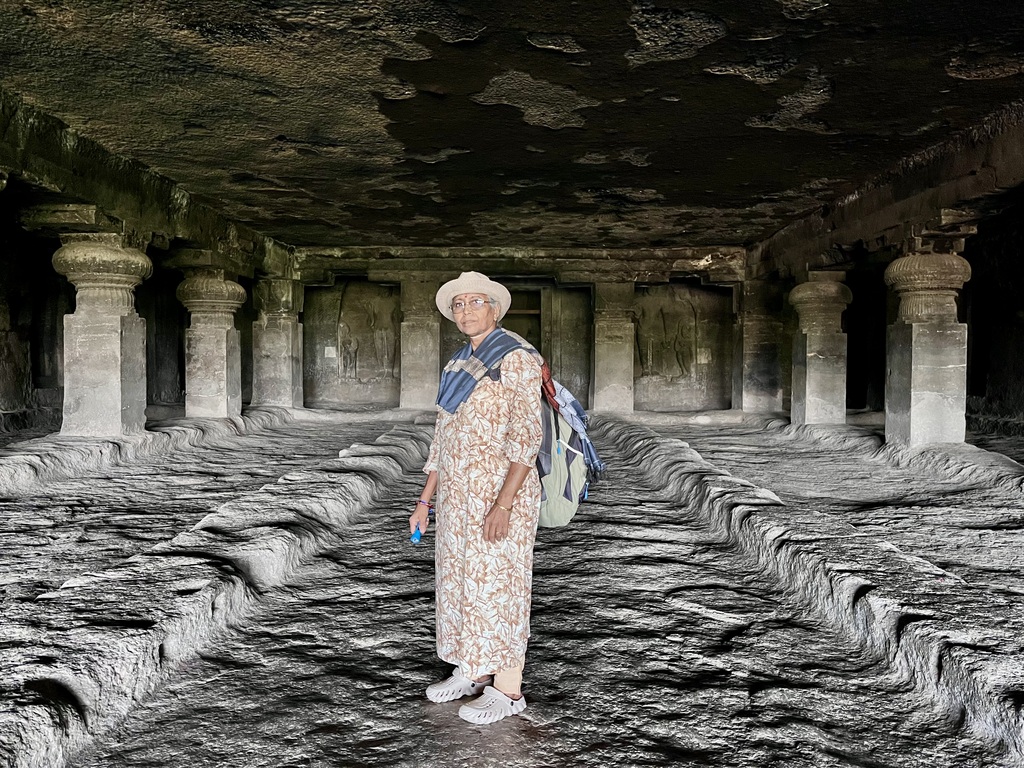
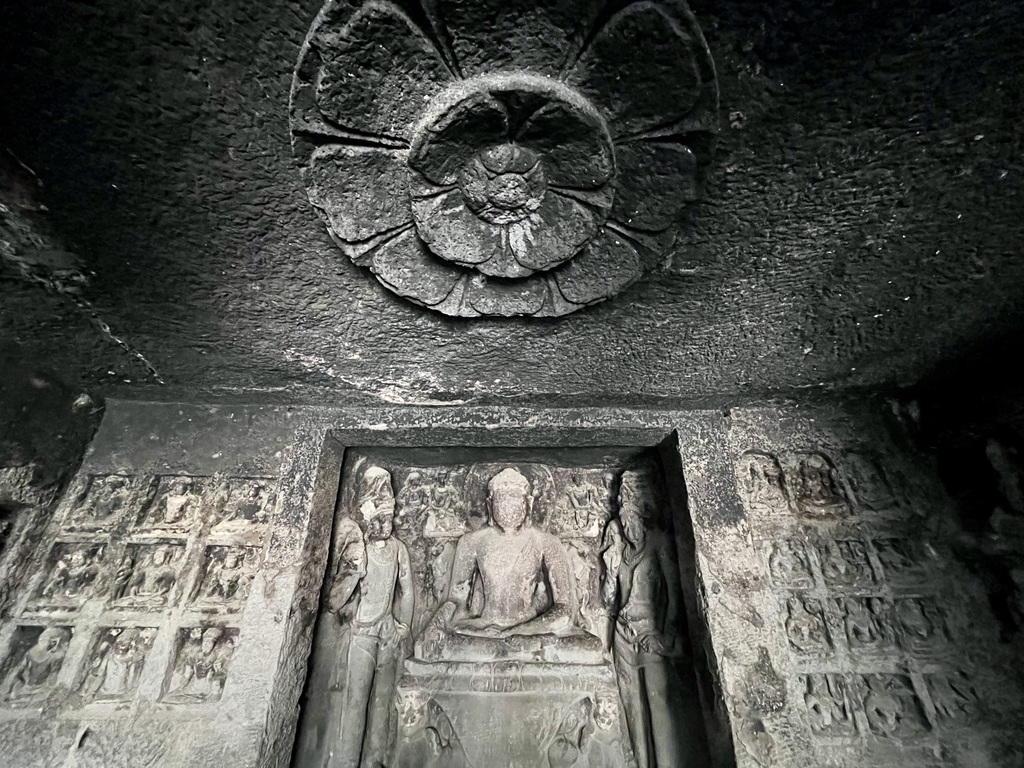
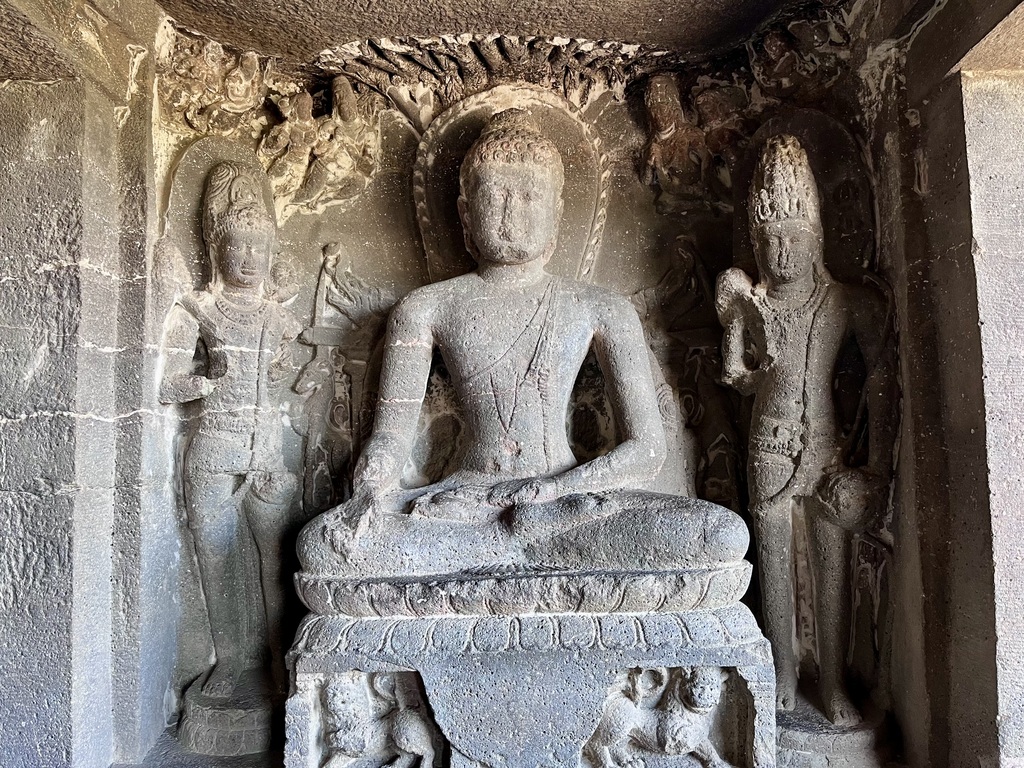
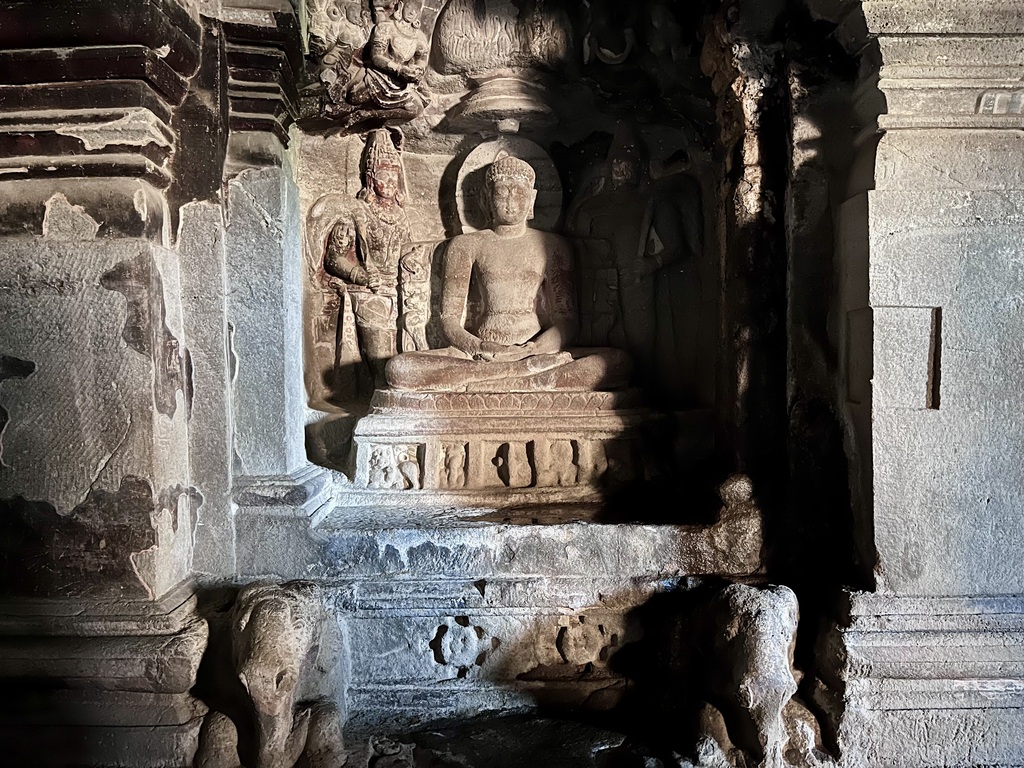
Cave 2 is a larger vihāra with a central hall supported by twelve massive pillars, and as you enter, the space feels grand and powerful, leading your eyes toward the shrine where a Buddha image sits on a lion throne, a symbol of royal state and spiritual authority, while the walls come alive with multiple Buddhas and Bodhisattvas, including Padmapāṇi, Vajrapani, and Maitreya, together telling a deeper story that shows the beginning of Mahāyāna influence at Ellora, and as you continue exploring Buddhist caves, you should get ready to see Vajrapani and Padampani in most of the caves, standing on both sides of Buddha as a dwarpal, quietly guarding and adding to the spiritual presence of the space.
Cave 3
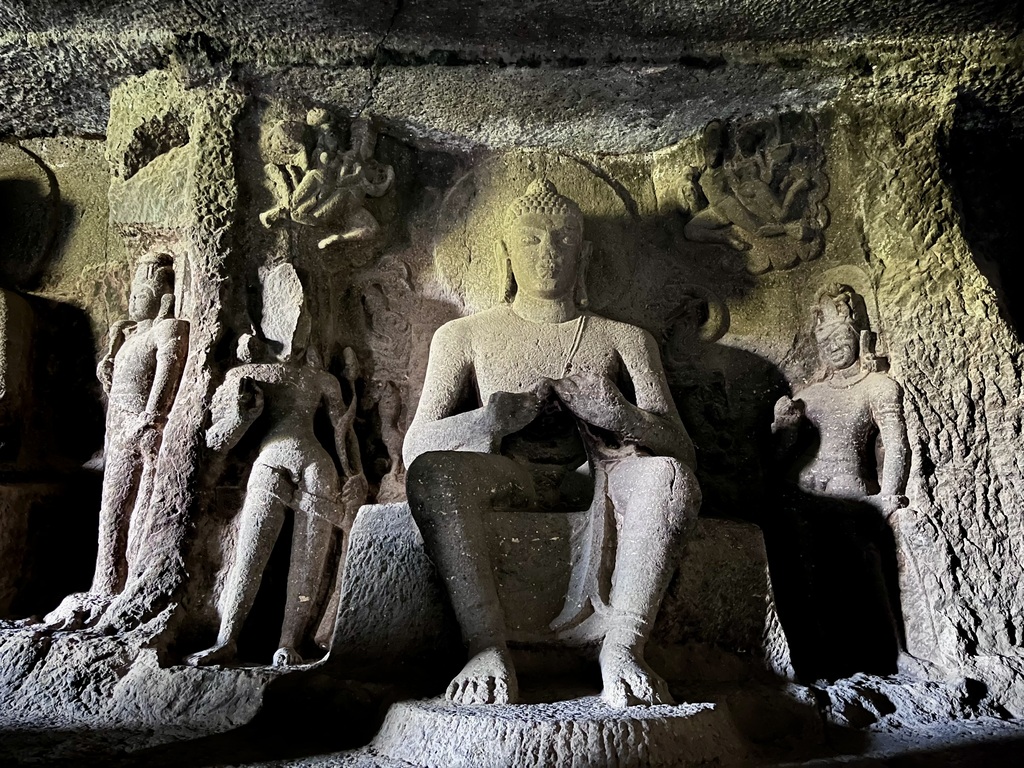
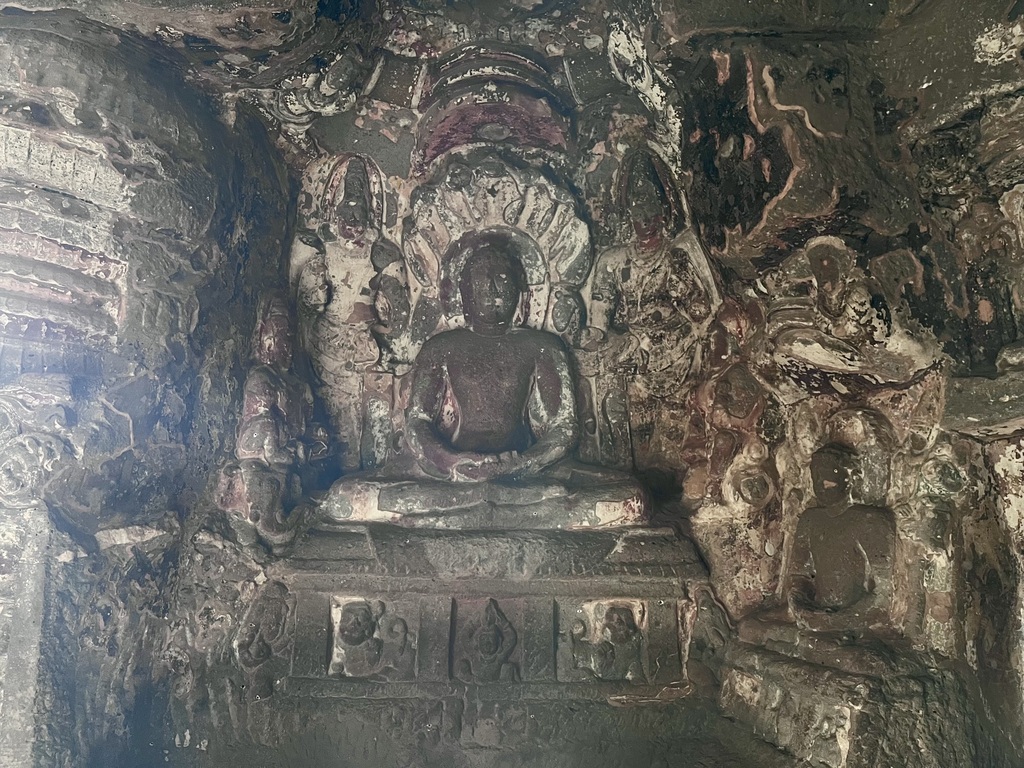
Cave 3 is a square-shaped vihāra with a pillared hall and a shrine at the back, and as you walk through the calm and balanced space, your attention is drawn to the central Buddha carved in deep meditation, peacefully supported by a Naga figure, while along the side walls you will notice niches filled with Bodhisattvas, each one adding to a quiet and powerful sense of devotion that fills the entire cave.
Cave 4
Cave 4 is an unfinished vihāra, and even though the work was never fully completed, it still draws your attention to the shrine where a celestial Buddha image of Amitābha is present, and as you observe closely, Amitābha is most often shown in the Dhyāna Mudrā, Varada Mudrā, or holding a lotus in hand, quietly reflecting a sense of peace and spiritual grace within the incomplete surroundings.
Cave 5
Cave 5 is a large vihāra traditionally named Maharwada, which is about 36 meters long with stone benches lining its sides, and as you step into this long hall, it feels different from the other caves, as this unusual feature suggests the cave was used as a communal prayer or assembly hall, possibly for teaching large groups of monks, where learning and discussion once filled the space.
Cave 6
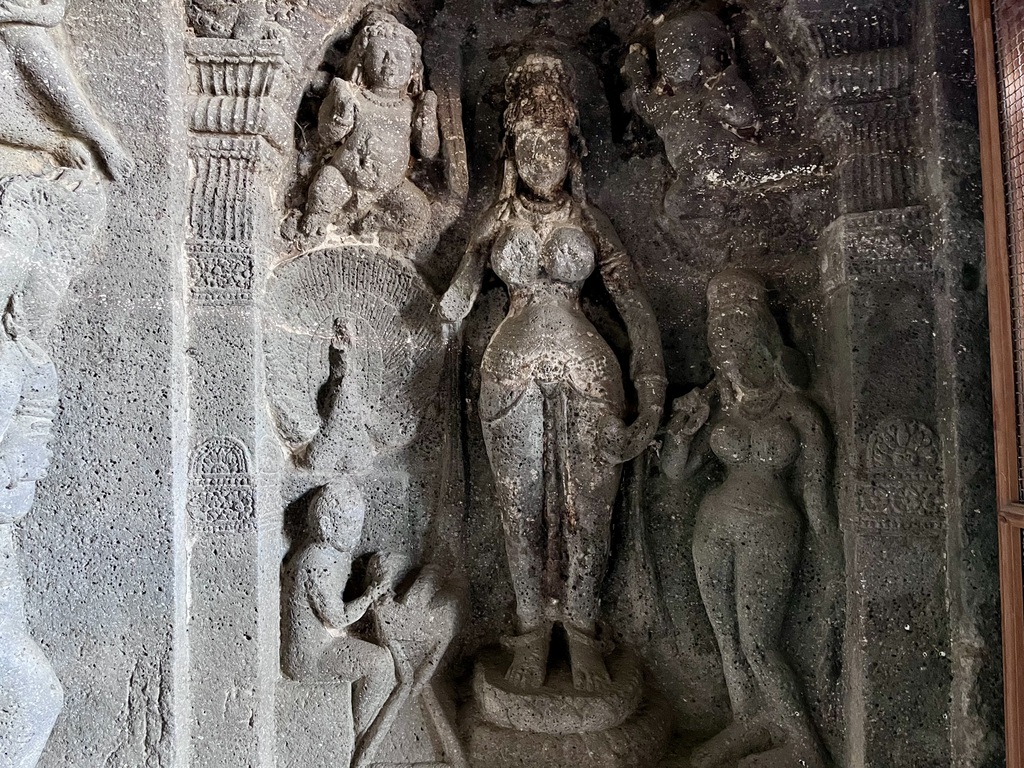
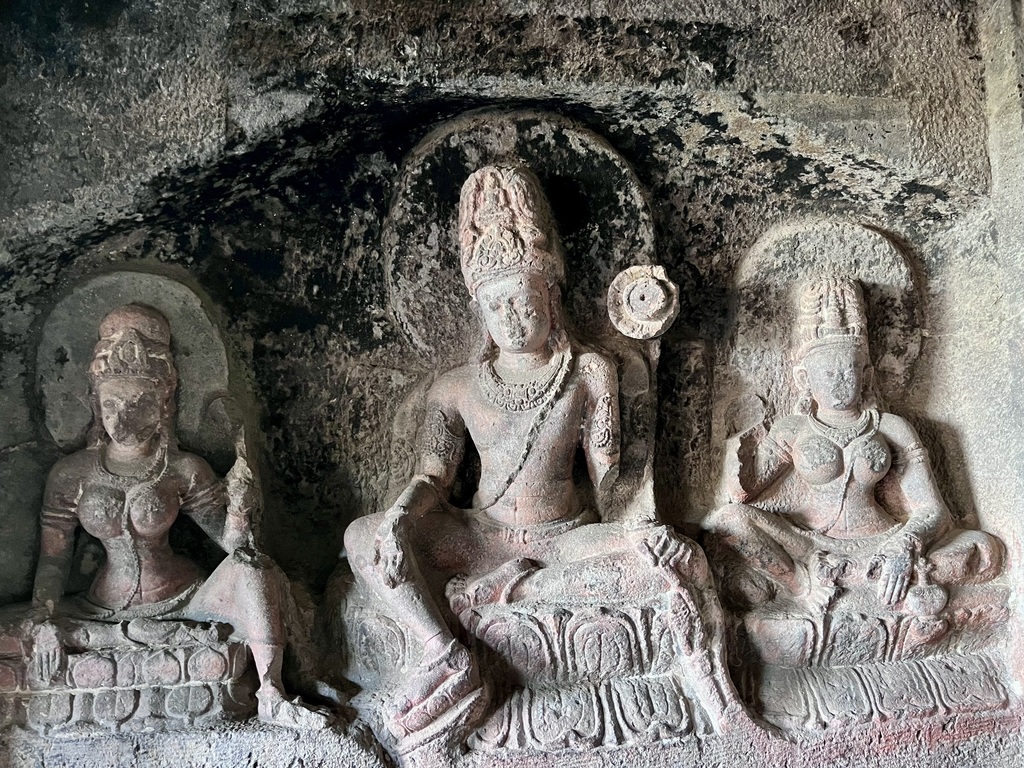
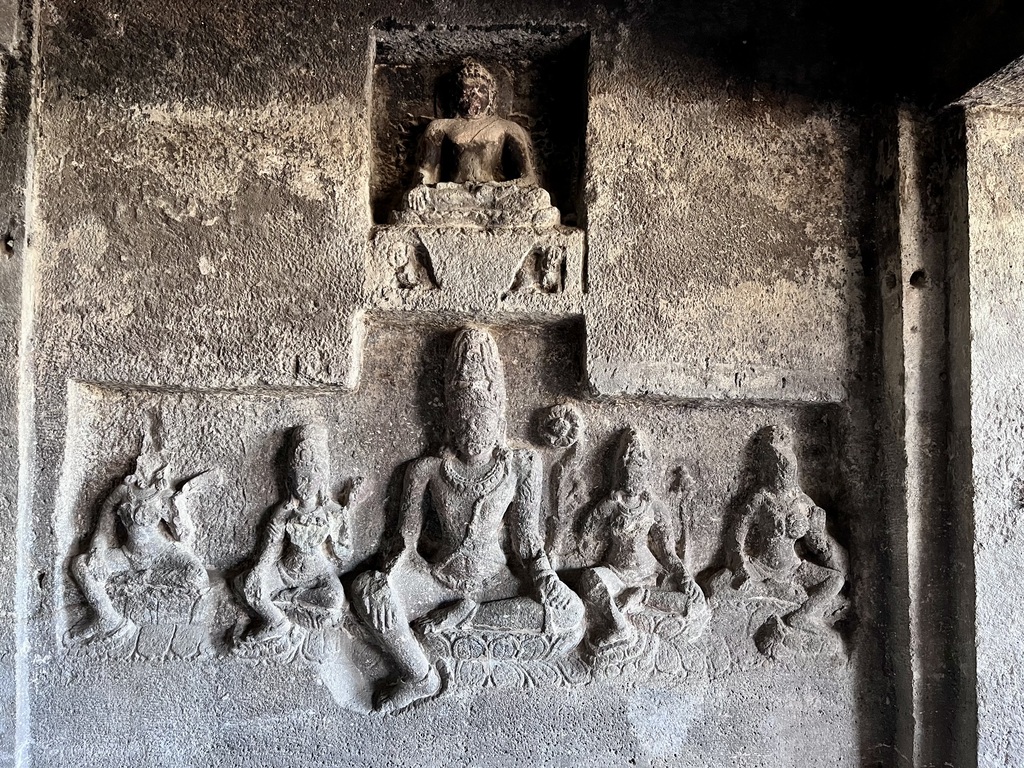
Cave 6 at Ellora is a Buddhist vihāra that beautifully shows the rise of Mahāyāna ideas, and as you explore inside, the main highlight that draws your attention is a large image of Avalokiteśvara, the Bodhisattva of Compassion, surrounded by carvings of the “Eight Great Perils,” where he is shown saving devotees from dangers like lions, snakes, fire, floods, and demons, and as you look deeper, you realize that each of these dangers also represents an inner weakness of human nature such as pride, anger, or ignorance, while the presence of female deities like Tārā and Mahāmāyūrī adds another layer of meaning, showing how Mahāyāna Buddhism gave divine forms to compassion and wisdom, making this cave feel less about plain meditation and more about the protective and compassionate role of Bodhisattvas.
Cave 7
Cave 7 is a modest vihāra with very little decoration, and as you step inside, the quiet and simplicity make it clear that it was built mainly for meditation and worship, where the focus is not on grand art but on inner peace, and within this calm space, you will find a small shrine with a seated Buddha along with an Avalokiteśvara figure, gently adding to the spiritual atmosphere.
Cave 8
Cave 8 is another unfinished vihāra, small and roughly carved, and as you look around, its incomplete state clearly suggests that it may have been abandoned midway, yet even in this rough and quiet space, you can still notice traces of early Mahāyāna style, hinting at the ideas that were beginning to take shape here.
Cave 9
Cave 9 is a smaller vihāra with finer carving than Cave 8, and as you observe the details, you begin to notice symbolic motifs of Bodhisattvas carefully placed within the space, and even though the cave is modest in size, it clearly shows a growing artistic refinement in its design, making it feel more thoughtful and developed.
Cave 10
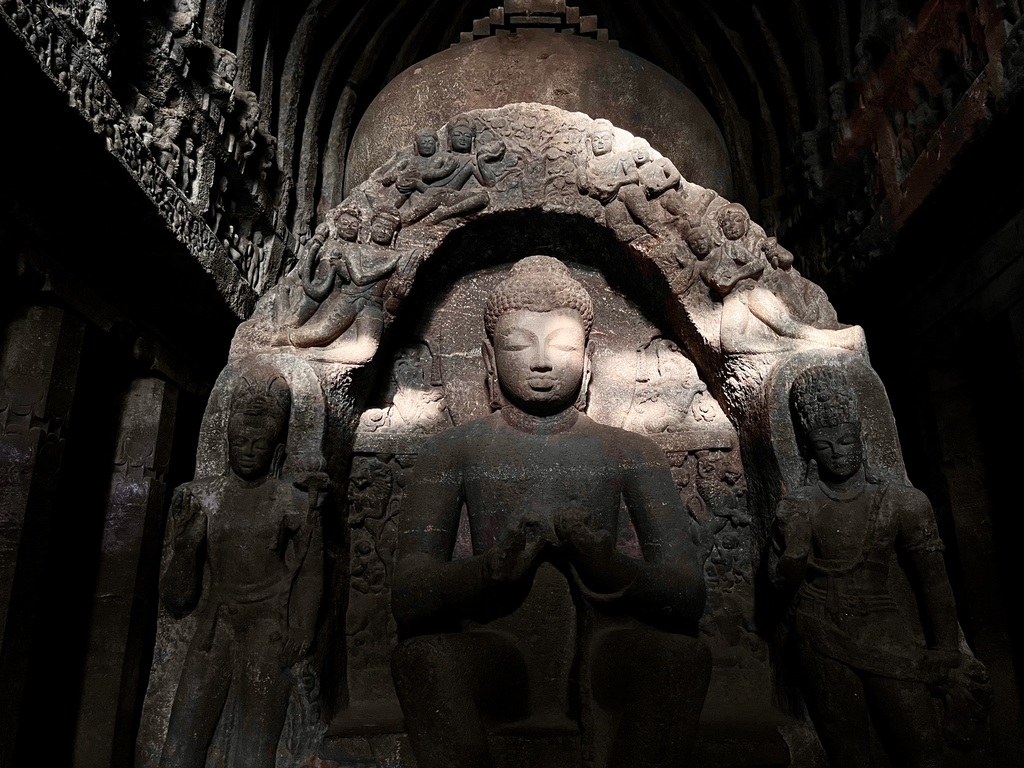
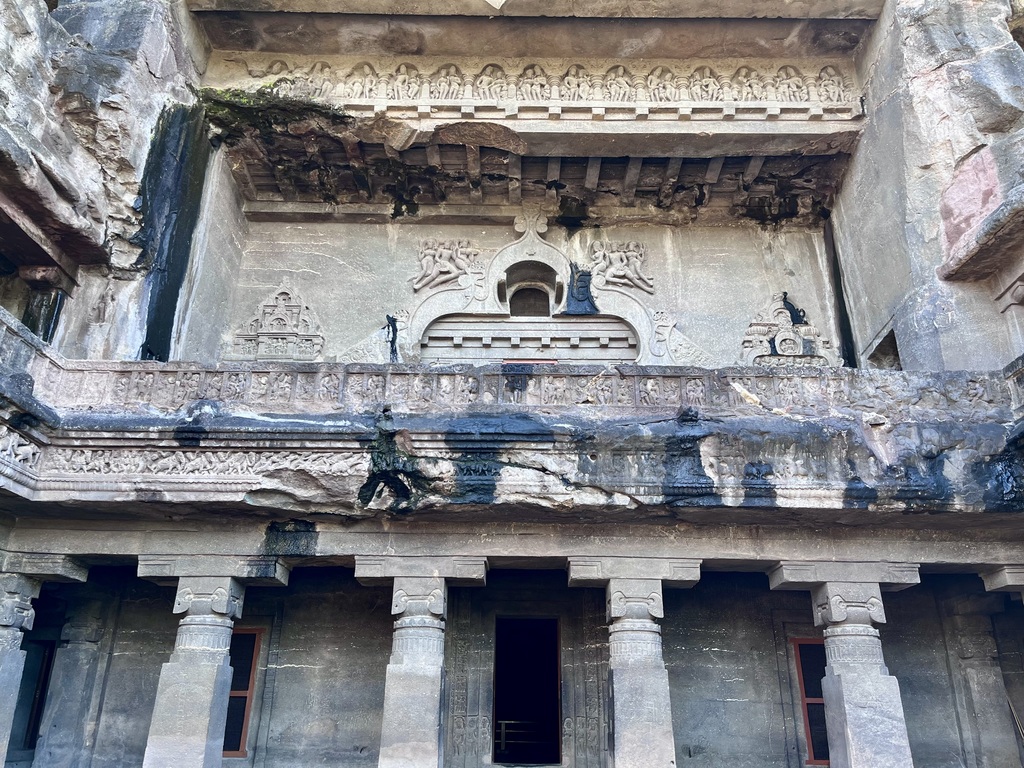
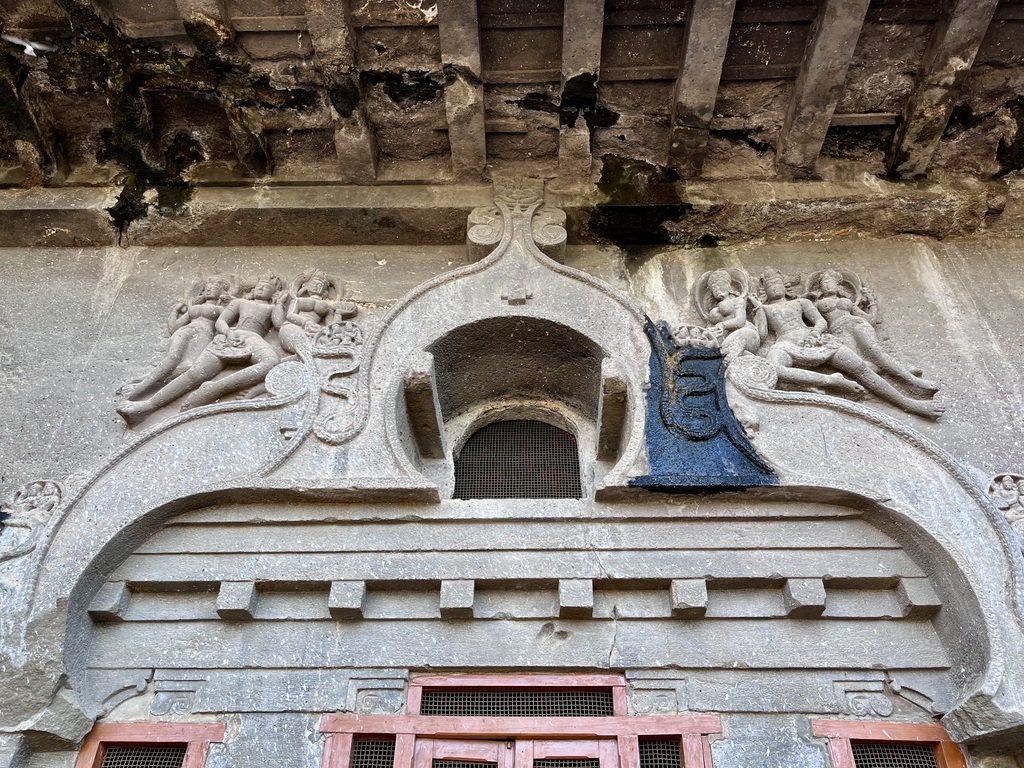
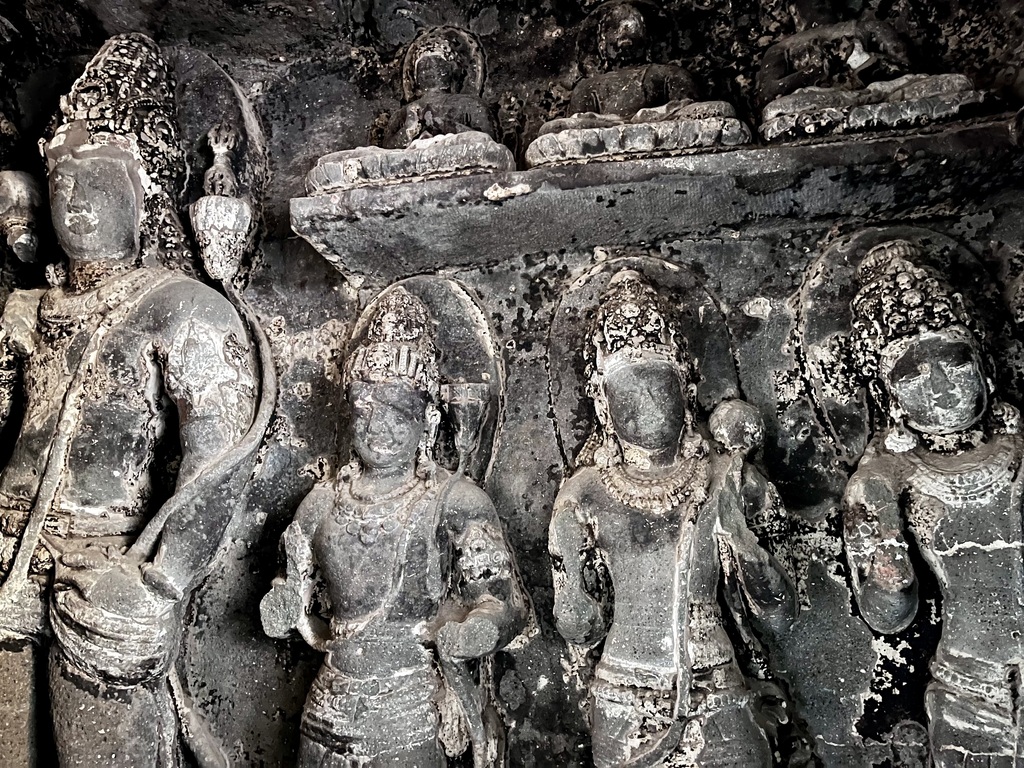
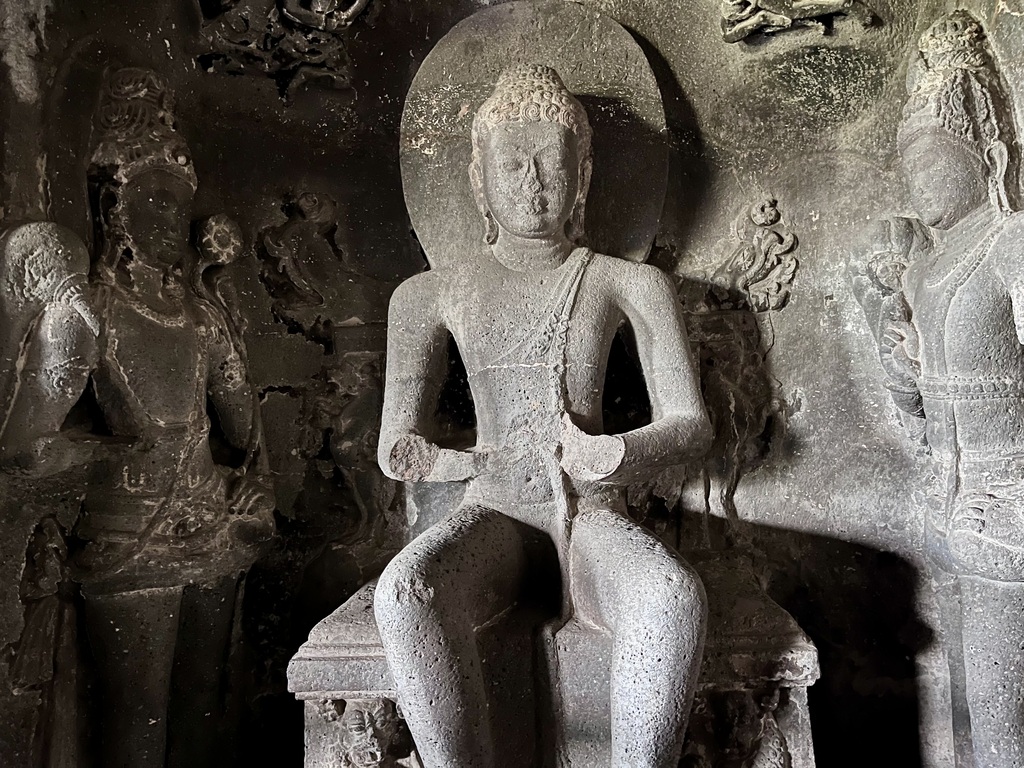
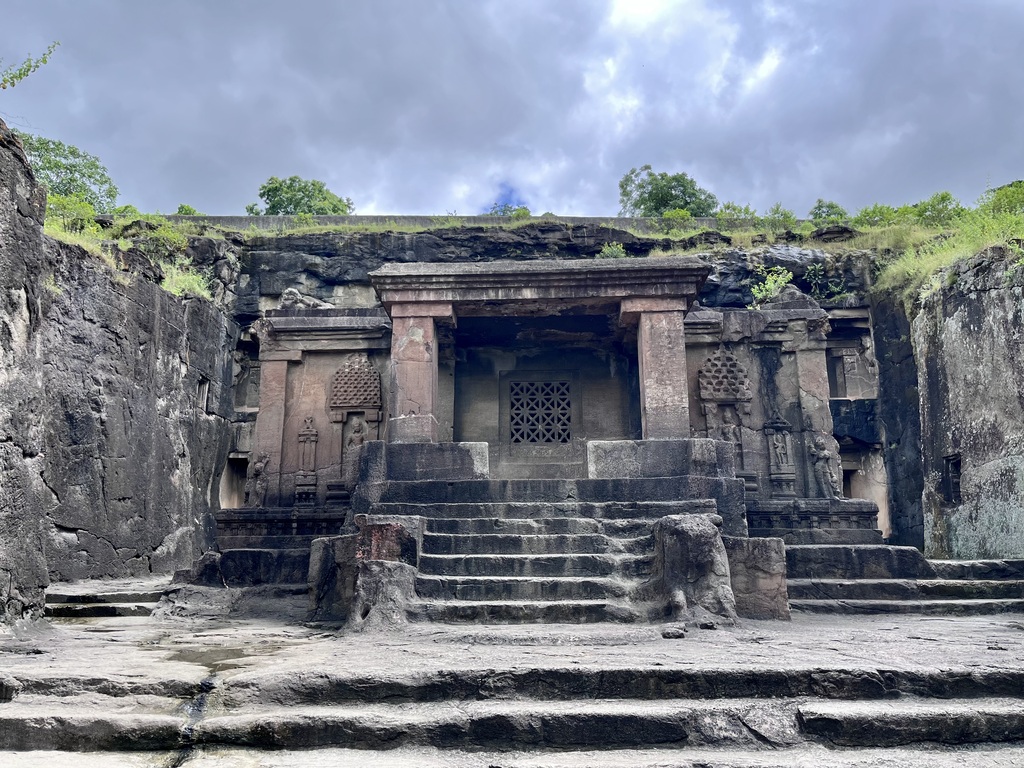
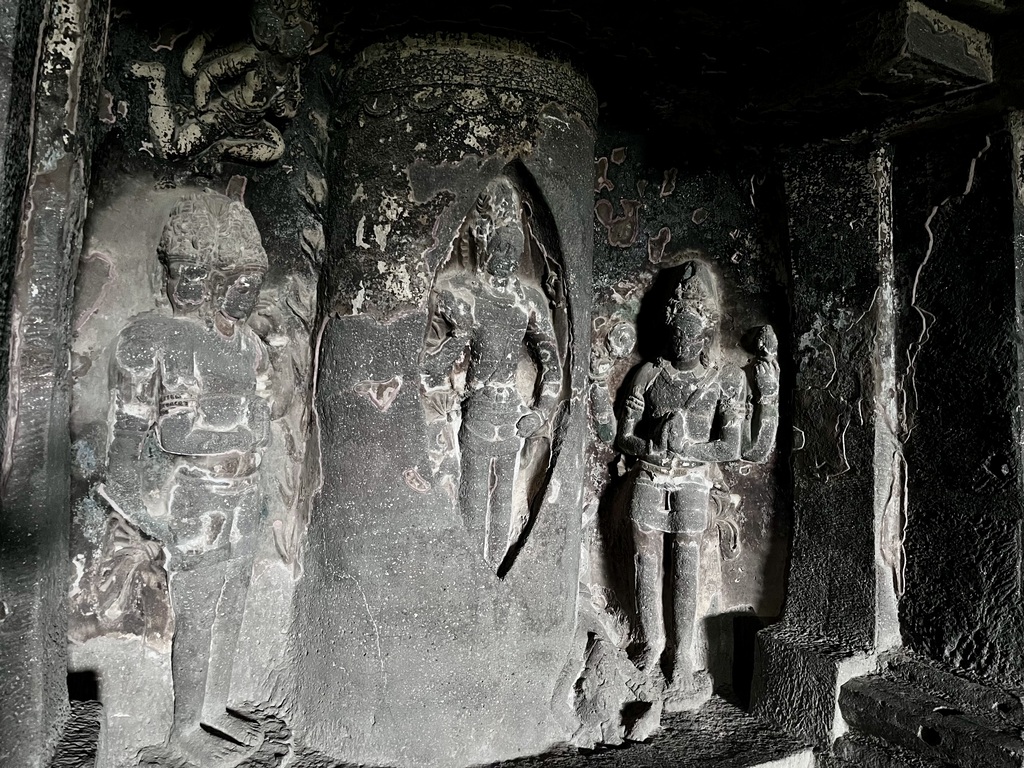
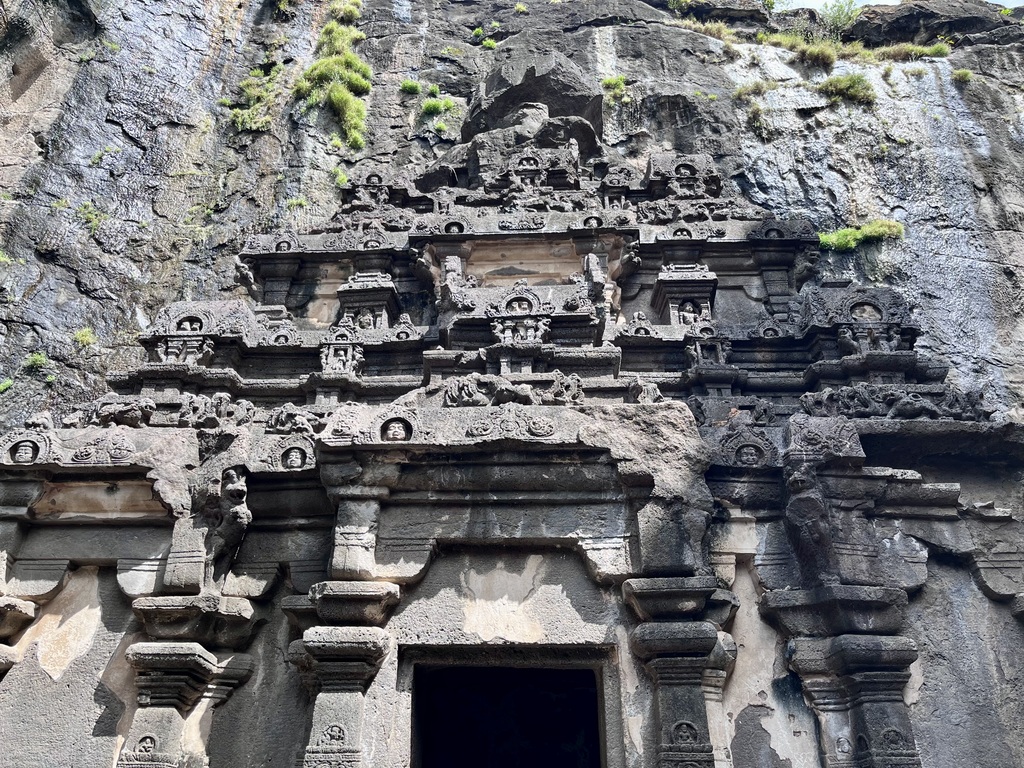
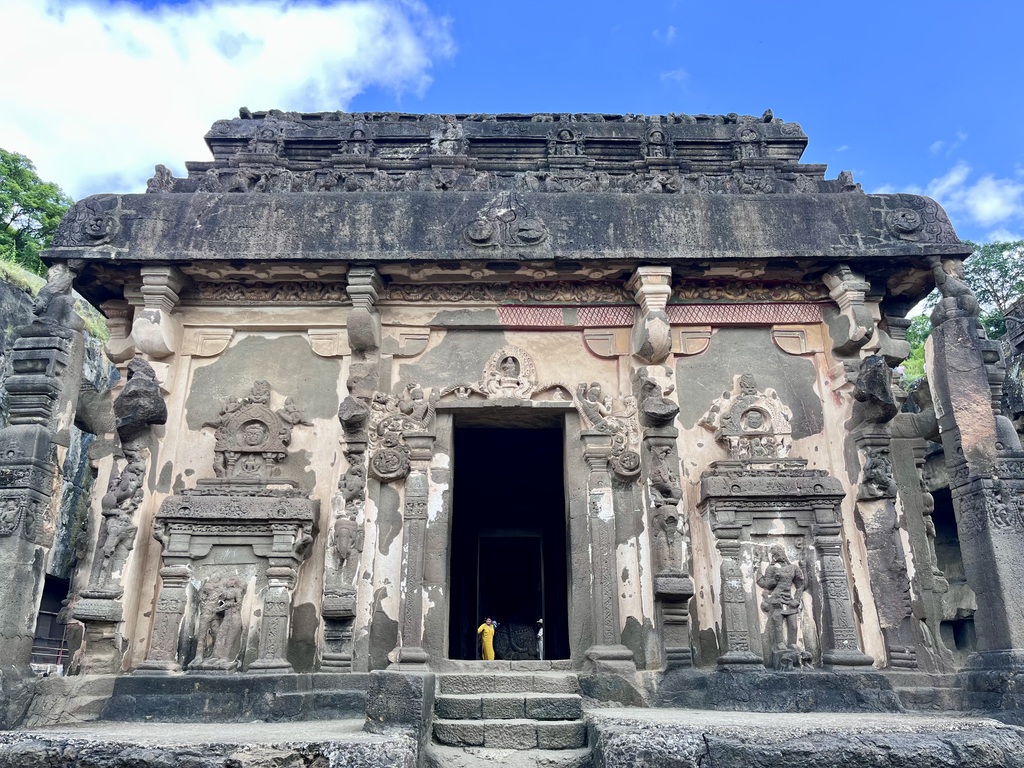
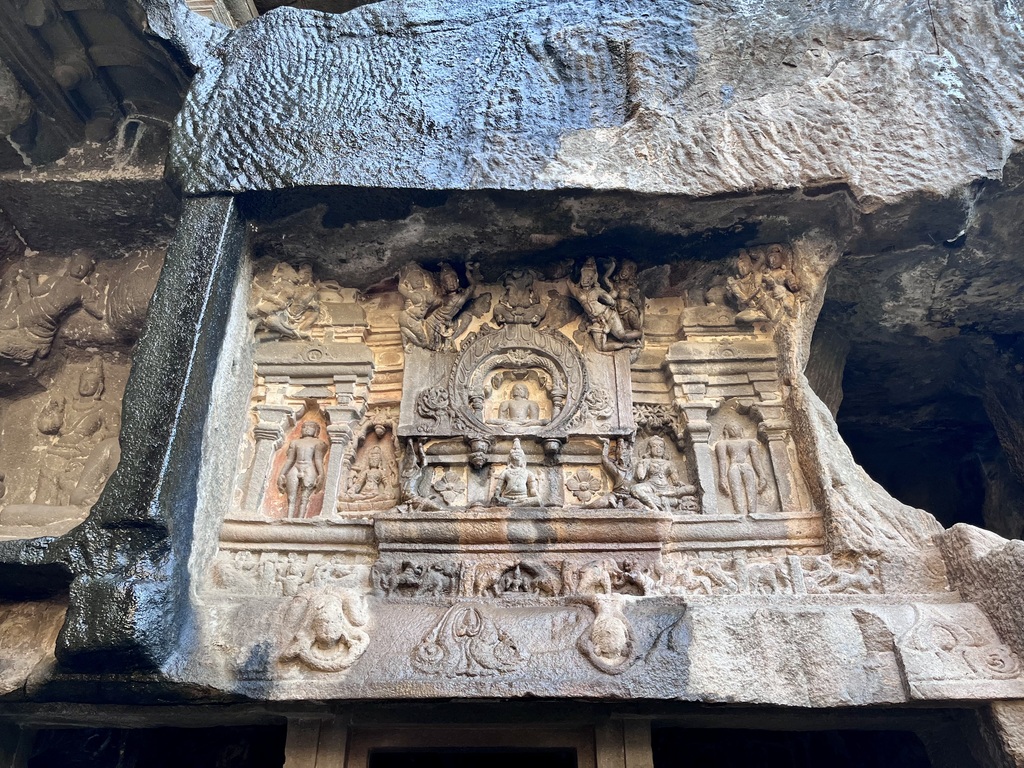
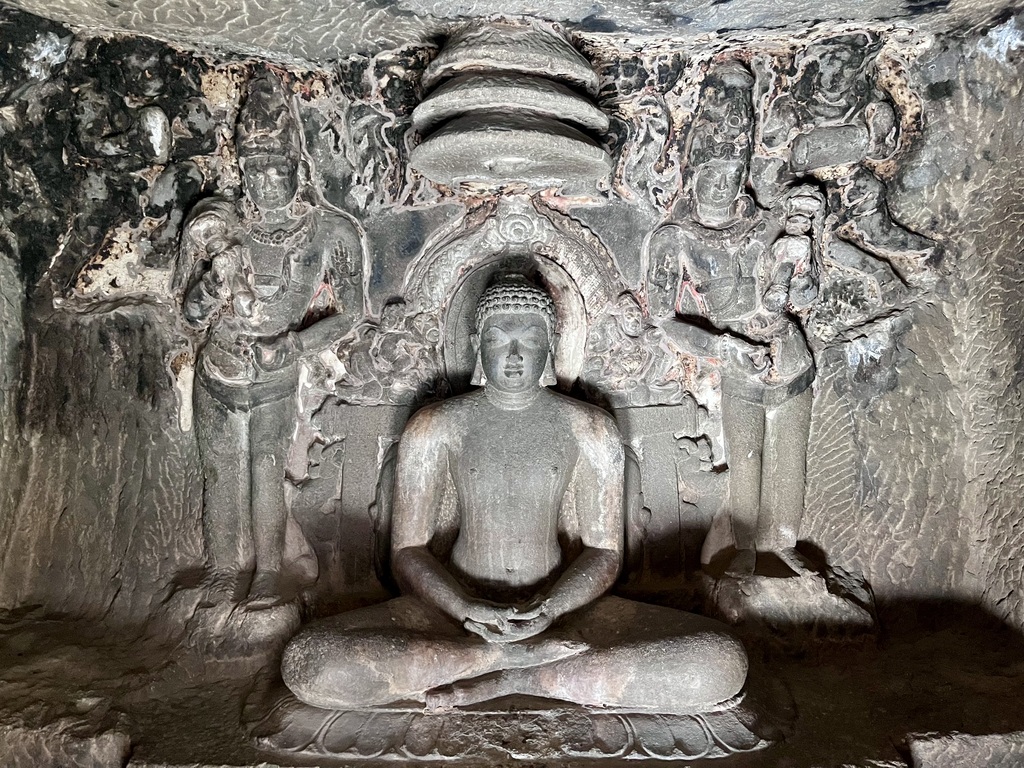
Among all 12 Buddhist caves, only Cave 10 belongs to the Chaitya Hall or Chaitya-griha, which means a room for worship and chanting, and as you approach this cave, known as Vishvakarma or the Carpenter’s Cave, you begin to feel its importance, where the Buddha is placed at the center as the main deity, drawing all attention toward him, while the most remarkable feature is the beautiful carved facade decorated with friezes of animals, couples, and a carved window that allows soft light to enter the cave, creating a peaceful atmosphere inside, and as you look at the Buddha, you will find him sitting in a simple meditation posture, dressed like a monk with no ornaments and a halo behind his head, clearly marking him as the sacred figure in this hall, while beside him stand Padmapani and Vajrapani, both Bodhisattvas shown in tribhanga posture, richly adorned and holding objects in their hands, where Padmapani, belonging to Avalokiteśvara, holds a lotus symbolizing kindness, mercy, and the saving of beings from suffering, and Vajrapani represents spiritual power, strength, and protection, and as you move further inside, you notice the semi-circular shape of the cave with a long series of 30 pillars guiding your view toward the stupa at the end, which is a key feature of a Chaitya hall in Buddhist caves, while outside, the cave opens into a large courtyard with double-storeyed rooms on both sides and an apsidal hall set on a raised platform, and above, the Music Gallery on the upper floor, reached by steps cut into the verandah wall, adds another layer of life to the space, where music may once have accompanied the chanting of monks below or served as a place for important visitors during prayers.
Cave 11
Cave 11 is the Do Tal cave, a three-storeyed vihāra where two floors are visible and one layer remains hidden, and as you explore this spacious structure with its pillared halls, you begin to sense a more developed and complex design, while the walls are filled with rich images of Buddhas and Bodhisattvas that go beyond simple devotion, illustrating advanced Mahāyāna themes like śūnyatā and Prajñāpāramitā, giving the cave a deeper philosophical and spiritual meaning.
Cave 12
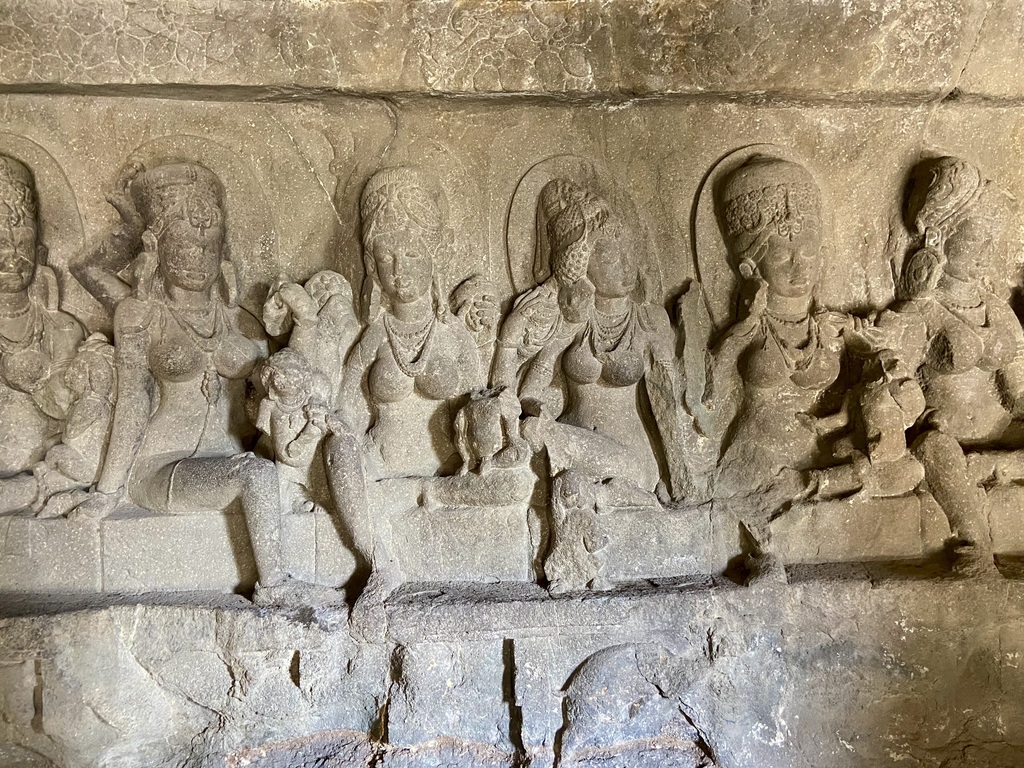
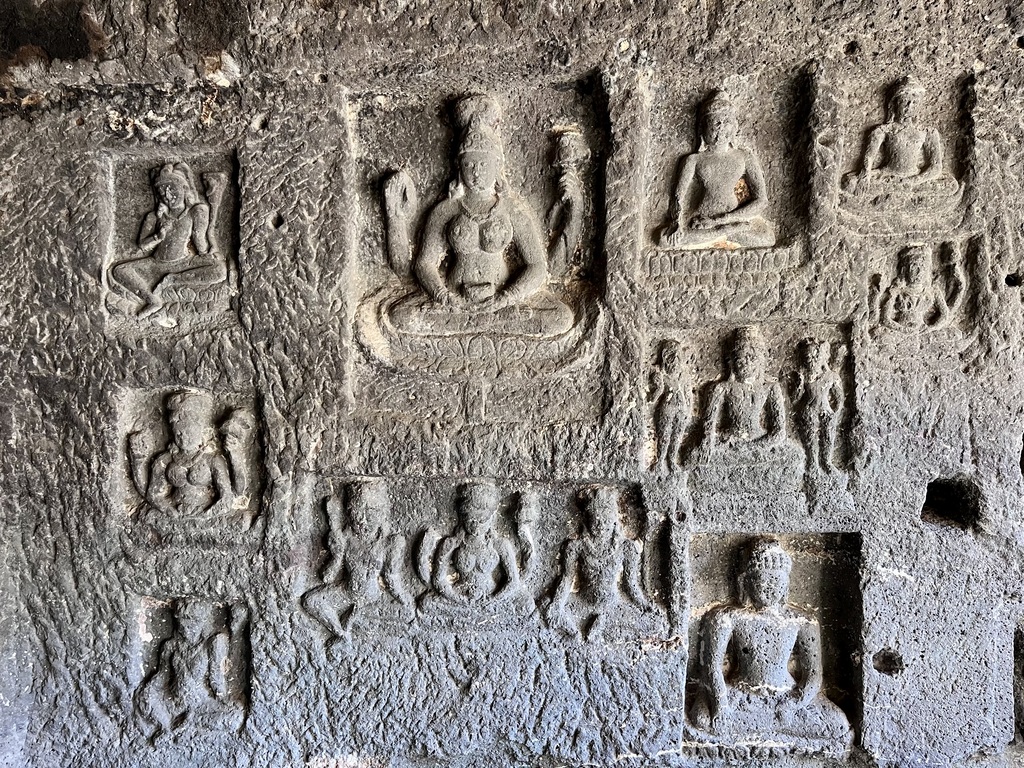
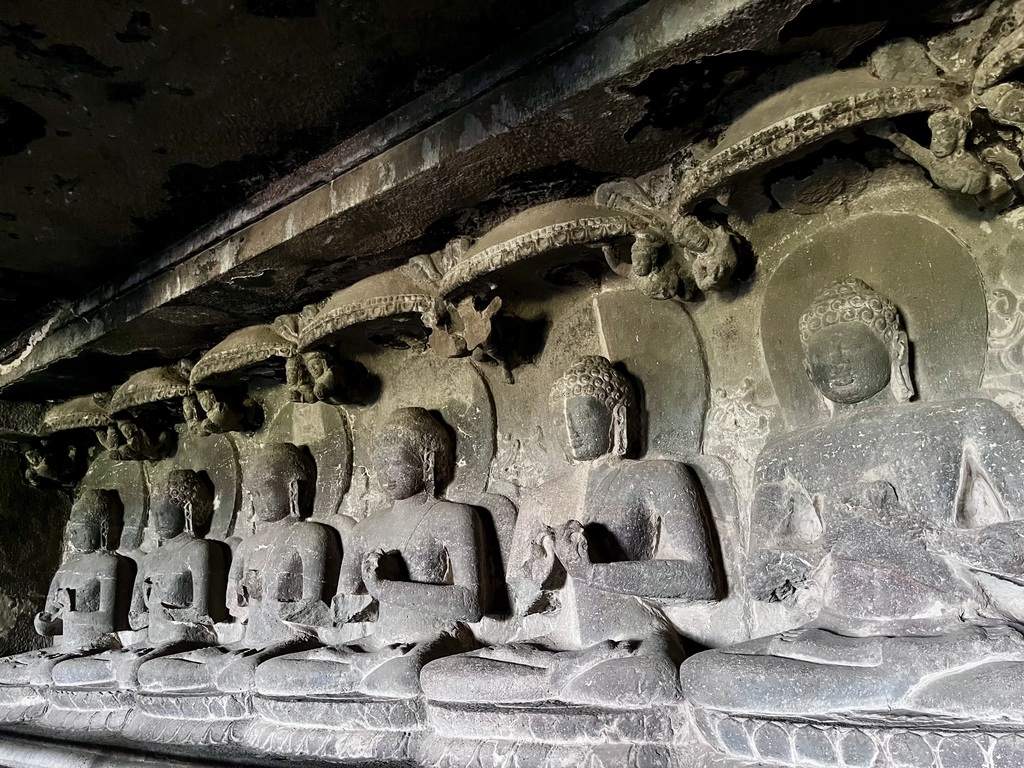
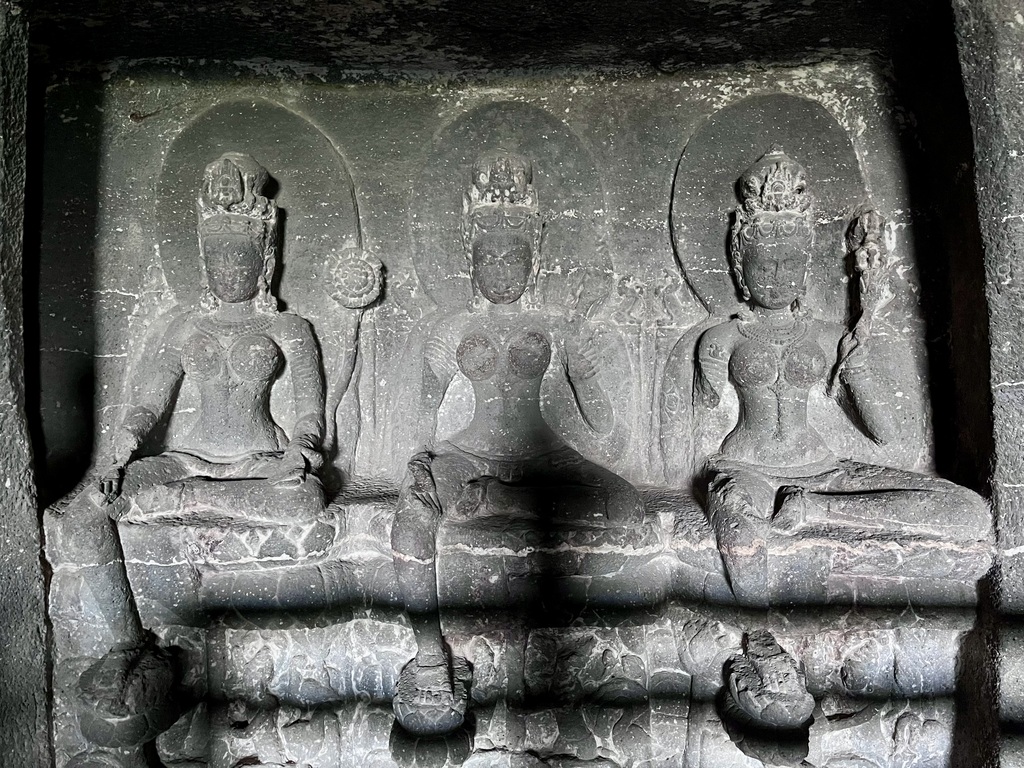
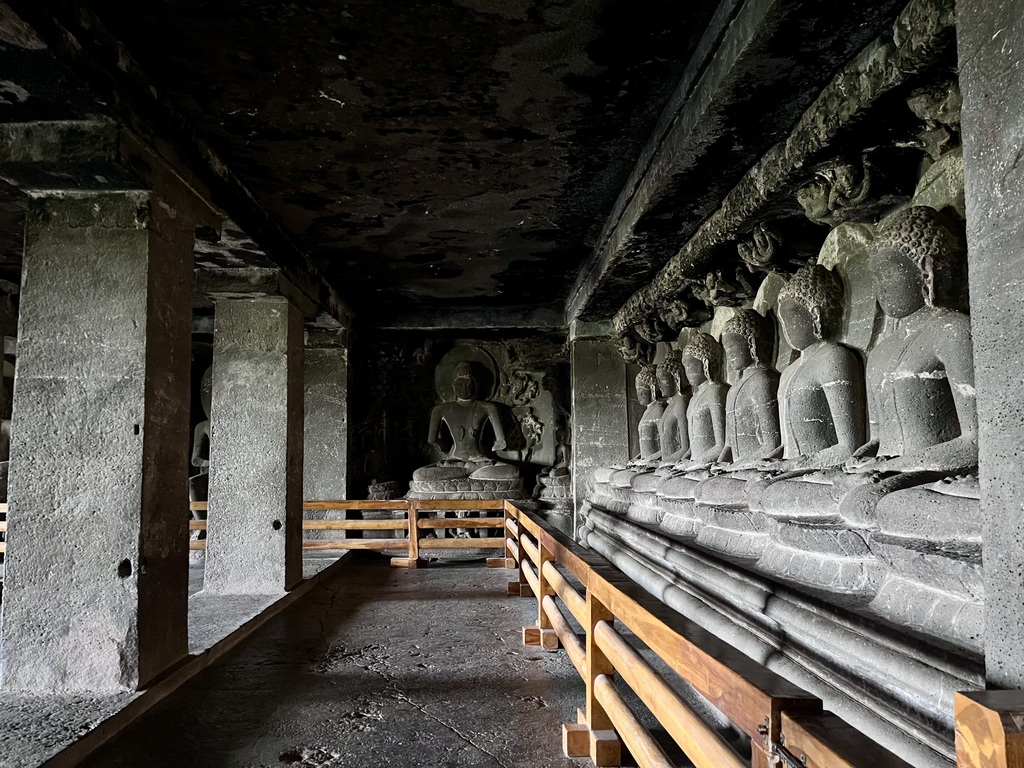
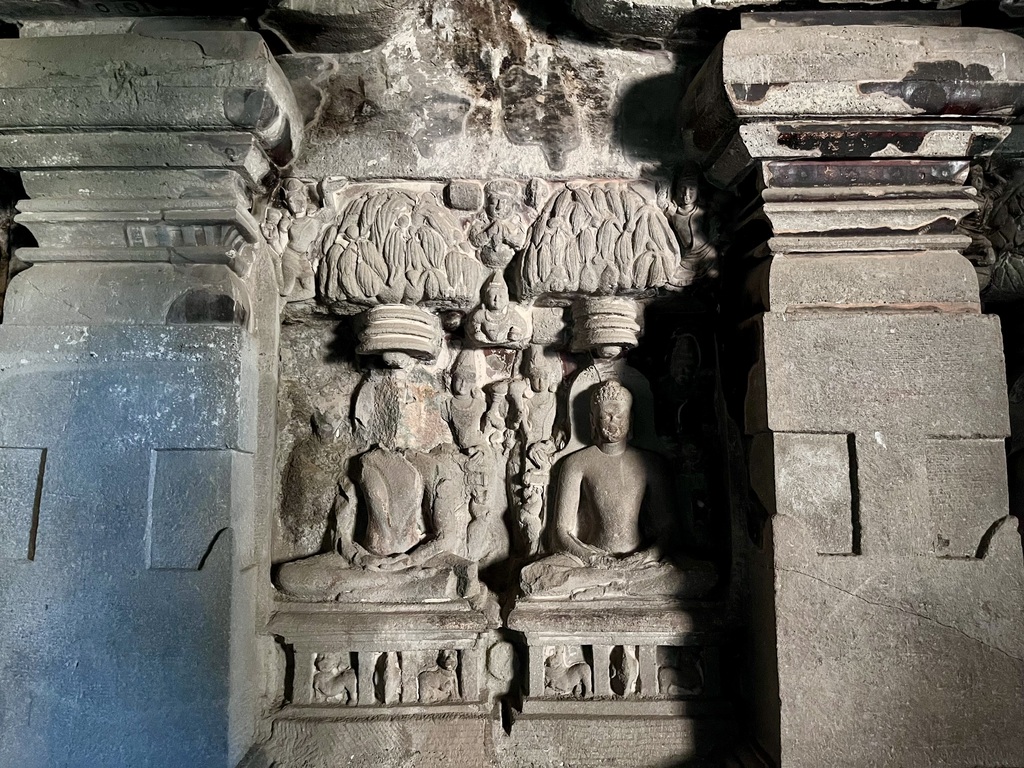
Cave 12 is known as Teen Tal because it has three floors, and as you stand before it, the cave looks large and grand but its simple facade hides the rich carvings inside, and once you enter the first floor, you find a pillared hall along with a small antechamber and a sanctum surrounded by cells, where Lord Buddha sits in a preaching pose on a lotus throne, with carvings of five Buddhas and eight Bodhisattvas covering the walls, and as you move to the second floor, you again see a verandah, hall, sanctum, and cells, but here the main highlight is the beautiful scene of Sujata offering kheer to Buddha in earth-touching posture, accompanied by carvings of seven Buddhas and eight Bodhisattvas, and it is believed that all these sculptures were once covered with plaster and painted, adding more life to them, and finally, on the third floor, the cave opens up like a grand sculpture gallery where the walls are filled with large figures of Buddha, Bodhisattvas, and flying figures, while the front wall displays a striking panel of eleven Buddhas and the antechamber walls show twelve goddesses seated on lotus thrones, and as you look closely, you will notice that the Sujata offering kheer scene appears here once again, along with faint traces of old paintings that still remain.
The Hindu Caves – A World of Stories, Power, and Divine Energy
As you move forward, the feeling changes. The Hindu caves are not silent. They are full of movement. Full of life. Full of stories from epics and Puranas.
Cave 13
Cave 13 belongs to the early phase of the Hindu caves and was constructed around the 7th century CE, and as you step into it, you will notice that it is very simple and less decorated, with only basic pillars and a small sanctum, yet even in this simplicity, it quietly shows an important transition, where artisans were experimenting with transforming the earlier Buddhist-style cave layouts into Hindu temple shrines associated with Lord Shiva.
Cave 14
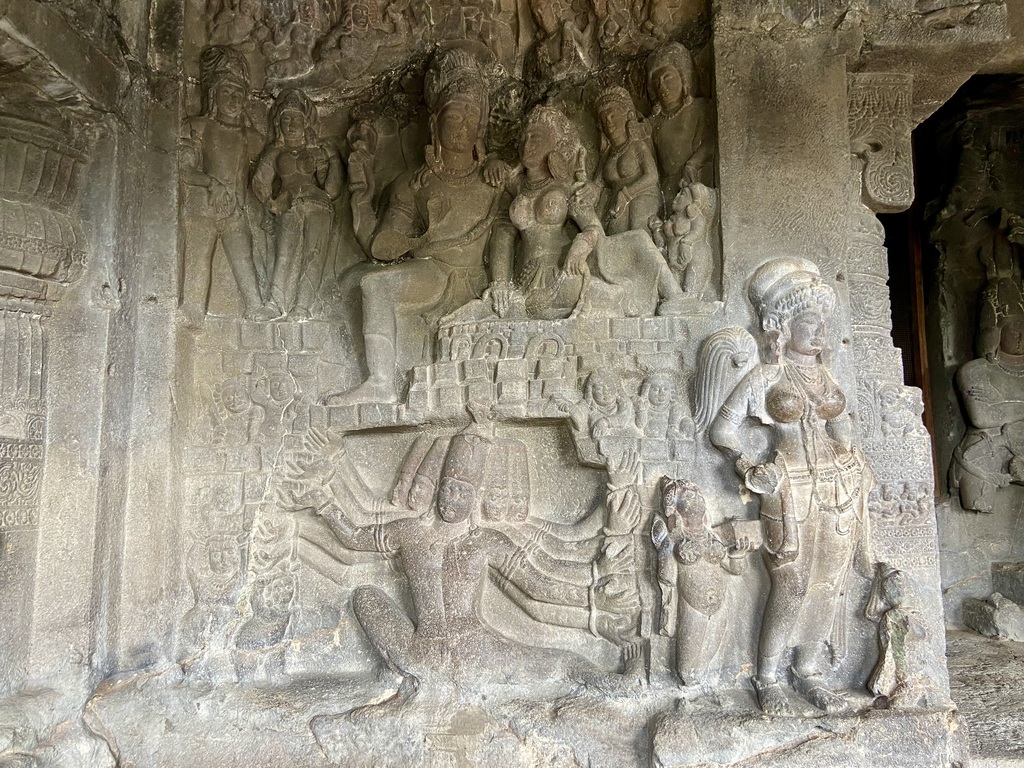
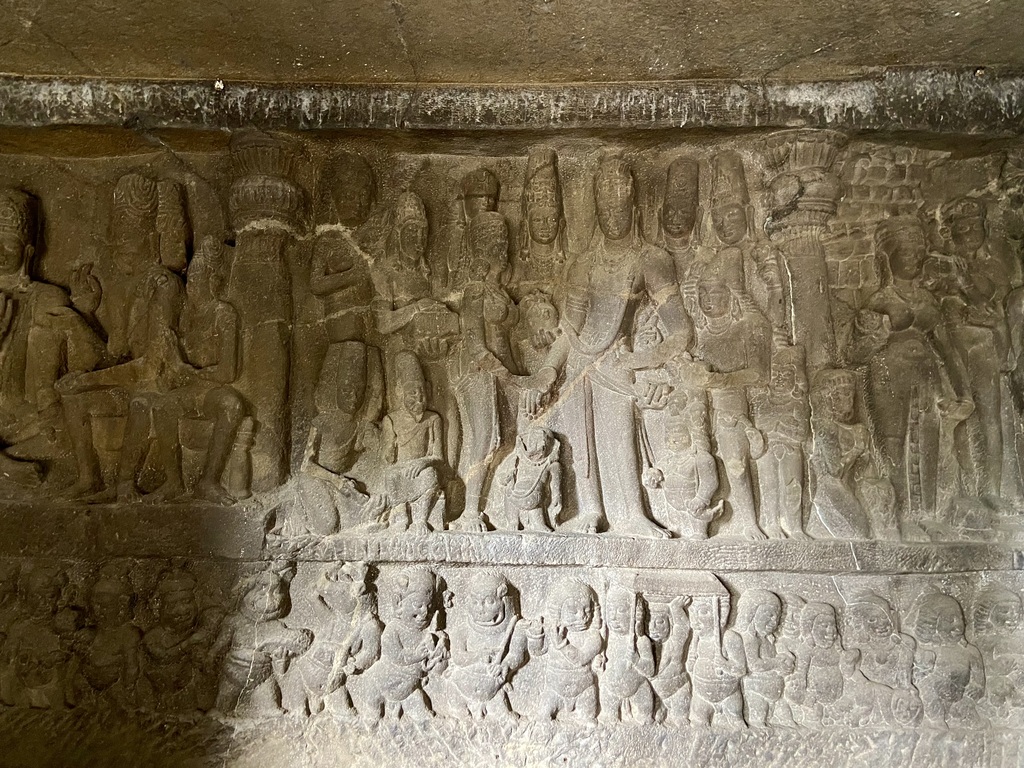
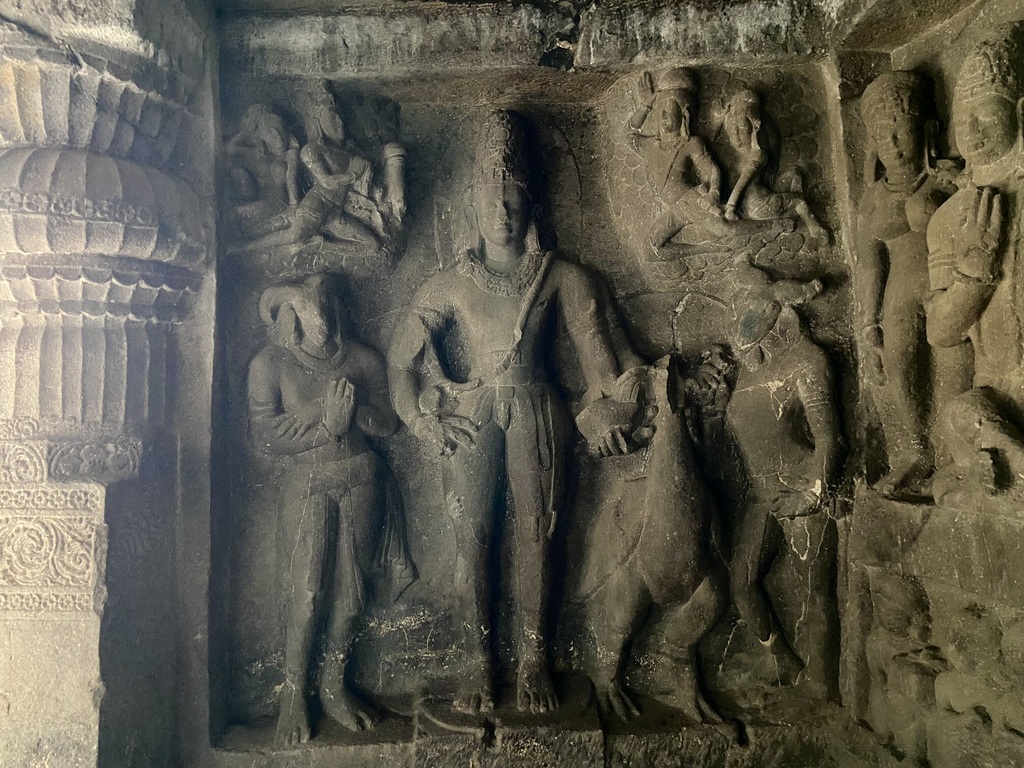
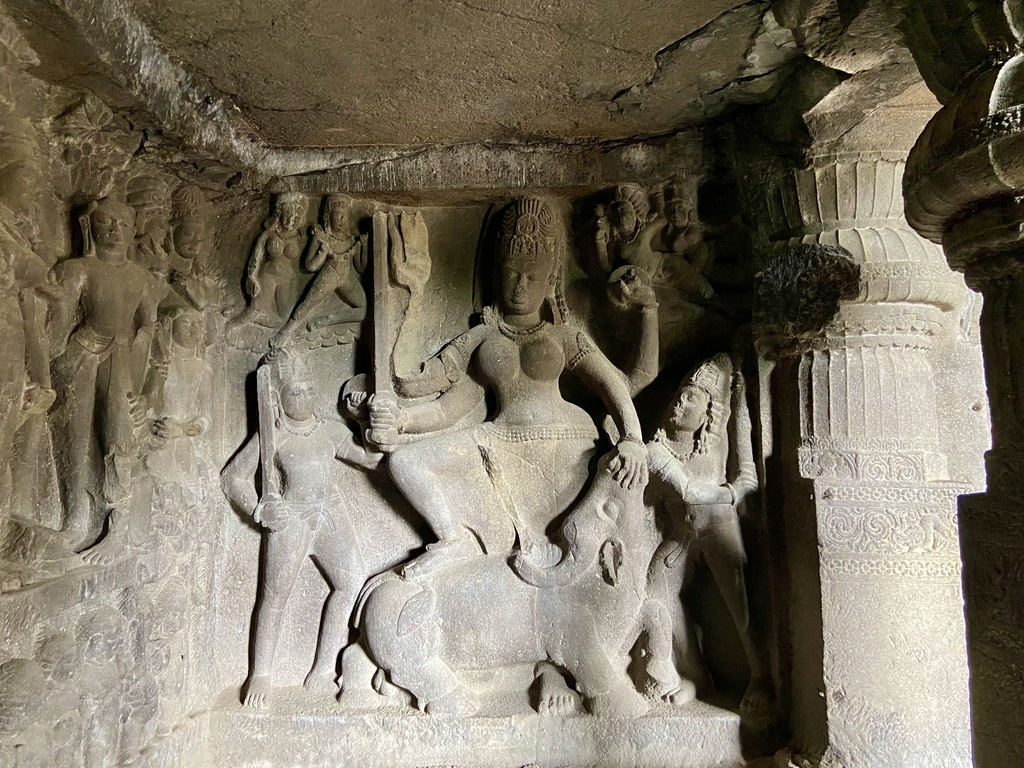
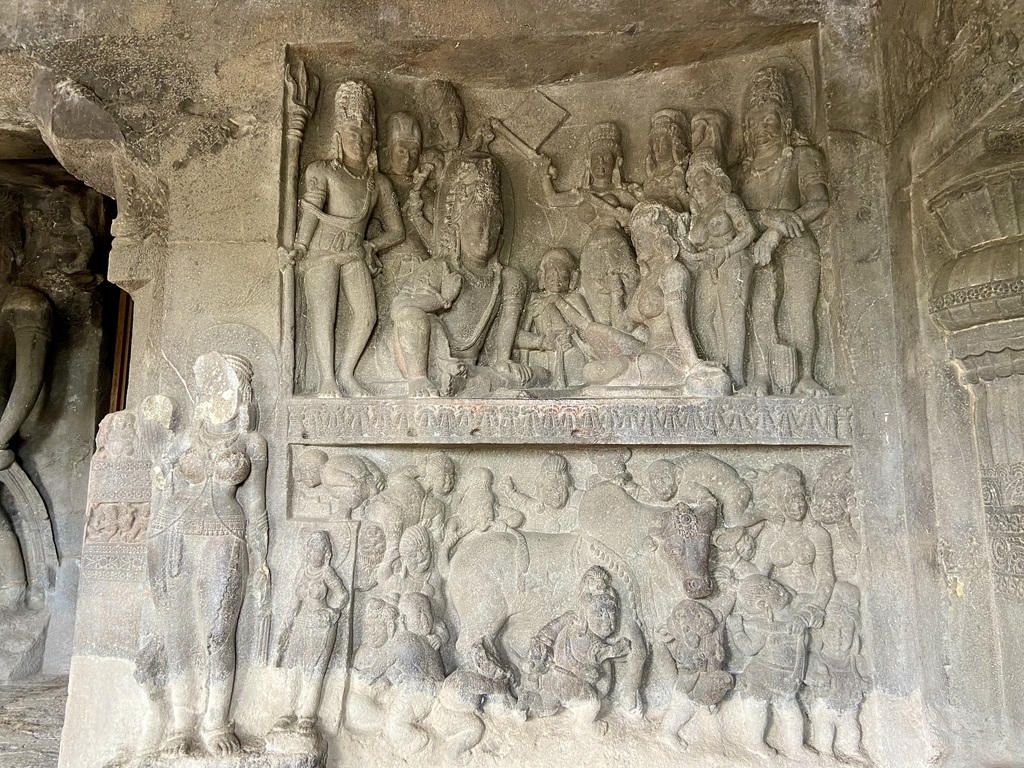
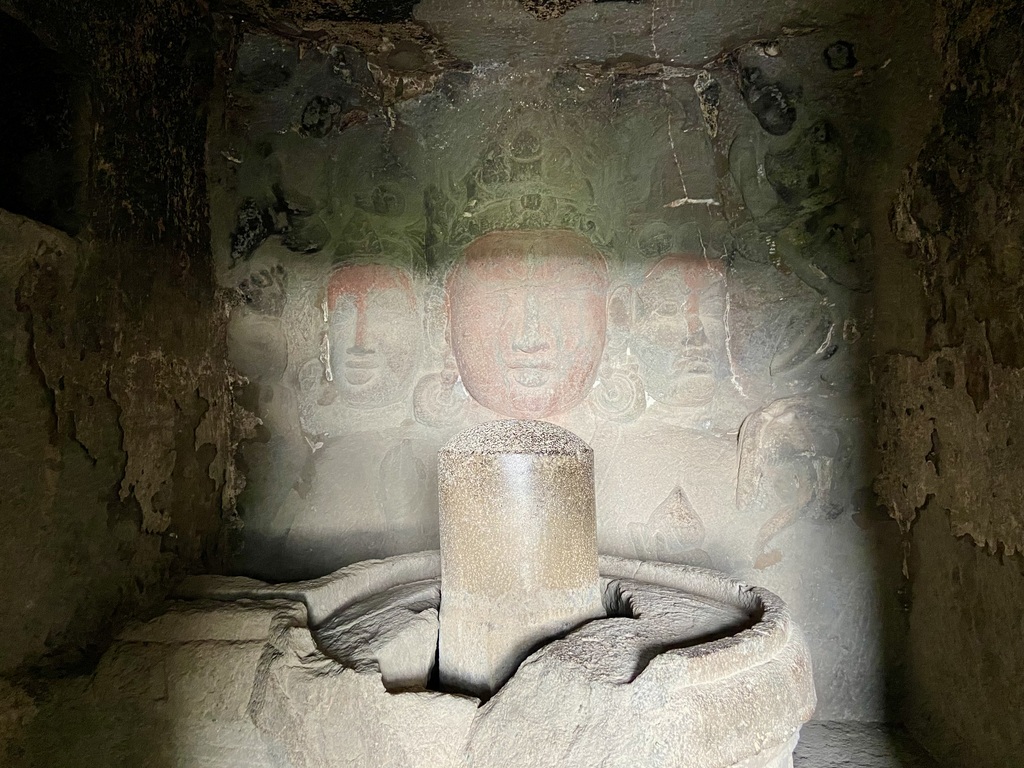
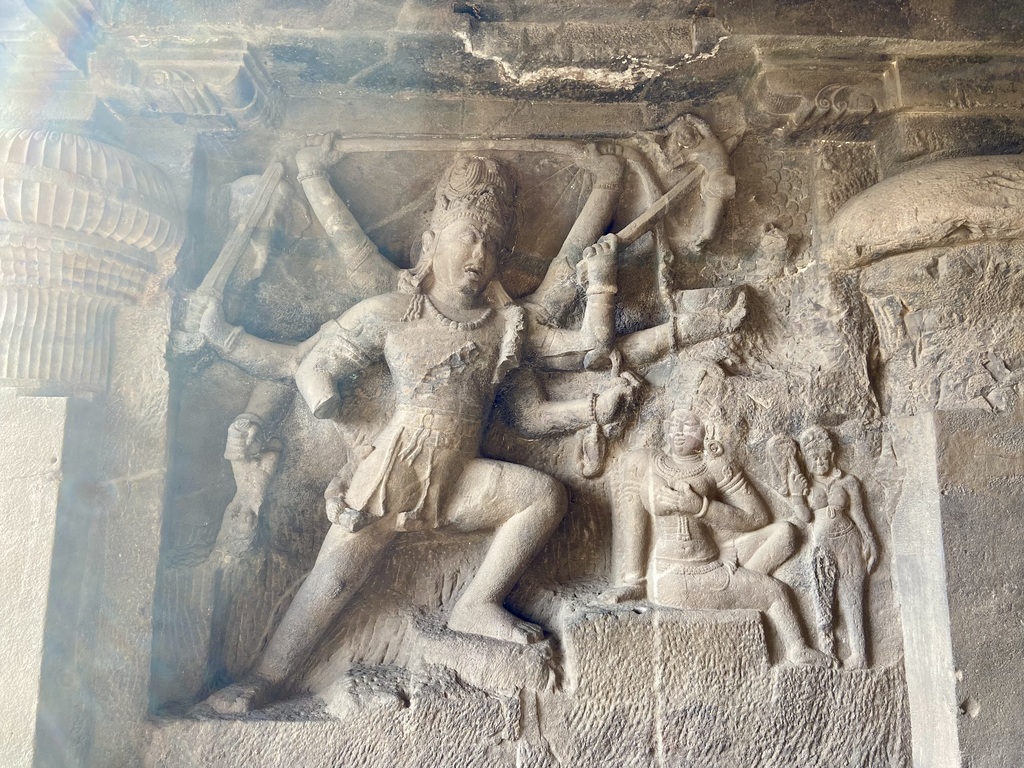
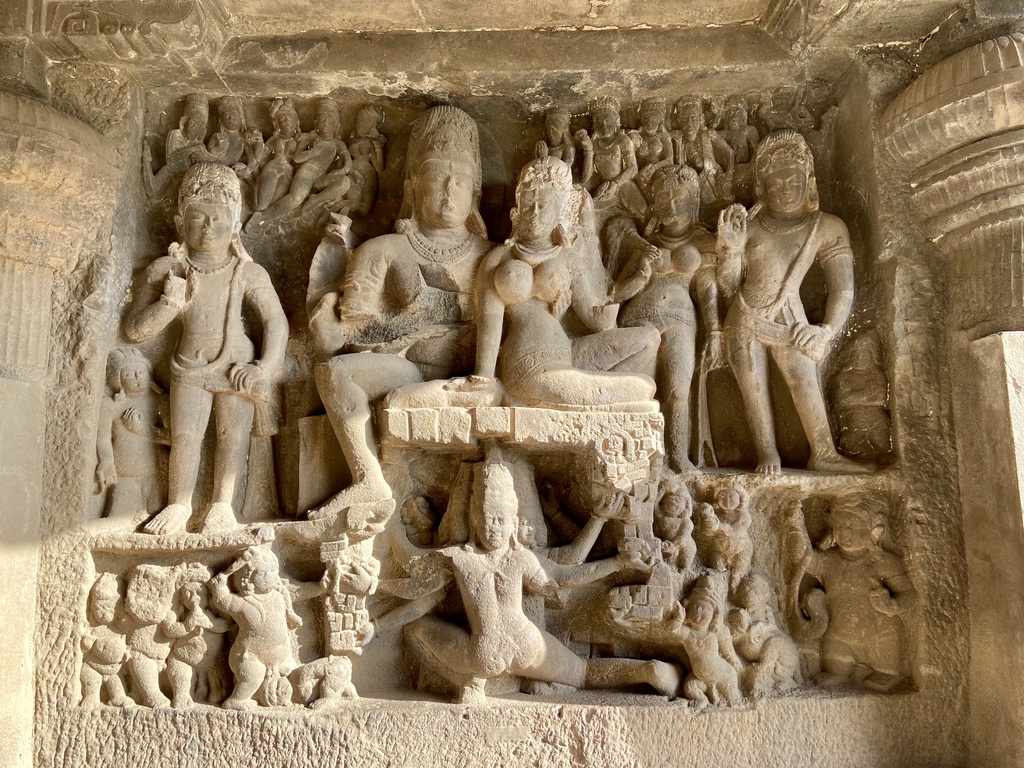
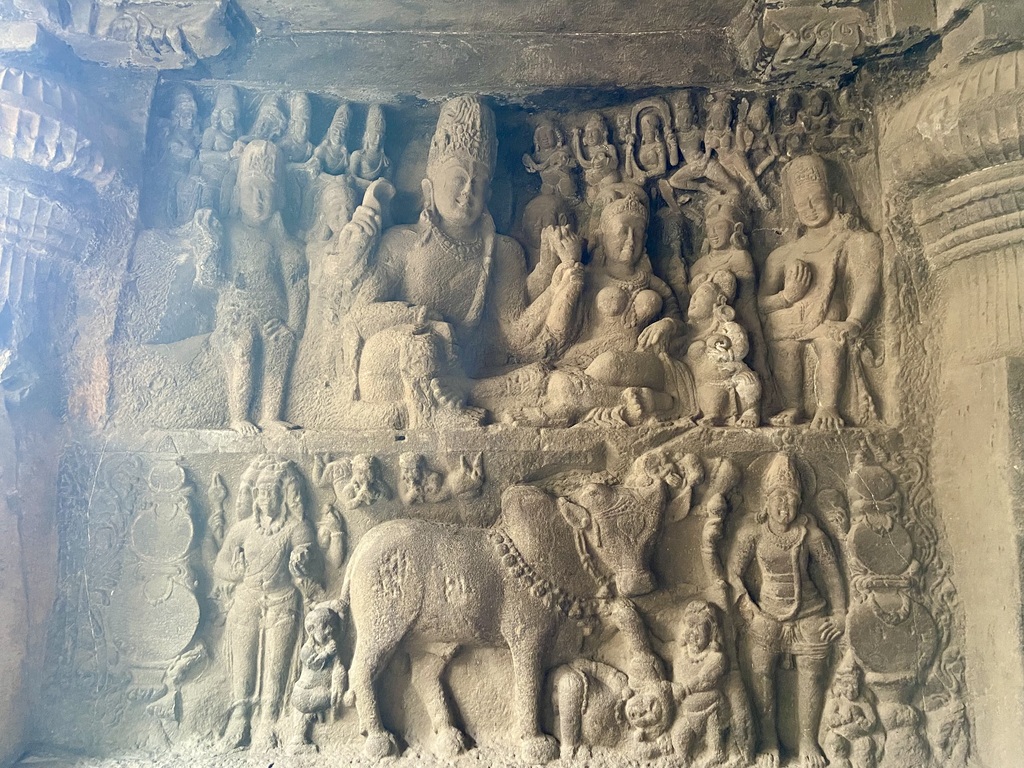
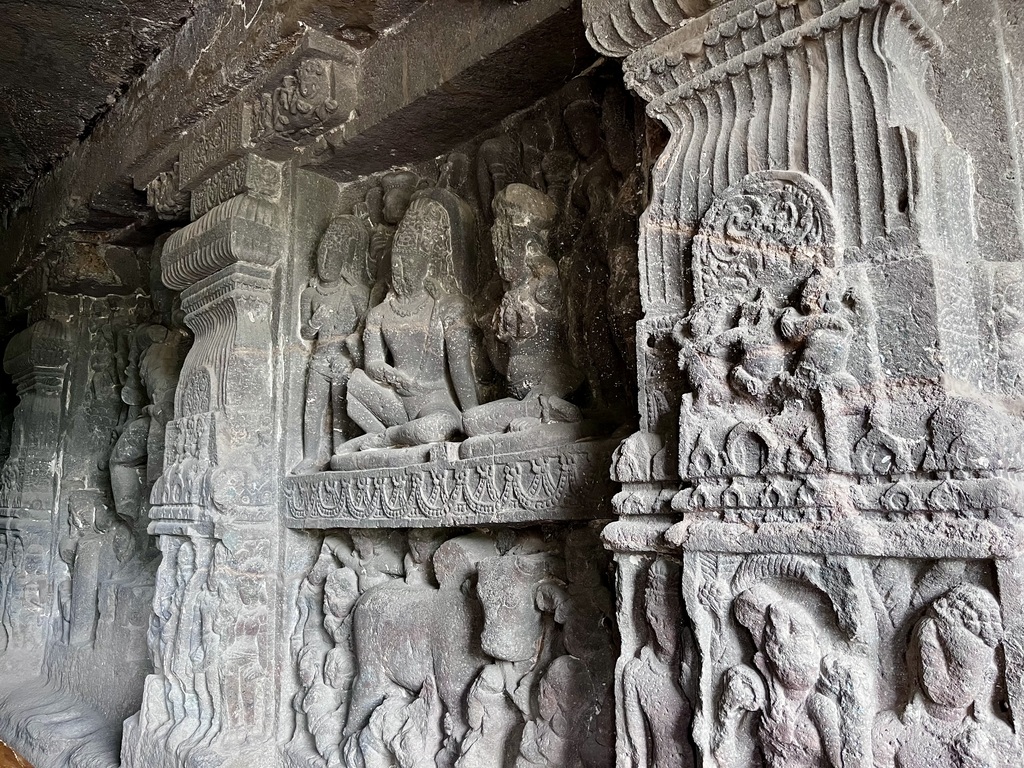
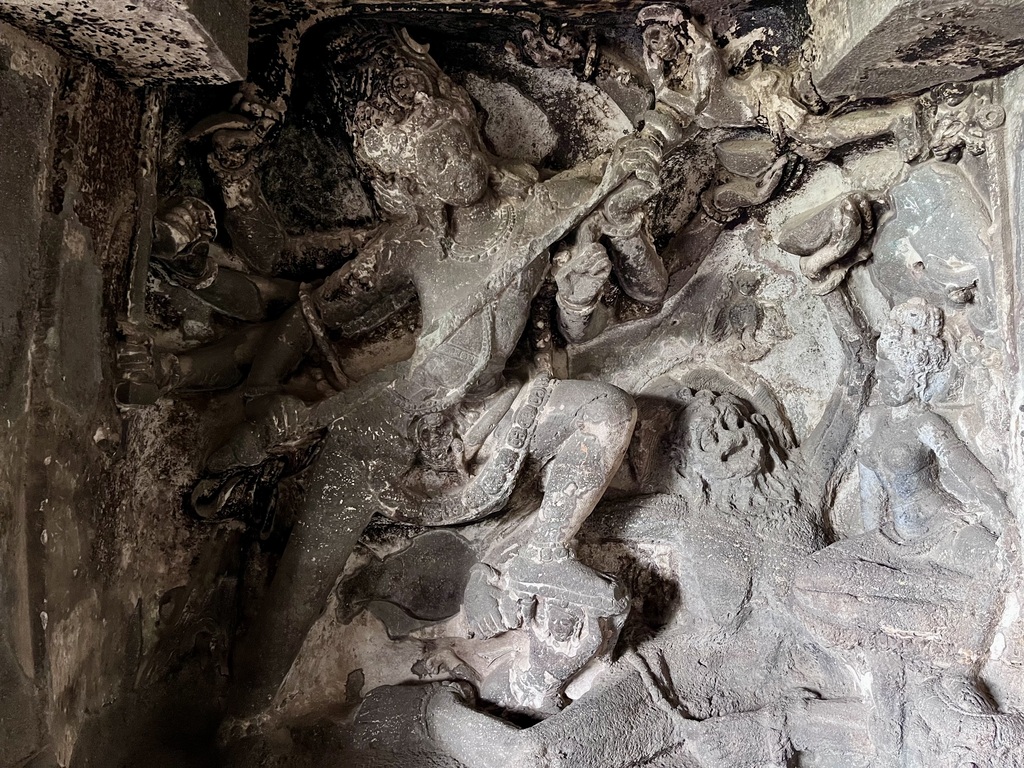
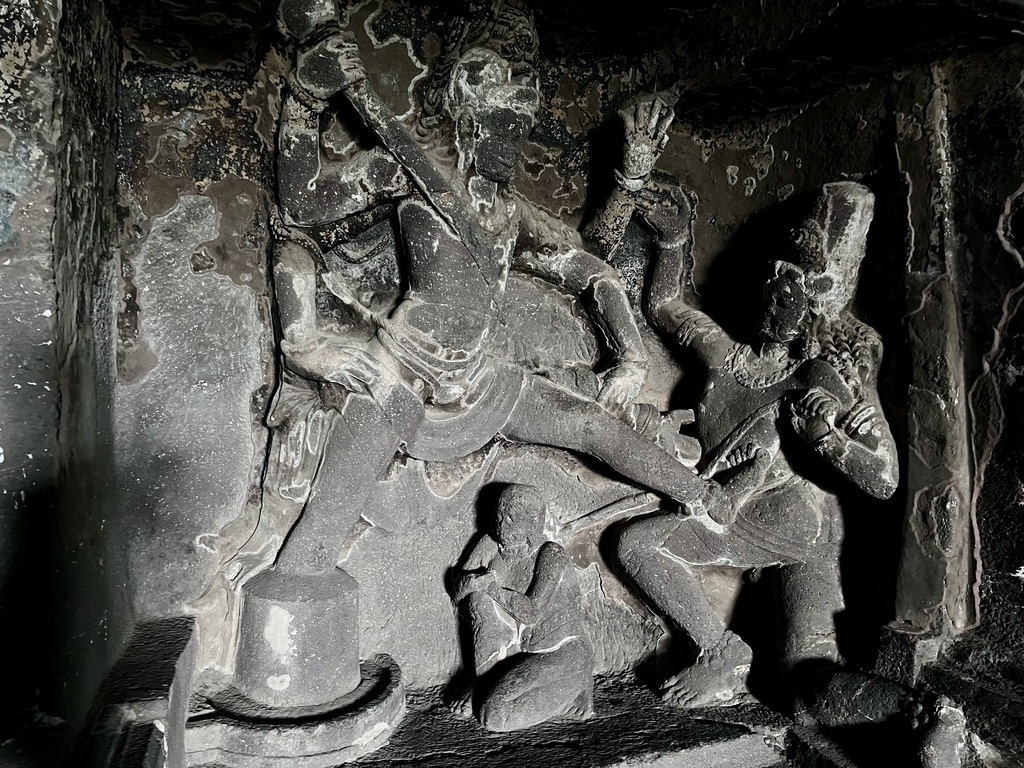
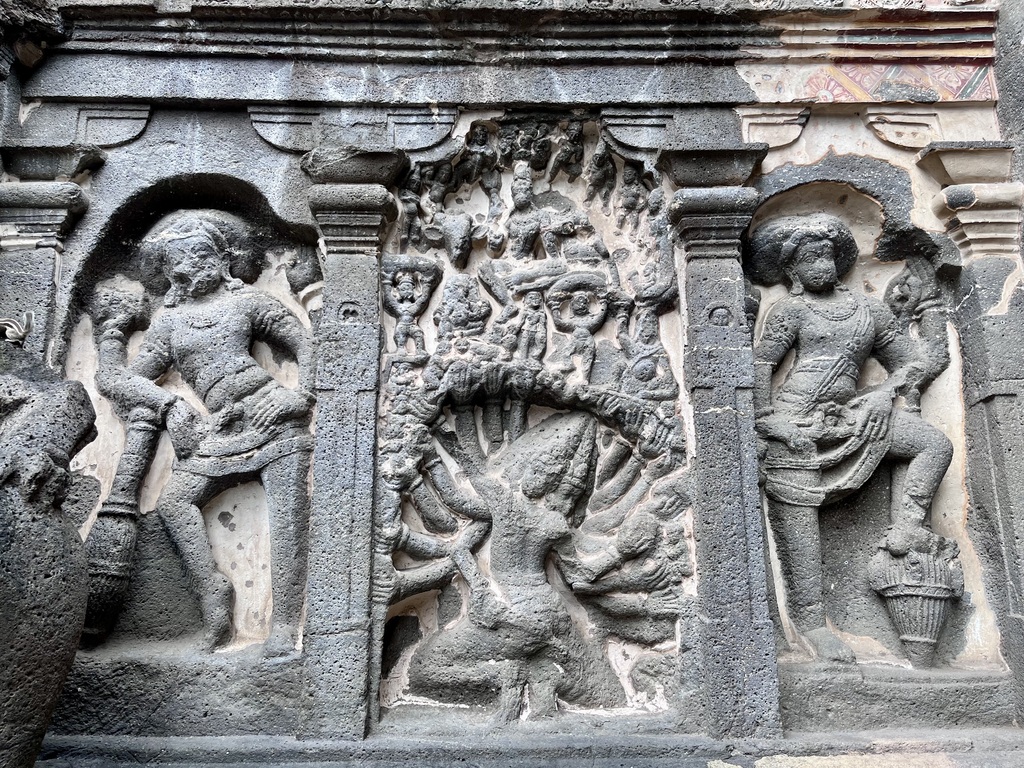
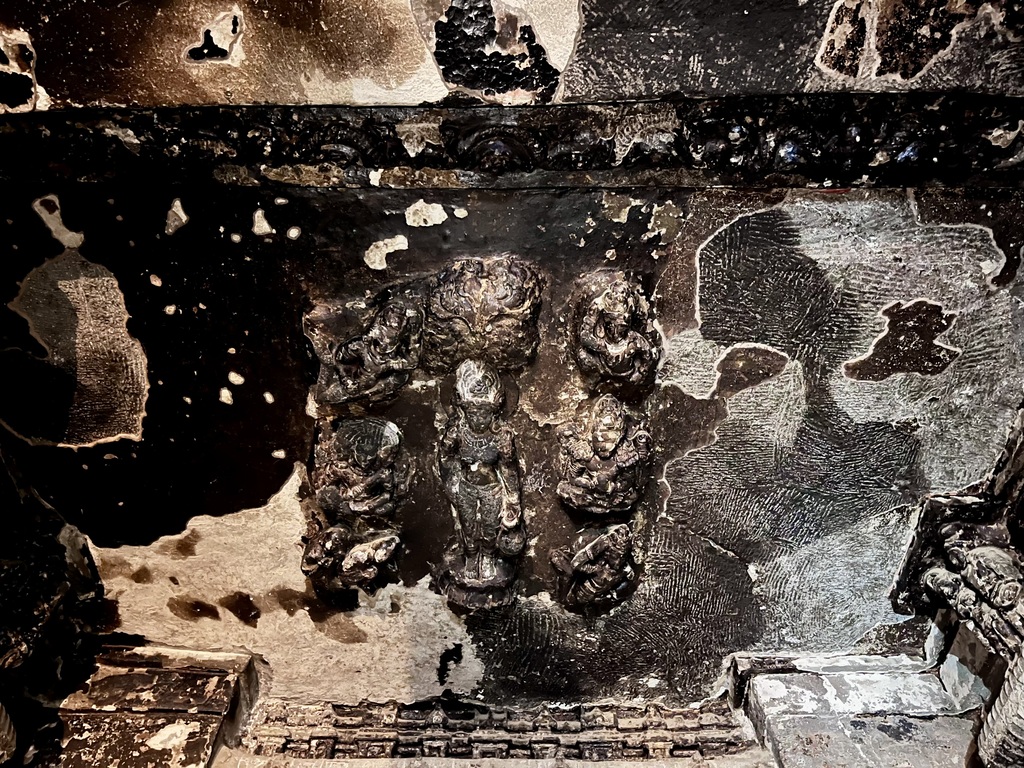
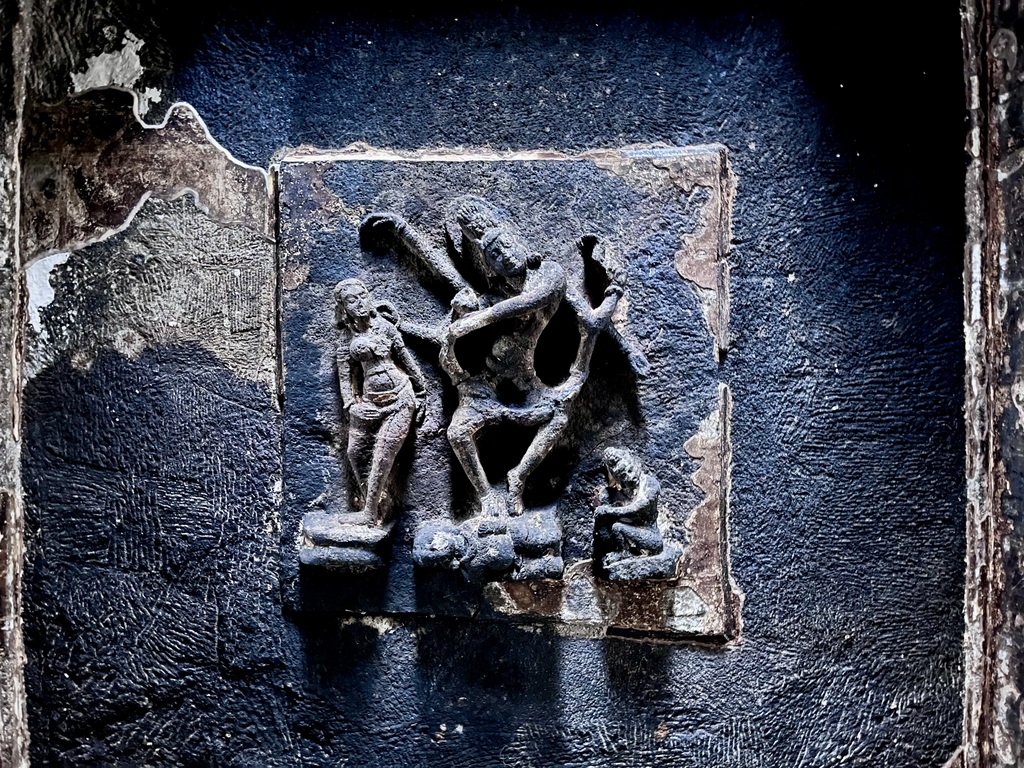
Cave 14 at Ellora, known as Ravana-ka-Khai or Ravana’s Den, is one of the earliest Hindu caves in the complex and is dedicated to Lord Shiva, and as you approach, you will notice a pillared hall leading to a small shrine with a Shiva linga, where the pillars remain simple with only a few decorations, clearly showing the early stage of Hindu cave design at Ellora, and once you enter, on the left side you will see Maa Durga with her vahana, the lion, although many parts are broken today, while on the right side you will find the powerful scene of Maa Durga slaying Mahishasura, and as you move further into the pillared hall, the left wall presents various incarnations of Lord Vishnu, including one carving of the Varaha avatar saving the world from the demon Hiranyaksha, while on the right wall you will come across a lively and human moment where Nandi is being teased by small boys as Mata Parvati defeats Lord Shiva in the chausar game they played, and some even say Mata Parvati intentionally tricked Lord Shiva, leading him to catch her hand, and nearby another beautiful carving shows Lord Shiva teaching dance to Mata Parvati, and among all these, one of the most iconic scenes captures Ravana lifting Mount Kailash while the entire family of Lord Shiva is seated above, bringing a sense of drama and divine power to the cave.
Cave 15
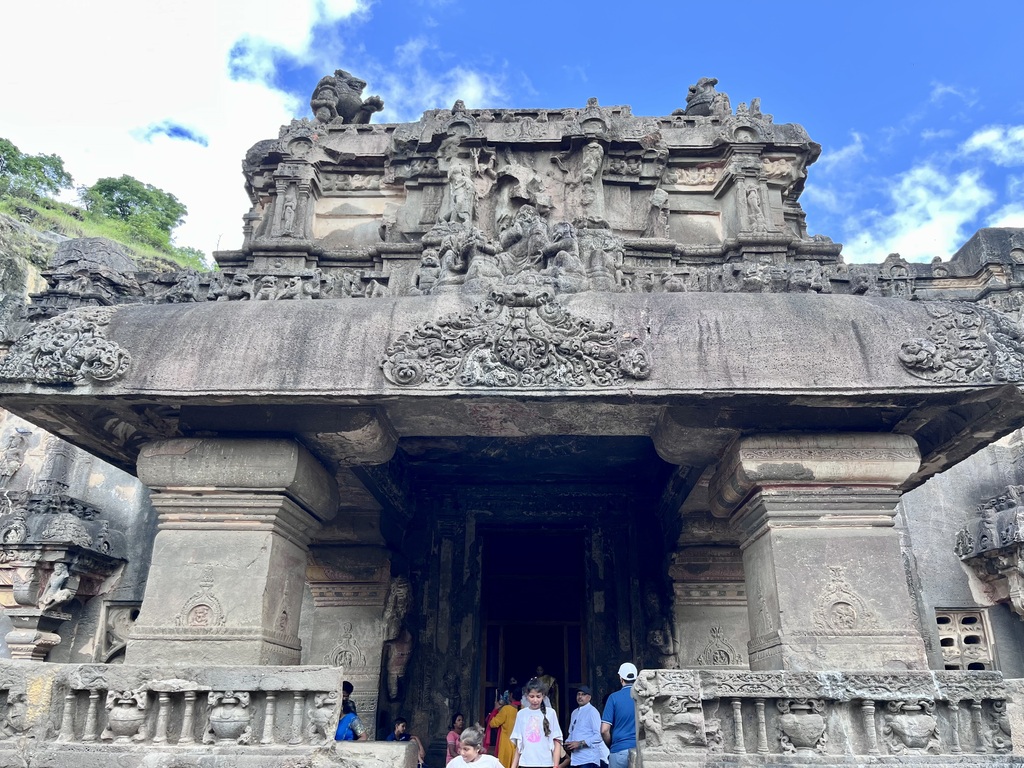
The Dasavatara Cave (Cave 15) at Ellora is a remarkable monument that reflects both architectural brilliance and rich mythology. Originally begun as a Buddhist vihara, it was later transformed into a grand Hindu temple dedicated to Lord Vishnu. This two-storeyed cave has a lower level that still shows traces of its Buddhist origin, while the upper level was redesigned into a central shrine with a mandapa (pillared hall) and beautifully carved panels depicting the ten avatars (Dasavatara) of Lord Vishnu, along with scenes from the Ramayana and Mahabharata, creating a unique blend of religion, mythology, and art.
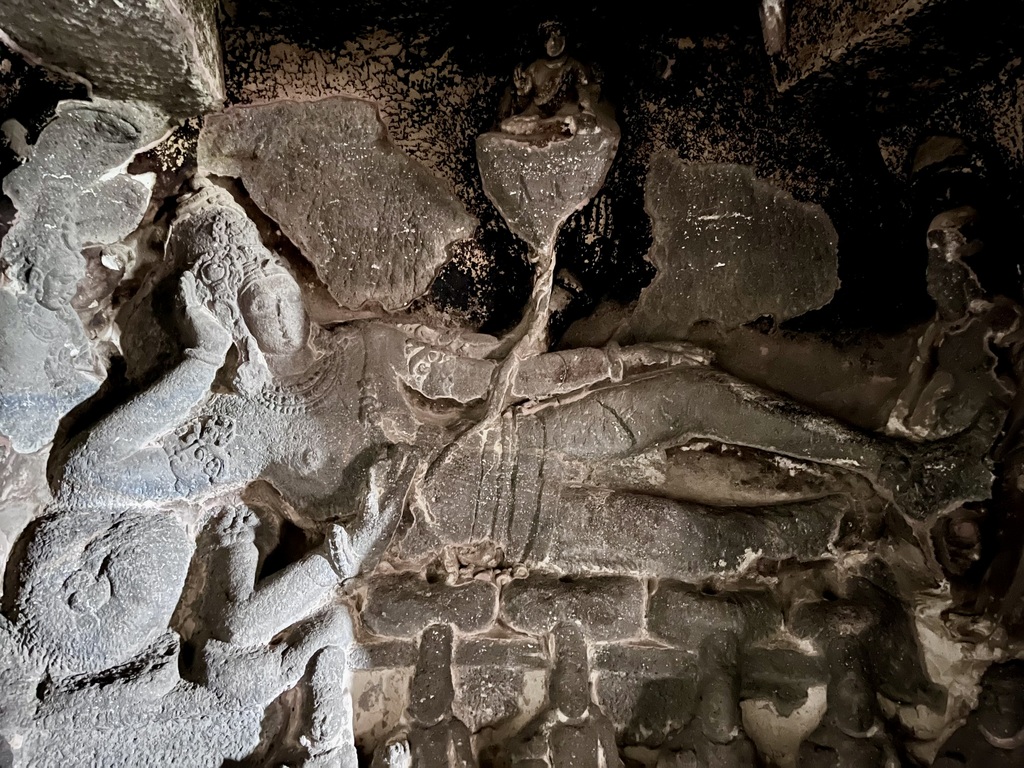
The sculptures inside the cave are thoughtfully arranged, with Shaivite themes appearing on the northern side and Vaishnavite themes on the southern side, showing a harmonious coexistence of traditions. The upper hall is especially striking, featuring finely carved figures of Vishnu in various incarnations, including the stunning Anantasayana form, where Vishnu reclines on the serpent Shesha as the universe emerges from him. Other carvings show Vishnu with Lakshmi in conversation, Narasimha slaying Hiranyakashipu with Prahlada present, Sri Krishna lifting Govardhan Parvat, and Krishna defeating Kansa, all brought to life with expressive detail.
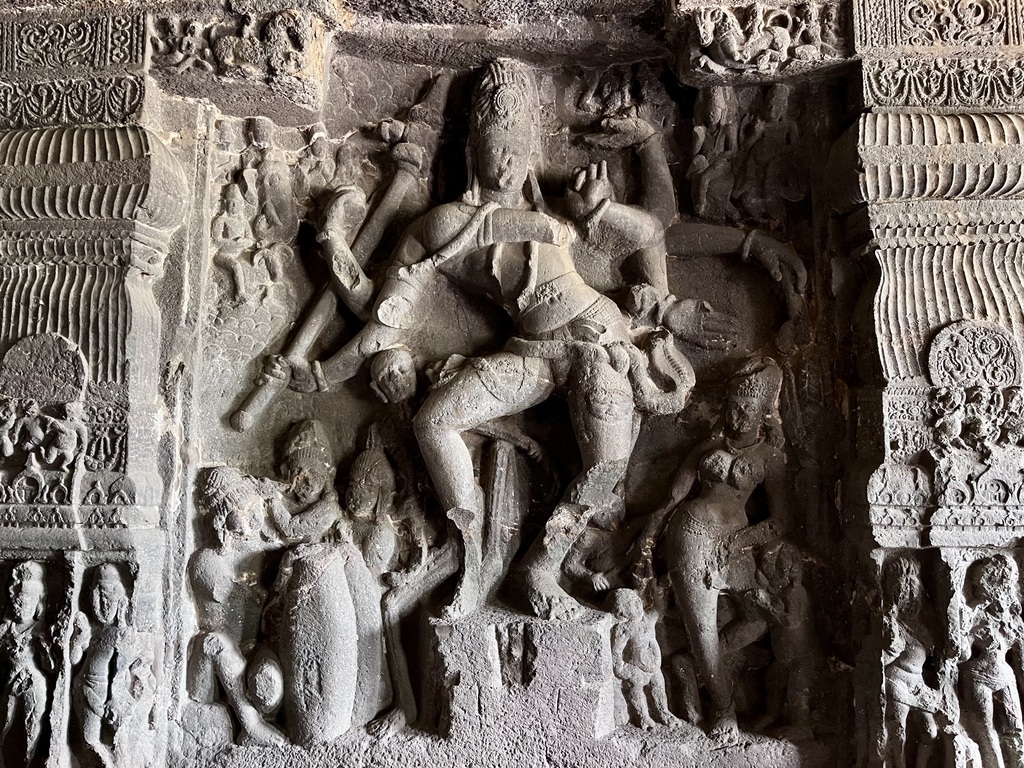
Alongside these, you will also find powerful and engaging scenes such as the Varaha avatar rescuing Mother Earth from the demon Hiranyaksha, and Lord Shiva slaying the demon king Tripurasura, highlighting the shared mythological space within the cave. There are also lively and human-like moments, such as Shiva performing the Tandava dance, and a playful scene where Mata Parvati defeats Lord Shiva in a game of chausar while Nandi is being teased by young boys. These carvings not only showcase artistic excellence but also bring a sense of storytelling and life into the stone, making Cave 15 a truly captivating experience.
Cave 16
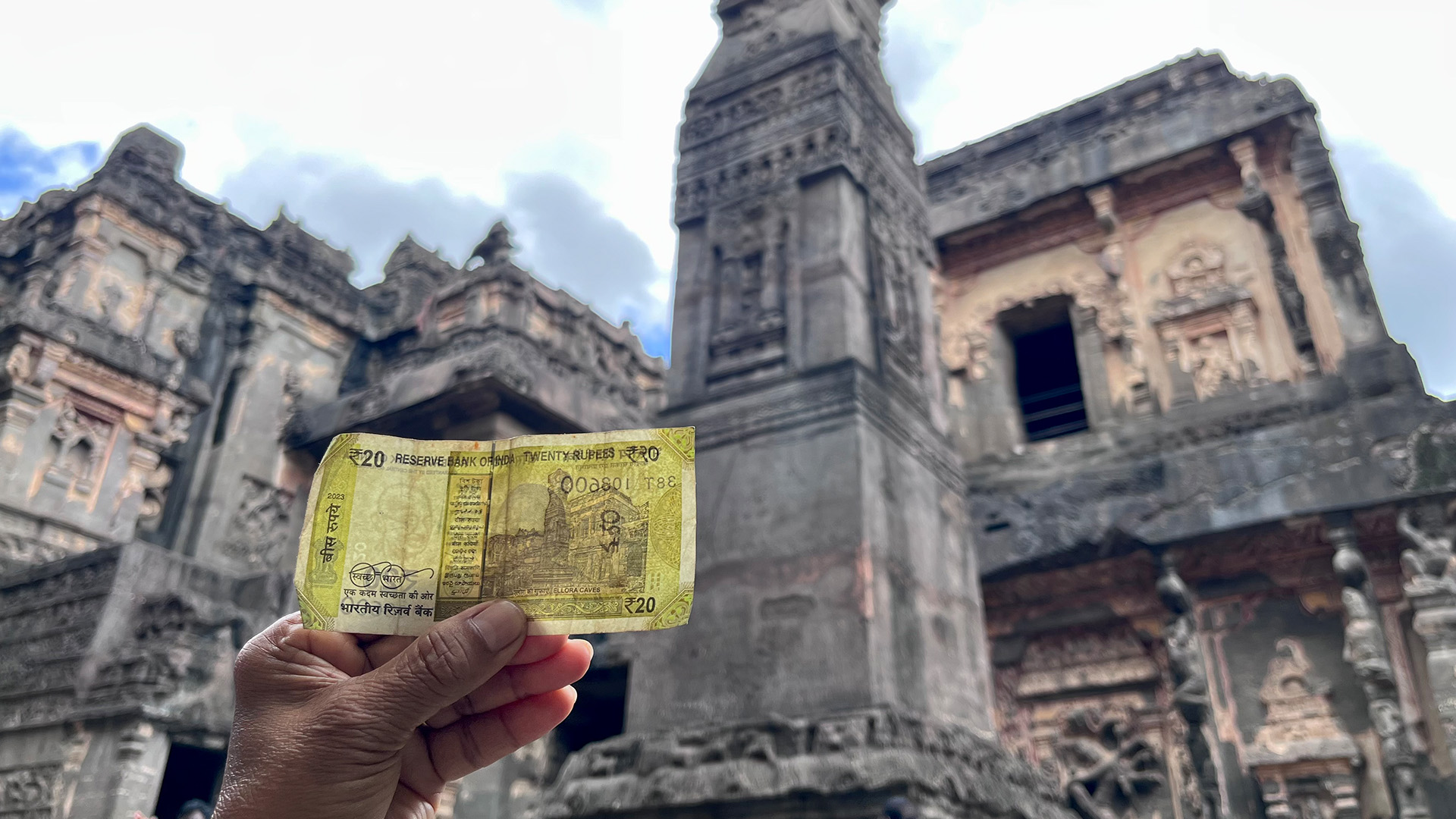
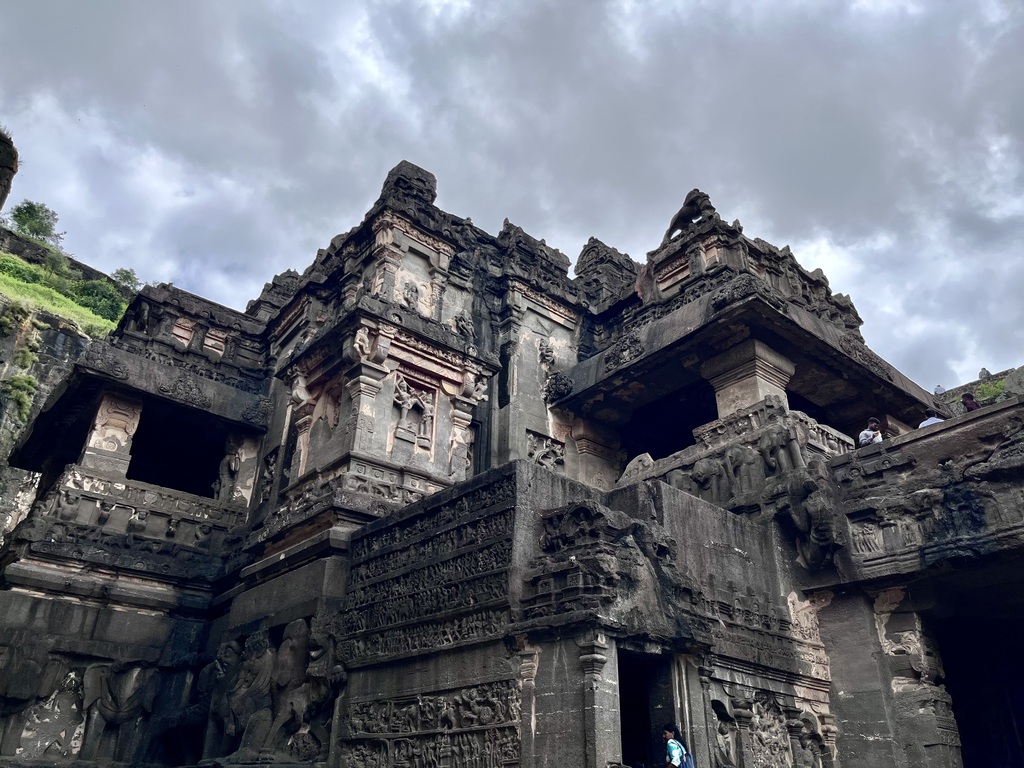
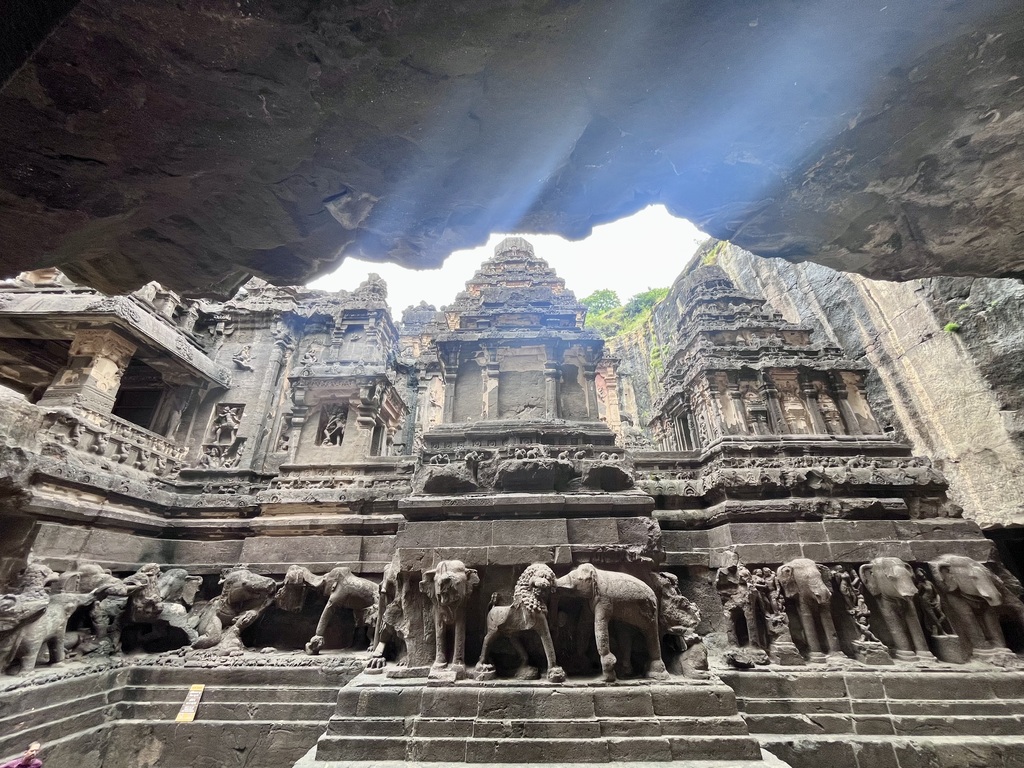
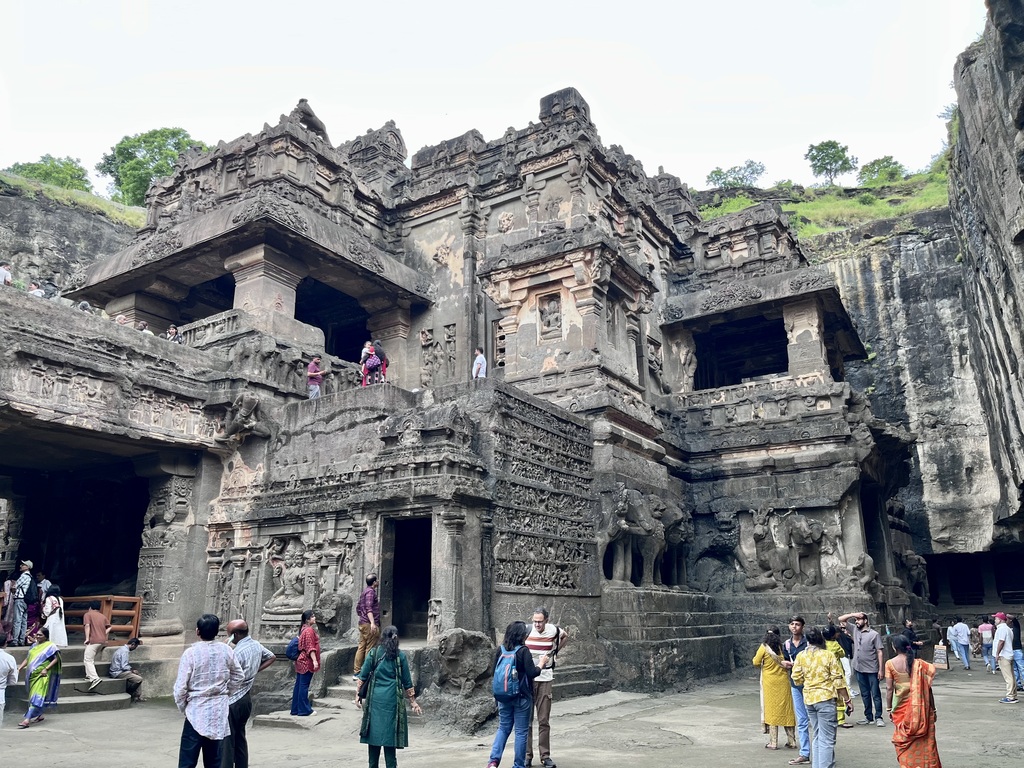
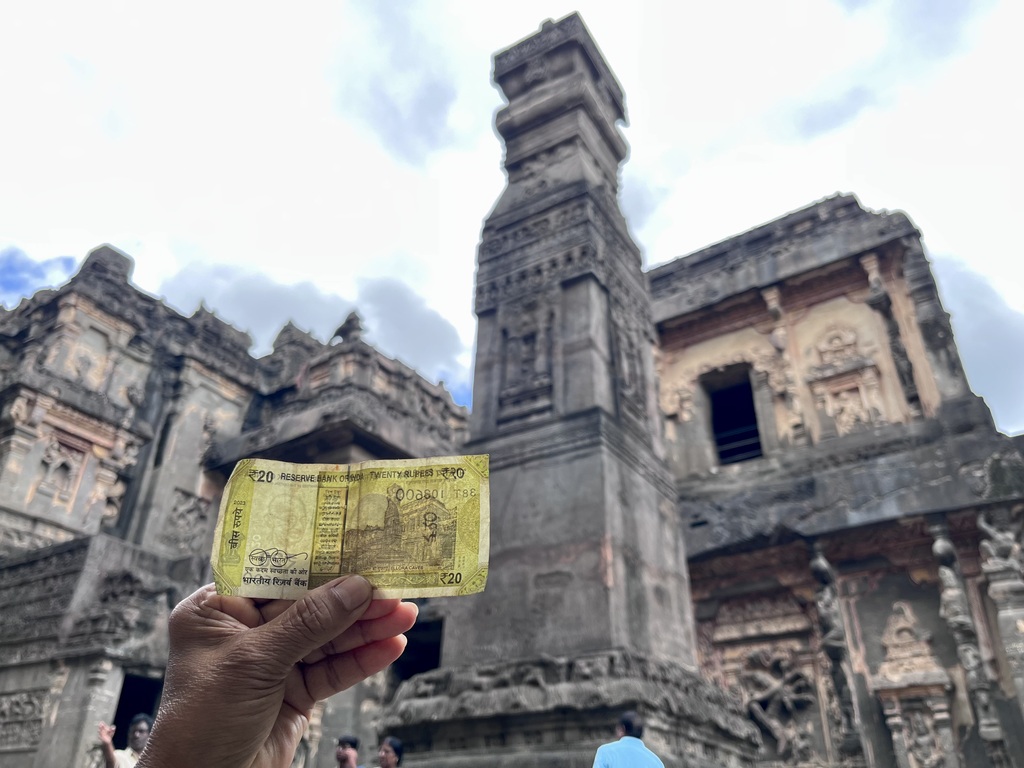
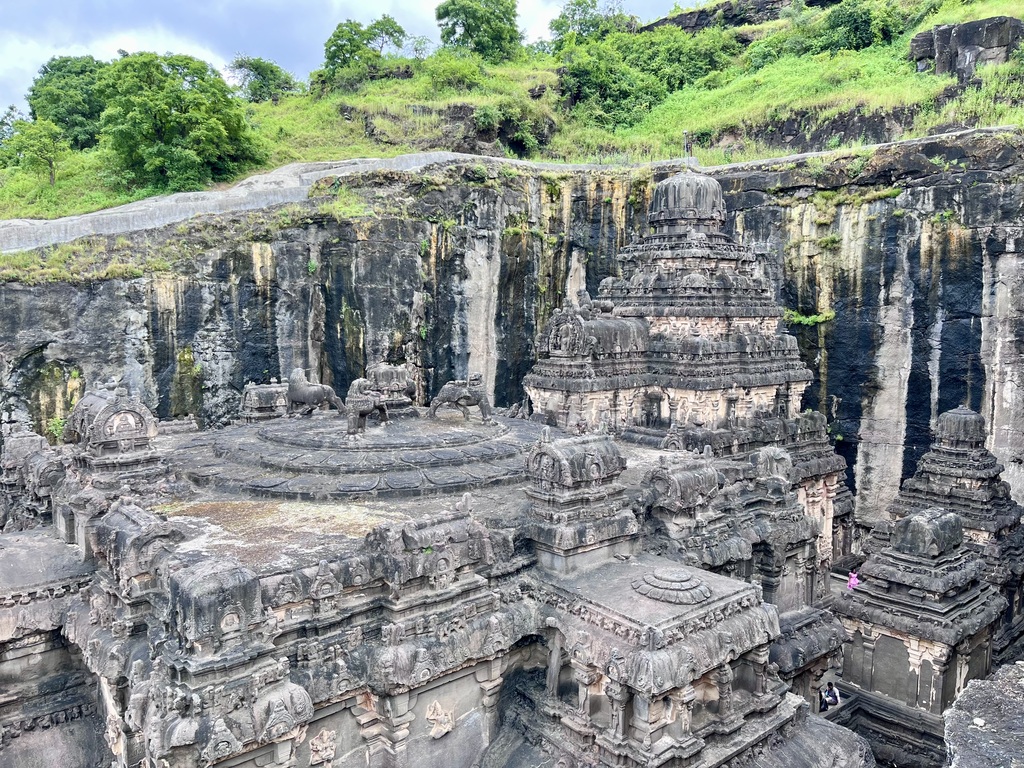
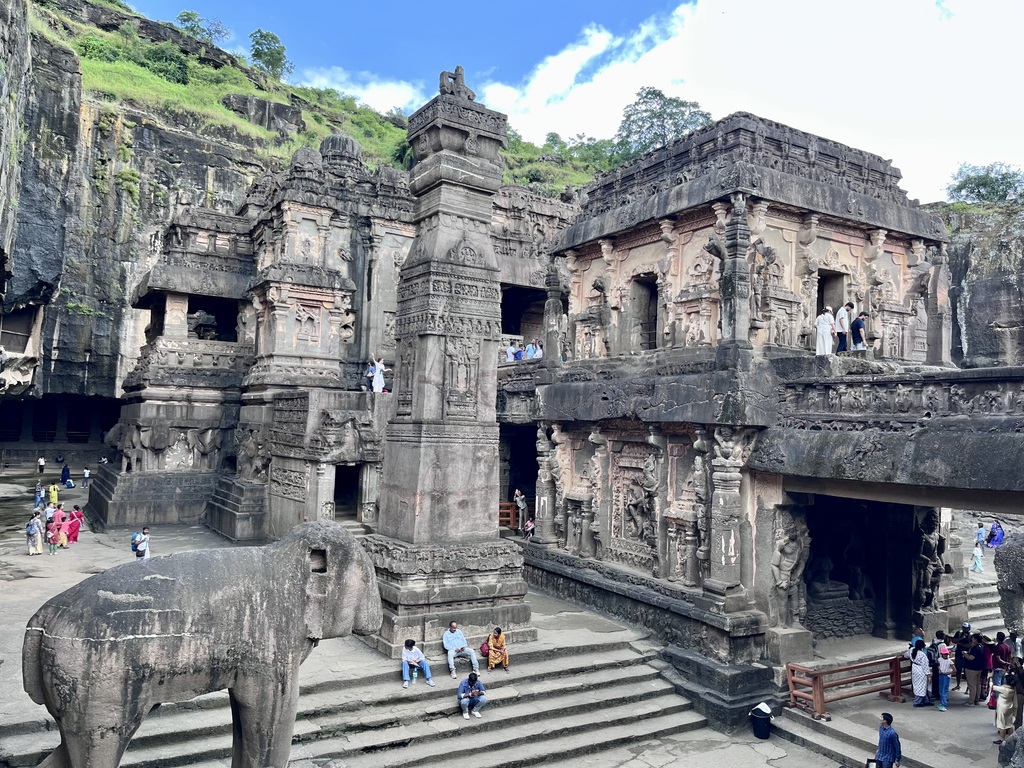
As you approach Cave 16, the famous Kailasa Temple, the first thing that strikes you is its massive scale. Carved entirely out of a single rock, it feels like a mountain has been shaped into a temple. This temple is dedicated to Lord Shiva and is designed to represent Mount Kailash, his divine home in Hindu mythology.
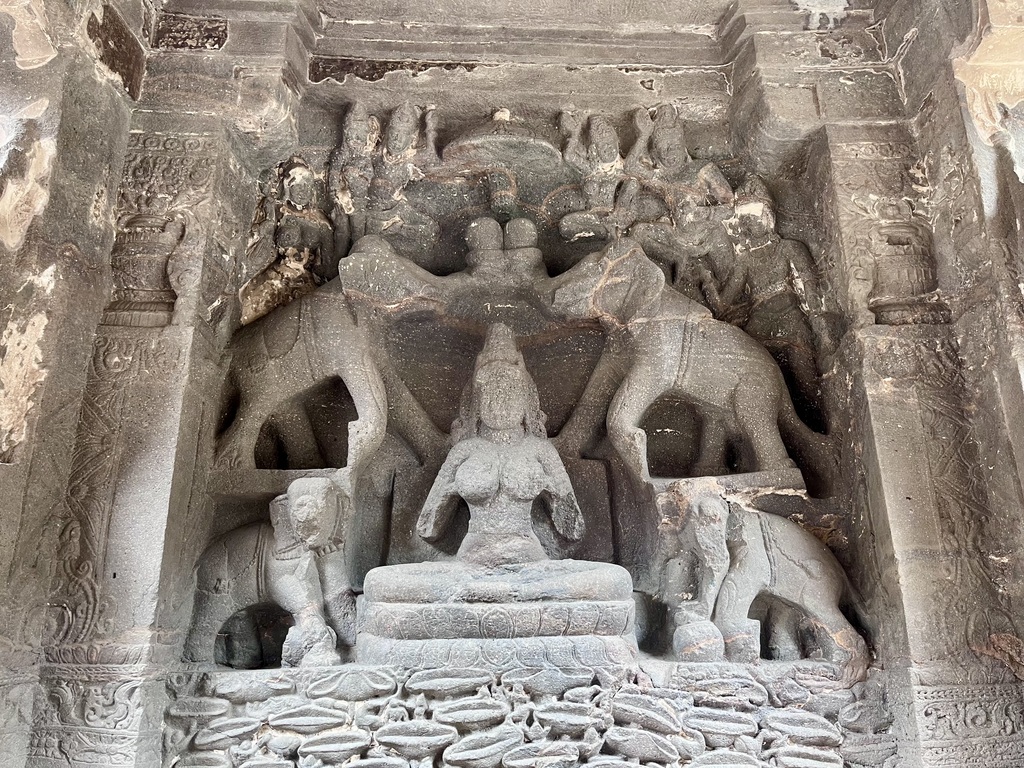
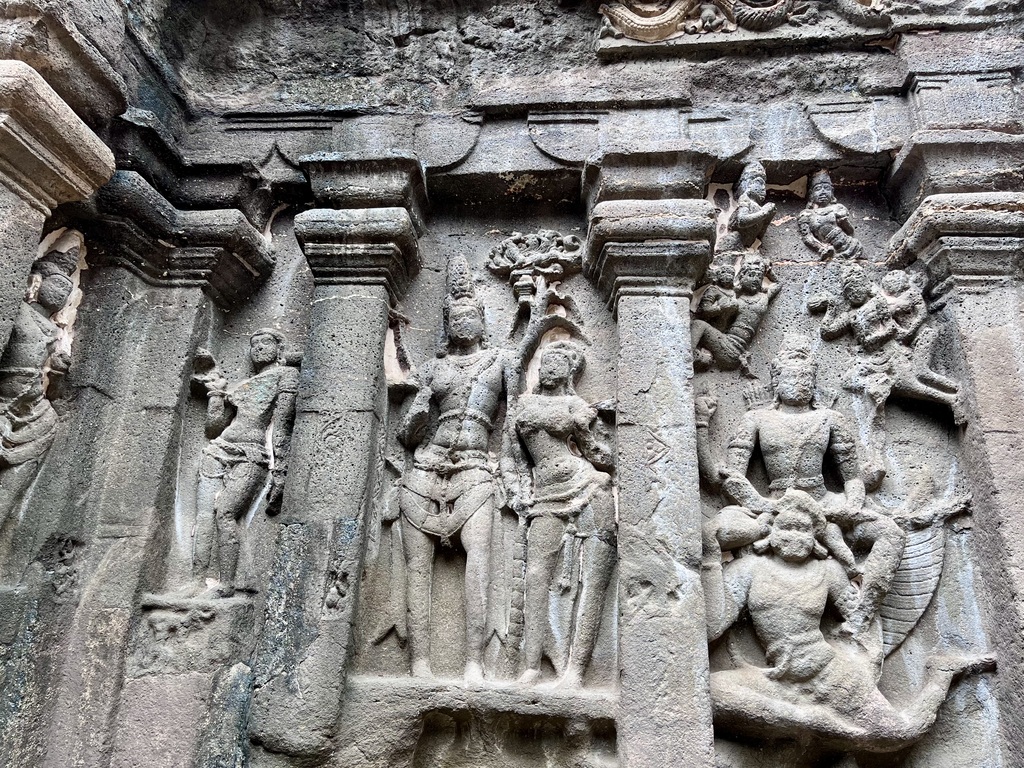
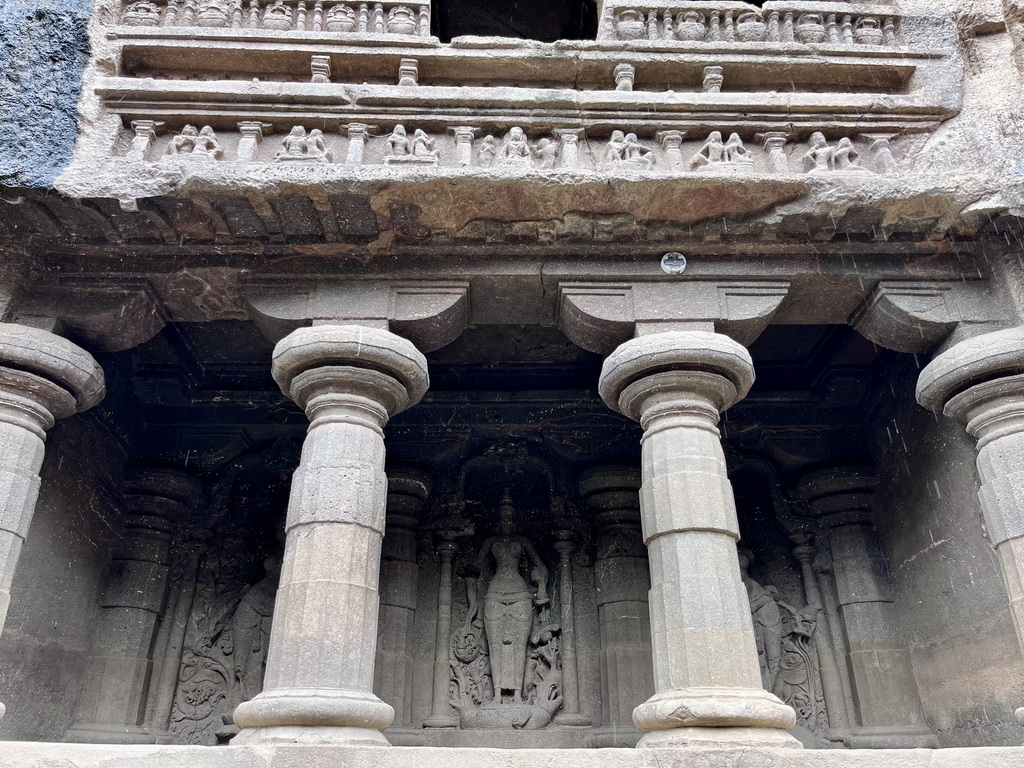
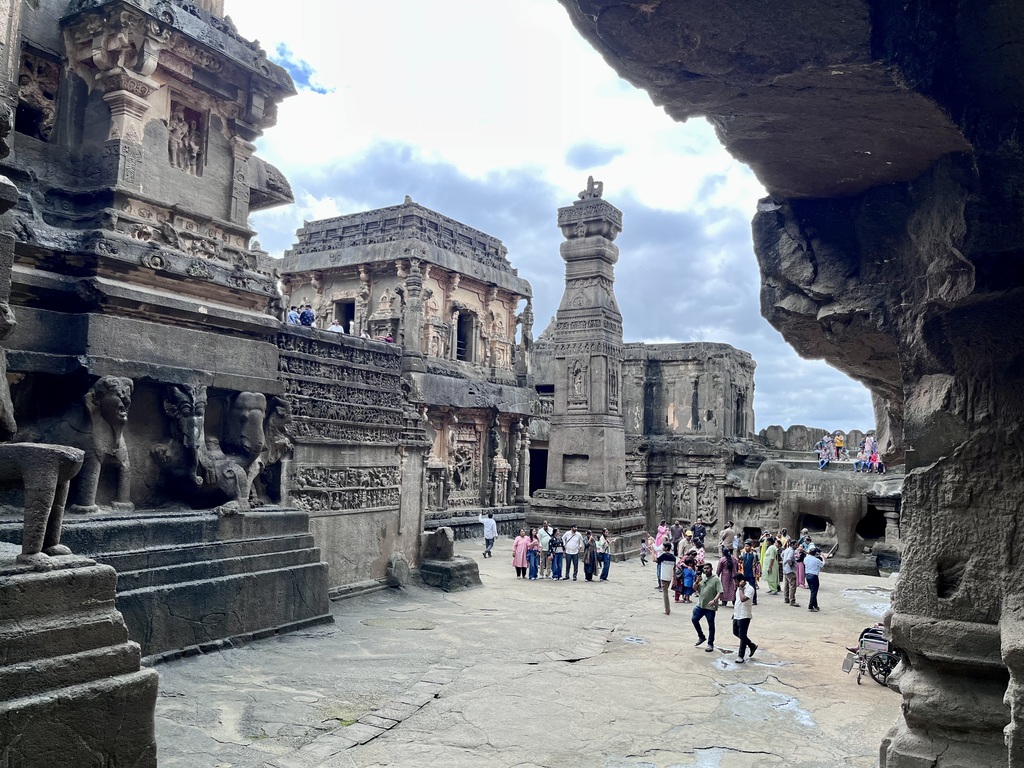
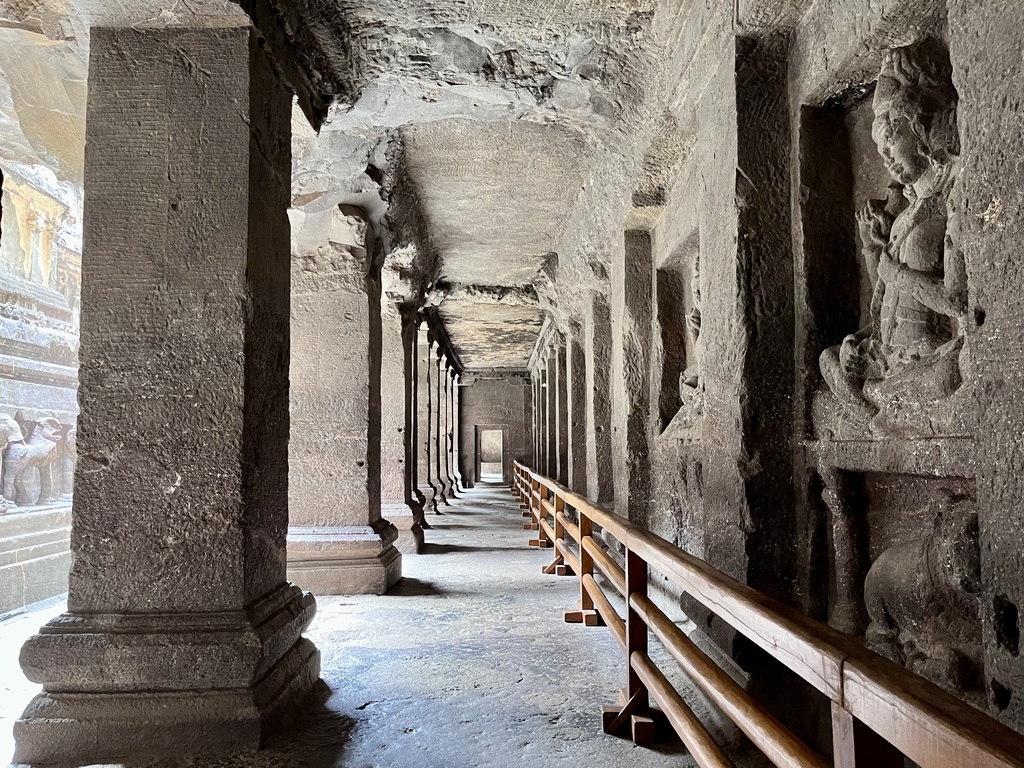
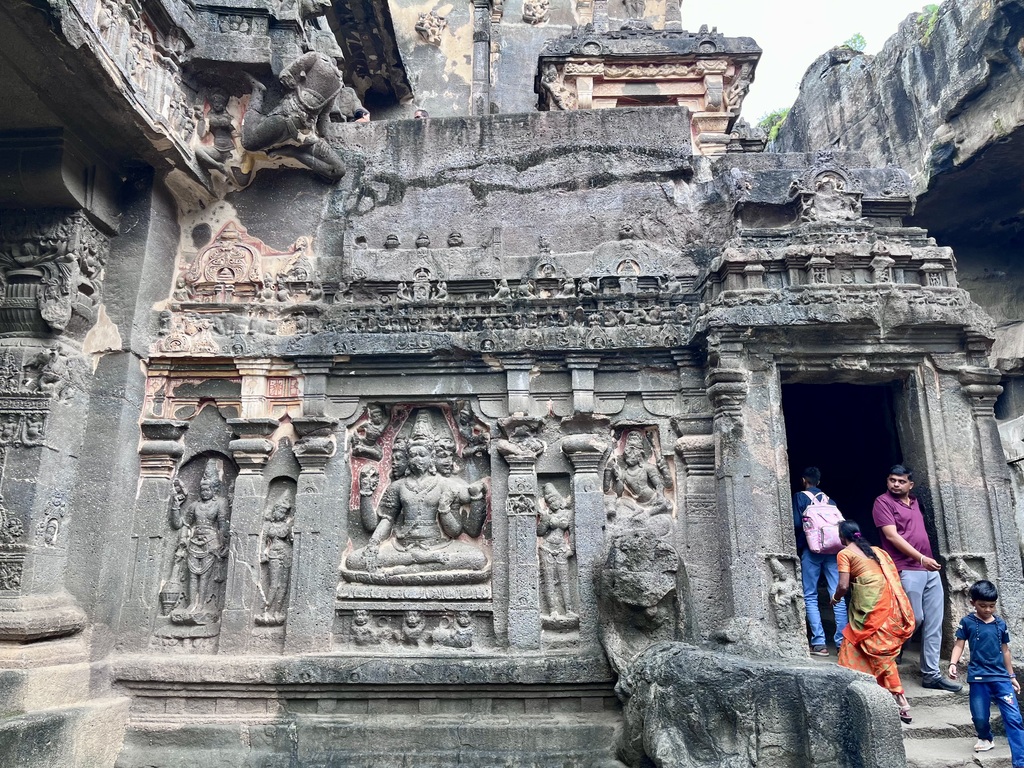
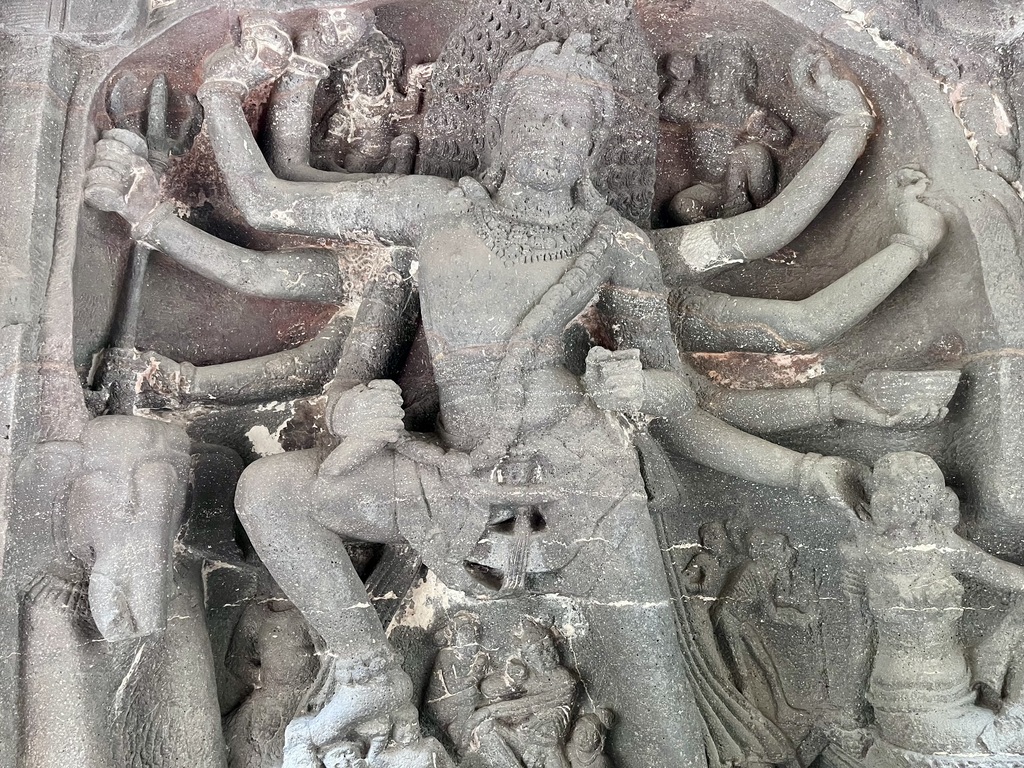
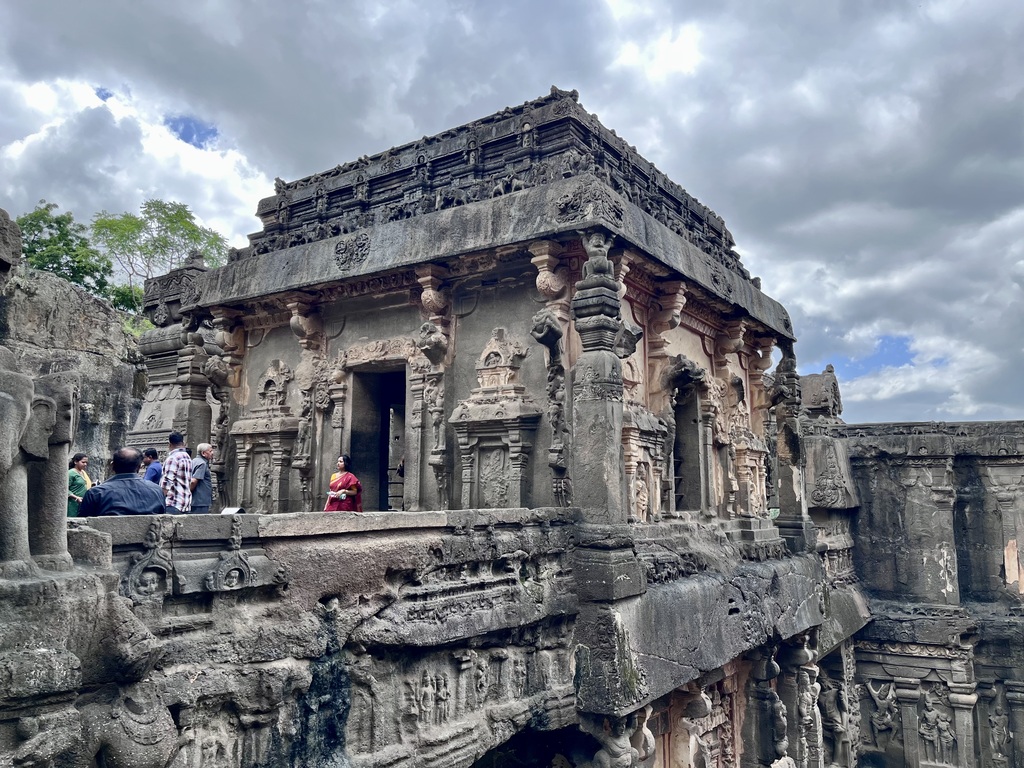
You enter through a huge open courtyard surrounded by tall rock-cut walls. It feels like stepping into another world, completely carved out of stone. After entering from the main gate, on the right you will see Maa Durga as Mahishasura Mardini, on the left you will see a Ganesha idol, and straight ahead you will find Gaja Lakshmi, greeted by elephants. Once you move towards the left on the north side, first you will see a chaitya hall where Ganga, Yamuna, and Saraswati are standing and giving blessings to the devotees.
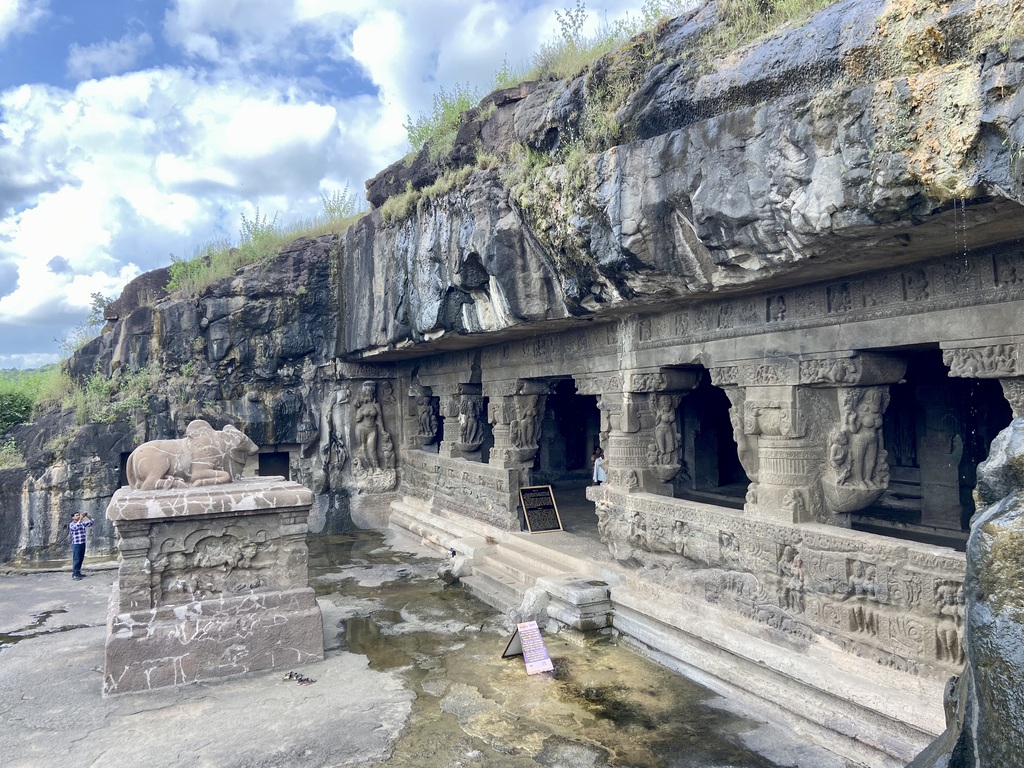
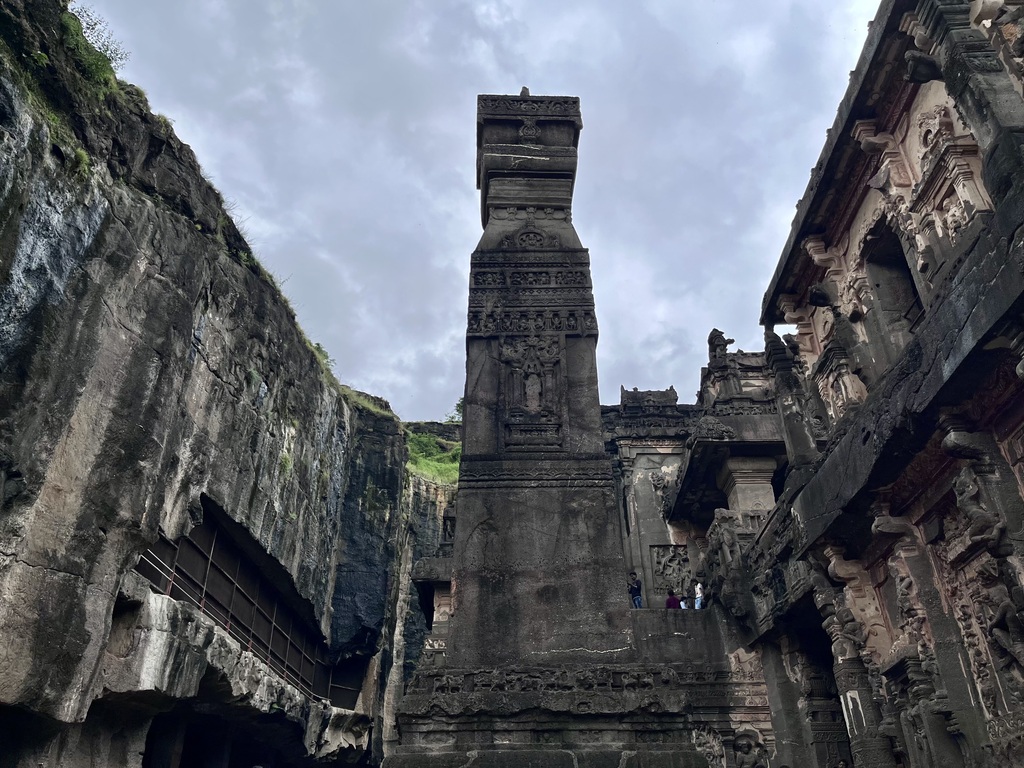
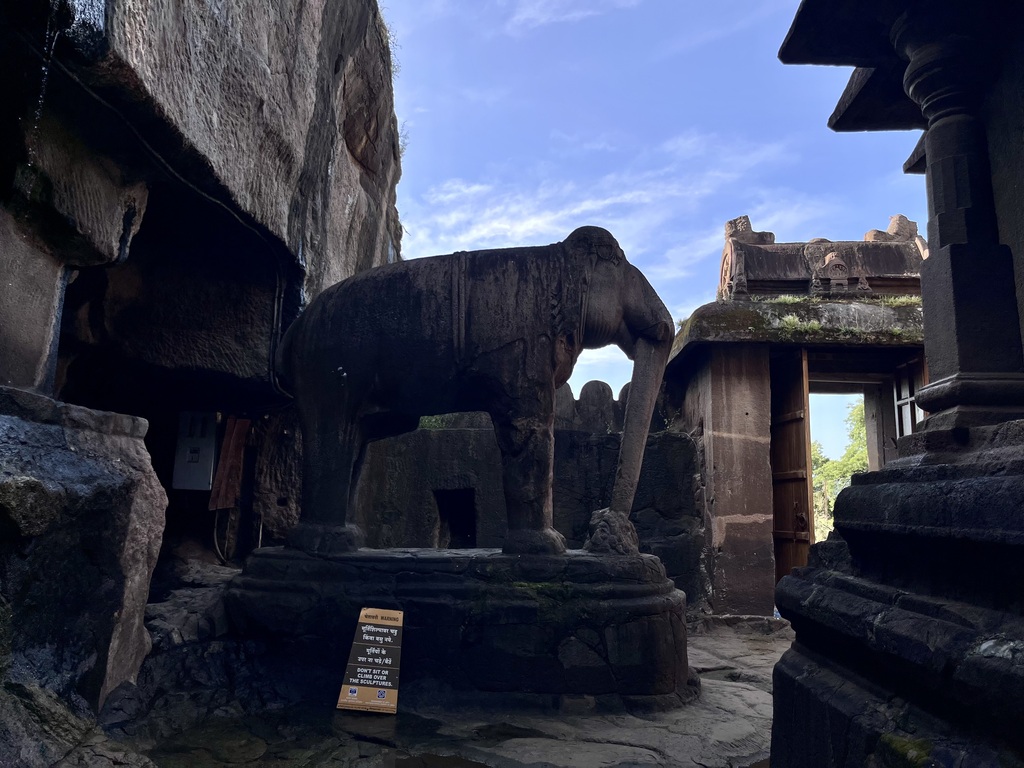
When you enter the courtyard of the Kailasa Temple in Ellora, you will see two tall stone pillars standing in front of you. These pillars show the entrance to the holy area of Lord Shiva. They stand proudly in the open space, almost like silent guides showing you the way inside. The pillars do not hold any roof, but they add beauty and meaning to the temple. They also remind visitors that they are stepping from the outside world into a sacred place. Next to them are two big elephant statues, standing like guards of the temple. Together, the pillars and elephants make the place feel strong and alive, as if they are welcoming every visitor who walks in.
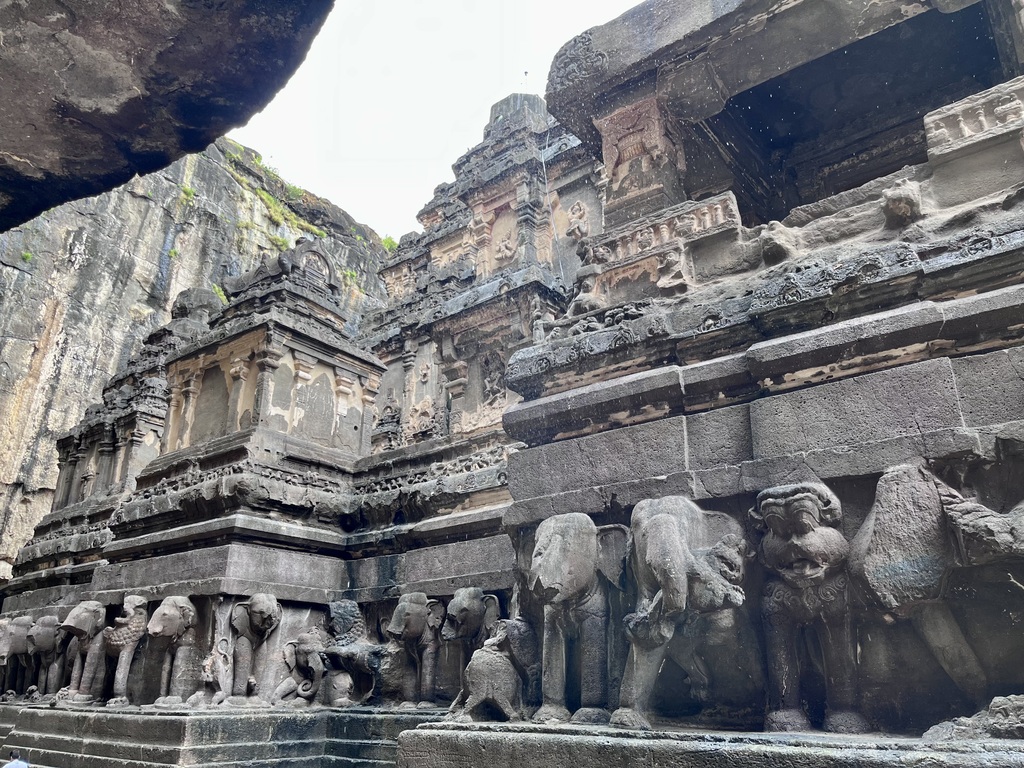
The complex is not just one temple but a whole universe. Around the main shrine, there are smaller sanctums, halls, and shrines, each decorated with carvings of gods, mythological stories, and ornate patterns. Every corner tells a new story. What makes Kailasa Temple truly extraordinary is how it was built. This is a monolithic structure, carved from top to bottom out of a single rock. The artisans began at the top of the cliff and worked their way down, removing over 200,000 tons of stone. The precision, balance, and huge scale are amazing, even after more than 1,200 years.
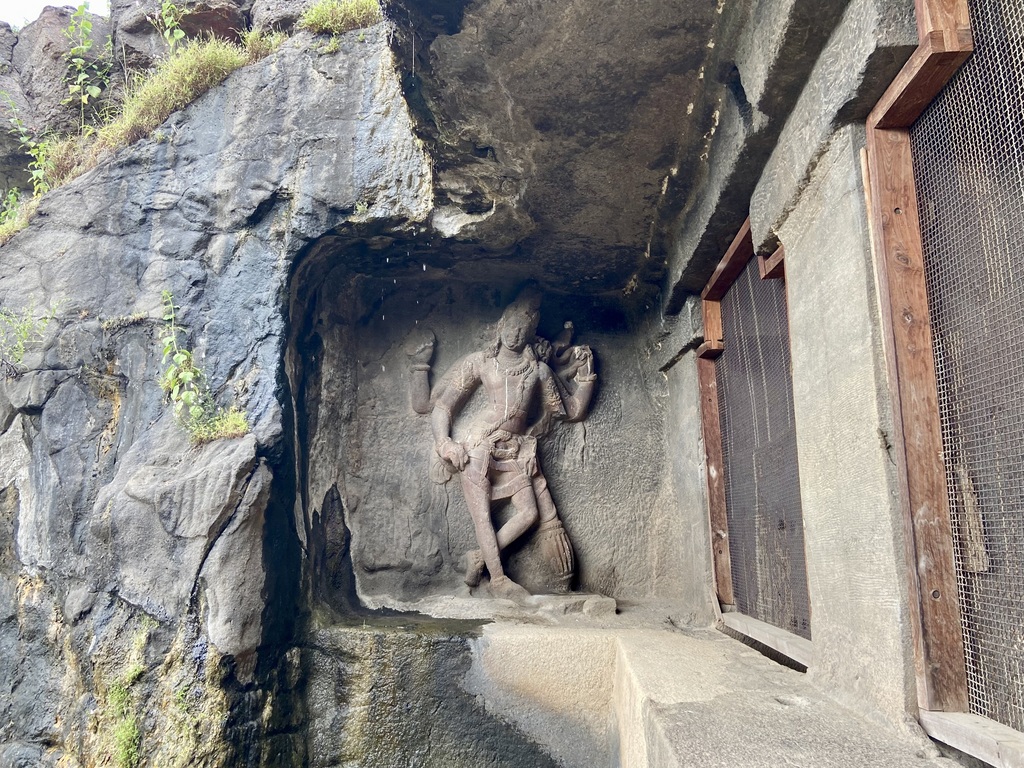
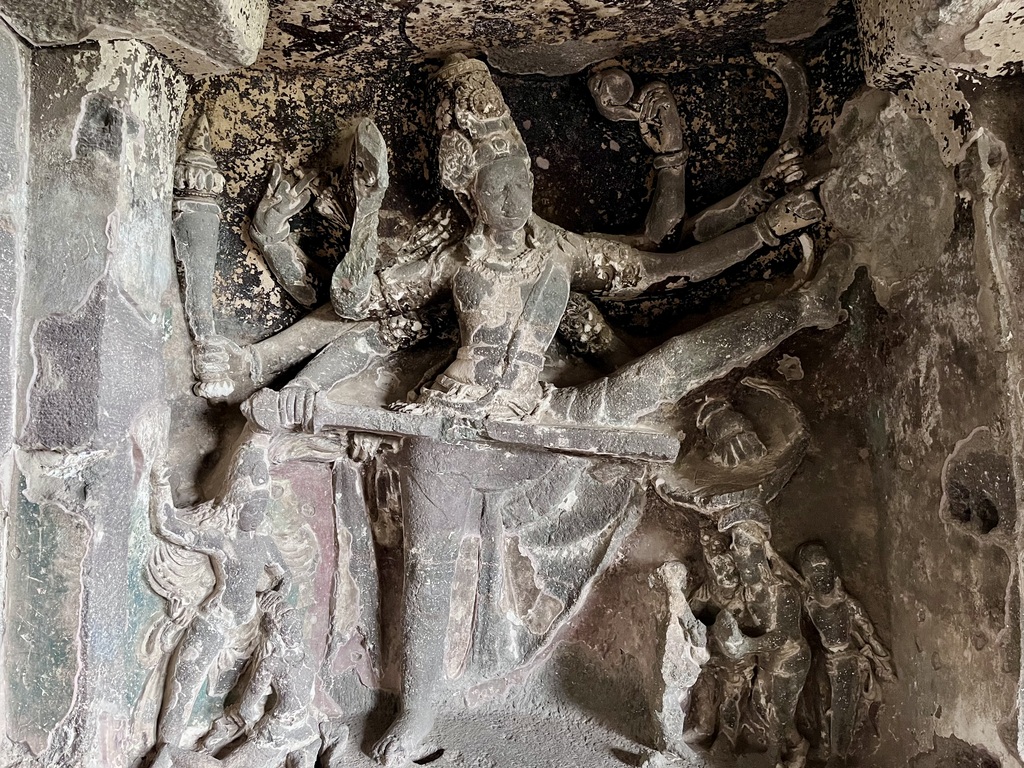
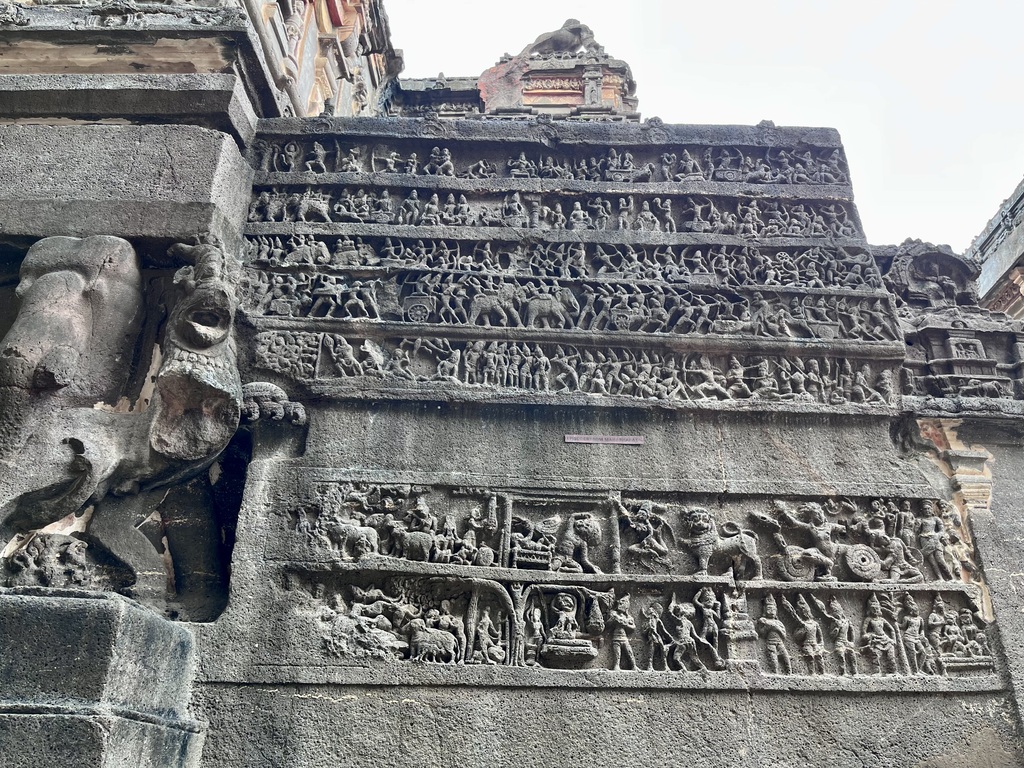
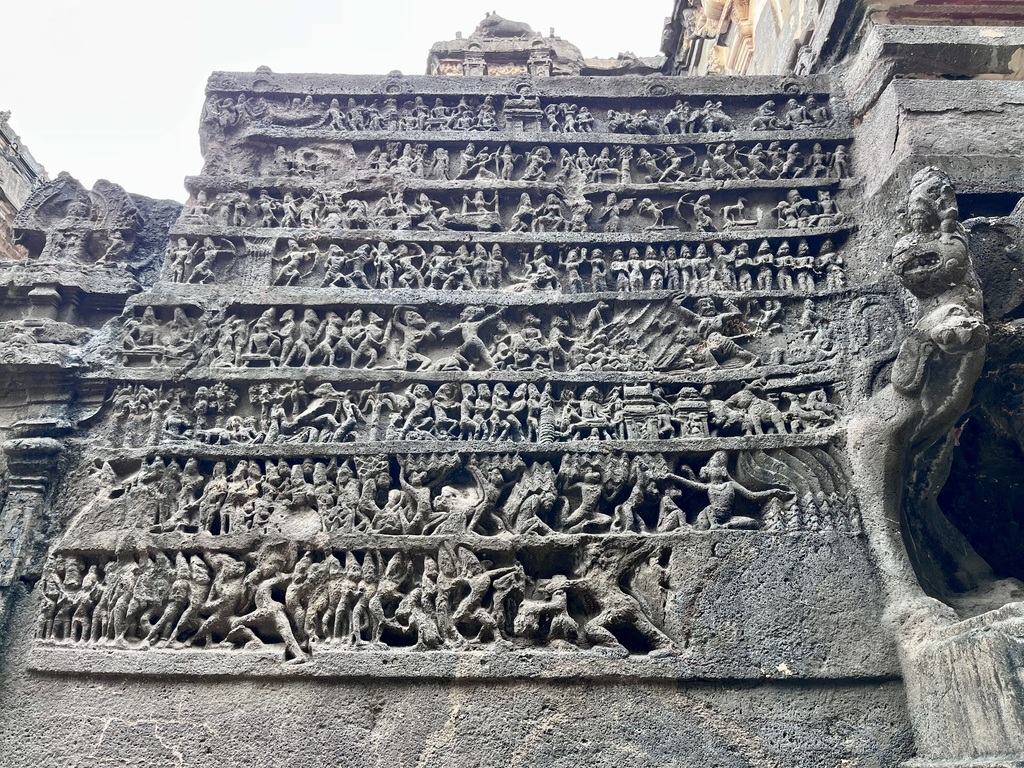
There are two very important panels on both sides of the main temple that no one should miss. On the north side, you will find the Mahabharata panel, where even the smallest figures are part of the same monolithic stone. On the southern side, the panel shows stories from the Ramayana. As you walk around the inner complex, the grand sculptural panels surrounding the temple on three sides unfold like a storybook, telling tales of gods, demons, battles, blessings, and the divine play of Lord Shiva. On the northern wall, you can see Shiva in many forms such as Nataraja, Ardhanarishvara, and Shiva in deep meditation, while on the southern wall you will see various avatars of Lord Vishnu along with several Puranic scenes. Other deities like Maa Durga, Lord Ganesha, and many attendants are also carved in dynamic poses.
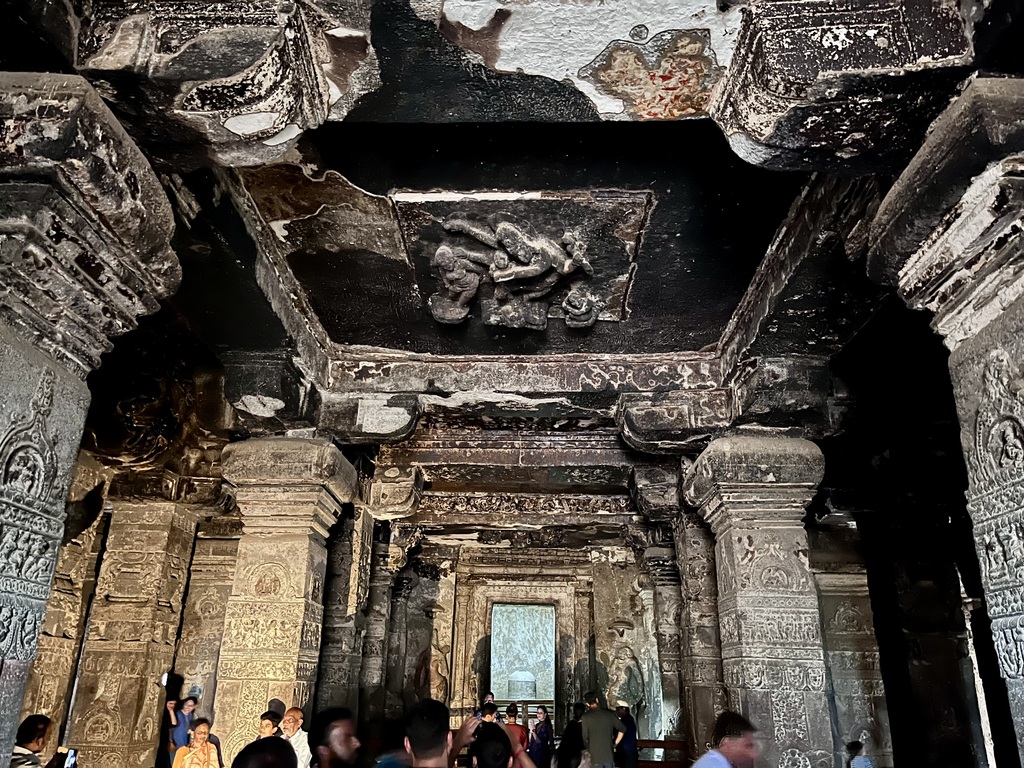
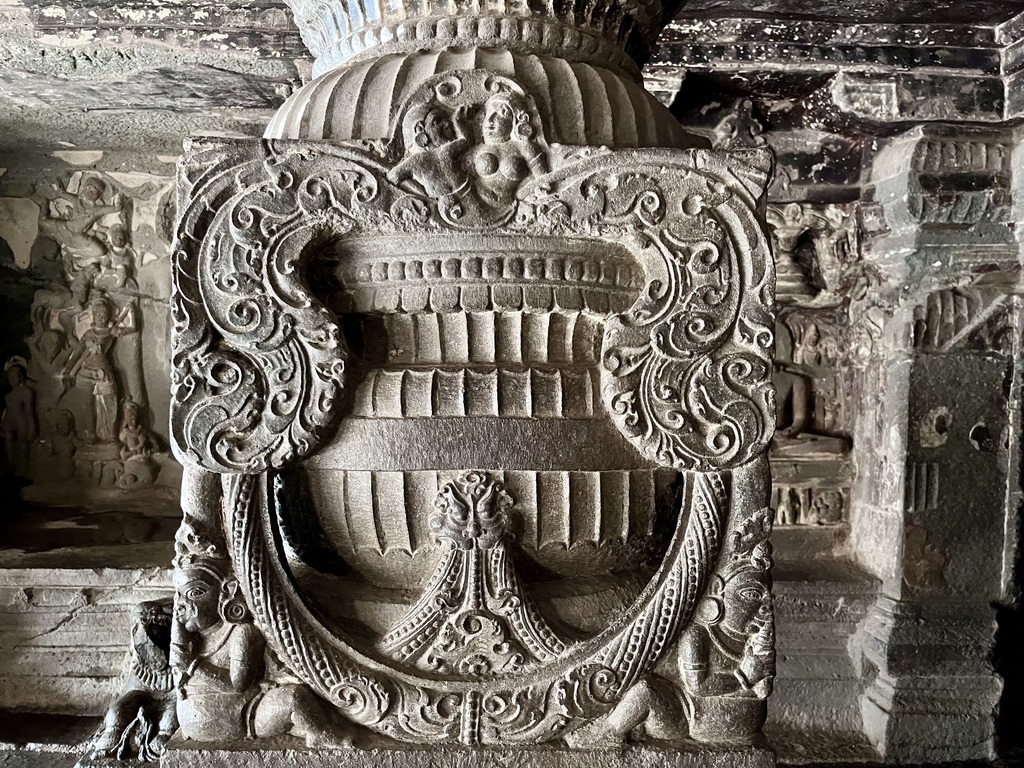
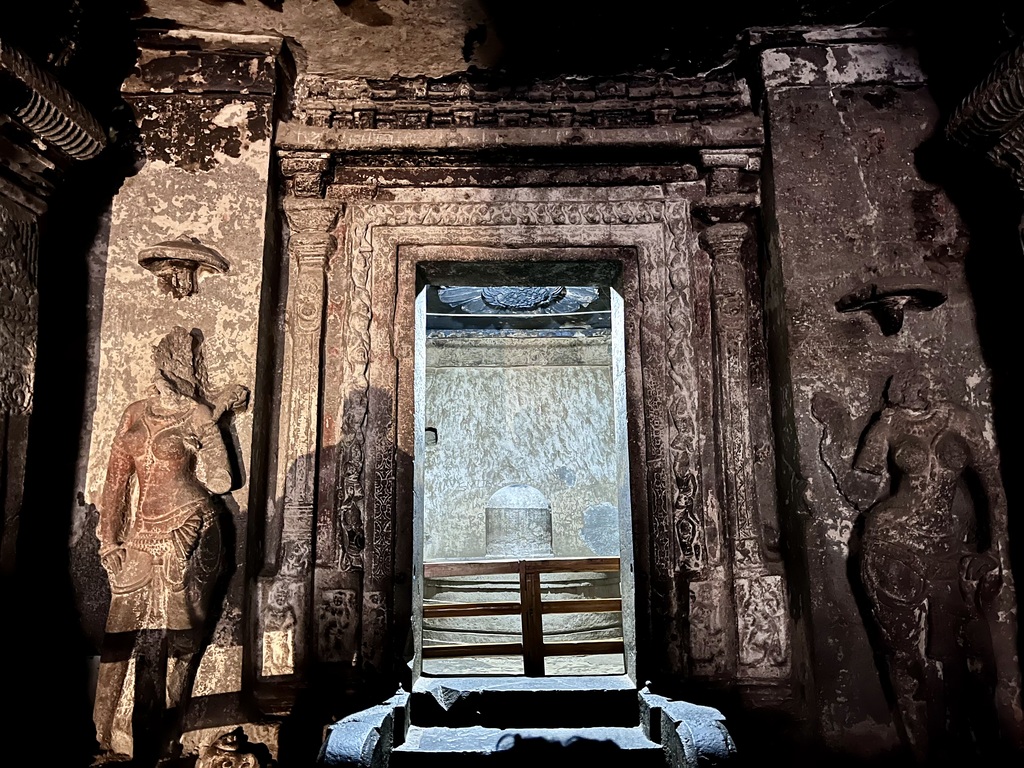
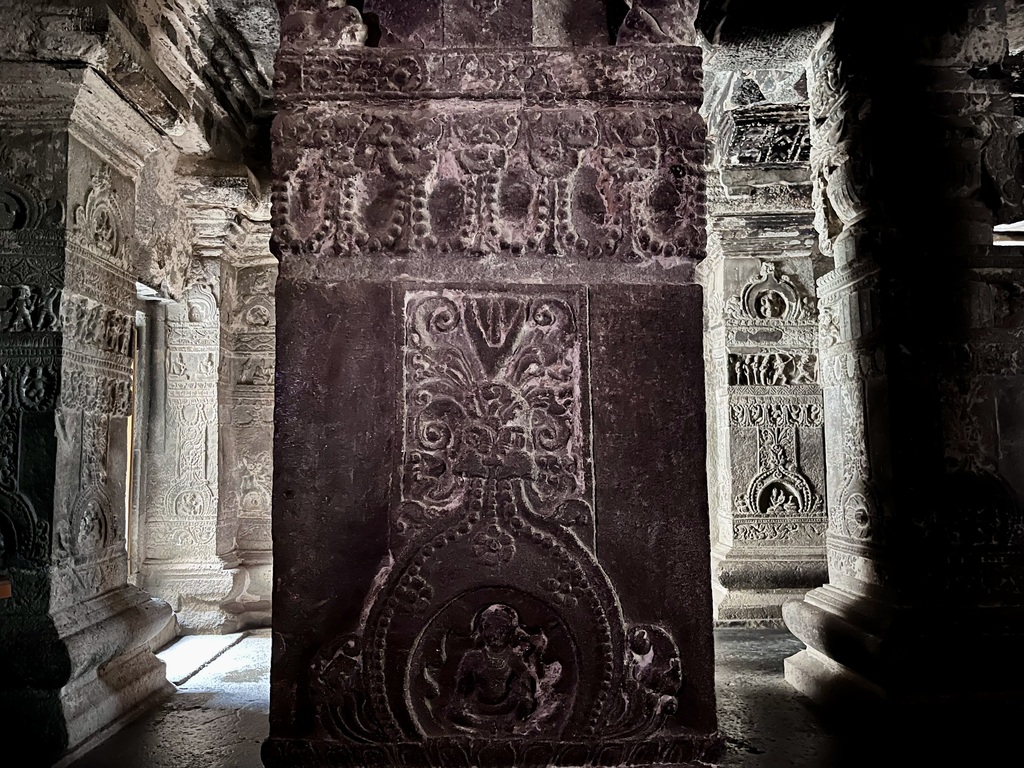
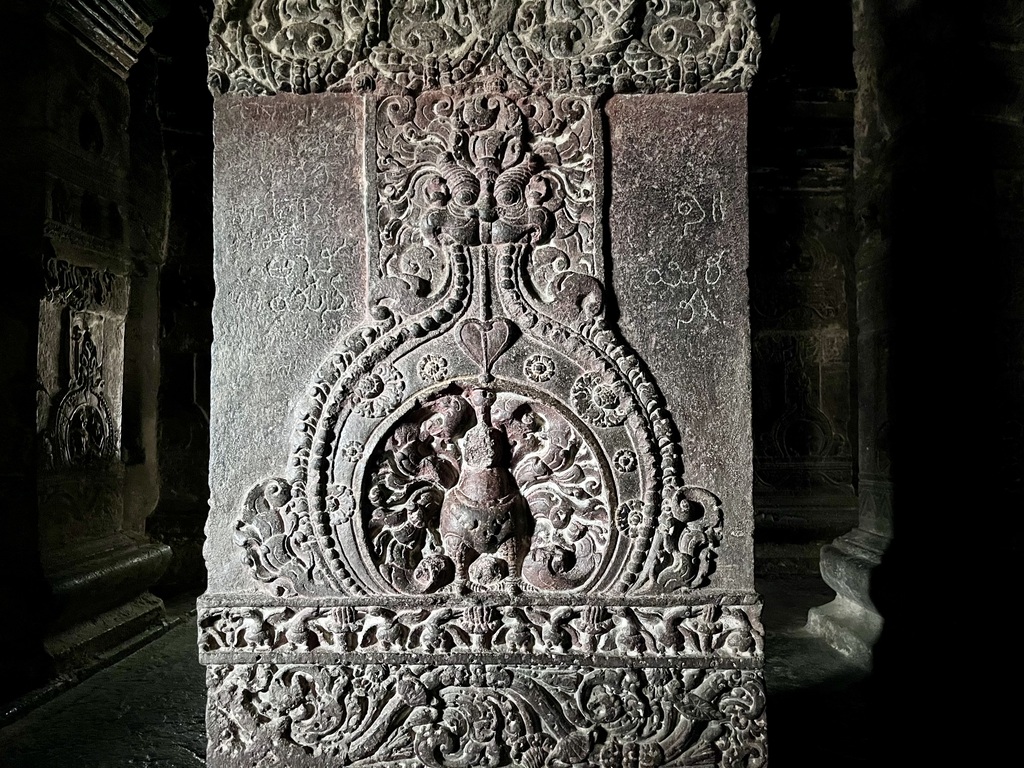
As you move further, you enter the main mandapa, a large hall supported by beautifully carved pillars showing dancers, musicians, and divine beings frozen in motion. The ceilings above are filled with floral and mythological carvings that make you look up in wonder. At the very heart of the temple lies the sanctum, where a massive Shiva Lingam sits on a raised platform, glowing softly as sunlight enters through small openings, creating a deep spiritual feeling. Right in front of the main shrine stands the Nandi Pavilion, where the life-size Nandi faces the sanctum with quiet devotion.
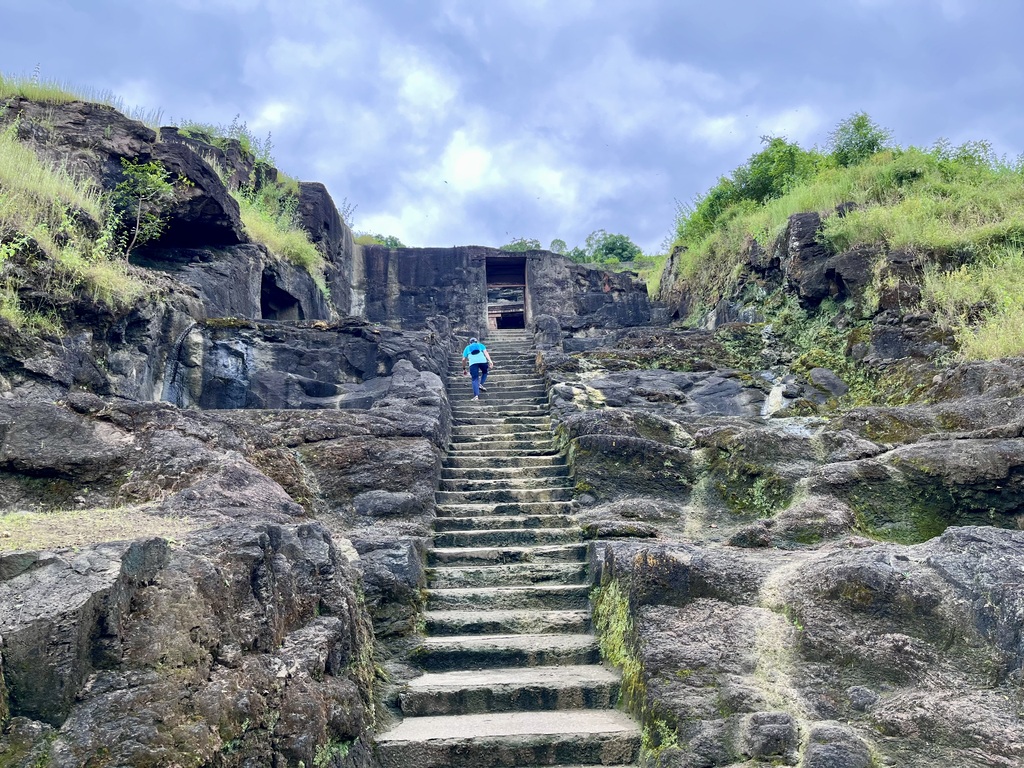
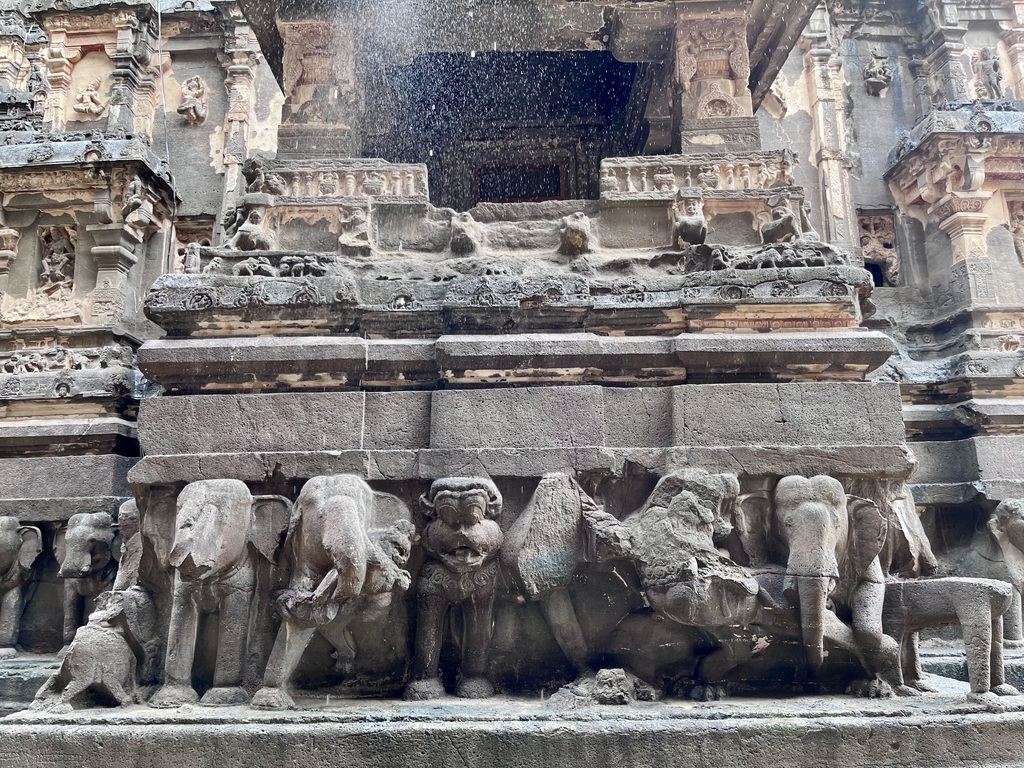
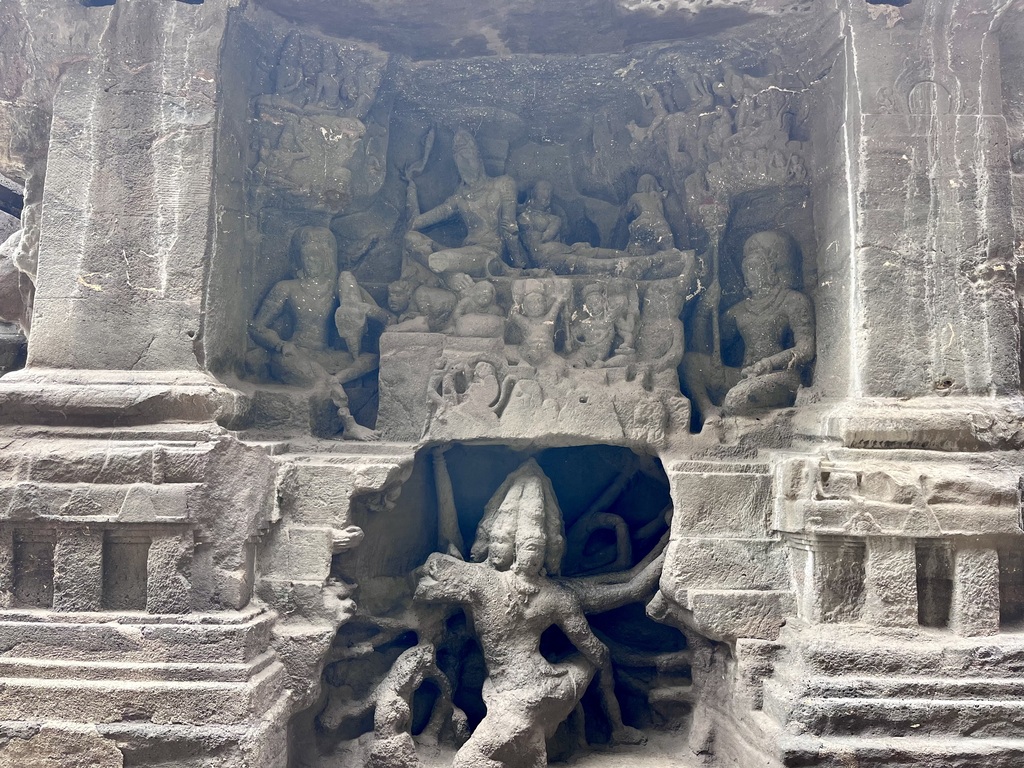
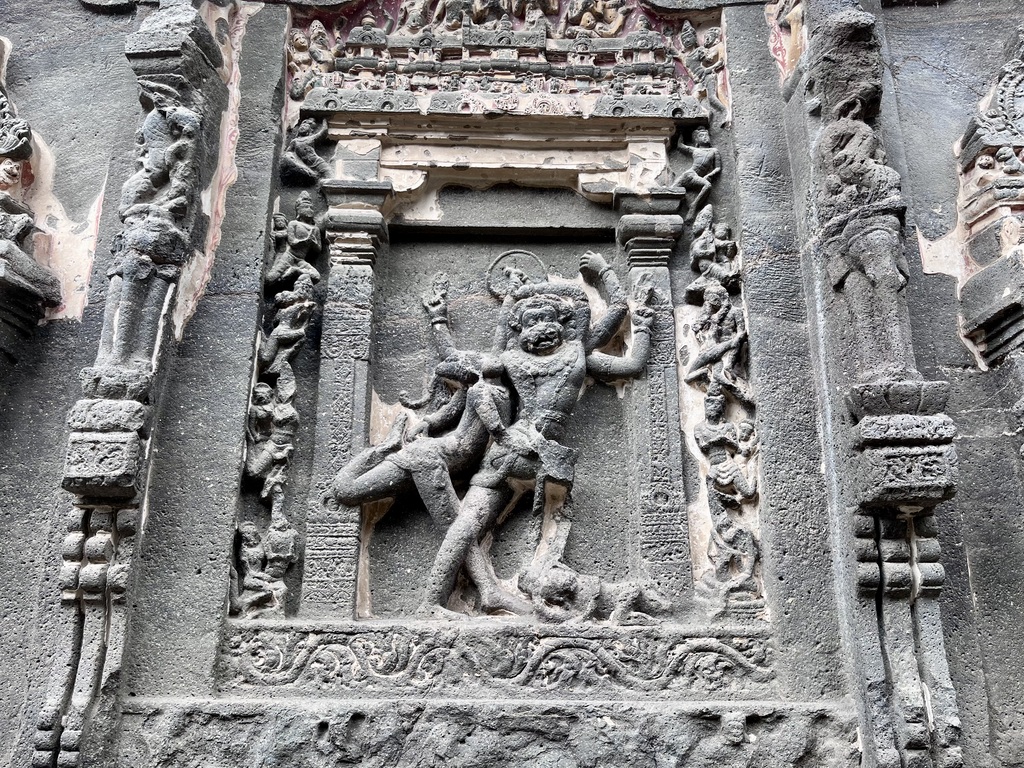
Visiting Kailasa Temple feels like walking through a living storybook. Every step shows something new — a dancer carved on a pillar, a battle scene on the wall, or Shiva sitting calmly in meditation. It is more than a place of worship; it is a masterpiece of human devotion, creativity, and engineering skill. One of the most remarkable carvings is the scene of Ravana lifting Mount Kailash, where Ravana is shown using all his strength while Shiva calmly presses the mountain down with one foot. You will also notice the row of elephants carved around the base of the temple, as if they are carrying its entire weight. Truly, the Kailasa Temple is so vast and detailed that it can easily take more than two hours to explore. As a final note, there are also 16A and 16B caves on both sides of Kailasa, where 16A is open and can be reached by climbing the staircase on the right side, while 16B remains closed.
Cave 17
Cave 17 is one of the earliest Hindu caves at Ellora and is a large monastery-style excavation, and as you step inside, you will see a spacious pillared hall leading to a central shrine dedicated to Lord Shiva, while the cave is filled with carvings of different deities that reflect the growing shift from simple forms to more expressive storytelling, and overall it clearly shows the early experiments in Hindu rock-cut architecture, where ideas were still developing but already beginning to take shape in a more structured and artistic way.
Cave 18
Cave 18 is a small and simple cave, and as you step inside, it feels quiet and focused, probably used as a shrine, where the main attention naturally goes to the Shiva linga placed inside the sanctum, and with only one chamber and very minimal decoration, the space feels calm and purely devoted to worship rather than artistic display.
Cave 19
Cave 19 is similar in simplicity to Cave 18, and as you step inside, it feels like a small shrine-like space where the focus is entirely on the Shiva linga, with very few carvings around, suggesting that the cave was designed more for practical worship than for decoration or detailed artistic work.
Cave 20
Cave 20, known as the Ramesvara Cave, is one of the most beautiful early Hindu caves, and as you approach the entrance, you will notice the sculpted river goddesses Ganga and Yamuna standing gracefully, symbolizing purity and welcoming you inside, and as you step into the cave, the shrine with a Shiva linga becomes the main focus, while the surrounding walls are filled with carvings of various gods and goddesses that bring life and richness to the space, and just like in typical Shaiva temples, you will also see the Nandi bull placed facing the shrine, adding to the spiritual atmosphere and devotion of the cave.
Cave 21
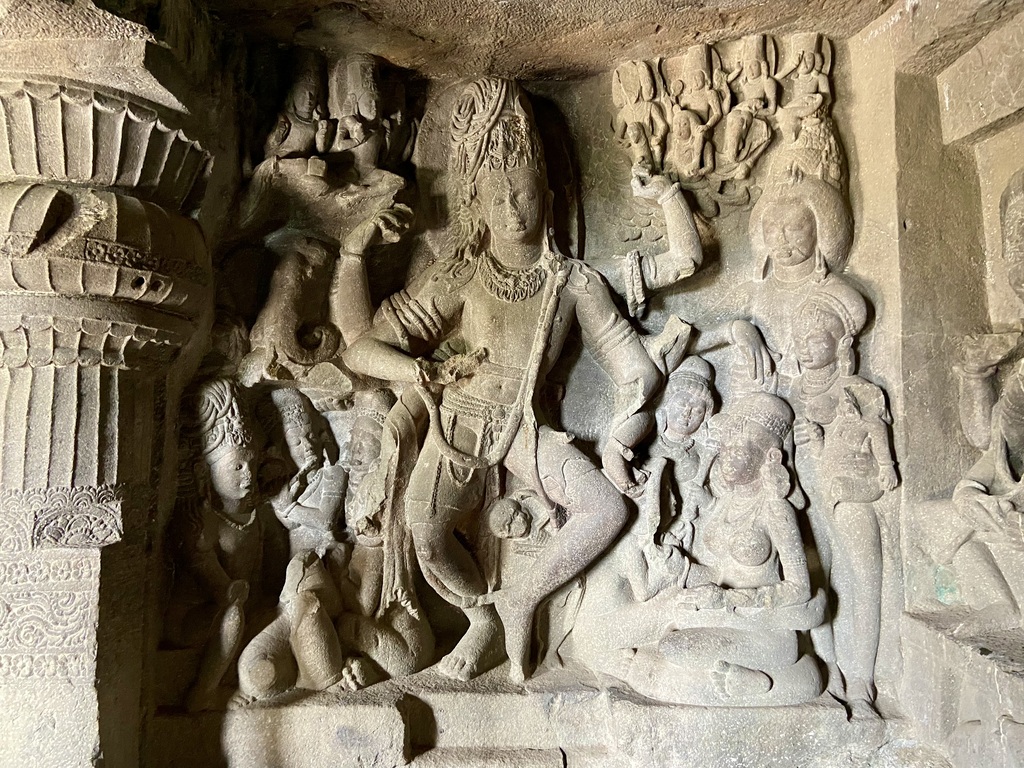
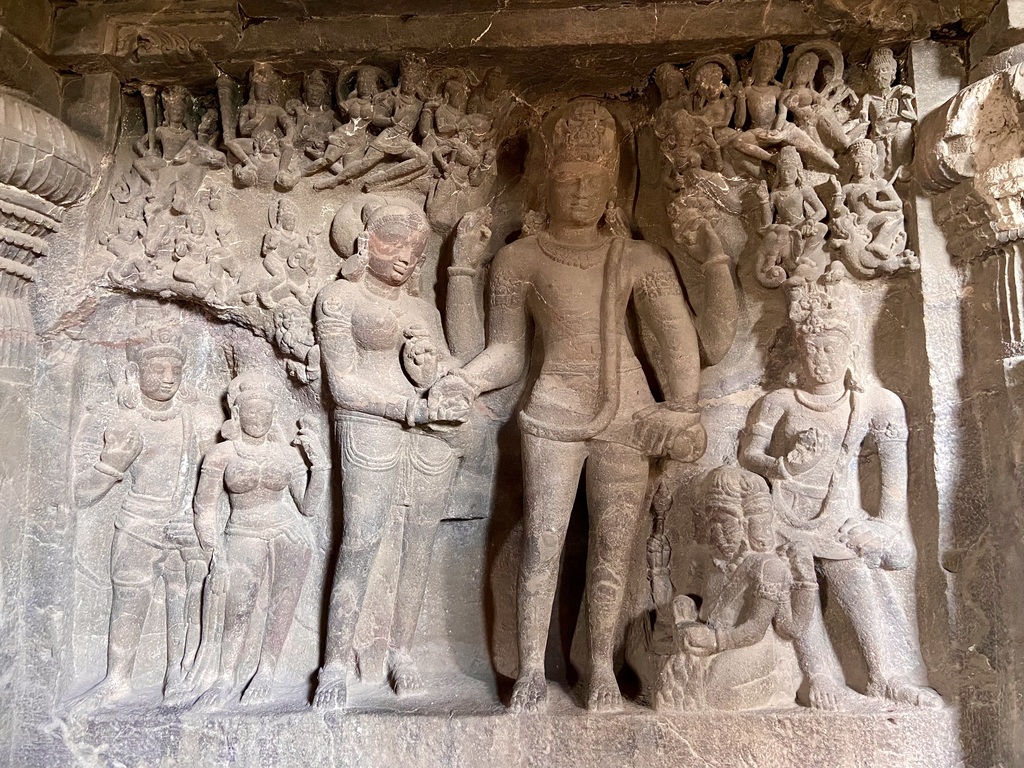
Cave 21 is another Shiva cave, often seen as a continuation of the Ramesvara theme, and as you enter, you are welcomed by a large hall supported by beautifully decorated pillars that immediately show a more developed level of craftsmanship, while the carvings around the cave bring together stories from the life of Lord Shiva along with some Vaishnavite images, creating a balanced mix of devotion and artistic expression that feels richer and more elaborate than the earlier small shrines, and as you explore further, you will once again come across the powerful figure of Ravana lifting Mount Kailash, adding a sense of continuity across the caves, and on one of the side walls, a beautiful carving captures the sacred marriage of Lord Shiva and Mata Parvati, full of grace and divine emotion, and nearby you will also find the fierce image of Mahishasura Mardini, showing the strength of Maa Durga, and continuing this lively storytelling, the cave again presents the familiar and engaging panel where Mata Parvati defeats Lord Shiva in a game of chausar while Nandi is being teased by young boys, bringing a touch of playfulness and human connection into the divine setting.
Cave 22
Cave 22 is dedicated to Nilkantha, the form of Lord Shiva known as the blue-throated one, and as you step into this simple shrine, your attention is drawn to the Shiva linga placed inside the sanctum, while the walls around quietly tell stories from Shiva’s legends, including the powerful moment of him drinking poison during the churning of the ocean to save the universe, and even though the cave is not very elaborate, it strongly emphasizes Shiva’s role as a cosmic protector who takes on suffering to preserve balance in the world.
Cave 23
Cave 23 is an unfinished or partly completed cave, and as you observe its layout, it clearly resembles a Buddhist vihara, yet it was later adapted for Hindu worship, showing a transition in design and purpose, and inside you will find a small shrine with a Shiva linga, while the absence of heavy decoration makes the space feel simple and raw, and in many ways, this cave quietly helps us understand how these rock-cut caves were modified and reworked during the process of excavation.
Cave 24
Cave 24 is very large but unfinished, and as you step inside, you can clearly see the rough rock walls and half-carved pillars that reveal the work left incomplete, while its layout shows that it was planned as a grand vihara-style cave with a central shrine, and even in its unfinished state, the cave feels fascinating because it offers a rare behind-the-scenes glimpse into how these magnificent structures were carved from top to bottom, almost like watching the process frozen in time.
Cave 25
Cave 25 is small and simple, and as you step inside, you will notice the quiet presence of a Shiva linga in the sanctum, while only a few sculptural traces remain on the walls, suggesting that it was likely used by local worshippers, and through its simplicity, this cave reminds us that not all Hindu caves were built for grandeur, as many were created for everyday devotion and practical worship.
Cave 26
Cave 26 is one of the most important Buddhist caves at Ellora, and as you enter this large chaitya hall, you are immediately struck by its grand scale, with tall pillars and a beautifully curved vaulted ceiling that draws your eyes forward toward the stupa and the seated Buddha, creating a powerful and sacred atmosphere, and as you begin to observe the carvings, you will notice how detailed and expressive they are, telling different moments from the life of Buddha, including one figure where Buddha is shown in a calm preaching posture, another deeply moving scene of Mahaparinirvana where he is lying down, representing his final passing away, and also a dramatic carving where Mara is trying to disturb Buddha during meditation, together making the cave feel like a living story carved in stone.
Cave 27
Cave 27 is located close to Cave 26 and is comparatively smaller, and as you step inside, you will find a simple layout with a small shrine and a few cells, suggesting it was likely used by monks for residence and meditation, and although the carvings are minimal, they still gently reflect Buddhist themes, giving the cave a quiet and peaceful atmosphere.
Cave 28
Cave 28 is an unfinished cave, and as you look around, you can clearly notice the early stages of excavation preserved in its raw form, with very few carvings and an incomplete structure that feels paused in time, and because of this, the cave becomes especially important as it helps us understand how the excavation process was carried out, revealing the initial steps behind creating these magnificent rock-cut spaces.
Cave 29
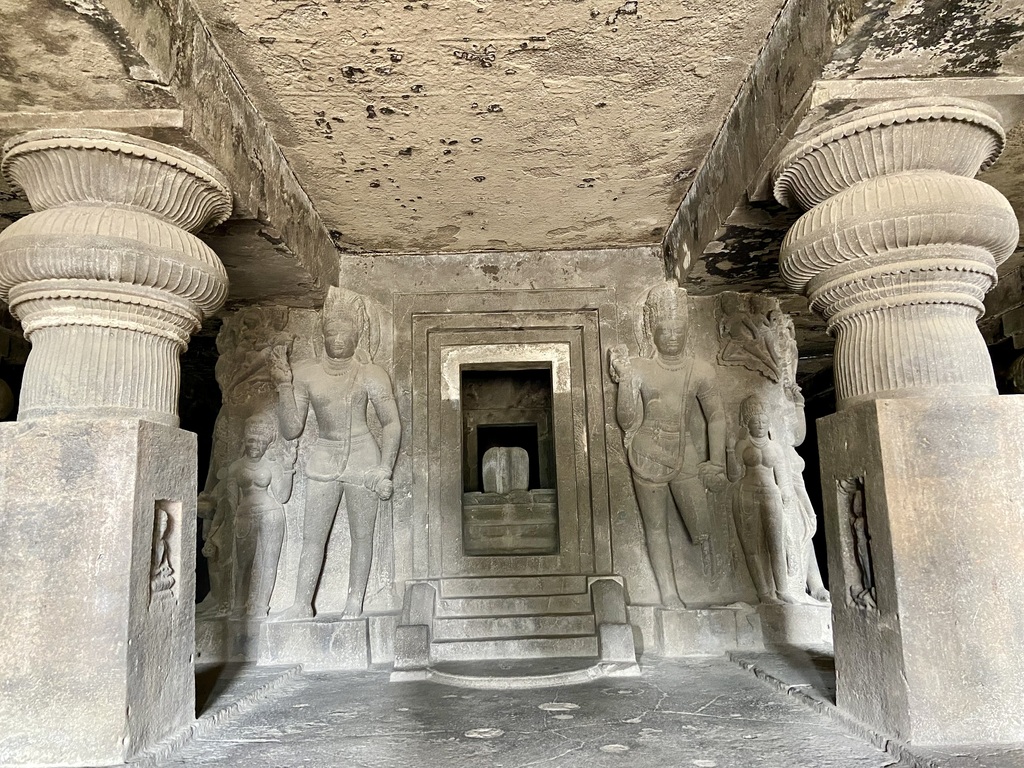
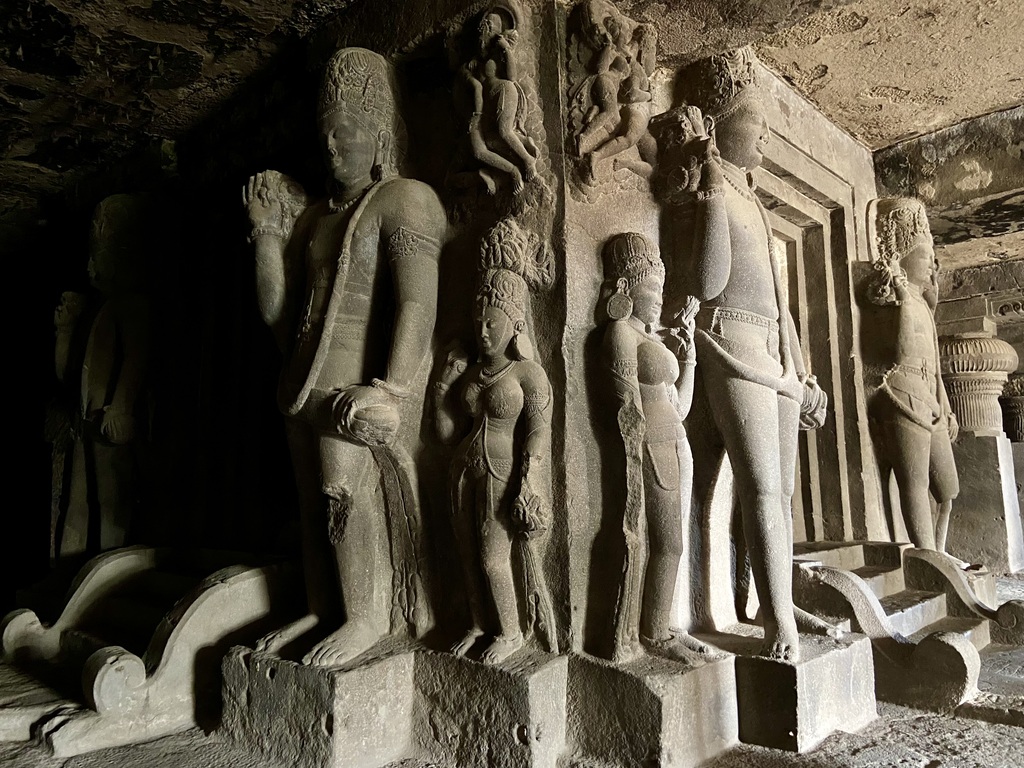
Cave 29, also known as Dhumar Lena, is one of the grand Hindu caves at Ellora, and as you approach it, the scale and power of the structure immediately stand out, with a large hall supported by massive pillars that create a strong and imposing space, and its layout closely resembles the famous Elephanta Cave near Mumbai, showing a similar architectural vision dedicated to Lord Shiva, and as you begin to explore, you will come across powerful sculptural panels, including the dramatic scene of Ravana trying to lift Mount Kailash, full of energy and tension, while another figure shows Lord Shiva and Mata Parvati seated together in calm unity, balancing the intensity with serenity, and nearby you will also find a fierce form of Shiva, expressing his powerful and destructive aspect, and at the entrance, the presence of river goddesses standing gracefully adds a sense of purity and sacred welcome, making the entire cave feel both grand and spiritually intense.
The Jain Caves – A World of Detail, Discipline, and Inner Peace
At the end of Ellora, the Jain caves appear. They are fewer. But very detailed. These caves were built later. They show a different kind of beauty.
The Jain philosophy focuses on control of the self. Simplicity. Inner purity.But their art is very rich and detailed.
Cave 30 – Chhota Kailasa (The Little Kailasa)
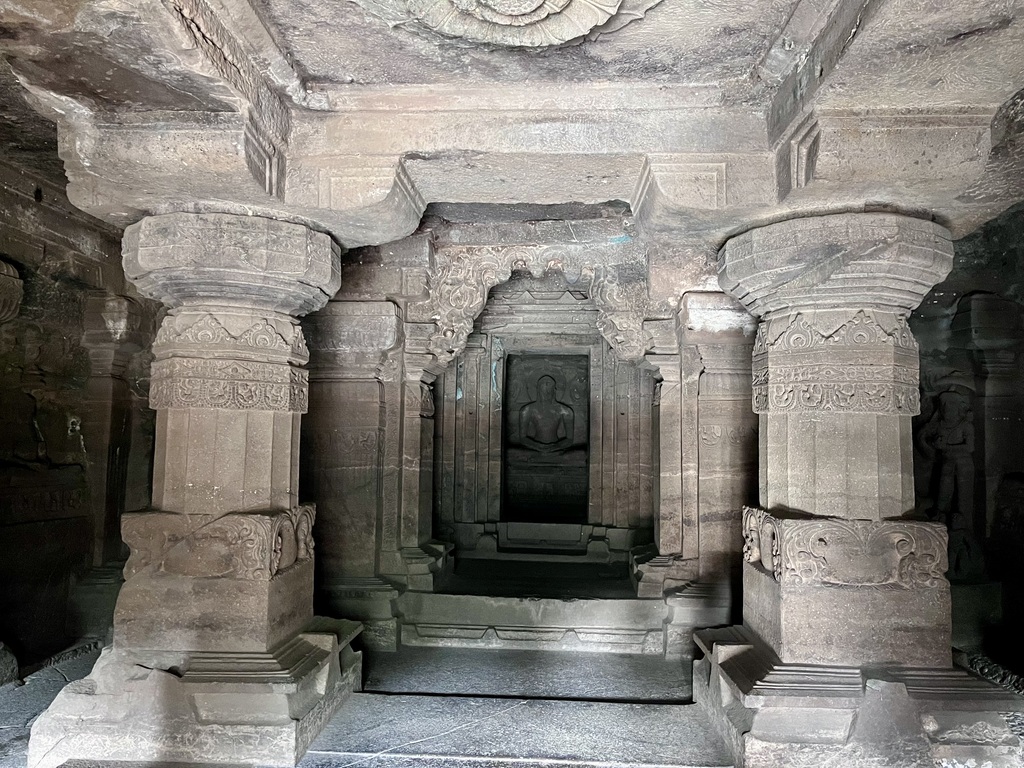
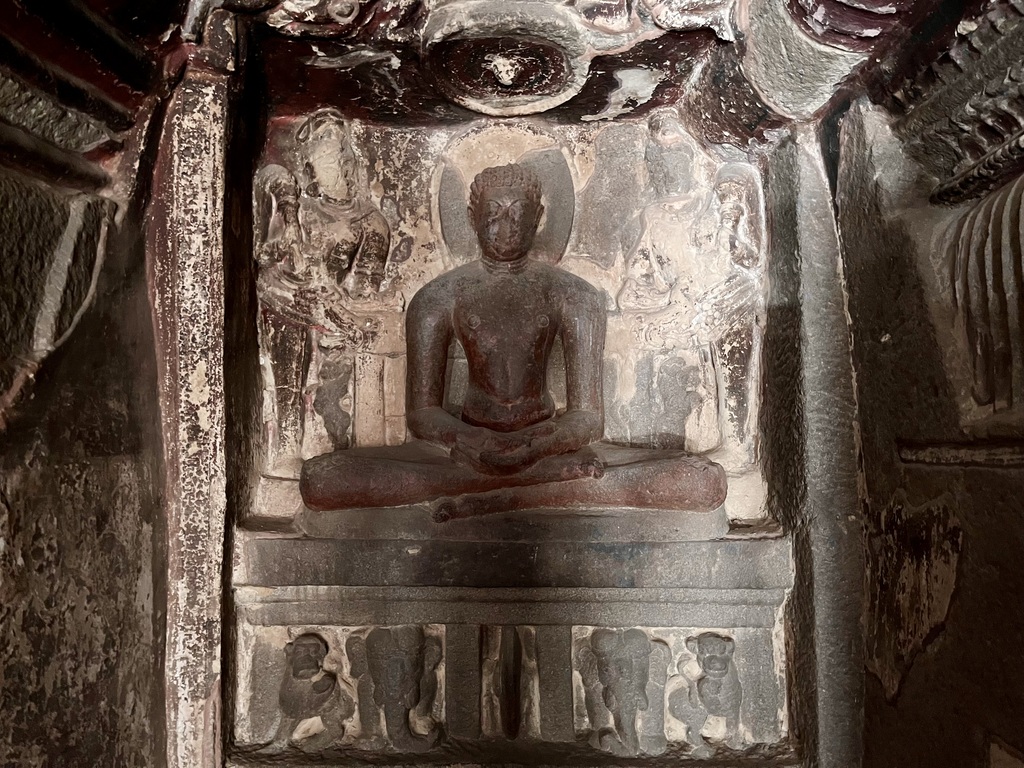
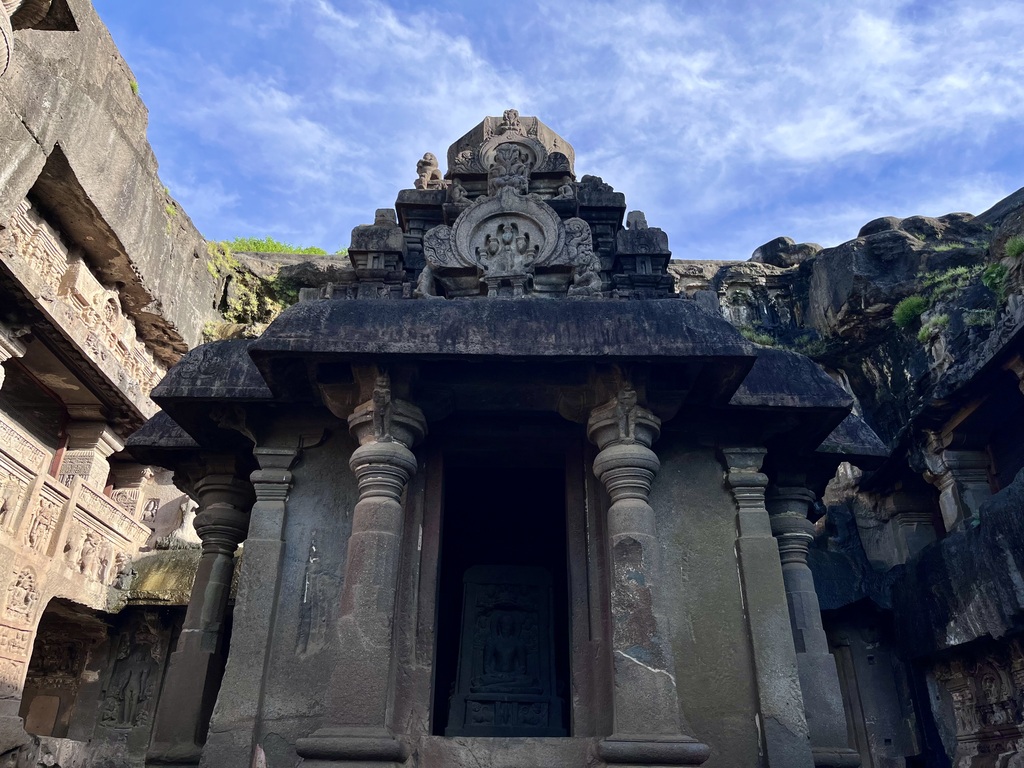
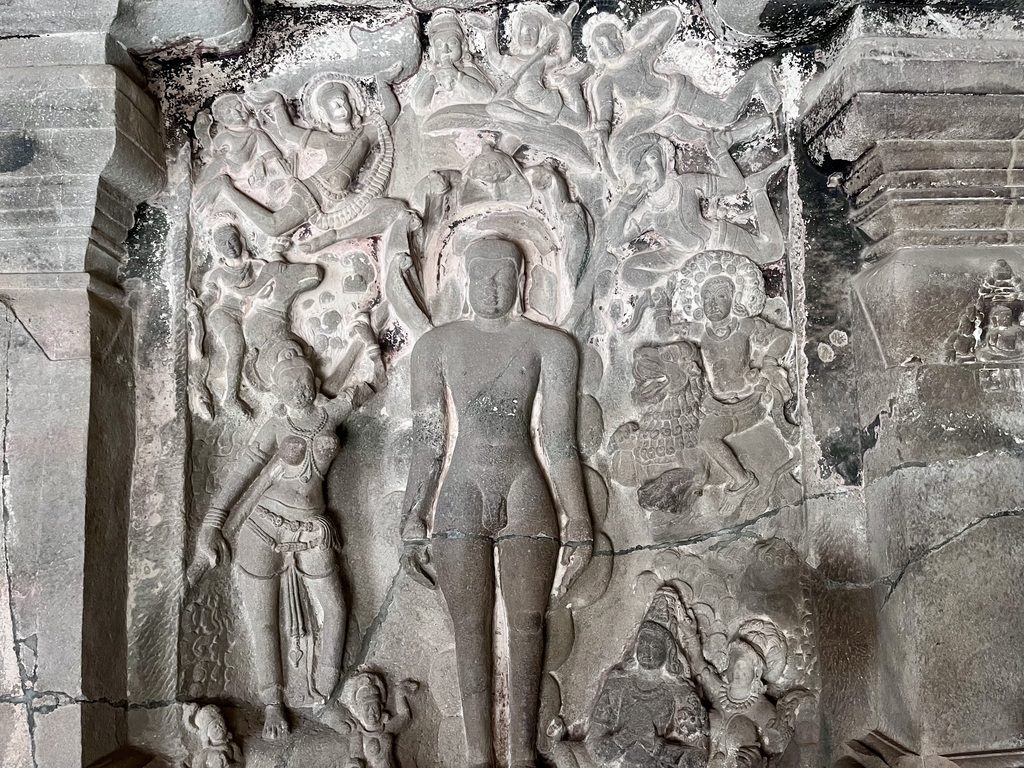
Let’s begin with Cave 30, popularly known as Chhota Kailasa or “Little Kailasa,” and as the name suggests, it closely resembles the grand Kailasa Temple but on a much smaller scale, and as you approach, you will notice that this too is a free-standing monolithic excavation, carved out of a single rock, giving it a miniature yet impressive presence, and as you explore further, you will find shrines and mandapas arranged thoughtfully within the complex, all adorned with finely carved figures of Jain Tirthankaras, reflecting deep spiritual symbolism, and what truly stands out here is the level of craftsmanship, with beautifully detailed ceilings and delicate decorative motifs that show great care and precision, and through all of this, the cave clearly reflects how Jain patrons aimed to match the grandeur of their Hindu counterparts, yet express it in their own distinct, serene, and refined artistic style.
Cave 31 – An Incomplete Monastery
Next is Cave 31, and as you step towards it, you will notice that it is a small and unfinished monastery cave, and its simple layout suggests that it was intended to serve as a residence for monks or ascetics, but for some reason, the work was never completed, and even in this incomplete state, the cave becomes quite meaningful, as it offers a rare glimpse into the rock-cutting process that was taking place, almost like a snapshot of the work left midway.
Cave 32 – Indra Sabha (Assembly Hall of the Gods)
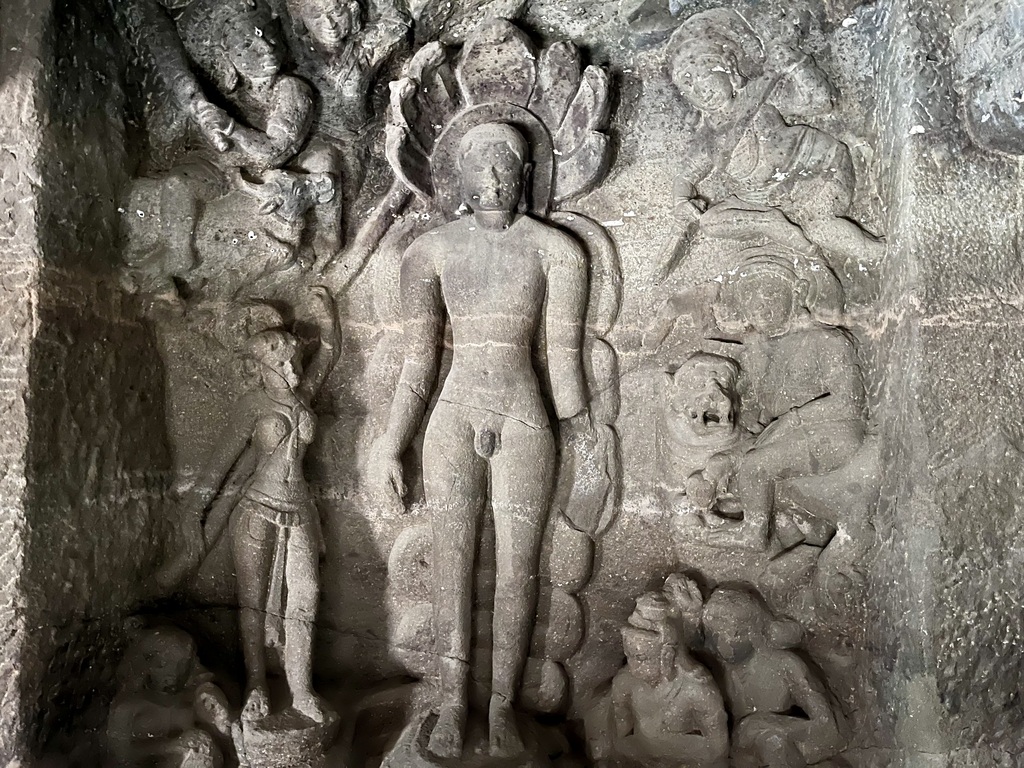
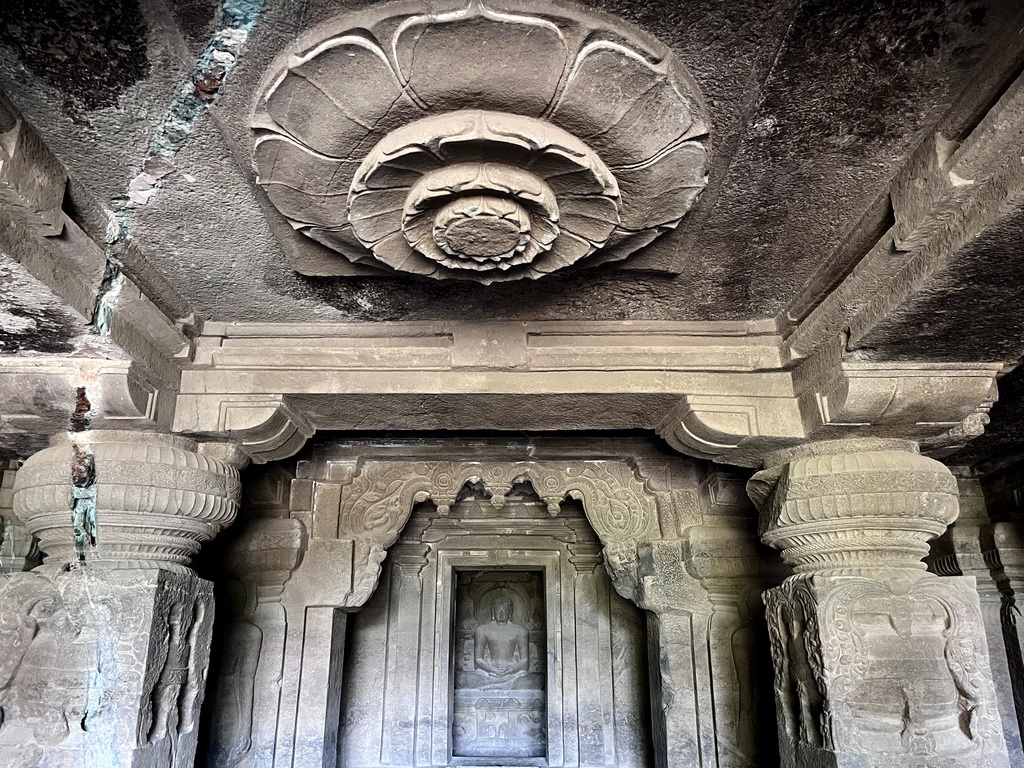
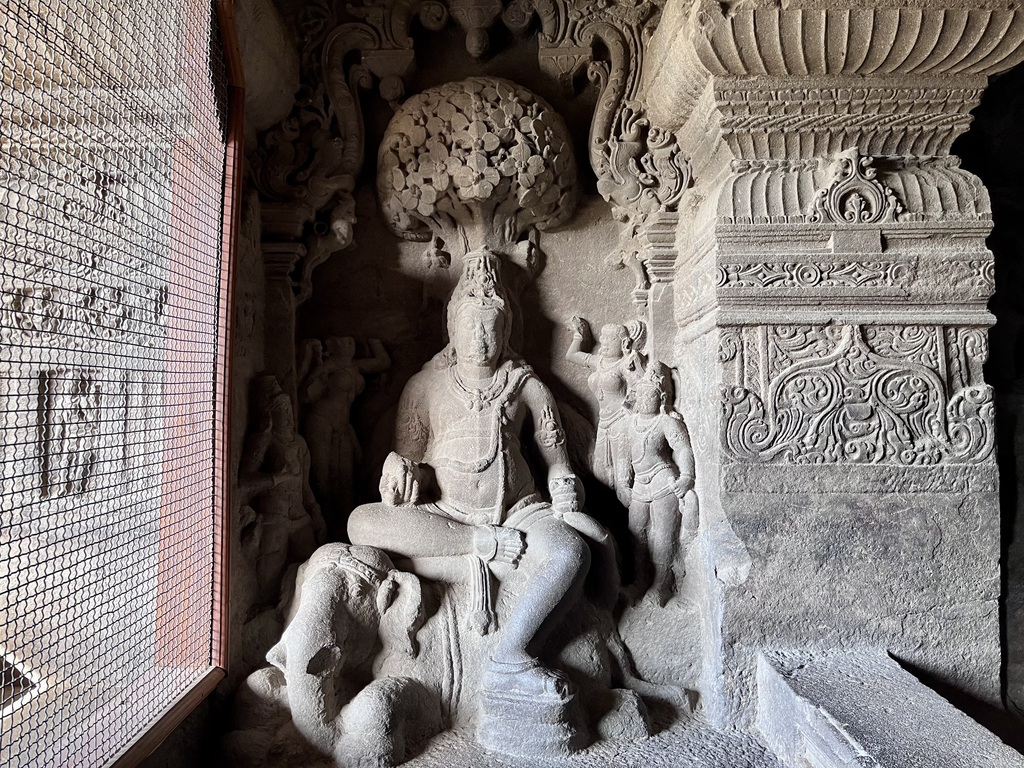
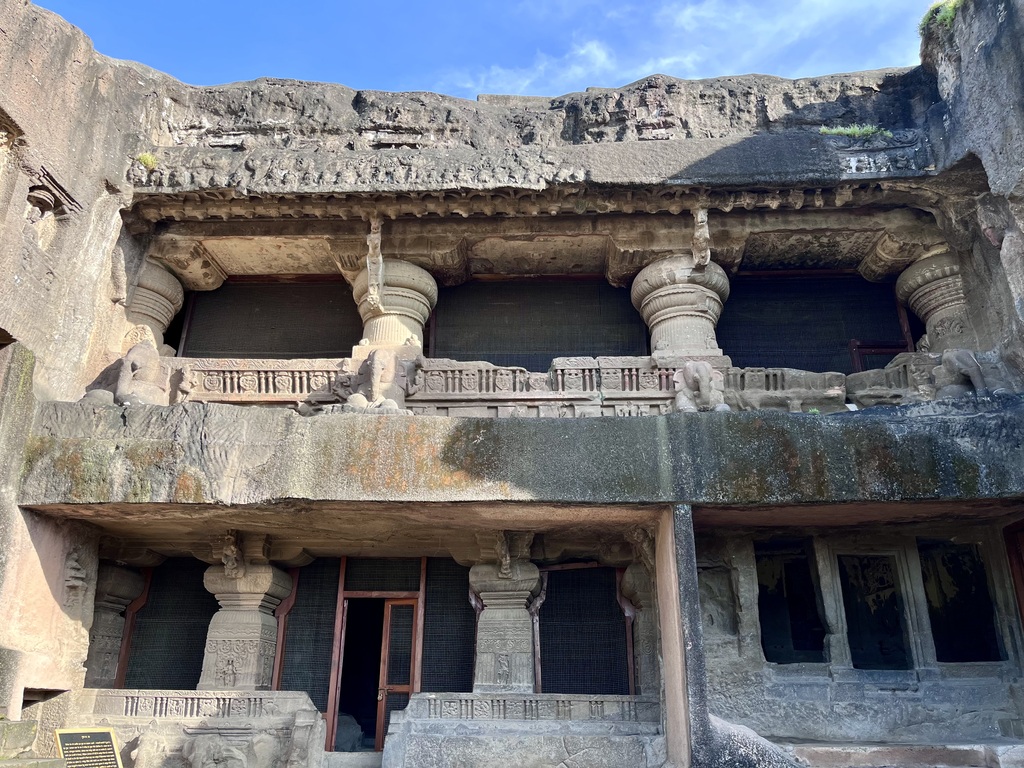
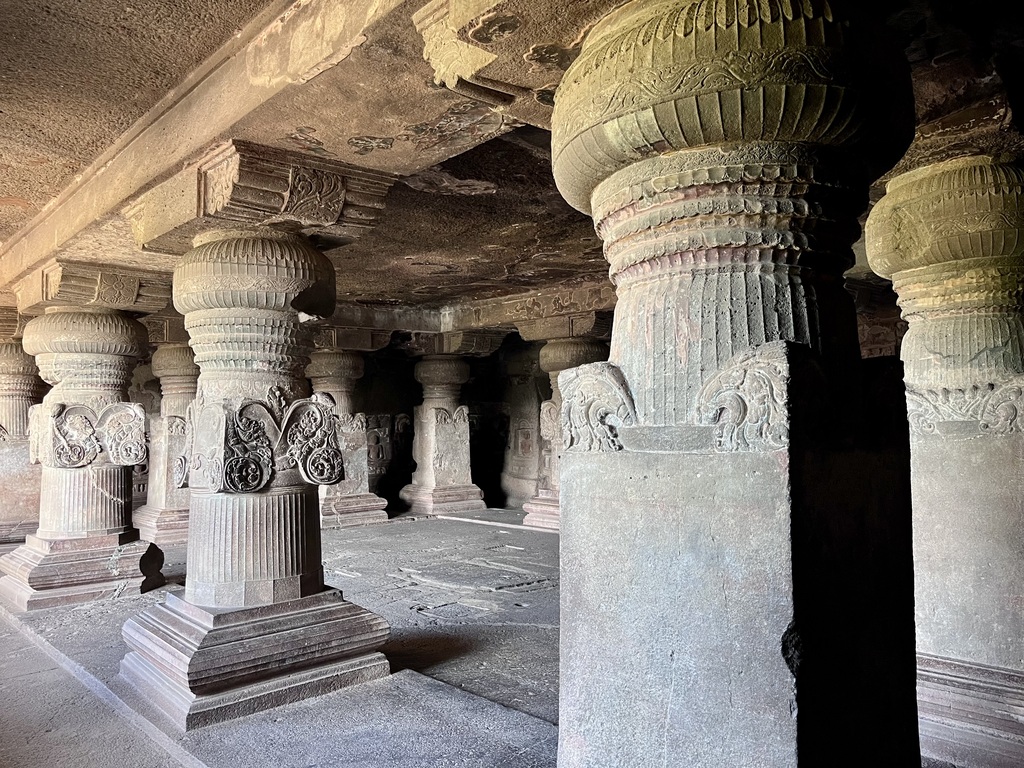
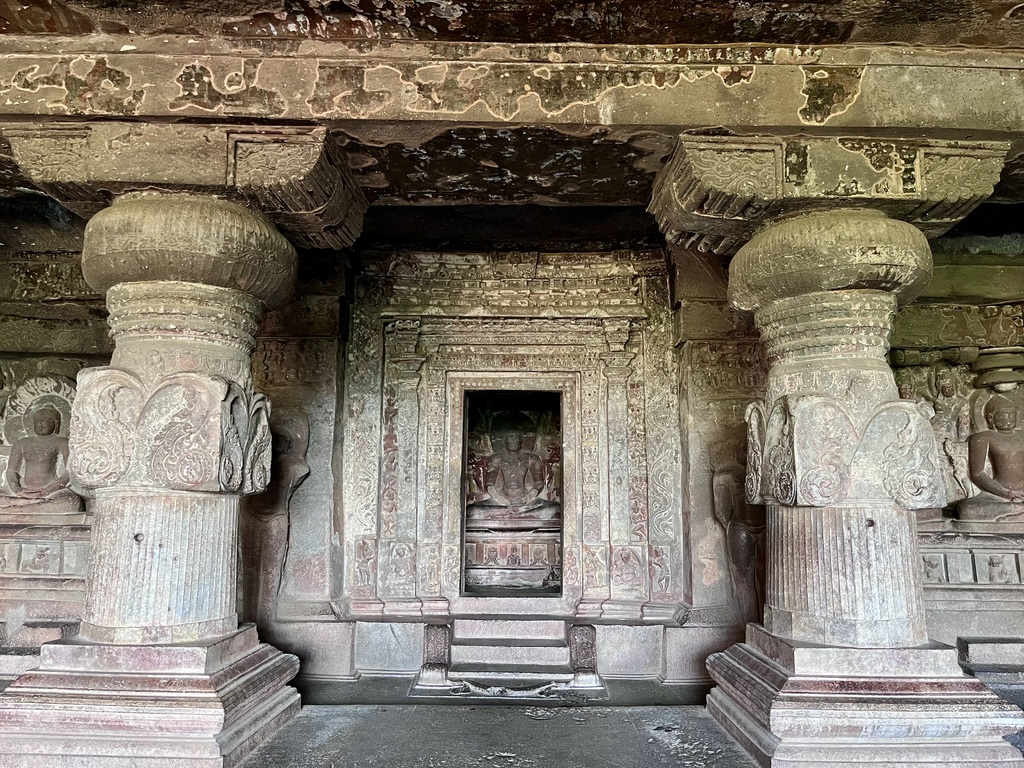
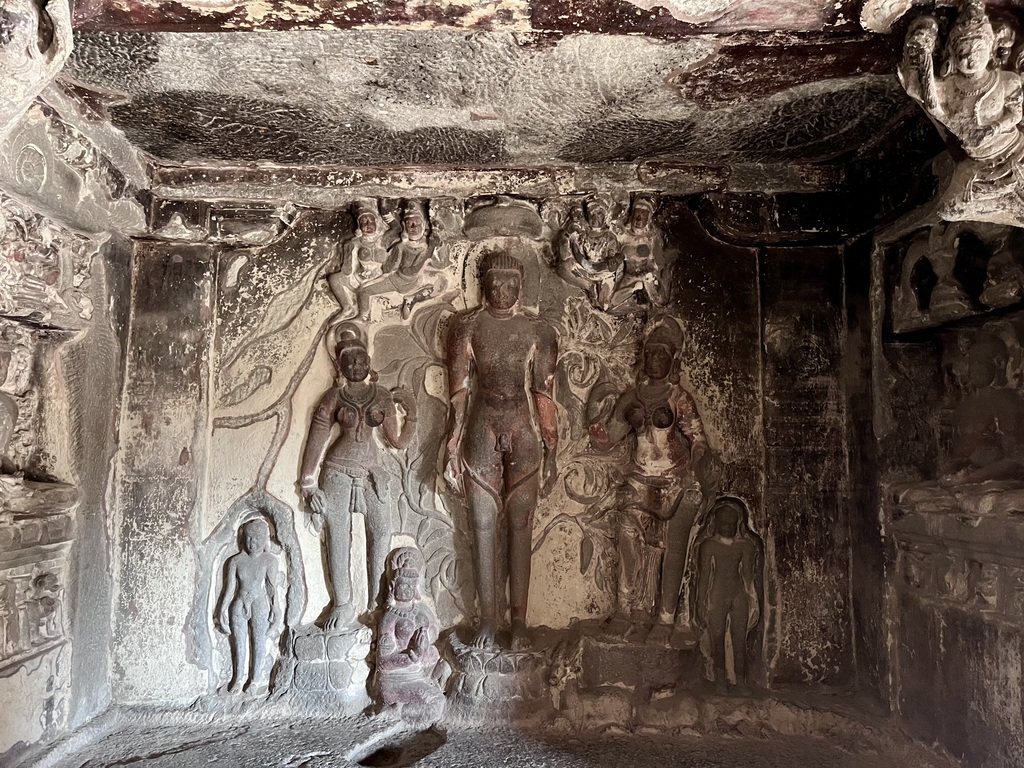
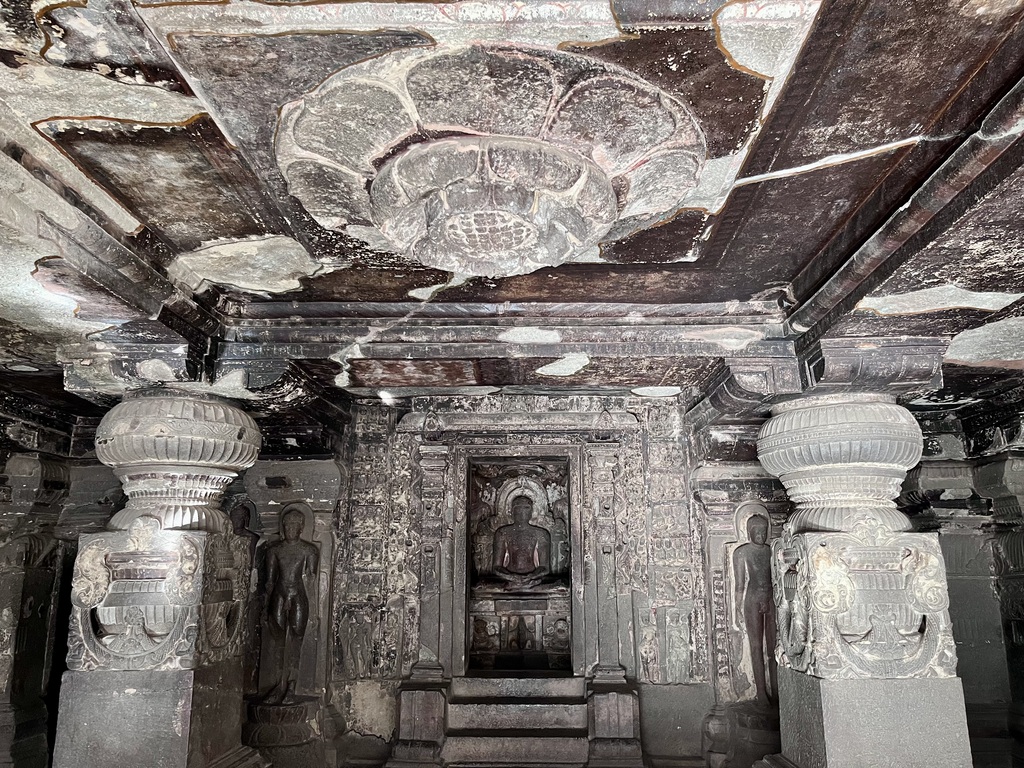
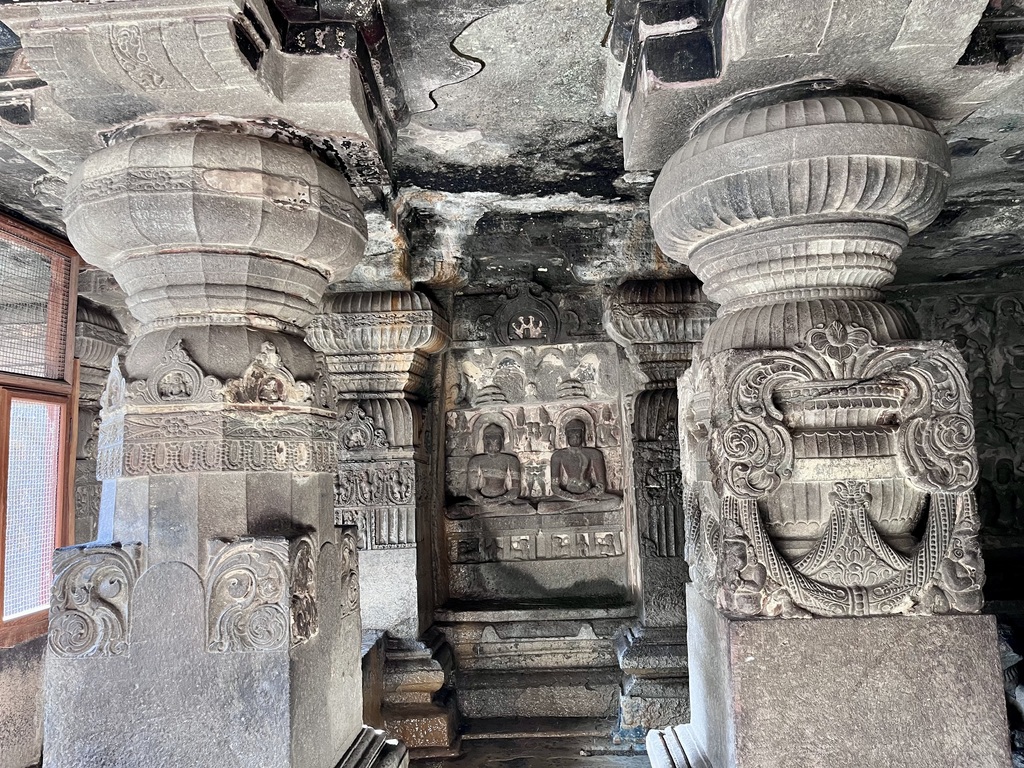
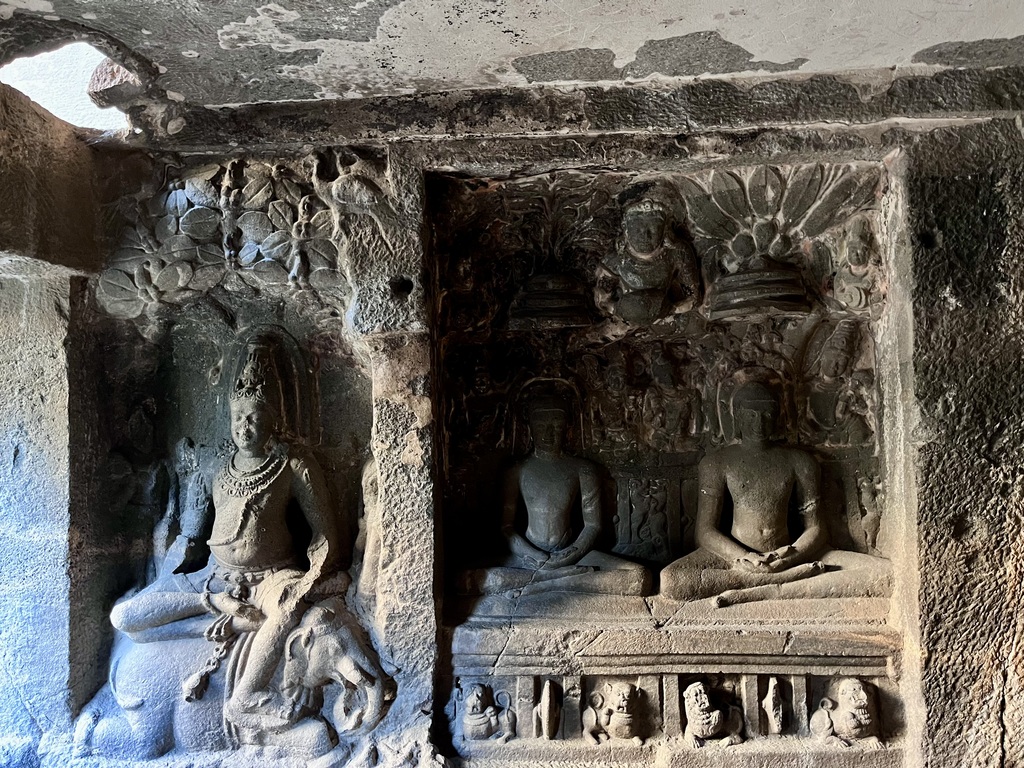
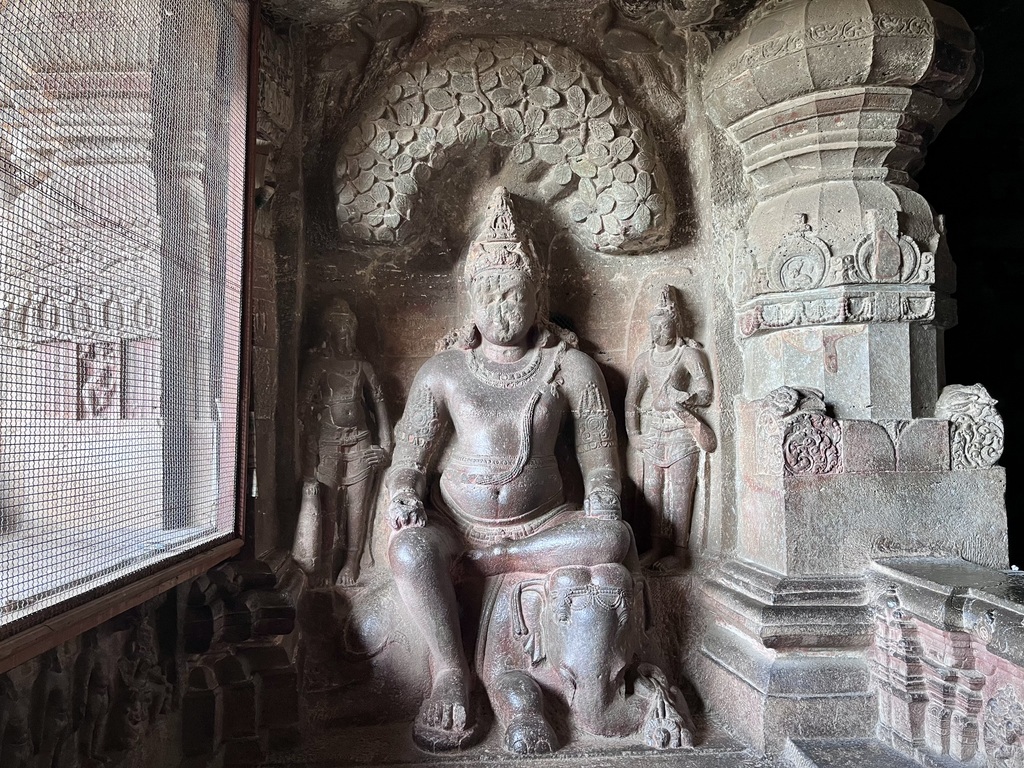
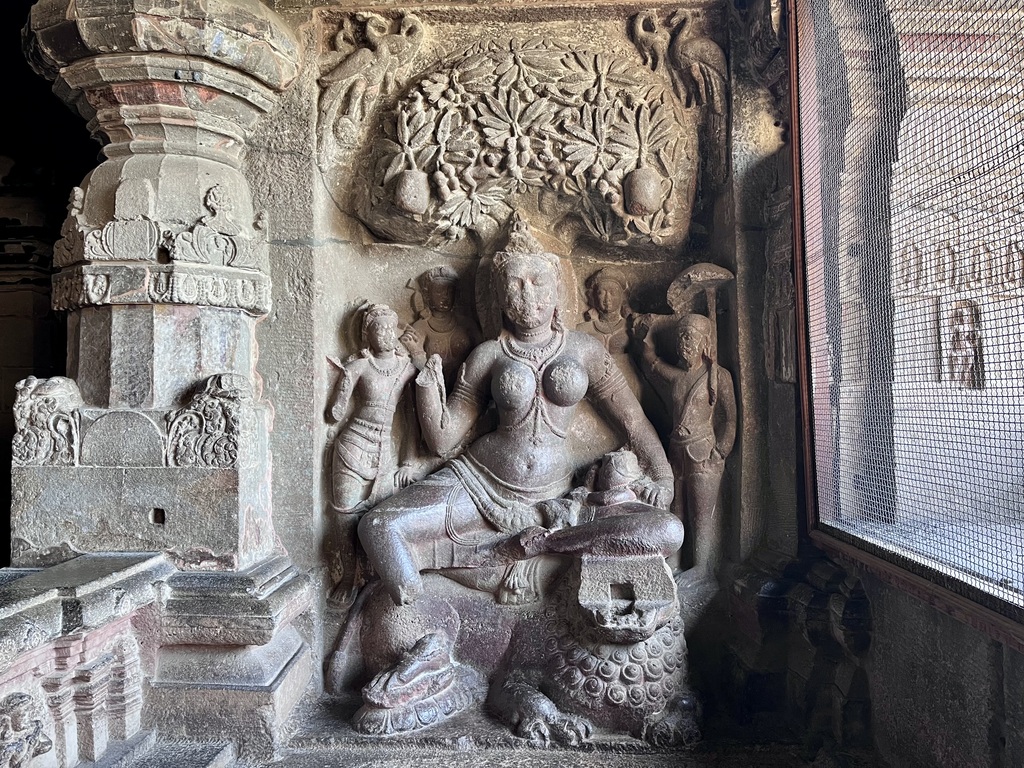
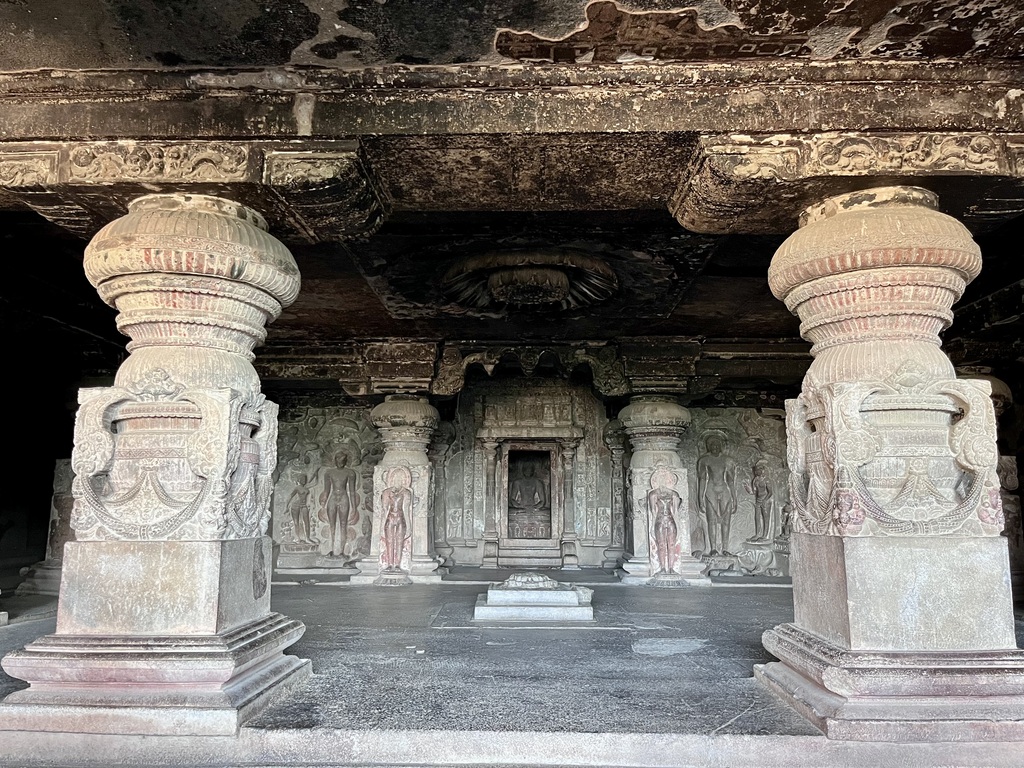
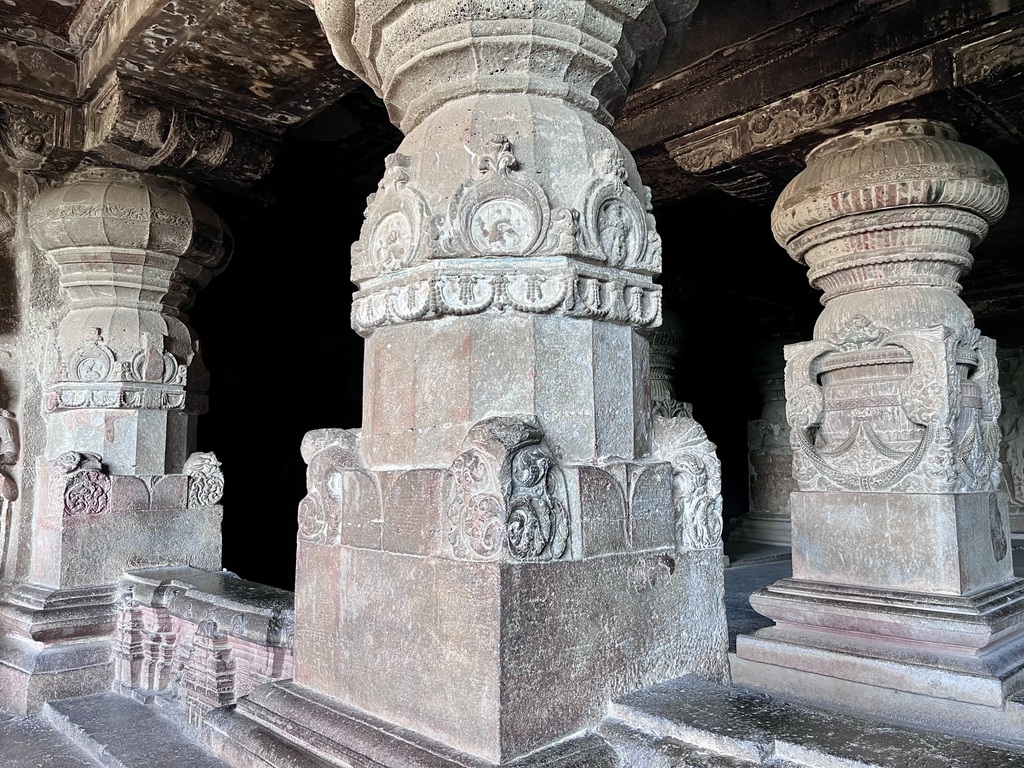
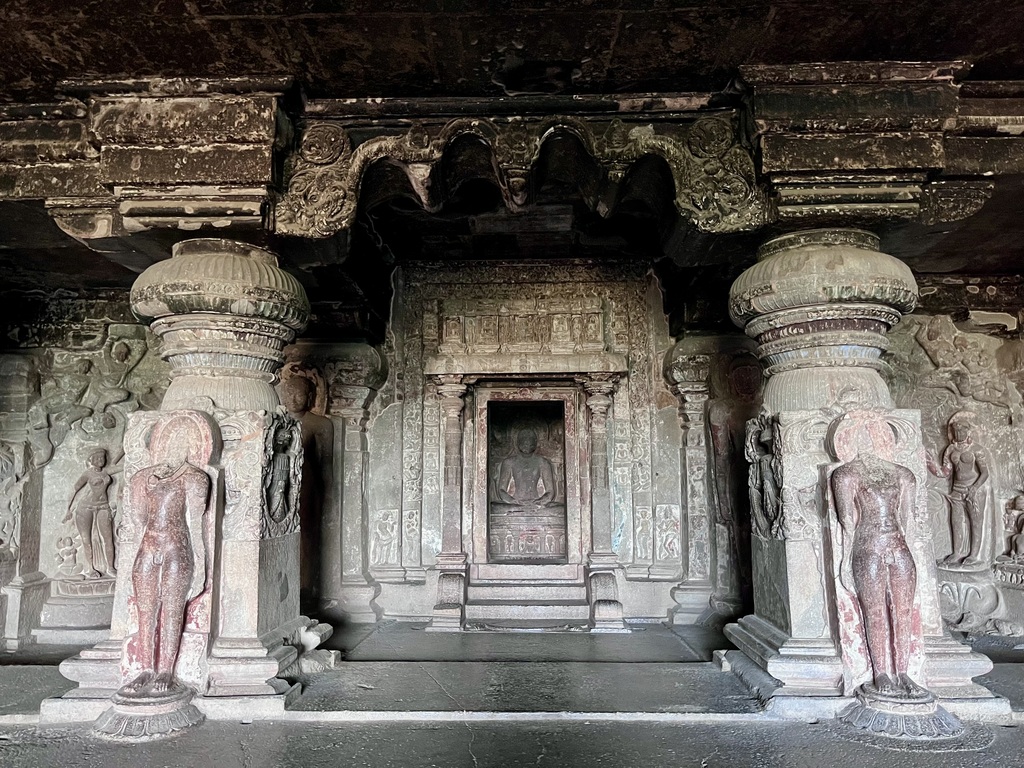
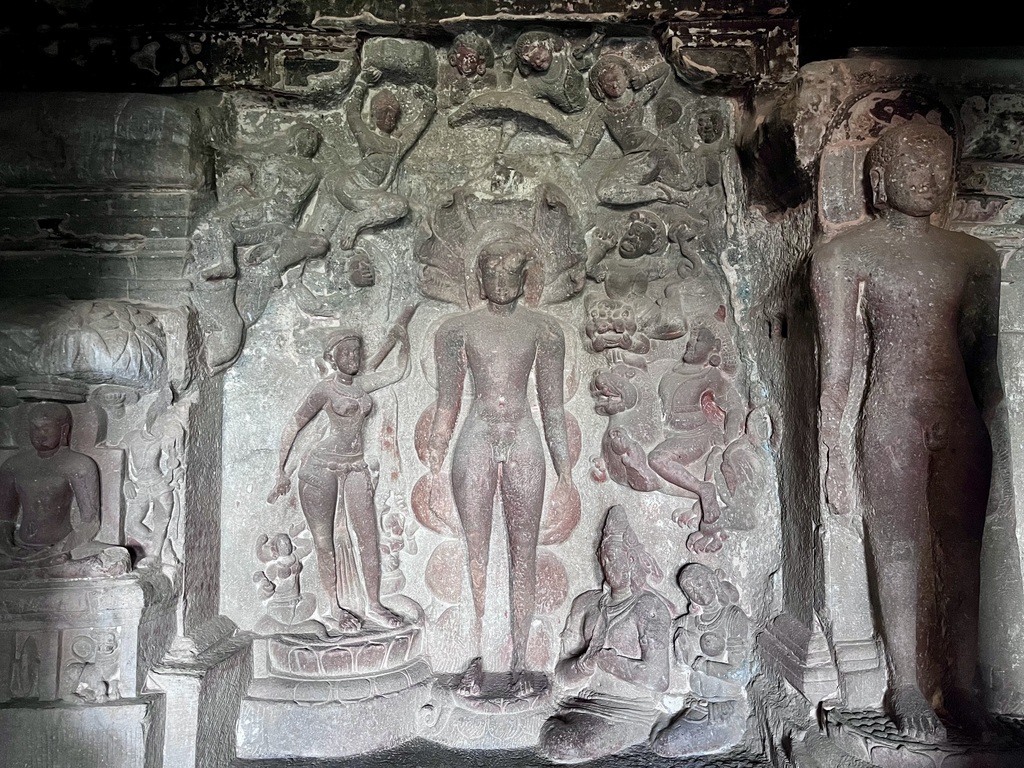
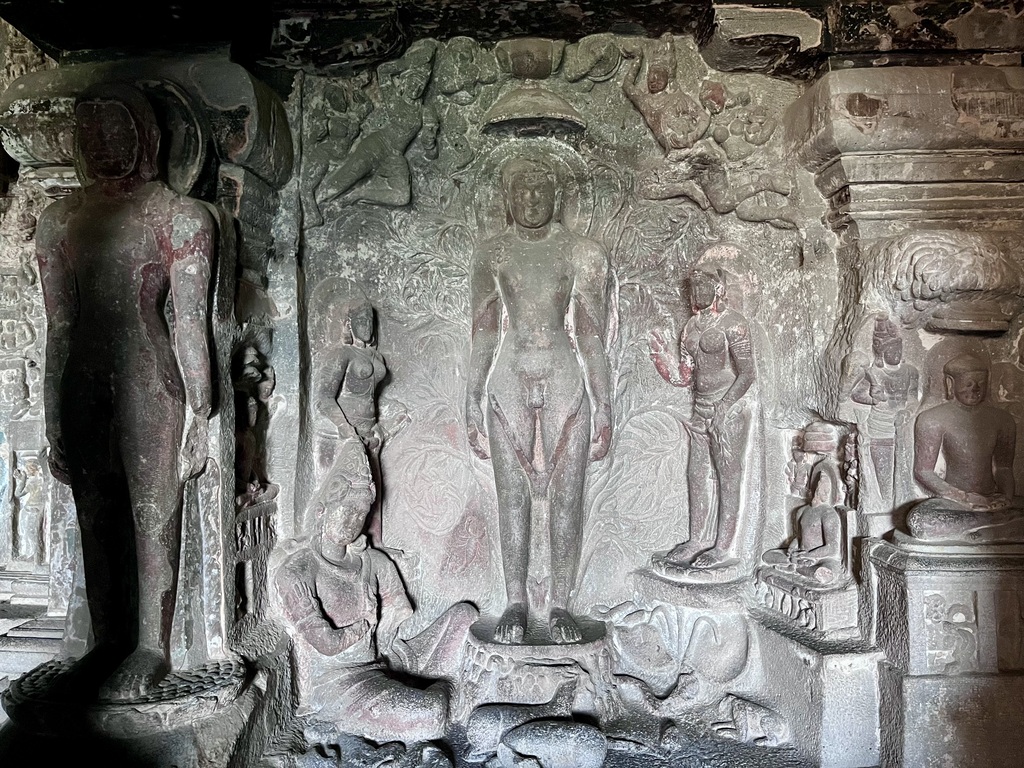
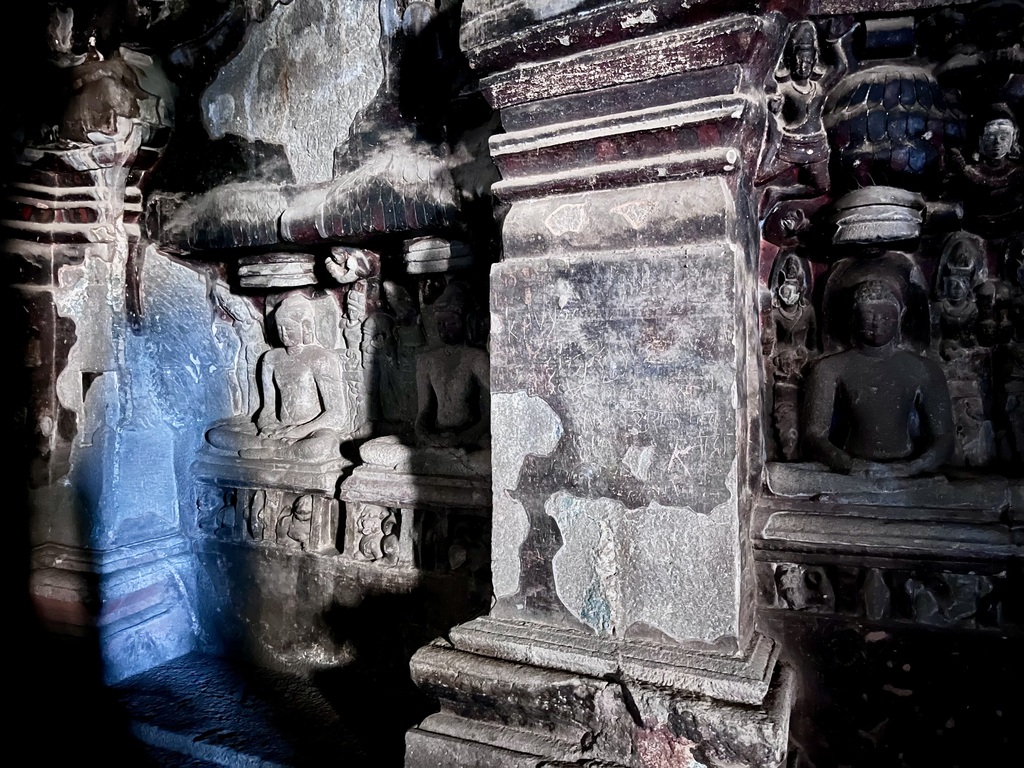
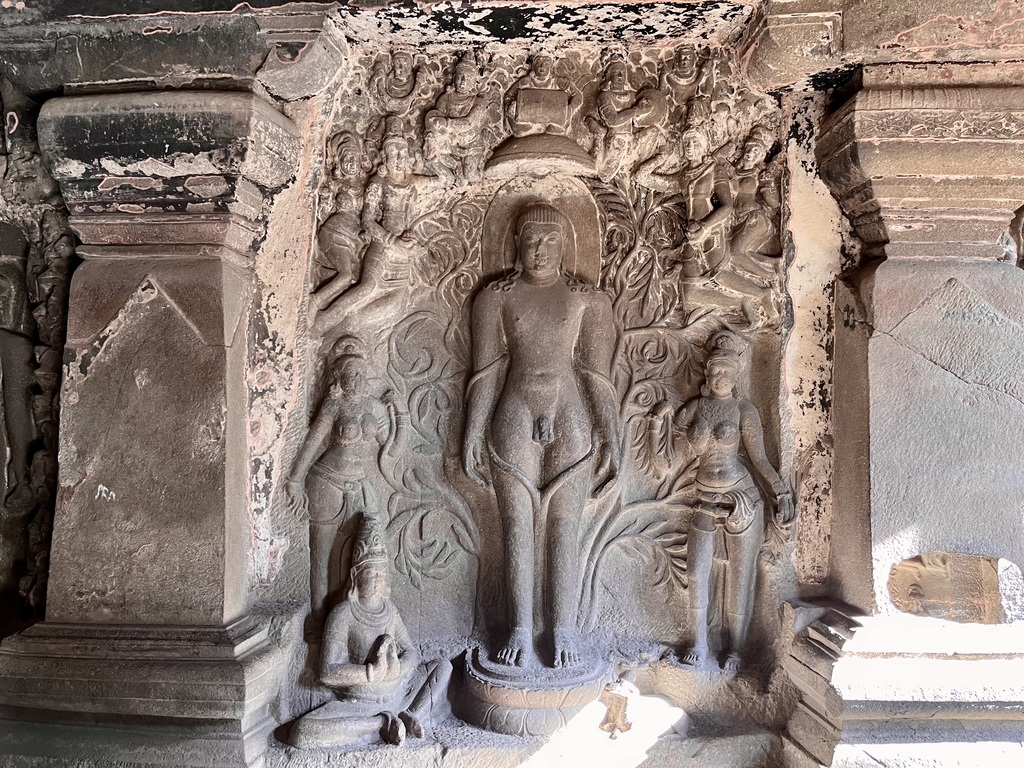
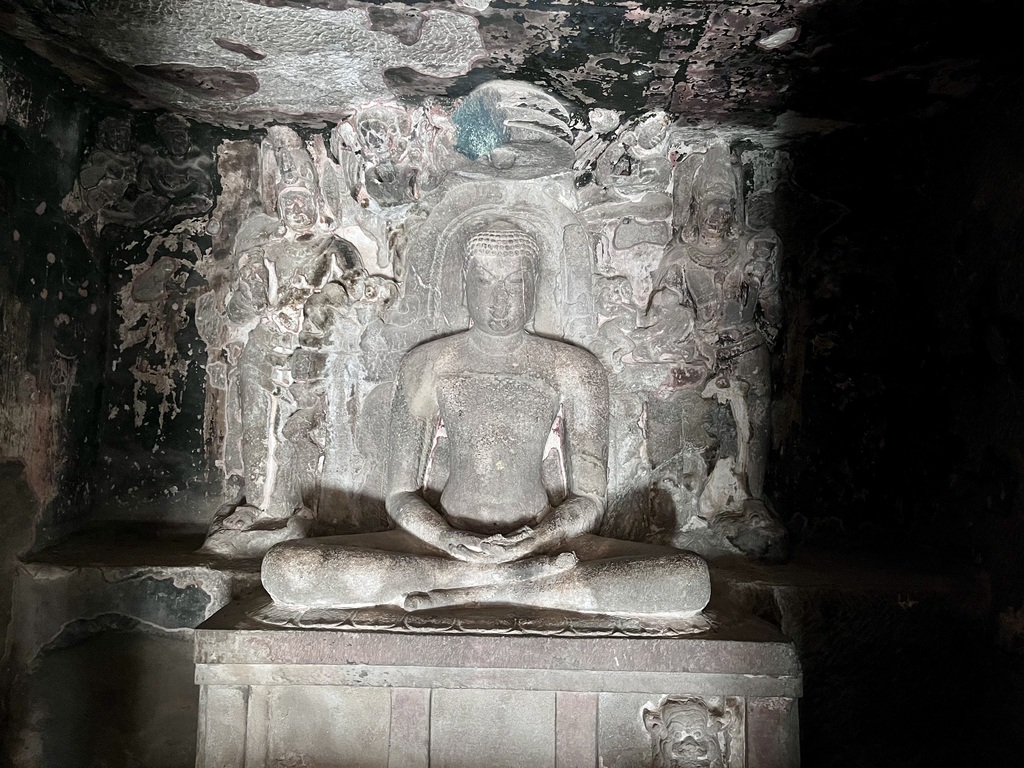
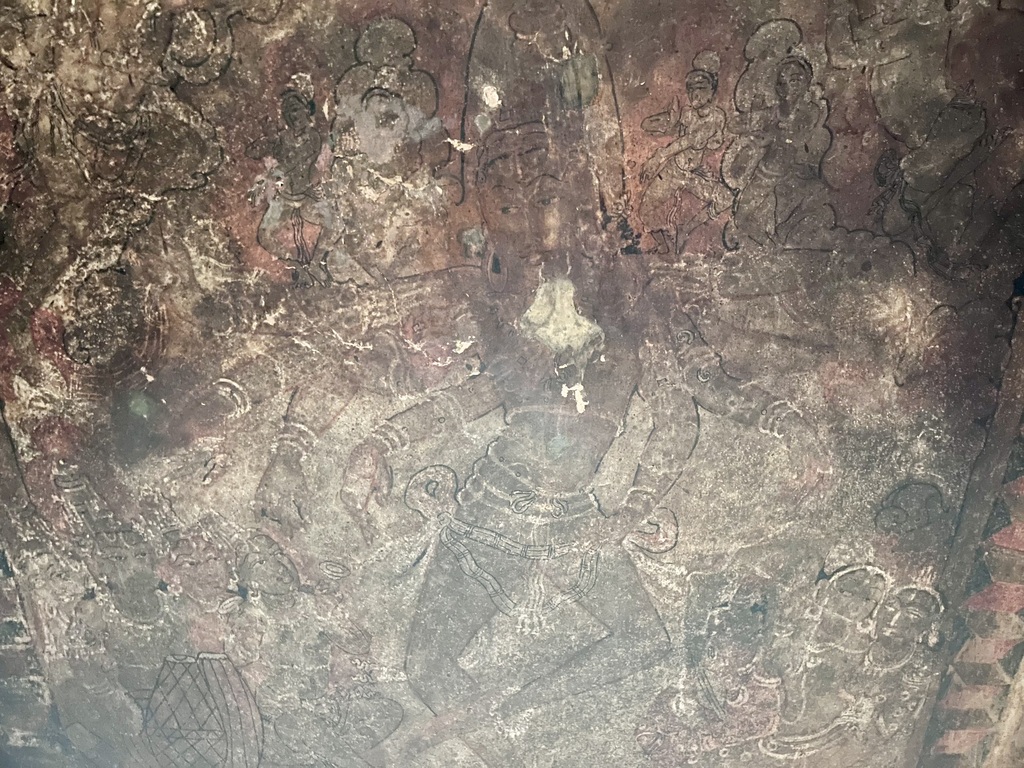
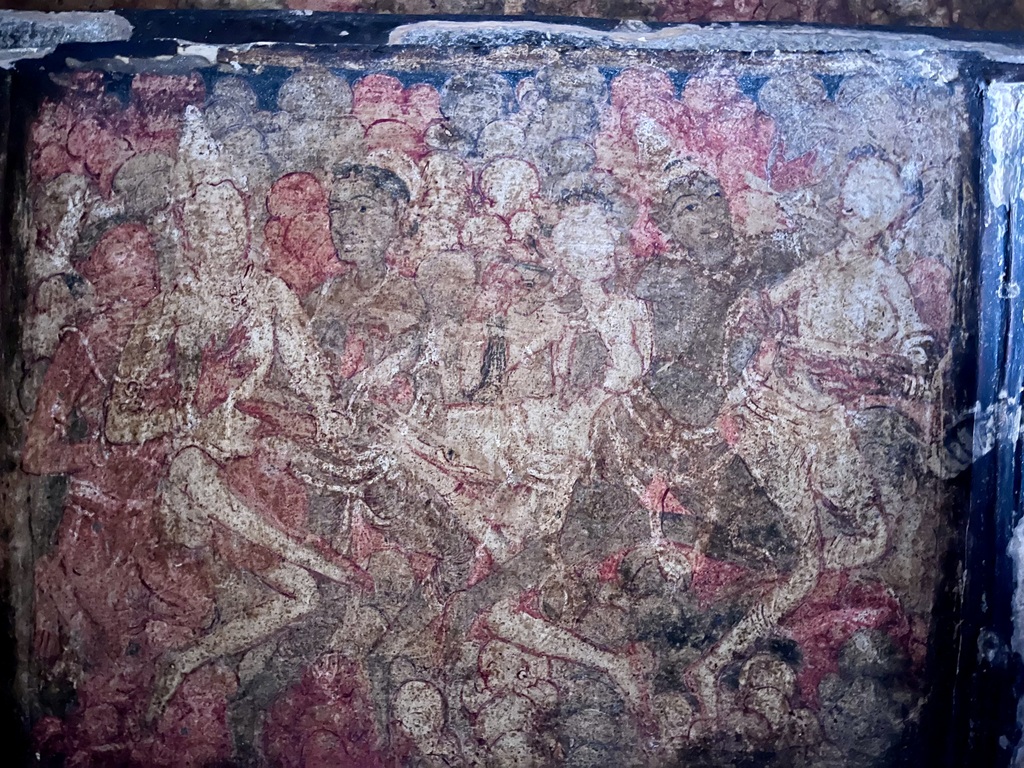
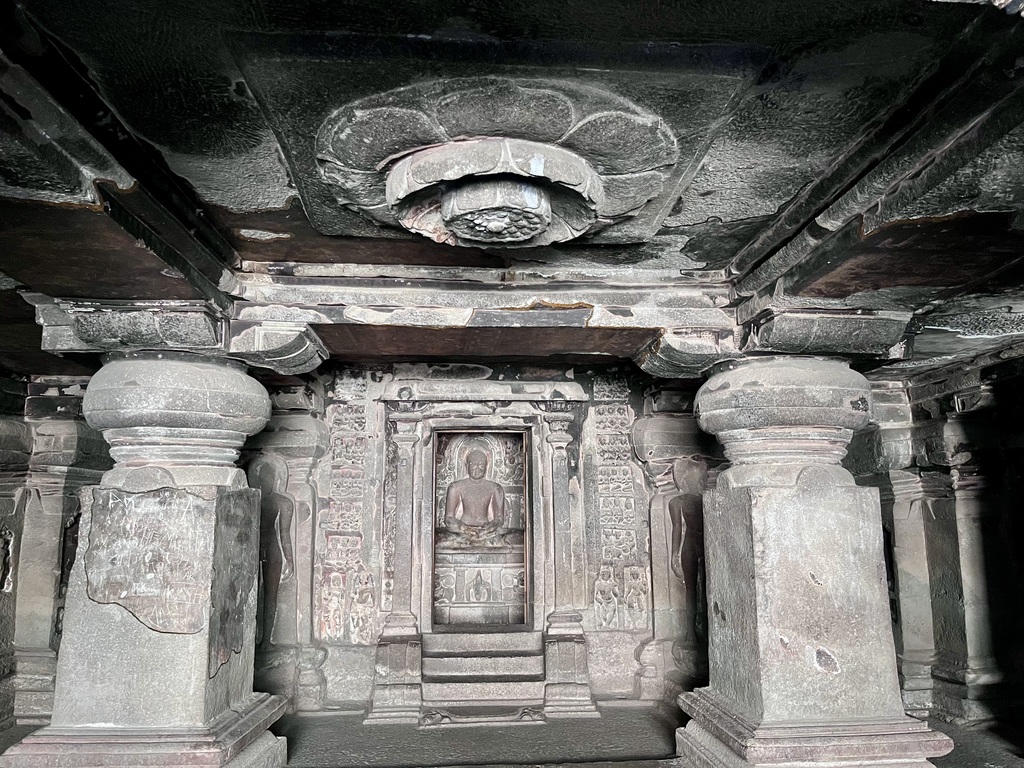
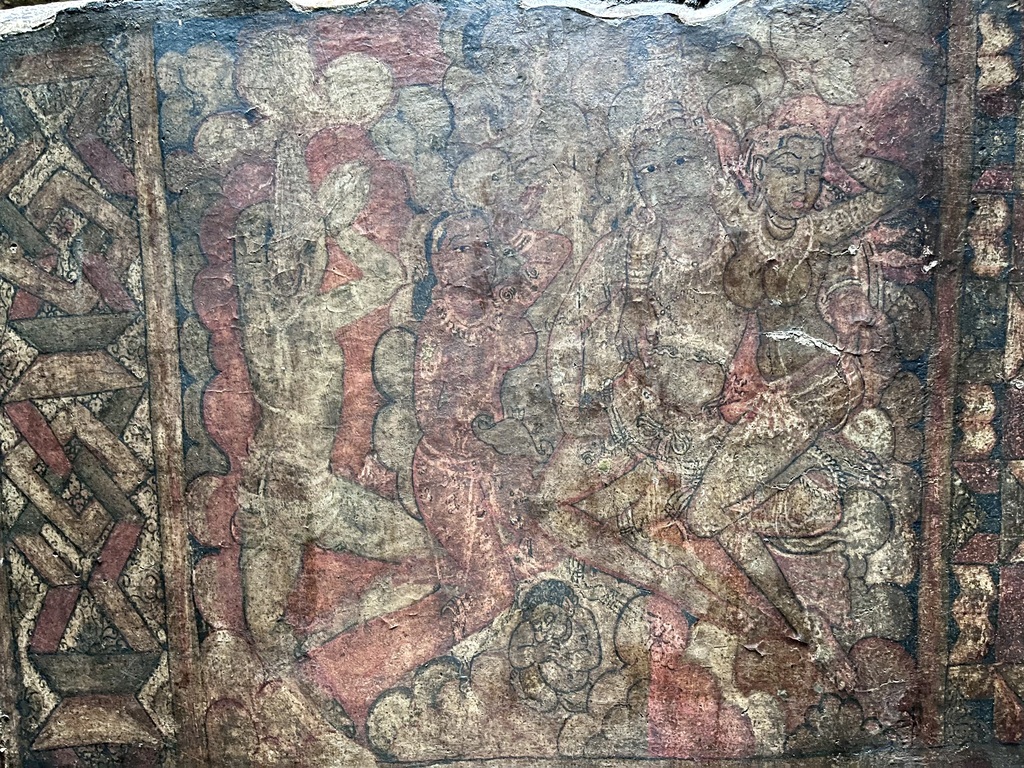
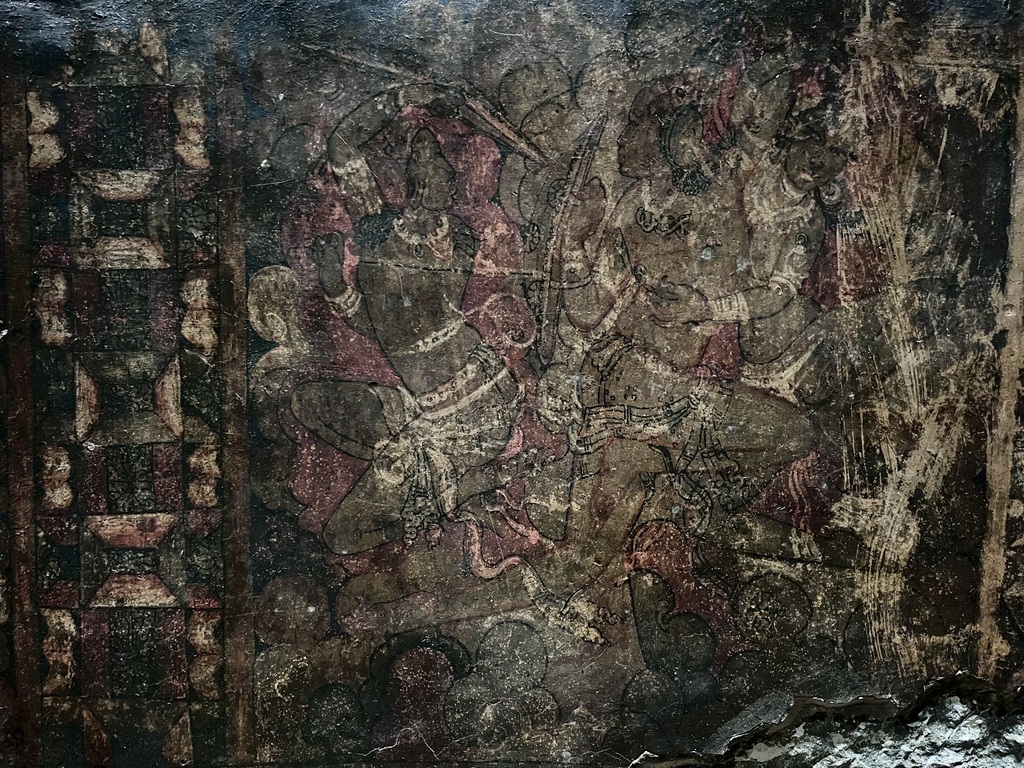
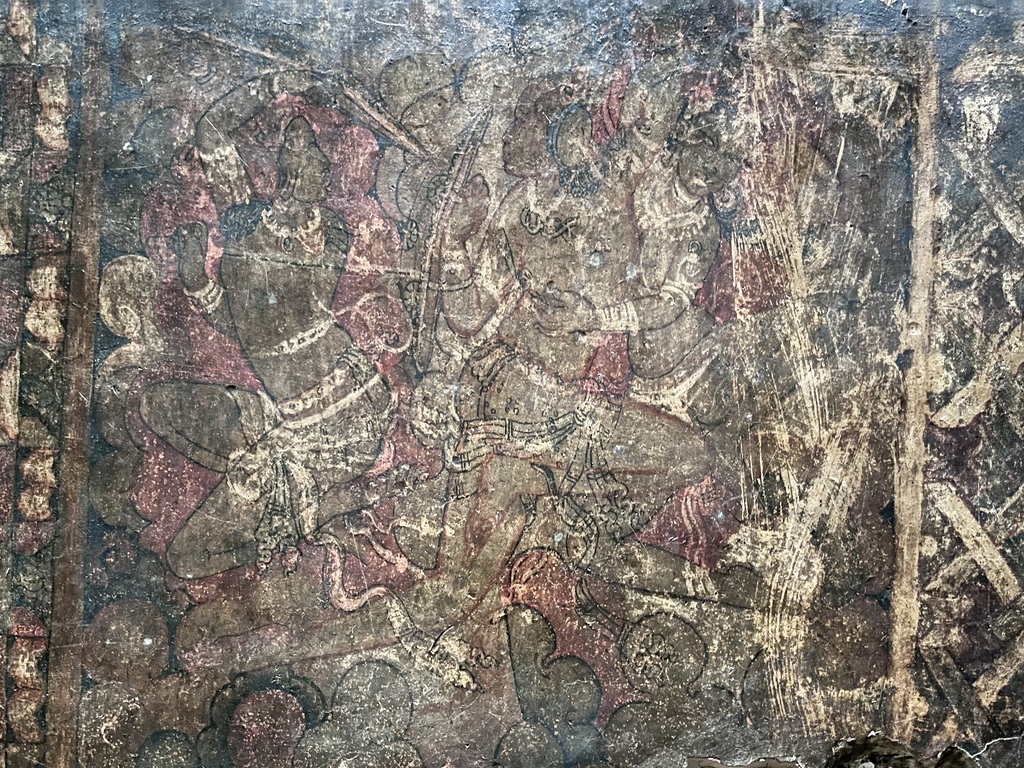
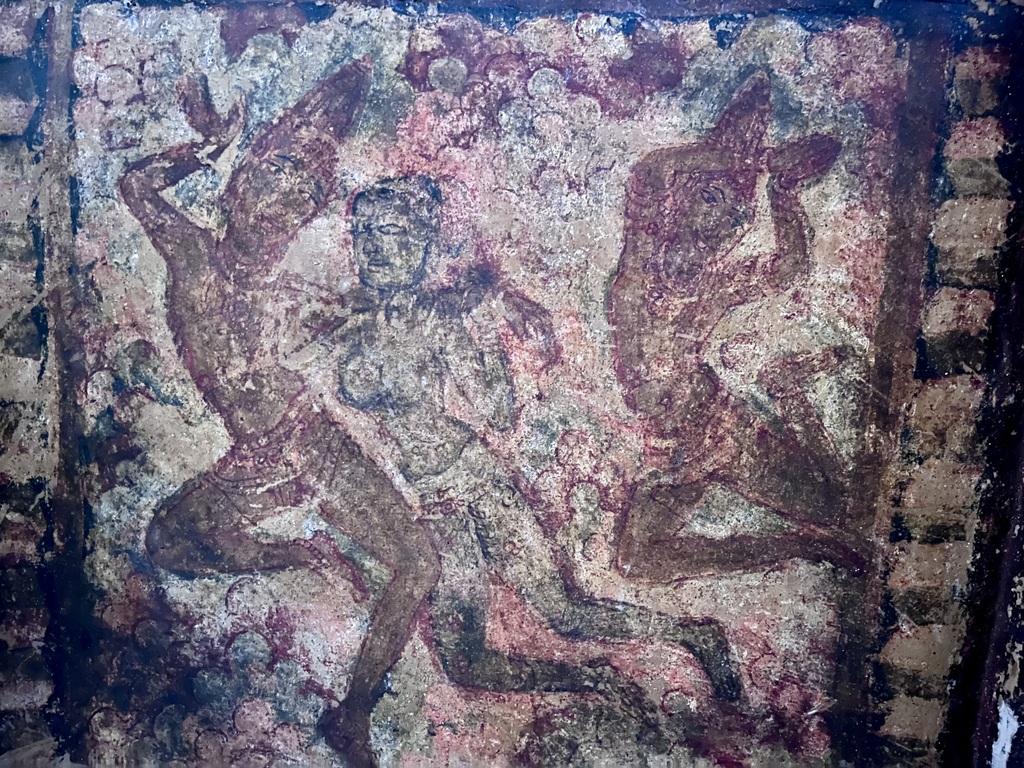
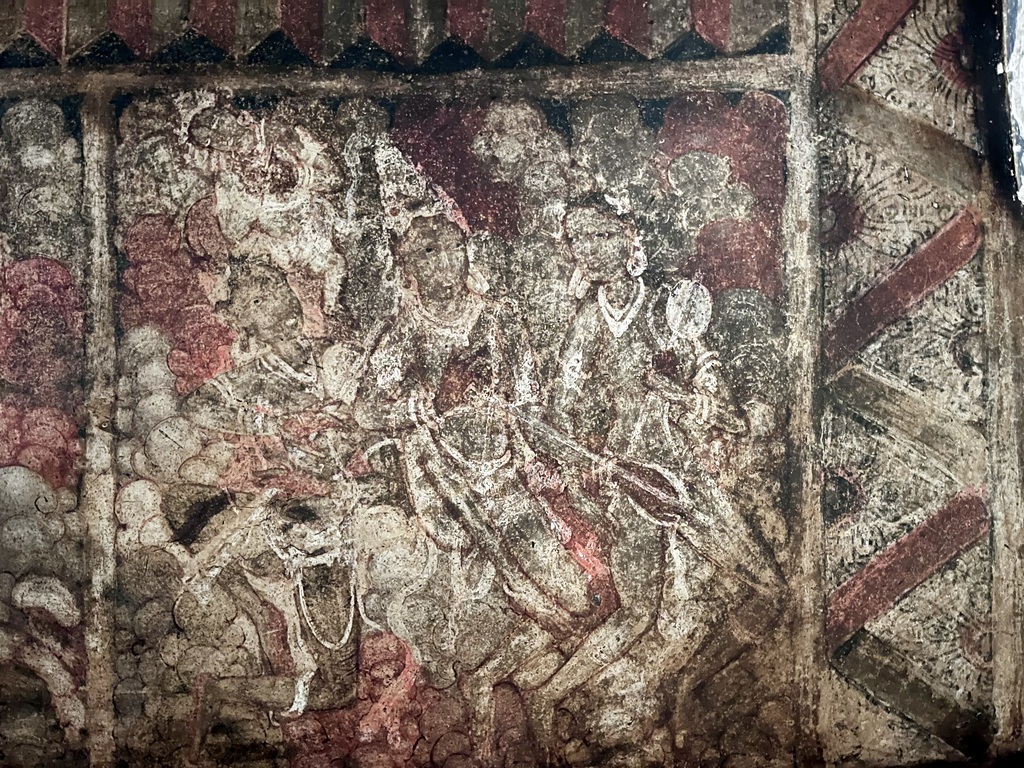
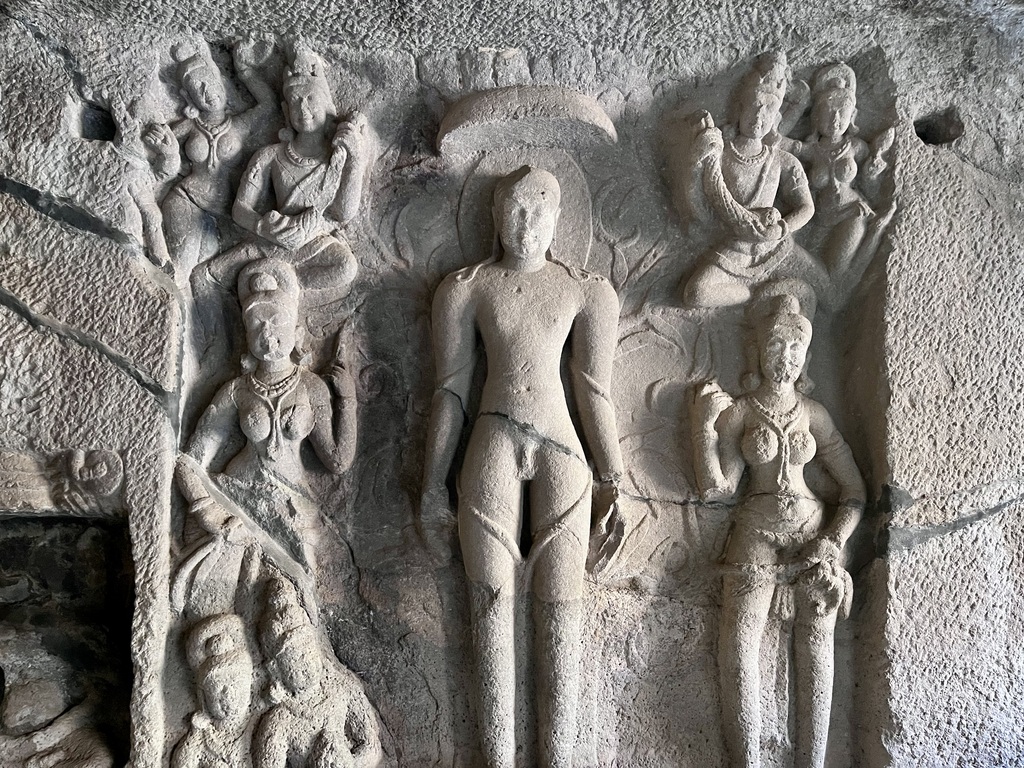
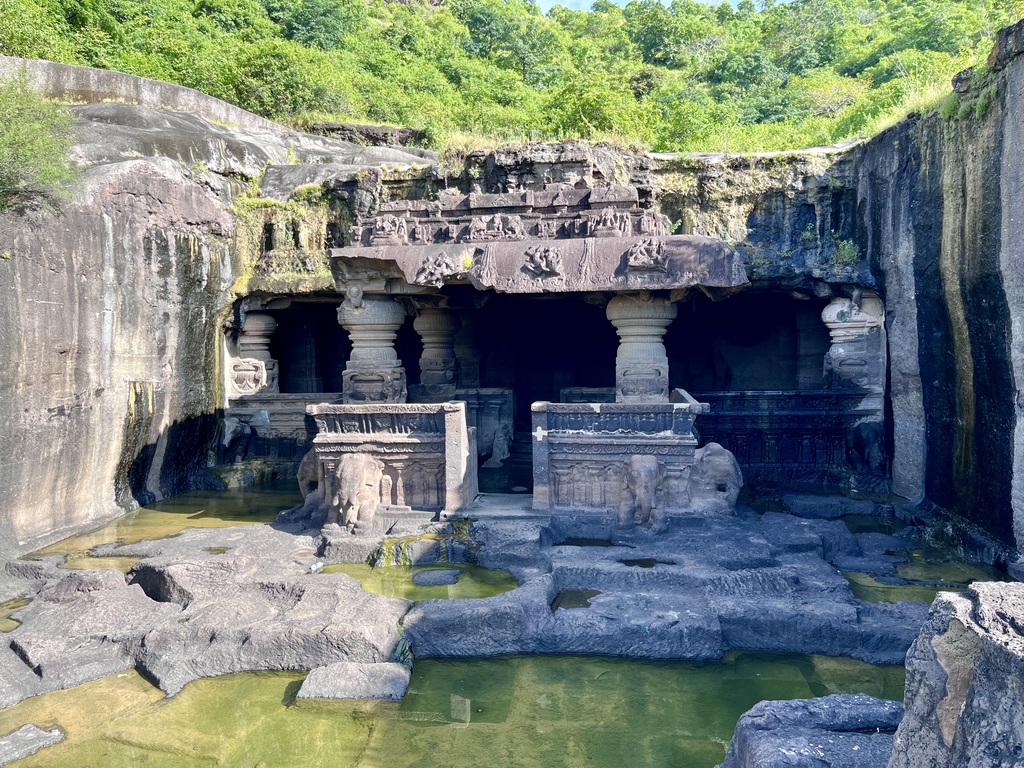
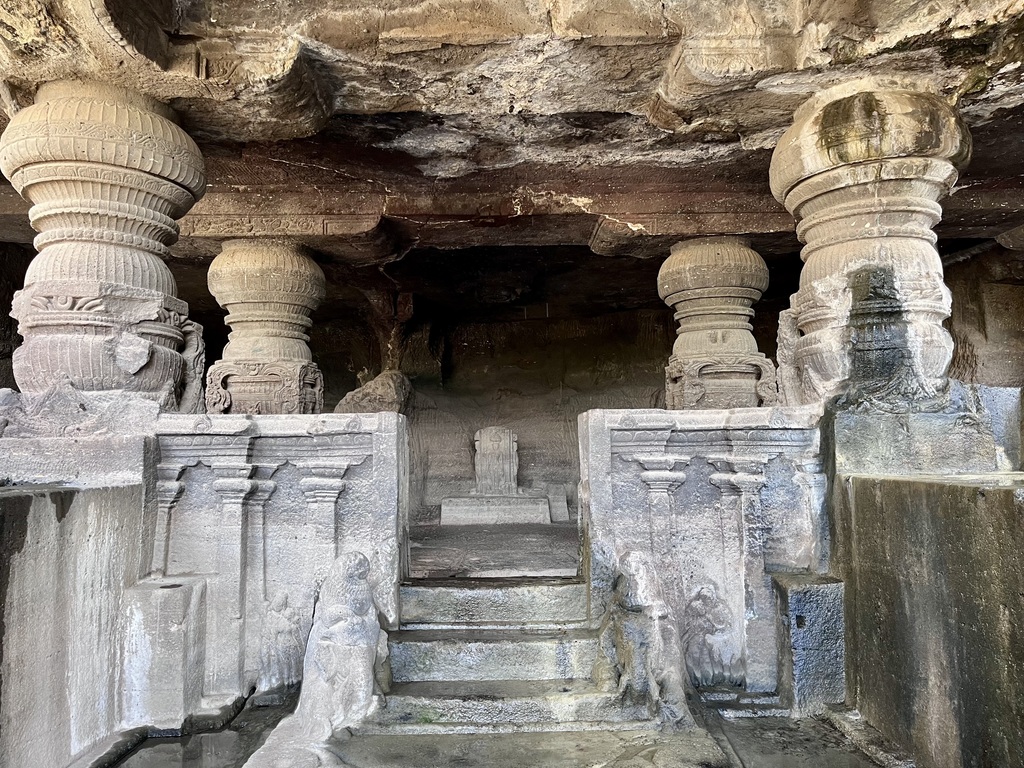
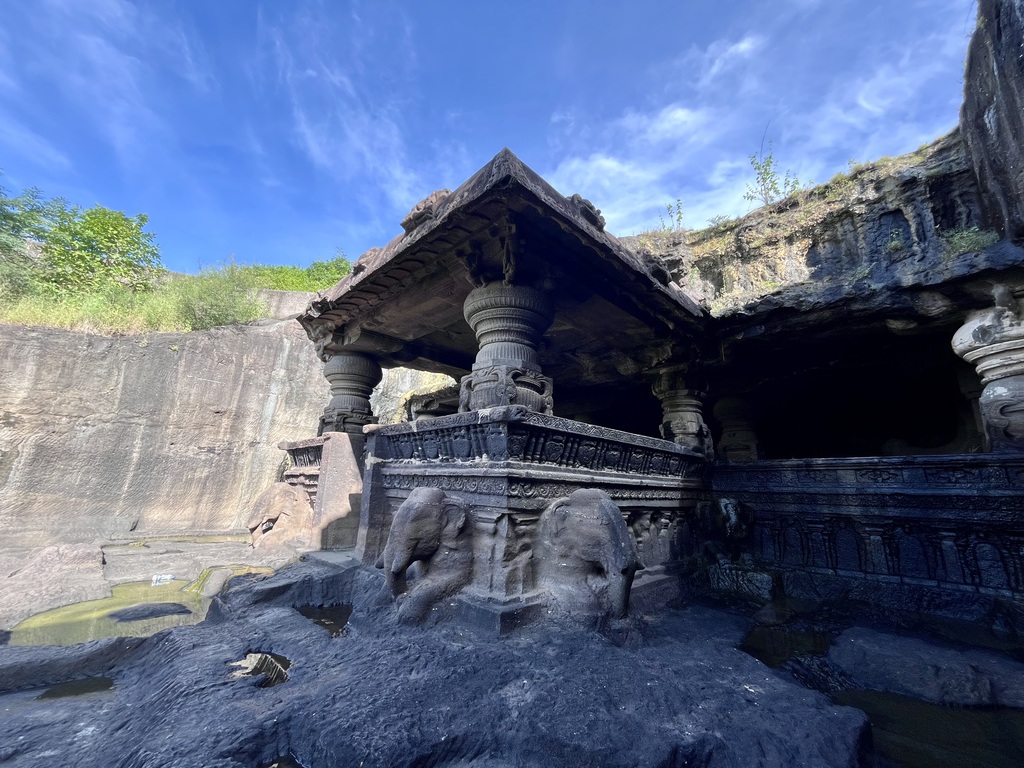
Now we arrive at the jewel of the Jain caves—Cave 32, known as Indra Sabha, and as you step into this magnificent space, you immediately sense its importance as the largest and most elaborate Jain cave at Ellora, designed as a two-storey structure with an open courtyard and a monolithic shrine standing at the center, giving it a grand yet balanced layout, and as you move upward into the upper hall, you are surrounded by richly carved images of Tirthankaras and Yakshis, the protective deities in the Jain tradition, each figure carved with calm expressions and fine detail, and when you look up, the ceilings reveal intricate lotus patterns and decorative motifs that carry deep cosmic symbolism, adding a spiritual depth to the artistic beauty, and among all these carvings, one of the most captivating is the statue of Ambika, the Yakshi goddess, gracefully seated under a mango tree with a child, a figure that feels both gentle and meaningful, and as you take in the entire cave, Indra Sabha beautifully shows how Jain art, while rooted in simplicity and discipline, could also achieve a high level of decoration and spiritual expression.
Cave 33 – A Spacious Monastery
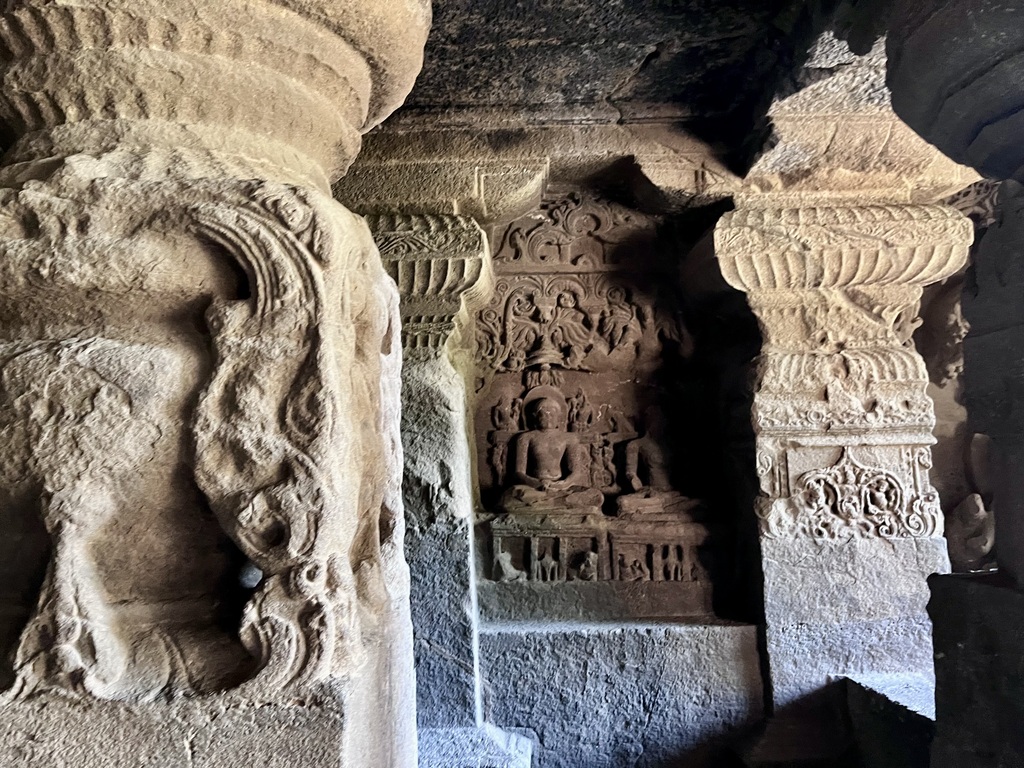
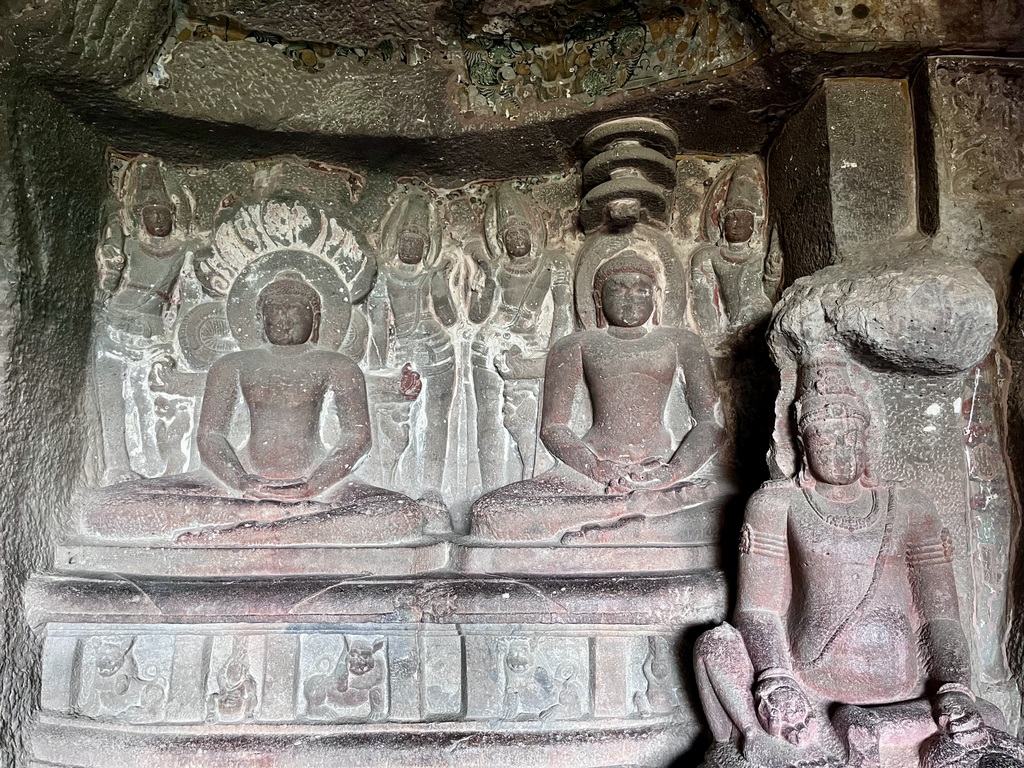
Moving on, Cave 33 is a large two-storey monastery, and as you explore it, you will notice the many small cells arranged within the structure, which were used by monks for living and meditation, along with a main shrine that houses images of the Tirthankaras, giving the cave both a residential and devotional purpose, and the overall scale of this cave clearly suggests that it was an important center for the Jain community, and as you look closely at the details, you will find that the ceilings and pillars are adorned with delicate floral and geometric designs, beautifully reflecting a balance between simplicity, discipline, and artistic elegance.
Cave 34 – The Small but Sacred Cave
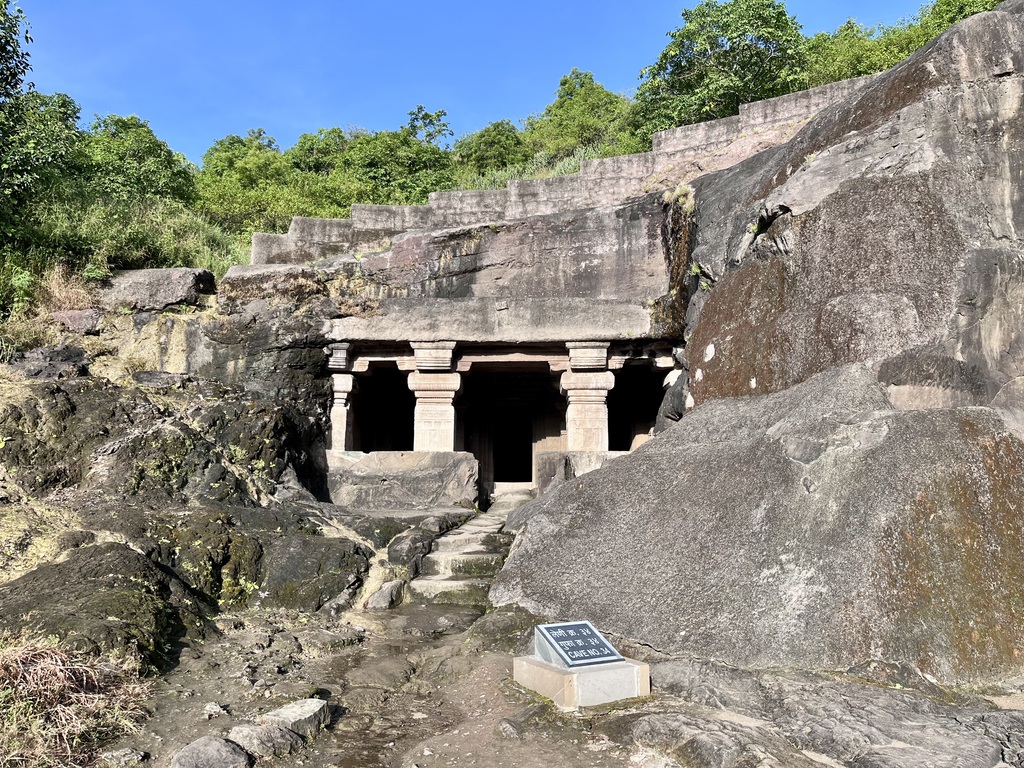
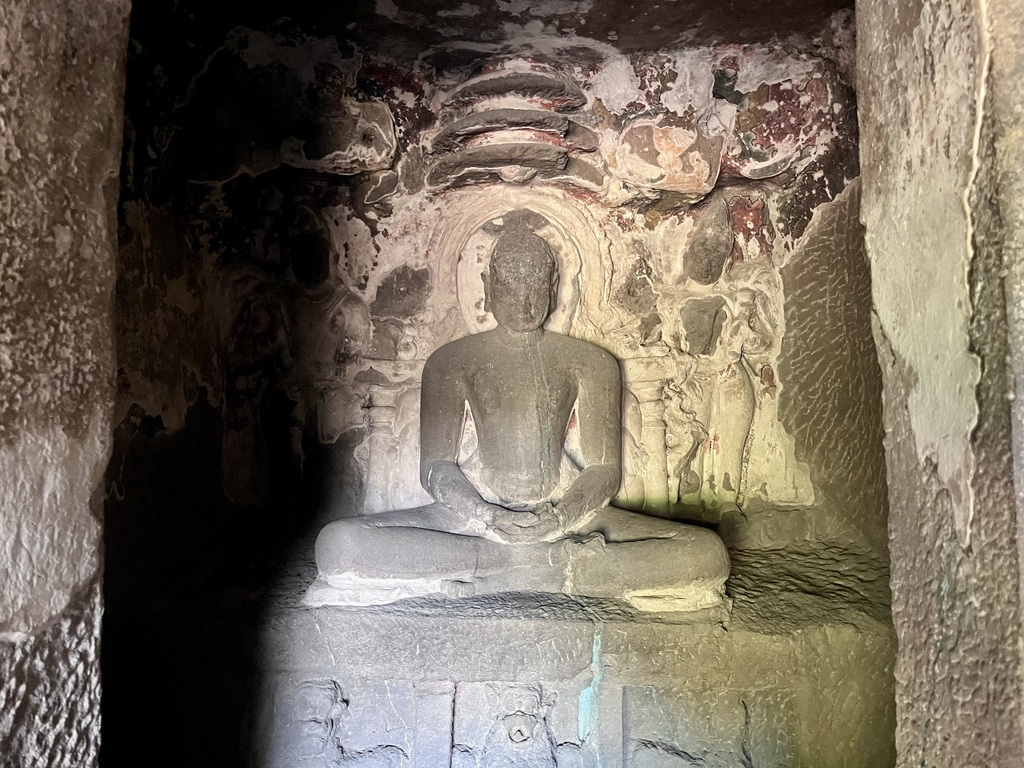
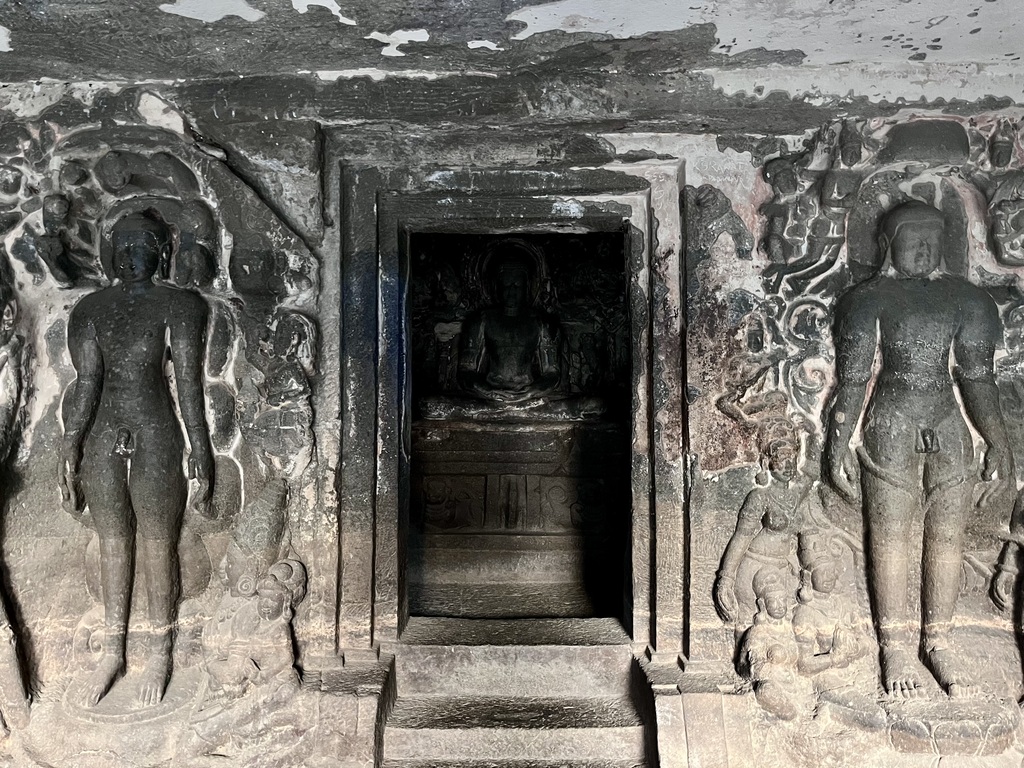
Finally, Cave 34 is the smallest of the Jain caves, and as you step inside, its modest size immediately creates a quiet and intimate atmosphere, yet despite its simplicity, you will notice beautifully carved images of seated Tirthankaras that bring a sense of calm and spiritual focus to the space, and like the other Jain caves, it gently reminds us that even within limited space, artists were able to create an environment filled with peace, devotion, and refined craftsmanship.
|


All Comments
No Comments Available