Worth knowing in life Treasure
The name "India" itself brings a feeling of purity and peace. It connects our hearts and souls to a divine culture and a proud, ancient history. This is the country we lovingly call our Mother, and that name holds deep meaning. Every state in India feels like a different country—with its own language, clothes, food, festivals, and traditions. Yet, they are all united by the great path of Sanatana Dharma.
The strength of its land, the fragrance in its air, the deep spirituality in every street, and the feeling of belonging among its people—these are the things that make India truly special in the world. India is also a country so rich in faith and wisdom that you can never fully know everything about it, even in a lifetime—especially its spiritual side.
As an Indian, I believe we should all know more about our roots. That’s why I’ve decided to take a small step and create a space to keep and share the things that matter. I like to call this space a Treasure. Here, you’ll find information about our gods, temples, scriptures, Vedas, Puranas, and more.
Thank you for visiting this part of my website.
-
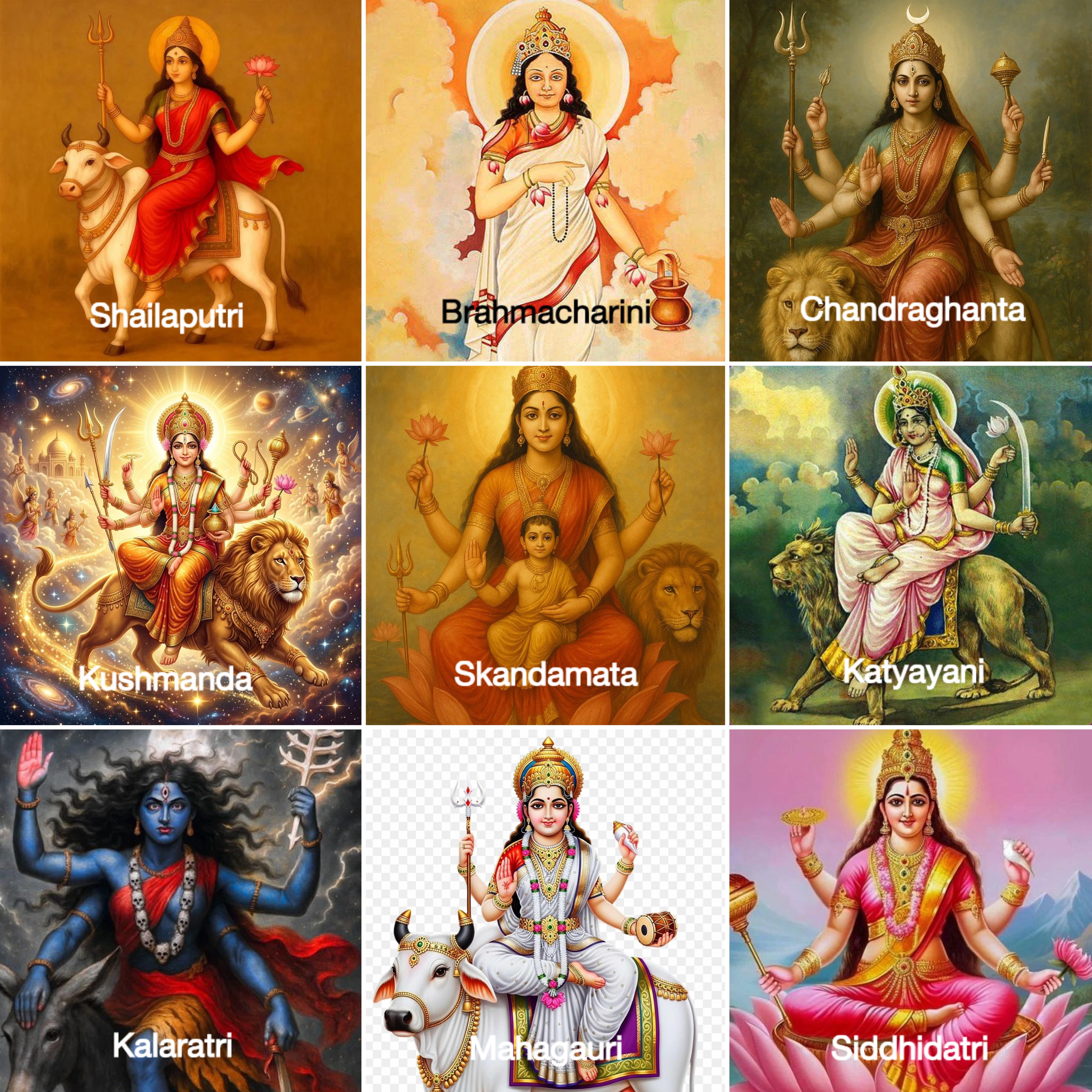
1. Shailaputri
Origin: After Goddess Sati immolated herself, Goddess Parvati was born as the daughter of Lord Himalaya. Since “Shaila” means mountain, she became known as Shailaputri, the daughter of the mountain.
Navratri Worship: Goddess Shailaputri is worshipped on the first day of Navratri.
-
2. Brahmacharini
Origin: According to this traditional account, Goddess Parvati was born in the household of Daksha Prajapati. Her unmarried form, associated with austerity and devotion, is worshipped as Goddess Brahmacharini.
Navratri Worship: Goddess Brahmacharini is worshipped on the second day of Navratri.
-
3. Chandraghanta
Origin: After marrying Lord Shiva, Goddess Parvati adorned her forehead with a crescent moon. As the crescent resembled a bell, she became known as Goddess Chandraghanta.
Navratri Worship: Goddess Chandraghanta is worshipped on the third day of Navratri.
-
4. Kushmanda
Origin: According to this traditional account, Goddess Parvati began residing at the centre of the Sun to provide energy to the universe. Her radiant form became known as Goddess Kushmanda.
Navratri Worship: Goddess Kushmanda is worshipped on the fourth day of Navratri.
-
5. Skandamata
Origin: When Goddess Parvati became the mother of Lord Skanda, also known as Lord Kartikeya, she became known as Goddess Skandamata.
Navratri Worship: Goddess Skandamata is worshipped on the fifth day of Navratri.
-
6. Katyayani
Origin: To destroy the demon Mahishasura, Goddess Parvati assumed the form of Goddess Katyayani, who is worshipped as a warrior goddess.
Navratri Worship: Goddess Katyayani is worshipped on the sixth day of Navratri.
-
7. Kalaratri
Origin: According to this traditional account, when Goddess Parvati removed her outer golden skin to kill the demons Shumbha and Nishumbha, she became known as Goddess Kalaratri. She is regarded as one of the fiercest forms of Goddess Parvati.
Navratri Worship: Goddess Kalaratri is worshipped on the seventh day of Navratri.
-
8. Mahagauri
Origin: According to Hindu mythology, Goddess Shailaputri was exceptionally beautiful and radiant at the age of sixteen. Because of her very fair complexion, she became known as Goddess Mahagauri.
Navratri Worship: Goddess Mahagauri is worshipped on the eighth day of Navratri.
-
9. Siddhidatri
Origin: According to tradition, at the beginning of the universe, Lord Rudra worshipped the formless Adi-Parashakti for the purpose of creation. The supreme Goddess then appeared as Siddhidatri from the left half of Lord Shiva.
Navratri Worship: Goddess Siddhidatri is worshipped on the ninth day of Navratri.
-
১. শৈলপুত্রী
উৎপত্তি: দেবী সতী আত্মাহুতি দেওয়ার পর দেবী পার্বতী পর্বতরাজ হিমালয়ের কন্যা হিসেবে জন্মগ্রহণ করেন। সংস্কৃতে “শৈল” শব্দের অর্থ পর্বত। তাই তিনি শৈলপুত্রী, অর্থাৎ পর্বতের কন্যা নামে পরিচিত হন।
নবরাত্রির পূজা: নবরাত্রির প্রথম দিনে দেবী শৈলপুত্রীর পূজা করা হয়।
-
২. ব্রহ্মচারিণী
উৎপত্তি: প্রচলিত কাহিনি অনুসারে, দেবী পার্বতী দক্ষ প্রজাপতির গৃহে জন্মগ্রহণ করেন। তাঁর অবিবাহিত রূপ, যা তপস্যা ও ভক্তির সঙ্গে সম্পর্কিত, দেবী ব্রহ্মচারিণী নামে পূজিত হয়।
নবরাত্রির পূজা: নবরাত্রির দ্বিতীয় দিনে দেবী ব্রহ্মচারিণীর পূজা করা হয়।
-
৩. চন্দ্রঘণ্টা
উৎপত্তি: ভগবান শিবের সঙ্গে বিবাহের পর দেবী পার্বতী তাঁর কপালে অর্ধচন্দ্র ধারণ করেন। সেই অর্ধচন্দ্র ঘণ্টার মতো দেখতে হওয়ায় তিনি দেবী চন্দ্রঘণ্টা নামে পরিচিত হন।
নবরাত্রির পূজা: নবরাত্রির তৃতীয় দিনে দেবী চন্দ্রঘণ্টার পূজা করা হয়।
-
৪. কুষ্মাণ্ডা
উৎপত্তি: প্রচলিত কাহিনি অনুসারে, বিশ্বব্রহ্মাণ্ডকে শক্তি প্রদান করার জন্য দেবী পার্বতী সূর্যের কেন্দ্রস্থলে অবস্থান করতে শুরু করেন। তাঁর এই জ্যোতির্ময় রূপ দেবী কুষ্মাণ্ডা নামে পরিচিত হয়।
নবরাত্রির পূজা: নবরাত্রির চতুর্থ দিনে দেবী কুষ্মাণ্ডার পূজা করা হয়।
-
৫. স্কন্দমাতা
উৎপত্তি: দেবী পার্বতী যখন ভগবান স্কন্দ, যিনি কার্তিকেয় নামেও পরিচিত, তাঁর মাতা হন, তখন তিনি দেবী স্কন্দমাতা নামে পরিচিত হন।
নবরাত্রির পূজা: নবরাত্রির পঞ্চম দিনে দেবী স্কন্দমাতার পূজা করা হয়।
-
৬. কাত্যায়নী
উৎপত্তি: অসুর মহিষাসুরকে বধ করার জন্য দেবী পার্বতী দেবী কাত্যায়নীর রূপ ধারণ করেন। এই রূপে তিনি যোদ্ধা দেবী হিসেবে পূজিত হন।
নবরাত্রির পূজা: নবরাত্রির ষষ্ঠ দিনে দেবী কাত্যায়নীর পূজা করা হয়।
-
৭. কালরাত্রি
উৎপত্তি: প্রচলিত কাহিনি অনুসারে, শুম্ভ ও নিশুম্ভ নামক অসুরদের বধ করার জন্য দেবী পার্বতী যখন তাঁর বাইরের সোনালি ত্বক ত্যাগ করেন, তখন তিনি দেবী কালরাত্রি নামে পরিচিত হন। তাঁকে দেবী পার্বতীর অন্যতম ভয়ংকর রূপ বলে মনে করা হয়।
নবরাত্রির পূজা: নবরাত্রির সপ্তম দিনে দেবী কালরাত্রির পূজা করা হয়।
-
৮. মহাগৌরী
উৎপত্তি: হিন্দু পৌরাণিক কাহিনি অনুসারে, ষোলো বছর বয়সে দেবী শৈলপুত্রী অত্যন্ত সুন্দরী ও উজ্জ্বল গাত্রবর্ণের অধিকারিণী ছিলেন। তাঁর অত্যন্ত গৌরবর্ণের কারণে তিনি দেবী মহাগৌরী নামে পরিচিত হন।
নবরাত্রির পূজা: নবরাত্রির অষ্টম দিনে দেবী মহাগৌরীর পূজা করা হয়।
-
৯. সিদ্ধিদাত্রী
উৎপত্তি: প্রচলিত বিশ্বাস অনুসারে, বিশ্বব্রহ্মাণ্ডের সৃষ্টির সূচনায় ভগবান রুদ্র সৃষ্টির উদ্দেশ্যে নিরাকার আদি পরাশক্তির উপাসনা করেন। এরপর পরম শক্তিরূপিণী দেবী ভগবান শিবের বাম অর্ধাংশ থেকে সিদ্ধিদাত্রী রূপে আবির্ভূত হন।
নবরাত্রির পূজা: নবরাত্রির নবম দিনে দেবী সিদ্ধিদাত্রীর পূজা করা হয়।
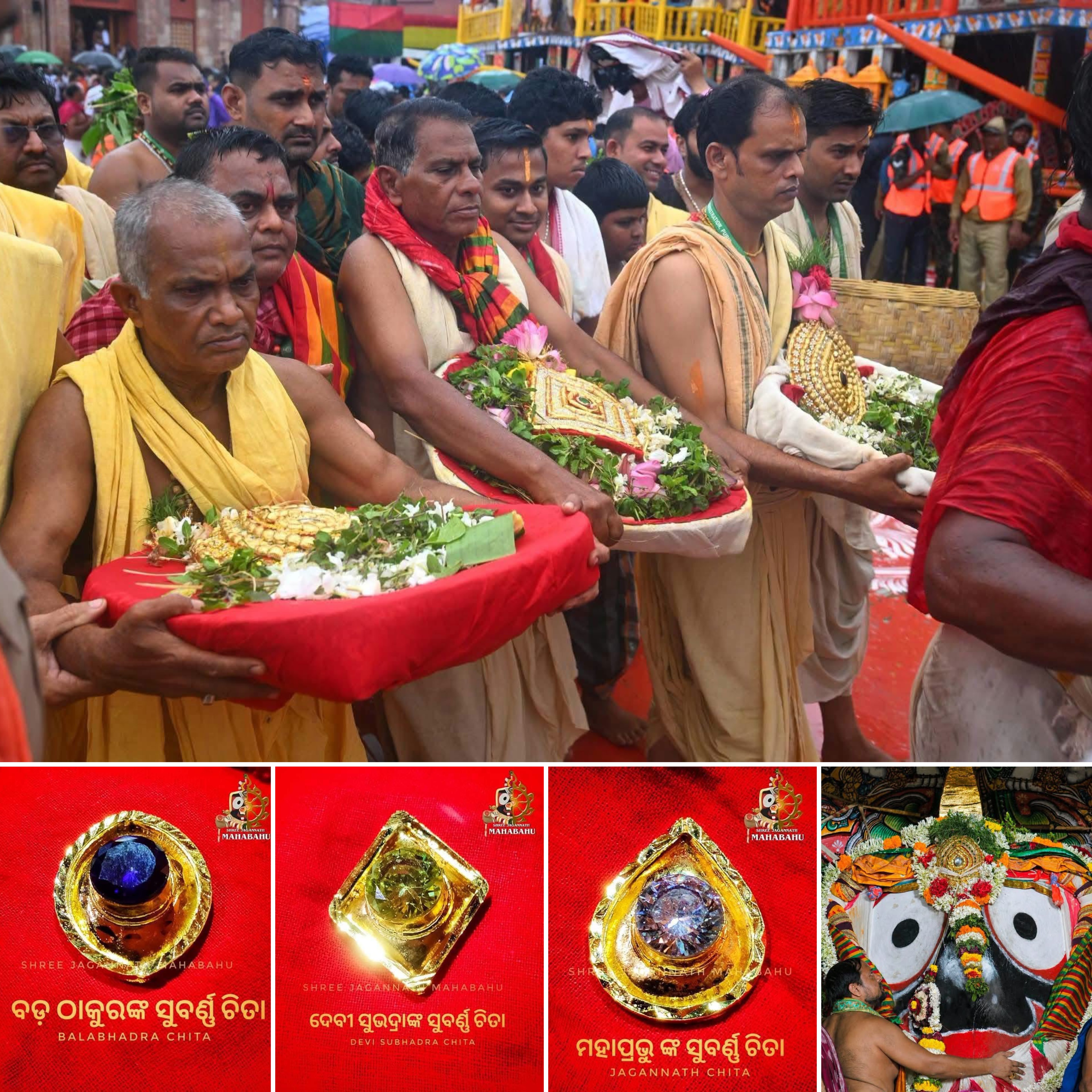
The story of Nil Madhav explains, according to the traditional accounts associated with the Jagannath Temple in Puri, how the worship of Lord Jagannath began and how the present forms of Sri Jagannath, Sri Balabhadra and Devi Subhadra came to be worshipped.
The central characters are King Indradyumna of Avanti in the ancient land of Malava, the tribal chief Vishvavasu, the Brahmin Vidyapati, and the divine architect Vishwakarma. The story connects the secret worship of Nil Madhav in the forests of Utkala, an ancient region broadly corresponding to present-day Odisha, with the appearance of the distinctive wooden deities known as Daru Brahma.
This is a sacred traditional narrative, preserved in different versions in texts and regional traditions. Some details differ between accounts, so it is worth separating the traditional story from what can be established historically.
Nil Madhav in the forest: Lord Vishnu was worshipped as Nil Madhav in a secluded forest shrine in Utkala by Vishvavasu, a chief of the Savara community. The Savara community was associated with the hills and forests of the region. Vishvavasu kept the deity's location secret from outsiders and worshipped Him with deep devotion.
King Indradyumna's search: King Indradyumna, a great devotee of Lord Vishnu, ruled over Avanti in the ancient land of Malava. According to a traditional account, he heard about the glory of Purushottama Kshetra from an elderly pilgrim. Deeply interested in finding a place where he could have the divine darshan of Lord Vishnu, the king sent Vidyapati, a Brahmin associated with the royal priest, to Utkala to discover the location of Nil Madhav.
Vidyapati meets Vishvavasu: Vidyapati travelled from Avanti to Utkala and reached the forest region where Vishvavasu lived. He eventually married Vishvavasu's daughter, Lalita. Through Lalita's request and his growing relationship with Vishvavasu, the tribal chief finally agreed to take Vidyapati to the hidden shrine. However, he blindfolded Vidyapati along the way so that the location would remain secret.
The mustard seeds: During the journey, Vidyapati secretly dropped mustard seeds along the path. When the seeds later germinated, he could trace the route back to the shrine. After receiving darshan of Nil Madhav, Vidyapati returned to Avanti and informed King Indradyumna about the deity and the shrine's location.
Nil Madhav disappears and the divine dream: King Indradyumna was overjoyed by Vidyapati's report and set out for Utkala to have darshan of Nil Madhav. However, when he arrived, the deity had disappeared. The king was heartbroken and cried out to Lord Vishnu, deeply longing to see Him. According to the version followed here, the king then received a divine dream in which the Lord instructed him not to worry. The Lord would manifest in another form, and a sacred log of divine wood, known as Daru Brahma, would come floating from the sea to the shore. This sacred wood would become the material form of the Lord.
The divine wooden log: Following the divine instruction, King Indradyumna waited for the sacred wood to appear. According to the traditional narrative, a divine log floated ashore from the sea near Purushottama Kshetra. The king recognised it as the sacred wood from which the divine deities were to be made. It is known as Daru Brahma, meaning the divine presence of the Supreme Lord manifested in wood.
The mysterious carpenter: A mysterious elderly carpenter appeared and offered to carve the deities from the sacred wood. In the popular account, this carpenter is identified as Vishwakarma in disguise. He agreed to undertake the work on the condition that he would work alone behind closed doors. He warned the king not to open the doors until the work was complete.
The doors open too soon: When no sound came from inside for many days, Queen Gundicha became worried that the carpenter might have died or fallen ill. Concerned about what was happening, the king eventually opened the doors before the agreed time. The carpenter had disappeared, and the wooden figures were left in their distinctive, unfinished forms.
The appearance of the present deities: The figures became the sacred forms of Sri Jagannath, Sri Balabhadra, Devi Subhadra and Sudarshana. In the traditional understanding, their unusual forms are not mistakes or incomplete work; they are the divine forms in which the Lord chose to manifest. These distinctive wooden forms remain central to the worship of the deities at the Jagannath Temple in Puri.
The consecration: King Indradyumna established the worship of the deities at Purushottama Kshetra, present-day Puri. The tradition associates him with the establishment of the temple and the formal worship of the four sacred forms. Some traditional accounts also describe the involvement of the sage Narada and Lord Brahma in the consecration ceremony.
The story explains the sacred and devotional understanding of how Nil Madhav became associated with the wooden forms of Jagannath, Balabhadra, Subhadra and Sudarshana. It also connects the worship practised by Vishvavasu's Savara community in the forests of Utkala with the later establishment of the deities at Puri. The historical origins of the Jagannath tradition are more complex, and scholars discuss the role of indigenous worship and the evolution of the tradition over time.
This is the traditional narrative in the sequence used here. Different versions vary in some details, particularly the events leading to Nil Madhav's disappearance, the timing of the king's dream, the appearance of the sacred log, the carpenter's instructions and the consecration of the deities.
নীল মাধবের কাহিনি অনুযায়ী, পুরীর শ্রীজগন্নাথ মন্দিরের সঙ্গে সম্পর্কিত প্রাচীন ধর্মীয় ঐতিহ্যে বর্ণিত হয়েছে কীভাবে শ্রীজগন্নাথদেবের পূজার সূচনা হয়েছিল এবং কীভাবে শ্রীজগন্নাথ, শ্রীবলভদ্র ও দেবী সুভদ্রার বর্তমান বিগ্রহগুলি পূজিত হতে শুরু করে।
এই কাহিনির প্রধান চরিত্ররা হলেন প্রাচীন মালব দেশের অবন্তীর রাজা ইন্দ্রদ্যুম্ন, শবর সম্প্রদায়ের প্রধান বিশ্বাবসু, ব্রাহ্মণ বিদ্যাপতি এবং দেবশিল্পী বিশ্বকর্মা। অরণ্যের গোপন মন্দিরে নীল মাধবের পূজা থেকে শুরু করে প্রাচীন উৎকল অঞ্চলে, যা মোটামুটিভাবে বর্তমান ওড়িশার সঙ্গে সম্পর্কিত, দারুব্রহ্ম নামে পরিচিত বিশেষ কাঠের বিগ্রহগুলির আবির্ভাব পর্যন্ত এই কাহিনি বিস্তৃত।
এটি একটি পবিত্র ধর্মীয় আখ্যান, যা বিভিন্ন ধর্মগ্রন্থ ও আঞ্চলিক ঐতিহ্যে বিভিন্ন রূপে সংরক্ষিত রয়েছে। বিভিন্ন বর্ণনায় কিছু বিবরণের পার্থক্য দেখা যায়। তাই প্রচলিত ধর্মীয় কাহিনি এবং ঐতিহাসিকভাবে প্রতিষ্ঠিত তথ্যের মধ্যে পার্থক্য রাখা গুরুত্বপূর্ণ।
অরণ্যে নীল মাধবের পূজা: উৎকলের এক নির্জন অরণ্যের মন্দিরে শবর সম্প্রদায়ের প্রধান বিশ্বাবসু নীল মাধব রূপে ভগবান বিষ্ণুর পূজা করতেন। শবর সম্প্রদায় এই অঞ্চলের পাহাড় ও অরণ্যের সঙ্গে সম্পর্কিত। বিশ্বাবসু নীল মাধবের অবস্থান বাইরের লোকদের কাছে গোপন রাখতেন এবং গভীর ভক্তির সঙ্গে তাঁর পূজা করতেন।
রাজা ইন্দ্রদ্যুম্নের অনুসন্ধান: রাজা ইন্দ্রদ্যুম্ন ছিলেন ভগবান বিষ্ণুর এক মহান ভক্ত। তিনি প্রাচীন মালব দেশের অবন্তী রাজ্যে রাজত্ব করতেন। প্রচলিত একটি কাহিনি অনুসারে, তিনি এক বৃদ্ধ তীর্থযাত্রীর কাছ থেকে পুরুষোত্তম ক্ষেত্রের মাহাত্ম্যের কথা জানতে পারেন। ভগবান বিষ্ণুর দর্শন লাভের আকাঙ্ক্ষায় রাজা নীল মাধবের সন্ধান করার সিদ্ধান্ত নেন। তিনি রাজপুরোহিতের সঙ্গে সম্পর্কিত বিদ্যাপতি নামে এক ব্রাহ্মণকে নীল মাধবের অবস্থান খুঁজে বের করার জন্য উৎকলে পাঠান।
বিদ্যাপতির সঙ্গে বিশ্বাবসুর পরিচয়: বিদ্যাপতি অবন্তী থেকে উৎকলে এসে সেই অরণ্য অঞ্চলে পৌঁছান, যেখানে বিশ্বাবসু বাস করতেন। পরবর্তীকালে তিনি বিশ্বাবসুর কন্যা ললিতাকে বিবাহ করেন। ললিতার অনুরোধ এবং বিশ্বাবসুর সঙ্গে তাঁর ঘনিষ্ঠ সম্পর্কের ফলে শবর প্রধান অবশেষে বিদ্যাপতিকে নীল মাধবের গোপন মন্দিরে নিয়ে যেতে সম্মত হন। তবে মন্দিরের অবস্থান গোপন রাখার জন্য তিনি পথ চলার সময় বিদ্যাপতির চোখ বেঁধে দেন।
সরিষার বীজের কৌশল: যাওয়ার পথে বিদ্যাপতি গোপনে রাস্তার উপর সরিষার বীজ ফেলতে থাকেন। পরে সেই বীজ থেকে গাছ জন্মালে তিনি সেই পথ অনুসরণ করে মন্দিরের অবস্থান শনাক্ত করতে পারবেন। নীল মাধবের দর্শন লাভের পর বিদ্যাপতি অবন্তীতে ফিরে যান এবং রাজা ইন্দ্রদ্যুম্নকে দেবতার অবস্থান ও মন্দিরের কথা জানান।
নীল মাধবের অন্তর্ধান এবং দৈবস্বপ্ন: বিদ্যাপতির সংবাদ পেয়ে রাজা ইন্দ্রদ্যুম্ন আনন্দিত হন এবং নীল মাধবের দর্শন লাভের জন্য উৎকলের উদ্দেশে যাত্রা করেন। কিন্তু সেখানে পৌঁছে তিনি দেখেন, দেবতা অন্তর্ধান করেছেন। রাজা গভীরভাবে শোকাহত হন এবং ভগবান বিষ্ণুর দর্শন লাভের আকুলতায় কাঁদতে কাঁদতে তাঁকে ডাকতে থাকেন। এখানে অনুসৃত কাহিনি অনুসারে, সেই সময় রাজা এক দৈবস্বপ্ন লাভ করেন। স্বপ্নে ভগবান তাঁকে চিন্তা না করতে বলেন। তিনি জানান যে অন্য এক রূপে আবার আবির্ভূত হবেন এবং সমুদ্র থেকে ভেসে আসবে এক পবিত্র দিব্য কাঠের গুঁড়ি, যা দারুব্রহ্ম নামে পরিচিত। সেই পবিত্র কাঠ থেকেই ভগবানের বিগ্রহ নির্মিত হবে।
দিব্য কাঠের গুঁড়ির আবির্ভাব: দৈব নির্দেশ অনুসারে রাজা ইন্দ্রদ্যুম্ন সেই পবিত্র কাঠের অপেক্ষা করতে থাকেন। প্রচলিত ধর্মীয় কাহিনি অনুসারে, পুরুষোত্তম ক্ষেত্রের কাছে সমুদ্র থেকে একটি দিব্য কাঠের গুঁড়ি ভেসে তীরে এসে পৌঁছায়। রাজা বুঝতে পারেন যে এই কাঠ থেকেই দেববিগ্রহগুলি নির্মিত হবে। এই পবিত্র কাঠ দারুব্রহ্ম নামে পরিচিত। দারুব্রহ্ম বলতে কাঠের মধ্যে পরমেশ্বরের দিব্য উপস্থিতিকে বোঝানো হয়।
রহস্যময় ভাস্করের আবির্ভাব: এরপর এক রহস্যময় বৃদ্ধ ভাস্কর আবির্ভূত হন এবং সেই পবিত্র কাঠ থেকে দেববিগ্রহ নির্মাণ করতে সম্মত হন। প্রচলিত কাহিনিতে তাঁকে ছদ্মবেশী বিশ্বকর্মা বলে মনে করা হয়। তিনি শর্ত দেন যে বন্ধ দরজার ভিতরে একা কাজ করবেন। কাজ সম্পূর্ণ হওয়ার আগে যেন কেউ দরজা না খোলেন, সেই সতর্কবাণীও তিনি রাজাকে দেন।
নির্ধারিত সময়ের আগেই দরজা খোলা: বহু দিন ধরে ভিতর থেকে কোনও শব্দ না আসায় রানি গুন্ডিচা চিন্তিত হয়ে পড়েন। তাঁর আশঙ্কা হয় যে ভাস্কর হয়তো মারা গিয়েছেন বা অসুস্থ হয়ে পড়েছেন। কী ঘটেছে তা জানার জন্য রাজা অবশেষে নির্ধারিত সময়ের আগেই দরজা খুলে দেন। কিন্তু ভাস্করকে আর দেখা যায়নি এবং কাঠের বিগ্রহগুলি তাঁদের বিশেষ অসম্পূর্ণ রূপেই পড়ে ছিল।
বর্তমান দেববিগ্রহগুলির আবির্ভাব: সেই কাঠের মূর্তিগুলিই শ্রীজগন্নাথ, শ্রীবলভদ্র, দেবী সুভদ্রা এবং সুদর্শনের পবিত্র বিগ্রহ হিসেবে প্রতিষ্ঠিত হয়। প্রচলিত ধর্মীয় বিশ্বাস অনুসারে, তাঁদের এই বিশেষ রূপ কোনও ভুল বা অসম্পূর্ণ কাজের ফল নয়; বরং ভগবান স্বয়ং এই রূপেই আবির্ভূত হতে চেয়েছিলেন। পুরীর শ্রীজগন্নাথ মন্দিরে এই বিশেষ কাঠের বিগ্রহগুলিই আজও পূজিত হন।
বিগ্রহ প্রতিষ্ঠা: রাজা ইন্দ্রদ্যুম্ন বর্তমান পুরী, অর্থাৎ পুরুষোত্তম ক্ষেত্রে দেববিগ্রহগুলির পূজা প্রতিষ্ঠা করেন। প্রচলিত ঐতিহ্যে মন্দির প্রতিষ্ঠা এবং চারটি পবিত্র বিগ্রহের নিয়মিত পূজার সূচনার সঙ্গে তাঁর নাম বিশেষভাবে যুক্ত। কিছু ঐতিহ্যবাহী বর্ণনায় বিগ্রহ প্রতিষ্ঠার অনুষ্ঠানে ঋষি নারদ এবং ভগবান ব্রহ্মার উপস্থিতির কথাও উল্লেখ করা হয়েছে।
এই কাহিনি নীল মাধবের সঙ্গে শ্রীজগন্নাথ, শ্রীবলভদ্র, দেবী সুভদ্রা এবং সুদর্শনের কাঠের বিগ্রহগুলির সম্পর্কের পবিত্র ধর্মীয় ব্যাখ্যা তুলে ধরে। একই সঙ্গে এটি উৎকলের অরণ্যে বিশ্বাবসুর শবর সম্প্রদায়ের মধ্যে প্রচলিত উপাসনার সঙ্গে পরবর্তীকালে পুরীতে দেববিগ্রহগুলির প্রতিষ্ঠার যোগসূত্র তুলে ধরে। তবে জগন্নাথ সংস্কৃতির ঐতিহাসিক উৎস আরও জটিল। গবেষকেরা এই ঐতিহ্যের বিকাশে আদিবাসী উপাসনাপদ্ধতি এবং সময়ের সঙ্গে সঙ্গে ধর্মীয় রীতিনীতির বিবর্তন নিয়েও আলোচনা করেন।
এখানে কাহিনিটি একটি নির্দিষ্ট ধারাবাহিকতা অনুসারে উপস্থাপন করা হয়েছে। বিভিন্ন বর্ণনায় কিছু বিবরণের পার্থক্য রয়েছে, বিশেষ করে নীল মাধবের অন্তর্ধানের আগে ও পরের ঘটনা, রাজার দৈবস্বপ্নের সময়, পবিত্র কাঠের গুঁড়ির আবির্ভাব, ভাস্করের শর্ত এবং দেববিগ্রহগুলির প্রতিষ্ঠা সম্পর্কে।
On the Amavasya tithi of the month of Shravan, the main attraction of Chitalagi Amavasya at Srimandir is placing the special golden chitas again on the foreheads of Sri Jagannath, Sri Balabhadra and Devi Subhadra. A ‘chita’ is a special ornament or tilak-like ornament worn on the forehead of the deities. While ordinary chitas are made using materials such as sandalwood, musk and gorochana, these special chitas of Srimandir are made of gold and precious gemstones.
The three main gemstones are: Sri Jagannath’s diamond chita, with diamond as the main gemstone; Sri Balabhadra’s blue sapphire chita, with blue sapphire as the main gemstone; and Devi Subhadra’s ruby chita, with ruby as the main gemstone. These chitas are mainly made of gold and decorated with different precious stones.
For Sri Jagannath, some descriptions mention a principal diamond known as the Nayak Heera. Another diamond called the Brahmajyoti Heera is also mentioned as a special upper diamond. However, the exact size, weight, value and rarity of these diamonds have not been verified from reliable government sources, so such details should not be stated as confirmed facts.
For Sri Balabhadra, the main gemstone of the Nila Chita is sapphire. Traditional descriptions say that a large Marakata or emerald is placed at the centre, surrounded by other gemstones such as ruby, diamond, emerald and sapphire. However, the exact arrangement of these gemstones has not been confirmed by government sources.
For Devi Subhadra, the main gemstone of the Manikya Chita is ruby. Traditional descriptions say that a square emerald is placed at the centre, with other gemstones such as ruby, diamond, emerald and sapphire around it. However, the exact arrangement of these gemstones has not been confirmed by government sources.
The special chitas are not worn throughout the year. They are removed around Snana Purnima. Traditional descriptions say that simpler or wooden chitas are used during the Ratha Yatra period, while the special golden, gemstone-studded chitas are placed again on Shravan Amavasya, or Chitalagi Amavasya.
The ritual of placing the chitas again is a private inner ritual. The Jaya-Vijaya door remains closed, and ordinary devotees cannot enter the inner area during the ritual. The main ritual is performed by the Pati Mohapatra and Badagrahi Daita servitors. The chitas are attached using Osua, or natural resin, and pattador, or silk thread. After this, the Mahasnan ritual is performed.
According to local religious belief, these three precious gemstones—diamond, sapphire and ruby—are symbolically associated with the planet Jupiter among the Navagrahas. According to this belief, having darshan of the gemstone-studded golden chitas of Sri Jagannath, Sri Balabhadra and Devi Subhadra on Chitalagi Amavasya is believed to reduce the negative effects of Jupiter or Guru Dosha. This is mainly a local religious belief and part of the traditional faith of devotees; it should not be considered a compulsory or universally accepted result of the Srimandir ritual.
শ্রাবণ মাসের অমাবস্যা তিথিতে শ্রীমন্দিরে পালিত চিতালাগী অমাবস্যা-র প্রধান আকর্ষণ হল শ্রীজগন্নাথ, শ্রীবলভদ্র ও দেবী সুভদ্রার কপালে তাঁদের বিশেষ সুবর্ণ চিতা পুনরায় পরানো। ‘চিতা’ হল দেবতাদের কপালের বিশেষ অলংকার বা তিলকসদৃশ অলংকার। সাধারণ চিতা চন্দন, কস্তুরী ও গোরোচনার মতো উপাদান দিয়ে তৈরি হলেও শ্রীমন্দিরের এই বিশেষ চিতাগুলি সোনা ও মূল্যবান রত্ন দিয়ে নির্মিত।
তিন দেবতার চিতার মধ্যে তিনটি প্রধান মূল্যবান রত্ন বিশেষভাবে উল্লেখযোগ্য। শ্রীজগন্নাথদেবের চিতা ‘হীরা চিতা’, যার প্রধান রত্ন হীরা; শ্রীবলভদ্রদেবের ‘নীলা চিতা’, যার প্রধান রত্ন নীলা বা নীলমণি—অর্থাৎ blue sapphire; এবং দেবী সুভদ্রার ‘মানিক্য চিতা’, যার প্রধান রত্ন মানিক্য বা প্রাকৃতিক রুবি। এই তিনটি চিতাই মূলত সুবর্ণের তৈরি এবং বিভিন্ন ছোট-বড় মূল্যবান রত্ন দিয়ে অলংকৃত।
শ্রীজগন্নাথদেবের হীরা চিতা তিনটির মধ্যে বিশেষভাবে উল্লেখযোগ্য। বিভিন্ন বর্ণনা অনুযায়ী এর কেন্দ্রে একটি প্রধান হীরা বা ‘নায়ক হীরা’ থাকে। চিতাটির অলংকরণে একাধিক বৃত্তাকার স্তরে হীরা ও অন্যান্য মূল্যবান রত্ন বসানো রয়েছে। এর উপরের অংশে একটি বিশেষ আকৃতির হীরাকে ‘ব্রহ্মজ্যোতি হীরা’ নামে উল্লেখ করা হয়। কিছু শ্রীজগন্নাথ-সংক্রান্ত বর্ণনায় এই কেন্দ্রীয় বা প্রধান হীরাকে ‘নায়ক’ এবং উপরের হীরাটিকে ‘ব্রহ্মজ্যোতি’ বলা হয়েছে। তবে এই হীরার আকার, ওজন, মূল্য বা পৃথিবীর বিরলতম হীরাগুলির অন্যতম—এ ধরনের দাবিকে নির্ভরযোগ্য সরকারি উৎসে নিশ্চিত করা যায়নি। তাই এগুলিকে নিশ্চিত তথ্য হিসেবে বলা উচিত নয়।
শ্রীবলভদ্রদেবের নীলা চিতার প্রধান রত্ন নীলা বা blue sapphire। এর কেন্দ্রে একটি বড় মারকত বা পান্না থাকার বর্ণনাও পাওয়া যায়, যার চারপাশে একাধিক বৃত্তাকার অলংকরণে ছোট ছোট মানিক্য, হীরা, পান্না ও নীল রত্ন বসানো রয়েছে। অর্থাৎ ‘নীলা চিতা’ নামটি চিতাটির প্রধান পরিচায়ক রত্ন নীলার সঙ্গে যুক্ত হলেও এর সম্পূর্ণ অলংকরণে শুধু নীলাই নয়, অন্যান্য মূল্যবান রত্নও ব্যবহৃত হয়েছে। এই বিস্তারিত গঠনটি মূলত শ্রীমন্দির-সংক্রান্ত ঐতিহ্যবাহী বর্ণনায় পাওয়া যায়; সরকারি উৎসে চিতার প্রতিটি স্তরের রত্নের পূর্ণ বিন্যাস নিশ্চিত করা যায়নি।
দেবী সুভদ্রার মানিক্য চিতা-র প্রধান পরিচায়ক রত্ন মানিক্য বা ruby। বিভিন্ন বর্ণনায় এর কেন্দ্রে একটি চৌকো আকৃতির মারকত বা পান্না এবং তার চারপাশে মানিক্য, হীরা, পান্না, নীলা ও অন্যান্য রত্নের অলংকরণের কথা বলা হয়েছে। এখানেও ‘মানিক্য চিতা’ নামটি মূলত এর প্রধান রত্ন মানিক্যের সঙ্গে সম্পর্কিত। তাই দেবী সুভদ্রার চিতাকে ‘মানিক্য চিতা’ বলা যথাযথ; চিতাটির অলংকরণে অন্যান্য রত্নও থাকতে পারে।
এই তিনটি চিতা সারা বছর দেবতাদের কপালে থাকে না। স্নানপূর্ণিমার সময় মূল রত্নখচিত চিতাগুলি খুলে রাখা হয়। এরপর রথযাত্রার সময় দেবতাদের জন্য অপেক্ষাকৃত সাধারণ বা কাঠের তৈরি চিতা ব্যবহারের কথা বিভিন্ন বর্ণনায় পাওয়া যায়। শ্রাবণ অমাবস্যায়, অর্থাৎ চিতালাগী অমাবস্যায়, সেই বিশেষ সুবর্ণ ও রত্নখচিত চিতাগুলি আবার ভাণ্ডার থেকে বের করে পরিষ্কার করে দেবতাদের কপালে পুনঃস্থাপন করা হয়।
চিতালাগীর এই পুনঃস্থাপন সাধারণ দর্শনের সামনে সম্পন্ন হয় না। এটি শ্রীমন্দিরের একটি গুপ্ত বা অন্তরঙ্গ নীতি হিসেবে পালিত হয়। নীতি চলাকালীন জয়-বিজয় দ্বার বন্ধ থাকে এবং সাধারণ ভক্তদের অন্তঃস্থলে প্রবেশের অনুমতি থাকে না। এই চিতা লাগানোর প্রধান আচার পতিমহাপাত্র ও বাড়গ্রাহী দৈতাপতি সেবকদের দ্বারা সম্পন্ন হয়। চিতাগুলি দেবতাদের কপালে ওসুয়া বা প্রাকৃতিক রজন এবং পট্টডোর বা রেশমি সুতা দিয়ে স্থাপন করা হয়। চিতা স্থাপনের পর দেবতাদের মহাস্নান নীতি সম্পন্ন হয়।
এই তিনটি রত্নখচিত চিতা তাই কেবল অলংকার নয়; চিতালাগী অমাবস্যায় এগুলির পুনঃস্থাপন শ্রীমন্দিরের একটি বিশেষ বার্ষিক নীতির অংশ। হীরা, নীলা ও মানিক্য—এই তিন প্রধান রত্নের কারণে শ্রীজগন্নাথ, শ্রীবলভদ্র ও দেবী সুভদ্রার চিতার পৃথক পরিচয় তৈরি হয়েছে। এই রত্নখচিত সুবর্ণ চিতা পুনরায় দেবতাদের শ্রীমুখে স্থাপনের মধ্য দিয়েই চিতালাগী অমাবস্যার অন্যতম প্রধান আচার সম্পূর্ণ হয়।
স্থানীয় ধর্মীয় বিশ্বাস অনুযায়ী, এই তিনটি মূল্যবান রত্ন—হীরা, নীলা ও মানিক্য—নবগ্রহের মধ্যে বৃহস্পতি গ্রহের সঙ্গে প্রতীকীভাবে সম্পর্কিত বলে মনে করা হয়। সেই বিশ্বাস অনুসারে, চিতালাগী অমাবস্যায় শ্রীজগন্নাথ, শ্রীবলভদ্র ও দেবী সুভদ্রার এই রত্নখচিত সুবর্ণ চিতা দর্শন করলে বৃহস্পতি গ্রহের অশুভ প্রভাব বা বৃহস্পতি-দোষ প্রশমিত হয়। এটি মূলত স্থানীয় ধর্মীয় বিশ্বাস ও ভক্তদের প্রচলিত আস্থার অংশ; শ্রীমন্দিরের সর্বজনস্বীকৃত আচারবিধির বাধ্যতামূলক ফল হিসেবে এটিকে বিবেচনা করা হয় না।
There are 14 Manvantaras in one Kalpa, or one day of Brahmā. Each Manvantara is governed by a particular Manu and has its own associated Sapta Rishis, Indra, and groups of Devas.
-
1. Svāyambhuva
Manu: Svāyambhuva Manu
Saptarishis: Marichi, Atri, Angira, Pulaha, Kratu, Pulastya, Vashistha
-
2. Svārochiṣa
Manu: Svārochiṣa Manu
Saptarishis: Urja, Stambha, Prana, Brihaspati, Datta, Atri, Cyavana
-
3. Uttama
Manu: Uttama Manu
Saptarishis: Pramada and other sons of Vashistha
-
4. Tāmasa
Manu: Tāmasa Manu
Saptarishis: Jyoti, Dhama, Prithu, Kavya, Chaitra, Agni, Pivara
-
5. Raivata
Manu: Raivata Manu
Saptarishis: Hiranyaroma, Vedasiras, Urdhvabahu, and others
-
6. Cākṣuṣa
Manu: Cākṣuṣa Manu
Saptarishis: Havishmat, Viraka, Sumedhas, Anuttama, Madhu, Atinama, Sahishnu
-
7. Vaivasvata — Present
Manu: Vaivasvata Manu
Saptarishis: Kashyapa, Atri, Vashistha, Vishvamitra, Gautama, Jamadagni, Bharadvaja
-
8. Sāvarṇi
Manu: Sāvarṇi Manu
Saptarishis: Galava, Parashurama, Ashvatthama, Kripa, Rishyashringa, Vyasa, Diptiman
-
9. Dakṣa-sāvarṇi
Manu: Dakṣa-sāvarṇi Manu
Saptarishis: Dyutiman and others
-
10. Brahma-sāvarṇi
Manu: Brahma-sāvarṇi Manu
Saptarishis: Havishman, Sukrita, Satya, Jaya, Murti and others
-
11. Dharma-sāvarṇi
Manu: Dharma-sāvarṇi Manu
Saptarishis: Aruna and others
-
12. Rudra-sāvarṇi
Manu: Rudra-sāvarṇi Manu
Saptarishis: Tapomurti, Tapasvi, Agnidhraka and others
-
13. Deva-sāvarṇi
Manu: Deva-sāvarṇi Manu
Saptarishis: Nirmoka, Tattvadarshi and others
-
14. Indra-sāvarṇi
Manu: Indra-sāvarṇi Manu
Saptarishis: Agni, Bahu, Shuchi, Shuddha, Magadha and others
একটি কল্পে, অর্থাৎ ব্রহ্মার এক দিনে, মোট ১৪টি মন্বন্তর থাকে। প্রতিটি মন্বন্তরের অধিপতি একজন নির্দিষ্ট মনু এবং প্রতিটি মন্বন্তরের নিজস্ব সপ্তর্ষি, ইন্দ্র ও দেবগণের বিভিন্ন গোষ্ঠী থাকে।
-
১. স্বায়ম্ভুব
মনু: স্বায়ম্ভুব মনু
সপ্তর্ষি: মরীচি, অত্রি, অঙ্গিরা, পুলহ, ক্রতু, পুলস্ত্য, বশিষ্ঠ
-
২. স্বারোচিষ
মনু: স্বারোচিষ মনু
সপ্তর্ষি: ঊর্জা, স্তম্ভ, প্রাণ, বৃহস্পতি, দত্ত, অত্রি, চ্যবন
-
৩. উত্তম
মনু: উত্তম মনু
সপ্তর্ষি: প্রমদ এবং বশিষ্ঠের অন্যান্য পুত্র
-
৪. তামস
মনু: তামস মনু
সপ্তর্ষি: জ্যোতি, ধামা, পৃথু, কাব্য, চৈত্র, অগ্নি, পীবর
-
৫. রৈবত
মনু: রৈবত মনু
সপ্তর্ষি: হিরণ্যরোমা, বেদশিরা, ঊর্ধ্ববাহু এবং অন্যান্য
-
৬. চাক্ষুষ
মনু: চাক্ষুষ মনু
সপ্তর্ষি: হবিষ্মান, বিরক, সুমেধা, অনুত্তম, মধু, অতিনামা, সহিষ্ণু
-
৭. বৈবস্বত — বর্তমান
মনু: বৈবস্বত মনু
সপ্তর্ষি: কশ্যপ, অত্রি, বশিষ্ঠ, বিশ্বামিত্র, গৌতম, জামদগ্নি, ভরদ্বাজ
-
৮. সাবর্ণি
মনু: সাবর্ণি মনু
সপ্তর্ষি: গালব, পরশুরাম, অশ্বত্থামা, কৃপ, ঋশ্যশৃঙ্গ, ব্যাস, দীপ্তিমান
-
৯. দক্ষ-সাবর্ণি
মনু: দক্ষ-সাবর্ণি মনু
সপ্তর্ষি: দ্যুতিমান এবং অন্যান্য
-
১০. ব্রহ্ম-সাবর্ণি
মনু: ব্রহ্ম-সাবর্ণি মনু
সপ্তর্ষি: হবিষ্মান, সুকৃত, সত্য, জয়, মূর্তি এবং অন্যান্য
-
১১. ধর্ম-সাবর্ণি
মনু: ধর্ম-সাবর্ণি মনু
সপ্তর্ষি: অরুণ এবং অন্যান্য
-
১২. রুদ্র-সাবর্ণি
মনু: রুদ্র-সাবর্ণি মনু
সপ্তর্ষি: তপোমূর্তি, তপস্বী, অগ্নিধ্রক এবং অন্যান্য
-
১৩. দেব-সাবর্ণি
মনু: দেব-সাবর্ণি মনু
সপ্তর্ষি: নির্মোক, তত্ত্বদর্শী এবং অন্যান্য
-
১৪. ইন্দ্র-সাবর্ণি
মনু: ইন্দ্র-সাবর্ণি মনু
সপ্তর্ষি: অগ্নি, বাহু, শুচি, শুদ্ধ, মাগধ এবং অন্যান্য
A Manvantara is a major period of time in Hindu cosmology, governed by a particular Manu (a highly elevated person who is appointed/recognized as the progenitor and ruler of humanity during a particular Manvantara.). There are 14 Manvantaras in one Kalpa, and a Kalpa represents one day of Brahmā. Each Manvantara has its own Manu, Sapta Rishis, Indra, and groups of Devas.
One Manvantara consists of 71 Mahāyugas (Chaturyugas). One Mahāyuga is 4,320,000 human years, making one Manvantara approximately 306.72 million human years long.
Between two Manvantaras there is a Manvantara-Sandhyā, a transition period lasting 1,728,000 human years. It is traditionally associated with dissolution, flood/deluge, and the reorganization of the earthly world. It is not the complete destruction of the universe; the major Pralaya occurs at the end of Brahmā’s entire day (Kalpa).
Simply:
Manvantara → Sandhyā (transition) → Next Manvantara
মন্বন্তর হলো হিন্দু মহাজাগতিক সময় গণনা অনুযায়ী একটি দীর্ঘ সময়কাল, যার অধিপতি থাকেন একজন নির্দিষ্ট মনু (একজন অত্যন্ত উচ্চ মর্যাদাসম্পন্ন ব্যক্তি, যিনি একটি নির্দিষ্ট মন্বন্তরে মানবজাতির আদি প্রজাপতি ও শাসক হিসেবে নিযুক্ত বা স্বীকৃত হন।)। একটি কল্পে মোট ১৪টি মন্বন্তর থাকে, এবং কল্পকে ব্রহ্মার এক দিন বলা হয়। প্রতিটি মন্বন্তরের নিজস্ব মনু, সপ্তর্ষি, ইন্দ্র এবং দেবগণের বিভিন্ন গোষ্ঠী থাকে।
একটি মন্বন্তর গঠিত হয় ৭১টি মহাযুগ বা চতুর্যুগ নিয়ে। একটি মহাযুগের সময়কাল ৪৩,২০,০০০ মানব বছর। তাই একটি মন্বন্তরের সময়কাল প্রায় ৩০৬.৭২ মিলিয়ন মানব বছর।
দুটি মন্বন্তরের মাঝখানে থাকে মন্বন্তর-সন্ধ্যা, যা একটি পরিবর্তন বা অন্তর্বর্তীকাল। এর সময়কাল ১৭,২৮,০০০ মানব বছর। এই সময়কে শাস্ত্রীয় বর্ণনায় লয়, বন্যা বা প্রলয়ের মতো পরিবর্তন এবং পৃথিবীর পুনর্বিন্যাসের সঙ্গে যুক্ত করা হয়। তবে এটি সমগ্র মহাবিশ্বের সম্পূর্ণ ধ্বংস নয়; বৃহৎ প্রলয় ঘটে ব্রহ্মার সম্পূর্ণ এক দিন বা কল্পের শেষে।
সহজভাবে:
মন্বন্তর → সন্ধ্যা (পরিবর্তনকাল) → পরবর্তী মন্বন্তর
The current Sapta Rishis belong to the 7th Manvantara — Vaivasvata Manvantara, ruled by Vaivasvata Manu.
-
1. Kashyapa
Represents: Creation
Meaning / Explanation: Source of all beings; symbolizes origin and expansion of life.
-
2. Atri
Represents: Purity
Meaning / Explanation: Represents purity of heart, devotion, and spiritual power.
-
3. Bharadvaja
Represents: Knowledge
Meaning / Explanation: Symbol of learning, wisdom, and guidance through Vedic knowledge.
-
4. Vishvamitra
Represents: Transformation
Meaning / Explanation: Shows how determination and tapasya can transform a person.
-
5. Gautama
Represents: Justice
Meaning / Explanation: Represents law, karma, fairness, and consequences of actions.
-
6. Jamadagni
Represents: Discipline
Meaning / Explanation: Symbol of strict discipline, control, and adherence to dharma.
-
7. Vashistha
Represents: Wisdom
Meaning / Explanation: Represents deep understanding, inner peace, and spiritual insight.
বর্তমান সপ্তর্ষিরা ৭ম মন্বন্তর — বৈবস্বত মন্বন্তরের অন্তর্গত। এই মন্বন্তরের মনু হলেন বৈবস্বত মনু।
-
১. কশ্যপ
যা নির্দেশ করে: সৃষ্টি
অর্থ / ব্যাখ্যা: সমস্ত জীবের উৎস; সৃষ্টি ও বিস্তারের প্রতীক।
-
২. অত্রি
যা নির্দেশ করে: পবিত্রতা
অর্থ / ব্যাখ্যা: হৃদয়ের পবিত্রতা, ভক্তি ও আধ্যাত্মিক শক্তির প্রতীক।
-
৩. ভরদ্বাজ
যা নির্দেশ করে: জ্ঞান
অর্থ / ব্যাখ্যা: শিক্ষা, বিদ্যা ও বেদের জ্ঞানের মাধ্যমে পথ প্রদর্শনের প্রতীক।
-
৪. বিশ্বামিত্র
যা নির্দেশ করে: রূপান্তর
অর্থ / ব্যাখ্যা: তপস্যা ও দৃঢ় সংকল্পে জীবনের পরিবর্তনের প্রতীক।
-
৫. গৌতম
যা নির্দেশ করে: ন্যায়
অর্থ / ব্যাখ্যা: ধর্ম, কর্মফল ও ন্যায়বিচারের প্রতীক।
-
৬. জামদগ্নি
যা নির্দেশ করে: শৃঙ্খলা
অর্থ / ব্যাখ্যা: কঠোর নিয়ম, সংযম ও ধর্মপালনের প্রতীক।
-
৭. বশিষ্ঠ
যা নির্দেশ করে: প্রজ্ঞা
অর্থ / ব্যাখ্যা: গভীর জ্ঞান, অন্তর্দৃষ্টি ও মানসিক শান্তির প্রতীক।
-
Position: Center
Deity: Surya (Sun)
Direction Faced: East
-
Position: 1
Deity: Chandra (Moon)
Direction Faced: West
-
Position: 2
Deity: Mangala (Mars)
Direction Faced: South
-
Position: 3
Deity: Budha (Mercury)
Direction Faced: North
-
Position: 4
Deity: Brihaspati (Jupiter)
Direction Faced: North-East
-
Position: 5
Deity: Shukra (Venus)
Direction Faced: South-East
-
Position: 6
Deity: Shani (Saturn)
Direction Faced: West
-
Position: 7
Deity: Rahu
Direction Faced: South-West
-
Position: 8
Deity: Ketu
Direction Faced: North-West
-
অবস্থান: কেন্দ্র
দেবতা: সূর্য (Surya)
মুখের দিক: পূর্ব
-
অবস্থান: ১
দেবতা: চন্দ্র
মুখের দিক: পশ্চিম
-
অবস্থান: ২
দেবতা: মঙ্গল
মুখের দিক: দক্ষিণ
-
অবস্থান: ৩
দেবতা: বুধ
মুখের দিক: উত্তর
-
অবস্থান: ৪
দেবতা: বৃহস্পতি
মুখের দিক: উত্তর-পূর্ব
-
অবস্থান: ৫
দেবতা: শুক্র
মুখের দিক: দক্ষিণ-পূর্ব
-
অবস্থান: ৬
দেবতা: শনি
মুখের দিক: পশ্চিম
-
অবস্থান: ৭
দেবতা: রাহু
মুখের দিক: দক্ষিণ-পশ্চিম
-
অবস্থান: ৮
দেবতা: কেতু
মুখের দিক: উত্তর-পশ্চিম
According to ancient temple tradition, the story of Lord Ranganatha of the Ranganathaswamy Temple begins at the time of creation. When Brahma was creating the universe, he saw that everything was temporary. He wanted something eternal. So, he prayed to Sriman Narayana (Lord Vishnu). He chanted the sacred mantra “Om Namo Narayanaya” and did deep penance.
The Lord was pleased. He appeared in a divine form with the sacred Pranavakara Vimanam. This Vimanam came from the cosmic ocean called Tiruparkadal (Ksheera Sagara). It was not just a structure. It was a divine presence. Brahma started worshipping the Lord in Satya Loka. He also appointed Surya (the Sun God) to perform daily worship.
In Treta Yuga, this sacred Vimanam came to Vaivasvata Manu and then to his son Ikshvaku. Ikshvaku was a great king of the Solar dynasty. He brought the Vimanam to Ayodhya. It became the royal deity of his dynasty. Many kings worshipped the Lord for generations. This continued during the time of King Dasaratha and Lord Rama.
A Chola king named Dharma Varma Chola came to Ayodhya for the Putra Kameshti Yajna. He saw the divine Vimanam. He felt deep devotion. He prayed to bring the Lord to Srirangam. But King Dasaratha did not agree. So, Dharma Varma returned to Srirangam. He did penance near the Chandra Pushkarani. He prayed for the Lord to come there.
After the Ramayana war, Lord Rama defeated Ravana. He wanted to honor Vibhishana. So, he gifted the sacred Vimanam and the deity of Lord Ranganatha to him. Vibhishana accepted it with devotion. He started his journey to Lanka.
On the way, he reached the banks of the River Cauvery at Srirangam. It was time for his daily rituals. So, he placed the Vimanam near the Chandra Pushkarani at a place called Sesha Peedam. After his rituals, he tried to lift it. But it did not move.
Lord Ranganatha appeared before him. He spoke with kindness. He said He wanted to stay at Srirangam. He said He would face south towards Lanka and bless Vibhishana always. Even today, the deity faces south.
Dharma Varma Chola realized the Lord had come. He felt great joy. He built the temple around the sacred Vimanam. He started regular worship. This is how the Ranganathaswamy Temple was established.
Even today, devotees pray near the Chandra Pushkarani. It is believed that their wishes are fulfilled. This story shows the journey from Brahma to Ayodhya to Srirangam.
-
Name of Deity: Shri Ranganathaswamy
-
Incarnation Of: Lord Vishnu
-
Position (Posture): Reclining (Ananta Shayana) on Adi Shesha
-
Consort in Garbhagriha: None
-
Other Deity Present in Garbhagriha: Brahma (on lotus emerging from navel)
-
City: Srirangam
-
State: Tamil Nadu
-
Main Idol Size: Approximately 21 feet long
প্রাচীন মন্দির প্রথা অনুযায়ী, রঙ্গনাথস্বামী মন্দিরের ভগবান রঙ্গনাথ-এর কাহিনী সৃষ্টির সময় থেকেই শুরু হয়। যখন ব্রহ্মা সৃষ্টি করছিলেন, তখন তিনি দেখলেন সবকিছুই অস্থায়ী। তিনি চিরস্থায়ী কিছু চাইলেন। তাই তিনি শ্রীমন নারায়ণ (ভগবান বিষ্ণু)-এর কাছে প্রার্থনা করেন। তিনি “ওঁ নমো নারায়ণায়” মন্ত্র জপ করে তপস্যা করেন।
ভগবান সন্তুষ্ট হয়ে দিব্য রূপে প্রকাশিত হন। তিনি ওঁকার আকৃতির পবিত্র মন্দির শিখর সহ আবির্ভূত হন। এই পবিত্র শিখর তিরুপার্কাডল (ক্ষীর সাগর) থেকে উদ্ভূত। এটি শুধু একটি স্থাপনা নয়, এটি ভগবানের পবিত্র উপস্থিতির প্রতীক। ব্রহ্মা সত্যলোকে এই রূপে ভগবানের পূজা শুরু করেন। তিনি সূর্যদেব-কে প্রতিদিন পূজা করার দায়িত্ব দেন।
ত্রেতা যুগে এই পবিত্র রূপ বৈবস্বত মনু এবং তাঁর পুত্র ইক্ষ্বাকু-এর কাছে আসে। ইক্ষ্বাকু সূর্যবংশের এক মহান রাজা ছিলেন। তিনি এটিকে অযোধ্যা-তে নিয়ে আসেন। এটি তাঁদের বংশের রাজদেবতা হয়ে ওঠে। বহু প্রজন্ম ধরে রাজারা ভগবানের পূজা করেন। এই পূজা রাজা দশরথ ও ভগবান রাম-এর সময়েও চলতে থাকে।
ধর্ম বর্মা চোল নামে এক চোল রাজা পুত্র কামেষ্ঠি যজ্ঞে অংশ নিতে অযোধ্যায় আসেন। তিনি এই দিব্য রূপ দেখে গভীর ভক্তিতে আপ্লুত হন। তিনি ভগবানকে শ্রীরঙ্গমে আনার জন্য প্রার্থনা করেন। কিন্তু রাজা দশরথ সম্মতি দেন না। তখন তিনি শ্রীরঙ্গমে ফিরে যান এবং চন্দ্র পুষ্করিণী-র কাছে তপস্যা শুরু করেন।
রামায়ণের যুদ্ধের পর ভগবান রাম রাবণকে পরাজিত করেন। তিনি বিভীষণ-কে সম্মান জানাতে এই পবিত্র রূপ উপহার দেন। বিভীষণ ভক্তিভরে এটি গ্রহণ করেন এবং লঙ্কার উদ্দেশ্যে যাত্রা শুরু করেন।
পথে তিনি কাবেরী নদীর তীরে শ্রীরঙ্গমে পৌঁছান। তখন তাঁর দৈনন্দিন পূজার সময় হয়। তাই তিনি এই পবিত্র রূপটি চন্দ্র পুষ্করিণী-র পাশে শেষ পীঠম-এ স্থাপন করেন। পূজা শেষে তিনি এটিকে তুলতে চেষ্টা করেন, কিন্তু এটি আর নড়ে না।
তখন ভগবান রঙ্গনাথ তাঁর সামনে প্রকাশিত হন। তিনি স্নেহভরে বলেন যে তিনি শ্রীরঙ্গমেই থাকতে চান। তিনি আরও বলেন যে তিনি দক্ষিণ দিকে লঙ্কার দিকে মুখ করে বিভীষণকে সর্বদা আশীর্বাদ করবেন। আজও মূর্তিটি দক্ষিণমুখী অবস্থায় রয়েছে।
ধর্ম বর্মা চোল বুঝতে পারেন যে ভগবান সেখানে স্থায়ীভাবে অবস্থান করতে চান। তিনি অত্যন্ত আনন্দিত হন। তিনি এই পবিত্র স্থানকে ঘিরে মন্দির নির্মাণ করেন এবং নিয়মিত পূজা শুরু করেন। এইভাবেই রঙ্গনাথস্বামী মন্দির-এর প্রতিষ্ঠা হয়।
আজও ভক্তরা চন্দ্র পুষ্করিণী-র কাছে প্রার্থনা করেন। বিশ্বাস করা হয়, এখানে প্রার্থনা করলে মনোবাসনা পূর্ণ হয়। এই কাহিনী ব্রহ্মা থেকে অযোধ্যা হয়ে শ্রীরঙ্গম পর্যন্ত ভগবানের আগমনের এক পবিত্র ইতিহাস তুলে ধরে।
-
দেবতার নাম: শ্রী রঙ্গনাথস্বামী
-
কার অবতার: ভগবান বিষ্ণু
-
অবস্থান (ভঙ্গি): অনন্ত শয়ন অবস্থায় (আদি শেষের উপর শায়িত)
-
গর্ভগৃহে সহধর্মিণী: কেউ উপস্থিত নন
-
গর্ভগৃহে অন্যান্য দেবতা: ব্রহ্মা (নাভি থেকে উৎপন্ন পদ্মে)
-
শহর: শ্রীরঙ্গম
-
রাজ্য: তামিলনাড়ু
-
প্রধান মূর্তির দৈর্ঘ্য: প্রায় ২১ ফুট
According to the Kerala tradition, the great devotee is known as Vilvamangalathu Swamiyar, and according to Sanskrit texts, he is known as Divakara Muni. Both names refer to the same महान भक्त of Lord Vishnu. He lived a simple and devoted life, worshipping the Lord every day with full faith and discipline.
One day, while he was doing his daily worship, a small boy came and started playing and disturbing him. At first, Divakara Muni (Vilvamangalathu Swamiyar) tried to ignore him, but the boy continued his mischief. Finally, the sage got a little angry and scolded the boy. The boy then smiled and said, “If you want to see me again, come to Ananthankadu,” and suddenly disappeared. The sage immediately realized that the boy was none other than Lord Vishnu and felt deep regret.
Then Divakara Muni (Vilvamangalathu Swamiyar) started searching for the Lord. After a long journey, he reached a forest called Ananthankadu. There, he saw an unbelievable divine vision. Lord Vishnu appeared in a huge cosmic form, lying on the serpent Ananta (Adi Shesha). The form was so big that the Head reached Thiruvallam, the Feet reached Thrippappur, and the entire region was filled with His divine body. The sage was unable to see the whole form at once.
With folded hands and deep devotion, Divakara Muni (Vilvamangalathu Swamiyar) prayed, “O Lord, please reduce Your form so I can worship You properly.” The Lord was pleased with his devotion and reduced His form into a smaller size that could be worshipped by people.
That divine form became the idol of Shri Padmanabhaswamy. The sage worshipped Him there, and the place became very sacred. The place later became known as Thiruvananthapuram.
“Thiru” = sacred
“Anantha” = serpent
“Puram” = city
This means “The Sacred City of Lord Ananta”. This is how the famous temple of Shri Padmanabhaswamy came into existence, showing the power of true devotion and the kindness of the Lord.
-
Name of Deity: Shri Padmanabhaswamy
-
Incarnation Of: Lord Vishnu
-
Position (Posture): Reclining (Ananta Shayana) on Ananta (Adi Shesha)
-
Consorts in Garbhagriha: Sri Devi (on chest), Bhu Devi (near feet), Brahma (on lotus from navel)
-
City: Thiruvananthapuram
-
State: Kerala
-
Main Idol Size: Approximately 18 feet long
কেরল প্রথা অনুযায়ী মহান ভক্তের নাম Vilvamangalathu Swamiyar এবং সংস্কৃত গ্রন্থ অনুযায়ী তাঁর নাম Divakara Muni। এই দুই নাম একই ভক্তকে বোঝায়। তিনি ভগবান বিষ্ণুর একনিষ্ঠ ভক্ত ছিলেন এবং প্রতিদিন ভক্তিভরে পূজা করতেন।
একদিন তিনি পূজা করার সময় একটি ছোট ছেলে এসে তাকে বিরক্ত করতে থাকে। প্রথমে Divakara Muni (Vilvamangalathu Swamiyar) তাকে উপেক্ষা করেন, কিন্তু ছেলেটি বারবার দুষ্টুমি করতে থাকে। শেষে তিনি রেগে গিয়ে তাকে বকুনি দেন। তখন ছেলেটি হেসে বলে, “যদি আবার আমাকে দেখতে চাও, তাহলে অনন্তঙ্কাডুতে এসো,” এবং হঠাৎ অদৃশ্য হয়ে যায়। তখনই তিনি বুঝতে পারেন যে সেই ছেলেটি আসলে ভগবান বিষ্ণু ছিলেন এবং তিনি খুব অনুতপ্ত হন।
তারপর Divakara Muni (Vilvamangalathu Swamiyar) ভগবানকে খুঁজতে বের হন। অনেক খোঁজার পর তিনি অনন্তঙ্কাডু নামে একটি বনে পৌঁছান। সেখানে তিনি এক বিশাল দিব্য রূপ দর্শন করেন। ভগবান বিষ্ণু অনন্ত (আদি শেষ) নাগের উপর শায়িত অবস্থায় প্রকাশিত হন। তাঁর রূপ এত বিশাল ছিল যে মাথা থিরুভাল্লম পর্যন্ত পৌঁছেছিল, পা থ্রিপ্পাপ্পুর পর্যন্ত পৌঁছেছিল, এবং পুরো অঞ্চল তাঁর দিব্য শরীরে পূর্ণ হয়ে গিয়েছিল। তিনি একসাথে পুরো রূপ দেখতে পারছিলেন না।
তখন ভক্তিভরে হাত জোড় করে Divakara Muni (Vilvamangalathu Swamiyar) প্রার্থনা করেন, “হে প্রভু, দয়া করে আপনার রূপ ছোট করুন যাতে আমি আপনাকে সঠিকভাবে পূজা করতে পারি।” ভগবান তাঁর ভক্তিতে সন্তুষ্ট হয়ে তাঁর বিশাল রূপ ছোট করে দেন।
এই রূপই পরে Shri Padmanabhaswamy মূর্তি হিসেবে প্রতিষ্ঠিত হয়। সেই স্থান খুব পবিত্র হয়ে ওঠে এবং পরে তার নাম হয় Thiruvananthapuram।
“Thiru” = পবিত্র
“Anantha” = নাগ (সর্প)
“Puram” = শহর
এর অর্থ “অনন্ত নাগের পবিত্র শহর”। এইভাবেই এই বিখ্যাত মন্দিরের প্রতিষ্ঠা হয়, যা ভক্তি ও ভগবানের কৃপা প্রদর্শন করে।
-
দেবতার নাম: শ্রী পদ্মনাভস্বামী
-
কার অবতার: ভগবান বিষ্ণু
-
অবস্থান (ভঙ্গি): অনন্ত শয়ন অবস্থায় (আদি শেষের উপর শায়িত)
-
গর্ভগৃহে উপস্থিত দেবতা: শ্রী দেবী (বুকে), ভূ দেবী (পায়ের কাছে), ব্রহ্মা (নাভি থেকে পদ্মে)
-
শহর: তিরুবনন্তপুরম
-
রাজ্য: কেরল
-
প্রধান মূর্তির দৈর্ঘ্য: প্রায় ১৮ ফুট
-
১. Shri Gadadhara Pandit
Position (Facing the Deities): Far Left (our left side)
Tattva (Philosophical Aspect): Shakti Tattva
Identity: Srimati Radharani (internal energy)
-
২. Shri Nityananda Prabhu
Position (Facing the Deities): Left Side
Tattva (Philosophical Aspect): Expansion (Balarama Tattva)
Identity: Lord Balarama
-
৩. Shri Chaitanya Mahaprabhu
Position (Facing the Deities): Center (Main Deity)
Tattva (Philosophical Aspect): Supreme Lord (Krishna Tattva)
Identity: Lord Krishna in the mood and complexion of Radha
-
৪. Shri Advaita Acharya
Position (Facing the Deities): Right Side
Tattva (Philosophical Aspect): Avatar Tattva
Identity: Combined form of Maha Vishnu and Sadashiva
-
৫. Shri Srivasa Pandit
Position (Facing the Deities): Far Right (our right side)
Tattva (Philosophical Aspect): Bhakta Tattva (Devotee)
Identity: Narada Muni
-
১. শ্রী গদাধর পণ্ডিত
অবস্থান (দেবমূর্তির সামনে দাঁড়িয়ে): একেবারে বাম পাশে (আমাদের বাম দিকে)
তত্ত্ব: শক্তি তত্ত্ব
পরিচয়: শ্রী রাধারাণী (অন্তরঙ্গ শক্তি)
-
২. শ্রী নিত্যানন্দ প্রভু
অবস্থান (দেবমূর্তির সামনে দাঁড়িয়ে): বাম দিক
তত্ত্ব: প্রকাশ তত্ত্ব (বলরাম তত্ত্ব)
পরিচয়: শ্রীবলরাম
-
৩. শ্রী চৈতন্য মহাপ্রভু
অবস্থান (দেবমূর্তির সামনে দাঁড়িয়ে): মাঝখানে (প্রধান মূর্তি)
তত্ত্ব: ভগবান স্বয়ং (কৃষ্ণ তত্ত্ব)
পরিচয়: শ্রীকৃষ্ণ রাধার ভাব ও কান্তি নিয়ে অবতীর্ণ
-
৪. শ্রী অদ্বৈত আচার্য
অবস্থান (দেবমূর্তির সামনে দাঁড়িয়ে): ডান দিক
তত্ত্ব: অবতার তত্ত্ব
পরিচয়: মহাবিষ্ণু ও সদাশিবের সংযুক্ত রূপ
-
৫. শ্রীবাস পণ্ডিত
অবস্থান (দেবমূর্তির সামনে দাঁড়িয়ে): একেবারে ডান পাশে (আমাদের ডান দিকে)
তত্ত্ব: ভক্ত তত্ত্ব
পরিচয়: নারদ মুনি
The story of Barbarika, who is lovingly worshipped today as Khatu Shyam, begins long before the great war of the Kurukshetra War. Barbarik was born into a powerful and divine lineage as the grandson of Bhima and the son of Ghatotkacha. From his childhood, he showed extraordinary strength, devotion, and a deep sense of dharma. Through intense penance and blessings, he obtained three divine arrows—so powerful that with one arrow he could mark all his enemies, and with another he could destroy them entirely. Because of this, he became known as the warrior of the “Teen Baan.” Yet, what made him truly unique was his vow that he would always fight for the weaker side, no matter who they were.
As the great Kurukshetra war approached, Barbarik prepared to join the battlefield. When asked which side he would support, he calmly replied that he would stand with the weaker army. At that moment, Krishna understood the grave consequence of this promise. If Barbarik joined one side, that side would immediately become stronger, forcing him to switch to the other side, and this cycle would continue endlessly, making the war impossible to conclude. To protect the balance of dharma, Krishna decided to intervene. Disguised as a humble Brahmin, he approached Barbarik and questioned him about his abilities. Barbarik confidently demonstrated his power, even showing how a single arrow could pierce every leaf of a tree. Satisfied, Krishna then asked him for a donation, as was the custom before a battle. Without hesitation, Barbarik agreed to give anything that was asked of him. To everyone’s astonishment, Krishna asked for his head.
True to his word and bound by his dharma, Barbarik did not refuse even for a moment. However, he made one final request—that he be allowed to witness the entire war he was about to miss. Krishna, deeply moved by his devotion and sacrifice, granted this wish. Barbarik then offered his head, and Krishna placed it on a hill overlooking the battlefield so that he could observe every moment of the war. From that vantage point, Barbarik witnessed not just the clash of warriors but the divine play unfolding behind it. After the war ended, when the Pandavas began to debate who deserved the credit for victory, Barbarik’s head revealed the truth—that it was not the warriors but Krishna alone, through his divine will and the Sudarshan Chakra, who ensured the triumph of dharma.
Overwhelmed by Barbarik’s unwavering devotion and supreme sacrifice, Krishna blessed him with a boon that in the age of Kaliyuga, he would be worshipped by Krishna’s own name, “Shyam,” and would become the refuge of those who are weak, defeated, or in despair. In time, it is believed that Barbarik’s sacred head was discovered in the village of Khatu, where a temple was established, now known as the Khatu Shyam Temple. Since then, countless devotees have come to believe in his compassion and grace, calling him “Haare ka Sahara,” the one who supports those who have lost hope. In this way, the brave warrior Barbarik, who once stood ready to change the fate of the Mahabharata, became eternally present as Khatu Shyam Ji, a symbol of sacrifice, devotion, and divine mercy.
বারবারিকের কাহিনি, যিনি আজ খাটু শ্যামজি নামে পূজিত হন, মহাভারতের মহান যুদ্ধের আগেই শুরু হয়। বারবারিক ছিলেন ভীমের পৌত্র এবং ঘটোট্কচের পুত্র। ছোটবেলা থেকেই তিনি অসাধারণ শক্তি, ভক্তি এবং ধর্মের প্রতি গভীর নিষ্ঠা প্রদর্শন করেন। তপস্যা করে তিনি তিনটি দিব্য বাণ লাভ করেন, যার সাহায্যে তিনি এক মুহূর্তে সমস্ত শত্রুকে চিহ্নিত করে ধ্বংস করতে পারতেন। এই কারণেই তিনি “তিন বাণের যোদ্ধা” নামে পরিচিত হন। তবে তাকে সবচেয়ে বিশেষ করে তুলেছিল তার প্রতিজ্ঞা—তিনি সবসময় দুর্বল পক্ষের হয়ে যুদ্ধ করবেন, তারা যেই হোক না কেন।
যখন কুরুক্ষেত্রের যুদ্ধ শুরু হওয়ার সময় এল, বারবারিকও যুদ্ধে অংশগ্রহণের জন্য প্রস্তুত হলেন। তাকে জিজ্ঞাসা করা হলে তিনি শান্তভাবে বলেন যে তিনি দুর্বল পক্ষের হয়ে লড়বেন। তখন শ্রীকৃষ্ণ এই প্রতিজ্ঞার গভীর ফলাফল বুঝতে পারেন। যদি বারবারিক এক পক্ষের হয়ে লড়েন, সেই পক্ষ শক্তিশালী হয়ে উঠবে এবং তিনি আবার অন্য পক্ষের হয়ে চলে যাবেন। এইভাবে যুদ্ধ কখনোই শেষ হবে না। ধর্মের ভারসাম্য রক্ষার জন্য কৃষ্ণ এক ব্রাহ্মণের ছদ্মবেশে এসে বারবারিকের কাছে যান এবং তার শক্তি সম্পর্কে জানতে চান। বারবারিক আত্মবিশ্বাসের সাথে তার ক্ষমতা প্রদর্শন করেন, এমনকি একটি তীর দিয়ে গাছের সব পাতা বিদ্ধ করার ক্ষমতাও দেখান। সন্তুষ্ট হয়ে কৃষ্ণ তার কাছে দান চান। কোনো দ্বিধা ছাড়াই বারবারিক বলেন তিনি যা চাওয়া হবে তাই দেবেন। তখন কৃষ্ণ তার মাথা দান হিসেবে চান।
নিজের প্রতিজ্ঞা ও ধর্ম রক্ষা করতে বারবারিক এক মুহূর্তও দেরি করেননি। তবে তিনি একটি শেষ ইচ্ছা প্রকাশ করেন—তিনি যেন পুরো যুদ্ধটি দেখতে পারেন। কৃষ্ণ তার এই ইচ্ছা পূরণ করেন। বারবারিক নিজের মাথা দান করেন এবং কৃষ্ণ সেটিকে একটি পাহাড়ের উপর স্থাপন করেন, যেখান থেকে তিনি সমগ্র যুদ্ধটি দেখতে পারেন। সেখান থেকে তিনি শুধু যোদ্ধাদের যুদ্ধই নয়, বরং এর পেছনে চলা ঐশ্বরিক লীলাও প্রত্যক্ষ করেন। যুদ্ধ শেষে যখন পাণ্ডবরা নিজেদের বিজয়ের কৃতিত্ব নিয়ে আলোচনা করছিলেন, তখন বারবারিকের মাথা জানায় যে প্রকৃতপক্ষে শ্রীকৃষ্ণই এই বিজয়ের একমাত্র কারণ, কারণ তারই ইচ্ছায় সবকিছু ঘটেছে।
বারবারিকের এই অটুট ভক্তি ও মহান ত্যাগে মুগ্ধ হয়ে কৃষ্ণ তাকে আশীর্বাদ করেন যে কলিযুগে তিনি “শ্যাম” নামে পূজিত হবেন এবং সকল দুর্বল, পরাজিত ও দুঃখী মানুষের আশ্রয় হবেন। পরে বিশ্বাস করা হয় যে তার পবিত্র মস্তক রাজস্থানের খাটু গ্রামে আবিষ্কৃত হয়, যেখানে খাটু শ্যাম মন্দির প্রতিষ্ঠিত হয়। তখন থেকে অসংখ্য ভক্ত তার কৃপায় বিশ্বাস করে তাকে “হারেদের সহায়” বলে ডাকেন। এইভাবেই মহাভারতের বীর যোদ্ধা বারবারিক চিরকাল খাটু শ্যামজি হিসেবে ভক্তদের হৃদয়ে বিরাজমান রয়েছেন, যিনি ত্যাগ, ভক্তি এবং দয়ার প্রতীক।
-
1. Rudra Gītā
Canto: 4
Chapter: 24
Speaker: Lord Shiva
Listener: Pracetas
Description: Glorifies Lord Vishnu and teaches that devotion (bhakti) is the ultimate means to attain liberation.
-
2. Venu Gītā (Song of the Flute)
Canto: 10
Chapter: 21
Speaker: Gopīs
Listener: Each other / Devotees
Description: Describes how Krishna’s flute enchants all living beings — symbolizing the irresistible attraction of the Divine.
-
3. Yugal Gītā (Pranaya Gītā / Song of Divine Love)
Canto: 10
Chapter: 35
Speaker: Radha & Krishna
Listener: Each other
Description: Depicts the exchanges between Radha and Krishna, expressing the soul’s loving union with the Supreme.
-
4. Gopī Gītā
Canto: 10
Chapter: 31
Speaker: Gopīs
Listener: Each other / Krishna
Description: Sung during the Rāsa Līlā when Krishna disappears — expressing longing, devotion, and surrender.
-
5. Bhramara Gītā (Song of the Bumblebee)
Canto: 10
Chapter: 47
Speaker: Śrī Rādhā
Listener: Bumblebee (Krishna’s messenger)
Description: Śrī Rādhā speaks to a bumblebee imagining it as Krishna’s messenger — symbolizing divine madness and love in separation (vipralambha bhāva).
-
6. Aila Gītā (Song of King Purūrava)
Canto: 11
Chapter: 26
Speaker: King Purūrava
Listener: Self / Sage
Description: Purūrava laments over his attachment to Urvashi and realizes the illusion of worldly love, turning towards spiritual awakening.
-
7. Bhikṣu Gītā (Song of the Renunciate Monk)
Canto: 11
Chapter: 23
Speaker: Renunciate Monk
Listener: Listeners / Devotees
Description: Describes peace through detachment, seeing pleasure and pain as equal and realizing God’s play in all.
-
১. রুদ্র গীতা
কান্তো: ৪
অধ্যায়: ২৪
ভাষক: প্রভু শিব
শ্রোতা: প্রচেতাস
বর্ণনা / সারাংশ: ভগবান বিষ্ণুর মহিমা বর্ণনা করে এবং শিক্ষা দেয় যে ভক্তি (ভক্তি) মুক্তি অর্জনের সর্বোত্তম মাধ্যম।
-
২. বেণু গীতা (বাঁশির গান)
কান্তো: ১০
অধ্যায়: ২১
ভাষক: গোপী
শ্রোতা: আপসঙ্গী / ভক্তগণ
বর্ণনা / সারাংশ: কিভাবে কৃষ্ণের বাঁশি সকল জীবকে মোহিত করে — এটি ঈশ্বরের অমোঘ আকর্ষণ প্রকাশ করে।
-
৩. যুগল গীতা (প্রণয় গীতা / দিব্য প্রেমের গান)
কান্তো: ১০
অধ্যায়: ৩৫
ভাষক: রাধা ও কৃষ্ণ
শ্রোতা: একে অপরকে
বর্ণনা / সারাংশ: রাধা ও কৃষ্ণের আদানপ্রদান দেখায়, যা আত্মার প্রেমময় মিলনকে ঈশ্বরের সঙ্গে প্রকাশ করে।
-
৪. গোপী গীতা
কান্তো: ১০
অধ্যায়: ৩১
ভাষক: গোপী
শ্রোতা: আপসঙ্গী / কৃষ্ণ
বর্ণনা / সারাংশ: রাসলীলা চলাকালীন কৃষ্ণের অনুপস্থিতিতে গোপীদের বিরহ ও ভক্তি প্রকাশ।
-
৫. ভ্রমর গীতা (ভ্রমরের গান)
কান্তো: ১০
অধ্যায়: ৪৭
ভাষক: শ্রী রাধা
শ্রোতা: ভ্রমর (কৃষ্ণের দূত)
বর্ণনা / সারাংশ: রাধা ভ্রমরের মাধ্যমে কৃষ্ণের প্রতি বিরহ ও প্রেমময় উন্মাদনা প্রকাশ করেন।
-
৬. আইলা গীতা (রাজা পুরুরবের গান)
কান্তো: ১১
অধ্যায়: ২৬
ভাষক: রাজা পুরুরব
শ্রোতা: নিজেকে / ঋষি
বর্ণনা / সারাংশ: উর্বশীর প্রতি আসক্তি থেকে বিচ্ছেদের মাধ্যমে মায়ার স্বরূপ উপলব্ধি করে আধ্যাত্মিক জাগরণ লাভ।
-
৭. ভিক্ষু গীতা
কান্তো: ১১
অধ্যায়: ২৩
ভাষক: সংন্যাসী মোনক
শ্রোতা: শ্রোতা / ভক্তগণ
বর্ণনা / সারাংশ: ত্যাগ ও নির্লিপ্ততার মাধ্যমে শান্তি লাভ এবং সুখ-দুঃখকে সমভাবে গ্রহণ করার শিক্ষা।
Ekadashi is the 11th day of every lunar fortnight in the Hindu calendar. It comes twice a month — once during the waxing phase of the Moon (Shukla Paksha) and once during the waning phase (Krishna Paksha). So, there are usually 24 Ekadashis in a year, and sometimes 26, when an extra lunar month (Adhika Masa) occurs. The word “Ekadashi” means “the eleventh” (from Sanskrit). It is considered a very sacred day for fasting and devotion to Lord Vishnu. Devotees avoid grains and certain foods, spend time in prayer, chanting, reading scriptures, and meditation. The goal is to purify the body and mind, control desires, and grow spiritually.
-
No. - 1
Ekadashi Name - Putrada Ekadashi
Other / Regional Names - Vaikunta Ekadashi (North India)
Lunar Month - Pausha
Phase - Shukla
Significance - This Ekadashi is known to bless couples with children and bring happiness in family life.
Story -
In ancient times, there lived a righteous and powerful king named Suketuman in the city of Bhadrāvatī. He was blessed with a prosperous kingdom, a strong army, wealth, and loyal subjects. However, despite having everything, the king remained deeply unhappy because he had no son to continue his lineage.
King Suketuman was constantly troubled by the thought of his childlessness. He worried that after his death, there would be no son to continue his family line and perform the traditional duties toward his ancestors. His sorrow became so great that one day he left his palace and went deep into the forest.
After travelling for a long time, the king came upon a beautiful sacred lake surrounded by hermitages. There he saw a group of sages and approached them with great respect. The sages revealed themselves as the Viśvedevas, divine beings who had come there to bathe.
The king respectfully asked them about the significance of the day. The Viśvedevas told him that it was Putradā Ekādaśī, the Ekādaśī of the bright fortnight of the month of Pauṣa. They told him that this sacred day was especially associated with the blessing of having a son.
King Suketuman then told the Viśvedevas about his sorrow and his deep desire to have a son. Hearing his plea, they advised him to sincerely observe the Putradā Ekādaśī vrata and worship Lord Viṣṇu with devotion.
The king followed their instructions with faith and observed the Putradā Ekādaśī fast. He worshipped Lord Viṣṇu and prayed for the blessing of a son. On the following day, Dvādaśī, he properly completed the observance and broke his fast before returning to his kingdom.
After returning home, his wife, Queen Campakā, conceived. In due course, she gave birth to a son. The child grew up to be righteous, virtuous, and worthy of succeeding his father. He eventually became king and continued the royal lineage.
Thus, King Suketuman's sincere observance of Putradā Ekādaśī fulfilled his long-held desire for a son. The story teaches the importance of faith, devotion, and sincere observance of the Ekādaśī vrata.
-
No. - 2
Ekadashi Name - Shattila Ekadashi
Other / Regional Names - Til Ekadashi
Lunar Month - Pausha
Phase - Krishna
Significance - Focuses on giving, generosity, and purification through sesame seeds.
Story -
According to the Padma Purāṇa, Uttara-khaṇḍa, Chapter 42, Śaṭtilā Ekādaśī falls on the Kṛṣṇa Pakṣa Ekādaśī of the month of Māgha. The story is presented by Lord Śrī Kṛṣṇa while explaining the significance and merit of this Ekādaśī.
Long ago, there lived a pious brāhmaṇa woman on earth. She was deeply devoted to Lord Vishnu and regularly observed vows, fasts, and religious practices. She worshipped the Lord with great devotion and disciplined herself through various austerities. Her devotion was sincere, and she spent much of her life engaged in spiritual practices.
However, although she performed many austerities and religious observances, she did not give food in charity. The Purāṇa explains that she had purified herself through fasting and worship, but she had not performed annadāna, the offering of food, which brings satisfaction to others. Seeing this, Lord Vishnu considered that her devotion and austerities needed to be accompanied by the spirit of giving.
To reveal this to her, Lord Vishnu descended to the mortal world in the disguise of a mendicant carrying a begging bowl. He approached the woman and asked her for alms. When she saw the mendicant and was asked for charity, she became angry and placed a lump of clay into his begging vessel. Lord Vishnu accepted it and returned to the heavenly realm.
After some time, the woman left her mortal body and reached heaven as a result of her devotion, fasting, and austerities. There she received a beautiful house, but when she entered it, she found that it was empty of food and grain. She became distressed and wondered why, despite having performed so many vows, fasts, and acts of worship, her house contained nothing that could sustain her.
She therefore went to Lord Vishnu and expressed her sorrow. She reminded Him that she had worshipped Him with devotion and had performed many fasts and religious practices, yet her heavenly home remained empty. Lord Vishnu then reminded her of the importance of charity and instructed her to return to her house. He told her that the wives of the gods would come to see her, and she should ask them about the sacred observance of Śaṭtilā Ekādaśī before opening the door to them.
When the wives of the gods came to her house, she asked them to explain the observance and significance of Śaṭtilā Ekādaśī. After hearing about the vrata, she followed the prescribed observance with devotion. The practice especially emphasized the sacred use and donation of sesame seeds, along with the proper observance of the Ekādaśī vow.
By the merit of observing Śaṭtilā Ekādaśī and properly engaging in the charitable use of sesame, her previously empty house became filled with wealth, grains, garments, gold, silver, and other forms of prosperity. Thus, she understood that spiritual austerity and devotion should be accompanied by generosity and charity. The story teaches that religious practice is not only about personal purification through fasting and worship, but also about giving to others.
The Purāṇa then explains the special significance of sesame on this Ekādaśī. Sesame is used in six ways: bathing with sesame, applying sesame as an anointment, using sesame-water, offering sesame in the sacred fire, eating sesame, and donating sesame. Because of these six uses of tila (sesame), the Ekādaśī is called Śaṭtilā Ekādaśī.
-
No. - 3
Ekadashi Name - Jaya Ekadashi
Other / Regional Names - Bhaimi Ekadashi
Lunar Month - Magha
Phase - Shukla
Significance - Grants liberation from ghostly existence and brings peace.
Story-
Long ago, Lord Indra ruled over heaven. His court was filled with beautiful music and dancing. Among the celestial beings who lived in heaven were a singer named Malyavan and a beautiful dancer named Pushpavati.
One day, Malyavan and Pushpavati were performing in Lord Indra’s court. But they became so busy looking at each other that they forgot to concentrate on their singing and dancing. Their performance went wrong, and Lord Indra became very angry with them.
Lord Indra cursed them and said that they would lose their heavenly forms and become ghosts on earth. Because of this curse, Malyavan and Pushpavati found themselves in the cold Himalayan mountains. They had frightening ghostly forms and suffered from hunger, cold, and loneliness.
They wandered through the mountains, looking for shelter and food. Their lives became very difficult. They had once enjoyed the happiness of heaven, but now they had to face many hardships.
One day, Jaya Ekadashi arrived. It was the sacred day dedicated to Lord Vishnu. Malyavan and Pushpavati did not know that it was Ekadashi. Because they were suffering from the cold and had no food to eat, they went without food that day.
When night came, the mountains became even colder. They sat beneath a tree and stayed awake throughout the night because they could not sleep in the freezing weather. Without knowing it, they had fasted and stayed awake on Jaya Ekadashi.
The next morning, something wonderful happened. By the grace of Lord Vishnu and the spiritual merit of Jaya Ekadashi, the curse was lifted. Malyavan and Pushpavati regained their beautiful heavenly forms.
A divine flying vehicle appeared and carried them back to heaven. They went before Lord Indra and bowed respectfully to him.
Lord Indra was surprised to see them looking like their old selves again. He asked them how they had become free from his curse. Malyavan explained that they had unknowingly observed Jaya Ekadashi by going without food and staying awake throughout the night.
Lord Indra understood the great spiritual power of Jaya Ekadashi. Malyavan and Pushpavati were welcomed back into heaven, where they could live happily once again.
The story teaches us that Jaya Ekadashi is a sacred day dedicated to Lord Vishnu. It reminds us of the power of devotion, the importance of good conduct, and the grace of the Lord, which can free us from suffering.
-
No. - 4
Ekadashi Name - Vijaya Ekadashi
Other / Regional Names - —
Lunar Month - Phalguna
Phase - Krishna
Significance - Known for victory over obstacles.
Story - Lord Rama observed Vijaya Ekadashi before crossing the ocean to Lanka. With divine support, the sea calmed and the bridge to Lanka was built successfully.
-
No. - 5
Ekadashi Name - Amalaki Ekadashi
Other / Regional Names - Amalaka Ekadashi
Lunar Month - Phalguna
Phase - Shukla
Significance - Purifies mind and blesses with health.
Story - A Brahmin named Vasudeva worshipped Lord Vishnu under an Amla tree. His devotion pleased Vishnu, who blessed him with prosperity and divine grace.
-
No. - 6
Ekadashi Name - Papamochani Ekadashi
Other / Regional Names - —
Lunar Month - Chaitra
Phase - Krishna
Significance - Destroyer of sins and guilt.
Story - Sage Medhavi fell from penance due to temptation. Later, he was advised to observe Papamochani Ekadashi. Through fasting and devotion, he was freed from sin and regained spiritual strength.
-
No. - 7
Ekadashi Name - Kamada Ekadashi
Other / Regional Names - —
Lunar Month - Chaitra
Phase - Shukla
Significance - Fulfills desires and removes sins.
Story - Lalita’s husband was cursed into a demon. She observed Kamada Ekadashi with devotion, and Lord Vishnu restored him to his original form.
-
No. - 8
Ekadashi Name - Varuthini Ekadashi
Other / Regional Names - —
Lunar Month - Vaishakha
Phase - Krishna
Significance - Protects from misfortune.
Story - King Mandhata was cursed and transformed into a bear. After observing Varuthini Ekadashi, he regained his human form through Lord Vishnu’s grace.
-
No. - 9
Ekadashi Name - Mohini Ekadashi
Other / Regional Names - —
Lunar Month - Vaishakha
Phase - Shukla
Significance - Removes illusion and grants clarity.
Story - Named after Lord Vishnu’s Mohini form during Samudra Manthan, this Ekadashi purifies the mind and removes Maya (illusion).
-
No. - 10
Ekadashi Name - Apara Ekadashi
Other / Regional Names - Achala Ekadashi
Lunar Month - Jyeshtha
Phase - Krishna
Significance - Removes deep sins and karmic burden.
Story - King Mahidhvaja was killed by his brother and became a restless spirit. Apara Ekadashi fasting liberated his soul.
-
No. - 11
Ekadashi Name - Nirjala Ekadashi
Other / Regional Names - Bhimaseni Ekadashi
Lunar Month - Jyeshtha
Phase - Shukla
Significance - Strictest fast without food or water.
Story - Bhima observed this Ekadashi on Vyasa’s advice, gaining the merit of all Ekadashis combined.
-
No. - 12
Ekadashi Name - Yogini Ekadashi
Other / Regional Names - —
Lunar Month - Ashadha
Phase - Krishna
Significance - Heals suffering and removes sins.
Story - Hemamali, a servant cursed by Kubera, was freed from disease and sin after observing Yogini Ekadashi.
-
No. - 13
Ekadashi Name - Devshayani Ekadashi
Other / Regional Names - Hari Shayani Ekadashi
Lunar Month - Ashadha
Phase - Shukla
Significance - Marks Vishnu’s cosmic sleep (Chaturmas begins).
Story - Lord Vishnu enters cosmic rest in Kshirsagar. Devotees observe fasting and devotion during Chaturmas.
-
No. - 14
Ekadashi Name - Kamika Ekadashi
Other / Regional Names - —
Lunar Month - Shravan
Phase - Krishna
Significance - Removes anger and negativity.
Story - A warrior who killed a Brahmin was purified through Kamika Ekadashi fasting and devotion to Vishnu.
-
No. - 15
Ekadashi Name - Putrada Ekadashi (Shravana)
Other / Regional Names - Pavitra Ekadashi
Lunar Month - Shravan
Phase - Shukla
Significance - Grants family happiness.
Story - King Mahijit and queen were blessed with a son after observing Putrada Ekadashi.
-
No. - 16
Ekadashi Name - Aja Ekadashi
Other / Regional Names - —
Lunar Month - Bhadrapada
Phase - Krishna
Significance - Removes sins of past lives.
Story - King Harishchandra regained his kingdom and family blessings through Aja Ekadashi.
-
No. - 17
Ekadashi Name - Parivartini Ekadashi
Other / Regional Names - Parsva / Vamana Ekadashi
Lunar Month - Bhadrapada
Phase - Shukla
Significance - Vishnu turns during cosmic sleep.
Story - Lord Vishnu changes side during Chaturmas and is linked with Vamana avatar and King Bali’s surrender.
-
No. - 18
Ekadashi Name - Indira Ekadashi
Other / Regional Names - —
Lunar Month - Ashwin
Phase - Krishna
Significance - Liberation of ancestors.
Story - King Indrasena’s father attained heaven after Indira Ekadashi fasting rituals.
-
No. - 19
Ekadashi Name - Papankusha Ekadashi
Other / Regional Names - —
Lunar Month - Ashwin
Phase - Shukla
Significance - Removes sins and grants liberation.
Story - Hunter Krodhana was liberated after observing Papankusha Ekadashi with devotion.
-
No. - 20
Ekadashi Name - Rama Ekadashi
Other / Regional Names - —
Lunar Month - Kartika
Phase - Krishna
Significance - Brings success and inner victory.
Story - King Muchukunda attained peace and prosperity through Rama Ekadashi fasting.
-
No. - 21
Ekadashi Name - Prabodhini Ekadashi
Other / Regional Names - Dev Uthani / Devotthana Ekadashi
Lunar Month - Kartika
Phase - Shukla
Significance - Vishnu awakens from cosmic sleep.
Story - Lord Vishnu awakens after Chaturmas; Tulsi Vivah is celebrated.
-
No. - 22
Ekadashi Name - Utpanna Ekadashi
Other / Regional Names - —
Lunar Month - Margashirsha
Phase - Krishna
Significance - Origin of Ekadashi goddess.
Story - Goddess Ekadashi emerged from Vishnu’s energy and destroyed demon Mur.
-
No. - 23
Ekadashi Name - Mokshada Ekadashi
Other / Regional Names - Gita Jayanti
Lunar Month - Margashirsha
Phase - Shukla
Significance - Grants liberation and spiritual wisdom.
Story - Lord Krishna revealed Bhagavad Gita to Arjuna; a king’s father attained liberation through this fast.
-
No. - 24
Ekadashi Name - Saphala Ekadashi
Other / Regional Names - —
Lunar Month - Pausha
Phase - Krishna
Significance - Brings success and renewal.
Story - Prince Lumpaka regained his kingdom after unknowingly observing Ekadashi and receiving Vishnu’s grace.
একাদশী হলো হিন্দু চন্দ্র ক্যালেন্ডারের প্রতি পক্ষের ১১তম দিন। এটি মাসে দু’বার আসে — একবার শুক্ল পক্ষ (চাঁদ বাড়ার সময়) এবং একবার কৃষ্ণ পক্ষ (চাঁদ কমার সময়)। তাই বছরে সাধারণত ২৪টি একাদশী হয়, আর কখনও কখনও অধিক মাস (অধিক মাসা) পড়লে ২৬টিও হতে পারে। “একাদশী” শব্দের অর্থ হলো “এগারো” (সংস্কৃত থেকে)। এই দিনটি খুব পবিত্র বলে মনে করা হয় এবং ভগবান বিষ্ণুর উপাসনার জন্য বিশেষ গুরুত্বপূর্ণ। এই দিনে ভক্তরা সাধারণত উপবাস করেন, শস্যজাত খাবার এড়িয়ে চলেন এবং সময় কাটান পূজা, জপ, ধর্মগ্রন্থ পাঠ ও ধ্যানে। এর মূল উদ্দেশ্য হলো শরীর ও মনকে শুদ্ধ করা, ইচ্ছা-বাসনা নিয়ন্ত্রণ করা এবং আধ্যাত্মিকভাবে উন্নতি করা।
-
১. পুত্রদ একাদশী
অন্যান্য / আঞ্চলিক নাম: বৈকুণ্ট একাদশী (উত্তর ভারত)
চন্দ্রমাস: পৌষ
ফেজ: শুক্ল
গুরুত্ব / অর্থ: দম্পতিদের সন্তান প্রাপ্তি ও পারিবারিক সুখ প্রদান করে।
গল্প:
প্রাচীনকালে ভদ্রাবতী নগরে সুকেতুমান নামে এক ধার্মিক ও পরাক্রমশালী রাজা বাস করতেন। তিনি একটি সমৃদ্ধ রাজ্য, শক্তিশালী সেনাবাহিনী, ধনসম্পদ এবং বিশ্বস্ত প্রজাদের দ্বারা আশীর্বাদপুষ্ট ছিলেন। কিন্তু এত কিছু থাকা সত্ত্বেও রাজা গভীরভাবে অসুখী ছিলেন, কারণ তাঁর বংশধারা অব্যাহত রাখার জন্য তাঁর কোনো পুত্র ছিল না।
রাজা সুকেতুমান তাঁর নিঃসন্তান হওয়ার কারণে সবসময় চিন্তিত থাকতেন। তিনি ভাবতেন যে তাঁর মৃত্যুর পর তাঁর বংশধারা অব্যাহত রাখার এবং তাঁর পূর্বপুরুষদের প্রতি প্রচলিত কর্তব্য পালন করার জন্য কোনো পুত্র থাকবে না। তাঁর দুঃখ এতটাই বেড়ে গেল যে একদিন তিনি রাজপ্রাসাদ ছেড়ে গভীর অরণ্যে চলে গেলেন।
দীর্ঘ সময় ভ্রমণ করার পর রাজা একটি সুন্দর পবিত্র হ্রদের কাছে পৌঁছালেন, যার চারপাশে ঋষিদের আশ্রম ছিল। সেখানে তিনি একদল ঋষিকে দেখতে পেলেন এবং অত্যন্ত শ্রদ্ধার সঙ্গে তাঁদের কাছে গেলেন। ঋষিরা নিজেদের বিশ্বেদেব হিসেবে পরিচয় দিলেন, যারা সেখানে স্নান করার জন্য এসেছিলেন।
রাজা শ্রদ্ধার সঙ্গে তাঁদের সেই দিনের মাহাত্ম্য সম্পর্কে জিজ্ঞাসা করলেন। বিশ্বেদেব তাঁকে বললেন যে সেদিন ছিল পৌষ মাসের শুক্লপক্ষের একাদশী, অর্থাৎ পুত্রদা একাদশী। তাঁরা তাঁকে বললেন যে এই পবিত্র দিনটি বিশেষভাবে পুত্র লাভের আশীর্বাদের সঙ্গে সম্পর্কিত।
এরপর রাজা সুকেতুমান বিশ্বেদেবদের কাছে তাঁর দুঃখ এবং পুত্র লাভের গভীর আকাঙ্ক্ষার কথা বললেন। তাঁর প্রার্থনা শুনে তাঁরা তাঁকে নিষ্ঠার সঙ্গে পুত্রদা একাদশীর ব্রত পালন করতে এবং ভক্তির সঙ্গে ভগবান বিষ্ণুর উপাসনা করতে পরামর্শ দিলেন।
রাজা তাঁদের নির্দেশ বিশ্বাসের সঙ্গে অনুসরণ করলেন এবং পুত্রদা একাদশীর উপবাস পালন করলেন। তিনি ভগবান বিষ্ণুর উপাসনা করলেন এবং পুত্র লাভের আশীর্বাদ প্রার্থনা করলেন। পরের দিন দ্বাদশীতে তিনি যথাযথভাবে ব্রতের সমাপ্তি করলেন এবং উপবাস ভঙ্গ করে নিজের রাজ্যে ফিরে গেলেন।
রাজ্যে ফিরে আসার পর তাঁর স্ত্রী, রানি চম্পকা, গর্ভবতী হলেন। যথাসময়ে তিনি একটি পুত্রসন্তানের জন্ম দিলেন। শিশুটি বড় হয়ে ধার্মিক, সদাচারী এবং পিতার উত্তরসূরি হওয়ার যোগ্য হয়ে উঠল। পরবর্তীকালে সে রাজা হয়ে পিতার রাজবংশ ও বংশধারা অব্যাহত রাখল।
এইভাবে রাজা সুকেতুমানের নিষ্ঠার সঙ্গে পুত্রদা একাদশী পালন তাঁর দীর্ঘদিনের পুত্র লাভের আকাঙ্ক্ষা পূর্ণ করেছিল। এই কাহিনী বিশ্বাস, ভক্তি এবং নিষ্ঠার সঙ্গে একাদশীর ব্রত পালনের গুরুত্ব শিক্ষা দেয়।
-
২. ষট্টিলা একাদশী
অন্যান্য / আঞ্চলিক নাম: তিল একাদশী
চন্দ্রমাস: পৌষ
ফেজ: কৃষ্ণ
গুরুত্ব / অর্থ: দান, উদারতা ও তিলের মাধ্যমে পবিত্রতা অর্জন।
গল্প:
পদ্ম পুরাণের উত্তরখণ্ড, ৪২তম অধ্যায় অনুসারে, মাঘ মাসের কৃষ্ণপক্ষের একাদশী তিথি ষট্তিলা একাদশী নামে পরিচিত। এই একাদশীর মাহাত্ম্য ও ফল সম্পর্কে ভগবান শ্রীকৃষ্ণ এই কাহিনি বর্ণনা করেছেন।
প্রাচীনকালে পৃথিবীতে এক ধর্মপরায়ণা ব্রাহ্মণী বাস করতেন। তিনি ভগবান বিষ্ণুর প্রতি গভীরভাবে ভক্ত ছিলেন এবং নিয়মিত ব্রত, উপবাস ও বিভিন্ন ধর্মীয় আচার পালন করতেন। তিনি অত্যন্ত নিষ্ঠার সঙ্গে ভগবানের পূজা করতেন এবং বিভিন্ন তপস্যার মাধ্যমে নিজেকে সংযত রাখতেন। তাঁর ভক্তি ছিল আন্তরিক এবং তাঁর জীবনের একটি বড় অংশ ধর্মীয় সাধনায় অতিবাহিত হতো।
তবে তিনি বহু তপস্যা ও ধর্মীয় আচার পালন করলেও অন্নদান করতেন না। পুরাণে বলা হয়েছে, উপবাস ও ভগবানের উপাসনার মাধ্যমে তিনি নিজেকে শুদ্ধ করেছিলেন, কিন্তু অন্যকে তৃপ্ত করার জন্য অন্নদান করেননি। ভগবান বিষ্ণু উপলব্ধি করলেন যে তাঁর ভক্তি ও তপস্যার সঙ্গে দান ও উদারতার ভাবও থাকা প্রয়োজন।
এই বিষয়টি তাঁকে বোঝানোর জন্য ভগবান বিষ্ণু এক ভিক্ষুকের ছদ্মবেশ ধারণ করে মর্ত্যে এলেন এবং হাতে ভিক্ষাপাত্র নিয়ে সেই ব্রাহ্মণীর কাছে উপস্থিত হলেন। তিনি তাঁর কাছে ভিক্ষা চাইলেন। ব্রাহ্মণী সেই ভিক্ষুককে দেখে এবং তাঁর কাছে দান চাওয়া হলে ক্রুদ্ধ হয়ে তাঁর ভিক্ষাপাত্রে এক মুঠো মাটি দিয়ে দিলেন। ভগবান বিষ্ণু সেই মাটি গ্রহণ করে স্বর্গলোকে ফিরে গেলেন।
কিছু সময় পরে সেই ব্রাহ্মণী তাঁর পার্থিব জীবন শেষ করে তাঁর ভক্তি, উপবাস ও তপস্যার ফলস্বরূপ স্বর্গলোকে পৌঁছালেন। সেখানে তিনি একটি সুন্দর গৃহ লাভ করলেন। কিন্তু সেই গৃহে প্রবেশ করে তিনি দেখলেন যে সেখানে কোনো খাদ্য বা শস্য নেই। তিনি অত্যন্ত দুঃখিত হলেন এবং ভাবতে লাগলেন, এত ব্রত, উপবাস ও ভগবানের উপাসনা করার পরেও তাঁর গৃহে এমন কিছু নেই যা তাঁকে আহার দিতে পারে।
তখন তিনি ভগবান বিষ্ণুর কাছে গিয়ে নিজের দুঃখ প্রকাশ করলেন। তিনি স্মরণ করিয়ে দিলেন যে তিনি নিষ্ঠার সঙ্গে ভগবানের উপাসনা করেছেন এবং বহু উপবাস ও ধর্মীয় আচার পালন করেছেন, তবুও তাঁর স্বর্গীয় গৃহ শূন্য। ভগবান বিষ্ণু তখন তাঁকে দানের গুরুত্ব স্মরণ করিয়ে দিয়ে নিজের গৃহে ফিরে যেতে বললেন। তিনি তাঁকে জানালেন যে দেবতাদের পত্নীরা তাঁর সঙ্গে দেখা করতে আসবেন এবং তাঁদের কাছে ষট্তিলা একাদশীর ব্রত সম্পর্কে জানতে বললেন।
দেবতাদের পত্নীরা যখন তাঁর গৃহে এলেন, তখন তিনি তাঁদের কাছে ষট্তিলা একাদশীর ব্রত ও মাহাত্ম্য সম্পর্কে জানতে চাইলেন। তাঁদের কাছ থেকে ব্রতের বিধি শুনে তিনি ভক্তি সহকারে সেই ব্রত পালন করলেন। এই ব্রতে বিশেষভাবে তিলের পবিত্র ব্যবহার ও তিল দানের গুরুত্ব রয়েছে এবং একাদশীর ব্রতও যথাযথভাবে পালন করা হয়।
ষট্তিলা একাদশী পালন এবং তিলের যথাযথ ব্যবহার ও দানের পুণ্যফলে তাঁর পূর্বের শূন্য গৃহ ধনসম্পদ, শস্য, বস্ত্র, সোনা, রূপা এবং অন্যান্য সমৃদ্ধিতে পূর্ণ হয়ে গেল। এর মাধ্যমে তিনি বুঝতে পারলেন যে আধ্যাত্মিক সাধনা ও ভক্তির সঙ্গে উদারতা ও দানশীলতাও থাকা উচিত। এই কাহিনি শিক্ষা দেয় যে ধর্মীয় সাধনা শুধু উপবাস ও ভগবানের উপাসনার মাধ্যমে নিজের শুদ্ধির জন্য নয়, অন্যের কল্যাণে দান করার সঙ্গেও যুক্ত।
এরপর পুরাণে এই একাদশীতে তিলের বিশেষ মাহাত্ম্য বর্ণনা করা হয়েছে। তিল ছয়ভাবে ব্যবহার করা হয়—তিল দিয়ে স্নান করা, তিলের লেপন করা, তিল মিশ্রিত জল ব্যবহার করা, অগ্নিতে তিলের আহুতি দেওয়া, তিল ভক্ষণ করা এবং তিল দান করা। তিলের এই ছয় প্রকার ব্যবহারের কারণেই এই একাদশীকে ষট্তিলা একাদশী বলা হয়।
-
৩. জয় একাদশী
অন্যান্য / আঞ্চলিক নাম: ভৈমী একাদশী
চন্দ্রমাস: মাঘ
ফেজ: শুক্ল
গুরুত্ব / অর্থ: প্রেতাত্মা থেকে মুক্তি ও শান্তি প্রদান।
গল্প:
অনেক দিন আগে, দেবরাজ ইন্দ্র স্বর্গলোক শাসন করতেন। তাঁর সভা সুন্দর গান ও নাচে মুখরিত থাকত। স্বর্গের দেবীয় সত্তাদের মধ্যে ছিলেন মাল্যবান নামে এক গন্ধর্ব গায়ক এবং পুষ্পবতী নামে এক সুন্দরী অপ্সরা নৃত্যশিল্পী।
একদিন মাল্যবান ও পুষ্পবতী দেবরাজ ইন্দ্রের সভায় গান ও নৃত্য পরিবেশন করছিলেন। কিন্তু তাঁরা একে অপরের দিকে তাকাতে এতটাই মগ্ন হয়ে পড়লেন যে নিজেদের গান ও নাচে মনোযোগ দিতে ভুলে গেলেন। তাঁদের পরিবেশনা ঠিকমতো হলো না। এতে দেবরাজ ইন্দ্র অত্যন্ত ক্রুদ্ধ হলেন।
দেবরাজ ইন্দ্র তাঁদের অভিশাপ দিয়ে বললেন যে তাঁরা তাঁদের স্বর্গীয় রূপ হারিয়ে মর্ত্যে ভূতপ্রেতের মতো জীবনযাপন করবেন। এই অভিশাপের ফলে মাল্যবান ও পুষ্পবতী শীতল হিমালয় পর্বতে এসে উপস্থিত হলেন। তাঁদের ভয়ংকর রূপ ধারণ করতে হলো এবং ক্ষুধা, শীত ও একাকিত্বের কষ্ট সহ্য করতে লাগলেন।
তাঁরা আশ্রয় ও খাবারের সন্ধানে পাহাড়ের এদিক-ওদিক ঘুরে বেড়াতে লাগলেন। তাঁদের জীবন অত্যন্ত কষ্টকর হয়ে উঠল। একসময় তাঁরা স্বর্গের সুখ উপভোগ করতেন, কিন্তু এখন তাঁদের নানা দুঃখ-কষ্টের মুখোমুখি হতে হচ্ছিল।
একদিন জয়া একাদশী তিথি উপস্থিত হলো। এই পবিত্র দিনটি ভগবান বিষ্ণুর উদ্দেশে উৎসর্গীকৃত। মাল্যবান ও পুষ্পবতী জানতেন না যে সেদিন একাদশী। প্রচণ্ড ঠান্ডায় কষ্ট পাওয়া এবং খাবার না পাওয়ার কারণে তাঁরা সেদিন কিছুই খেতে পারলেন না।
রাত নামার সঙ্গে সঙ্গে পাহাড়ের ঠান্ডা আরও বেড়ে গেল। তাঁরা একটি গাছের নিচে আশ্রয় নিলেন। প্রচণ্ড ঠান্ডার কারণে তাঁরা সারা রাত ঘুমাতে পারলেন না এবং জেগে রইলেন। এভাবেই অজান্তে তাঁরা জয়া একাদশীর উপবাস পালন করলেন এবং সারা রাত জাগলেন।
পরদিন সকালে এক আশ্চর্য ঘটনা ঘটল। ভগবান বিষ্ণুর কৃপায় এবং জয়া একাদশী পালনের পুণ্যফলে তাঁদের অভিশাপ দূর হয়ে গেল। মাল্যবান ও পুষ্পবতী তাঁদের আগের সুন্দর স্বর্গীয় রূপ ফিরে পেলেন।
একটি দিব্য বিমান এসে তাঁদের আবার স্বর্গলোকে ফিরিয়ে নিয়ে গেল। সেখানে তাঁরা দেবরাজ ইন্দ্রের সামনে উপস্থিত হয়ে তাঁকে শ্রদ্ধার সঙ্গে প্রণাম করলেন।
তাঁদের আগের রূপ ফিরে পেতে দেখে দেবরাজ ইন্দ্র বিস্মিত হলেন। তিনি জানতে চাইলেন, কীভাবে তাঁরা তাঁর অভিশাপ থেকে মুক্তি পেলেন। মাল্যবান তাঁকে জানালেন যে তাঁরা অজান্তেই জয়া একাদশীর উপবাস করেছিলেন এবং সারা রাত জেগে ছিলেন।
দেবরাজ ইন্দ্র জয়া একাদশীর মহান আধ্যাত্মিক মাহাত্ম্য উপলব্ধি করলেন। মাল্যবান ও পুষ্পবতীকে আবার স্বর্গলোকে স্বাগত জানানো হলো। তাঁরা পুনরায় সেখানে সুখে বসবাস করতে লাগলেন।
এই কাহিনি আমাদের শেখায় যে জয়া একাদশী ভগবান বিষ্ণুর উদ্দেশে উৎসর্গীকৃত একটি পবিত্র তিথি। এটি আমাদের ভক্তির শক্তি, সৎ আচরণের গুরুত্ব এবং ভগবানের কৃপা সম্পর্কে স্মরণ করিয়ে দেয়, যা আমাদের দুঃখ-কষ্ট থেকে মুক্ত করতে পারে।
-
৪. বিজয় একাদশী
অন্যান্য / আঞ্চলিক নাম: —
চন্দ্রমাস: ফাল্গুন
ফেজ: কৃষ্ণ
গুরুত্ব / অর্থ: সাফল্য ও বাধা জয়।
গল্প: ভগবান রামের লঙ্কা যাত্রার আগে এই একাদশী পালন করা হয়। সমুদ্র শান্ত হয়ে রাম সেতু নির্মাণ সহজ হয়।
-
৫. আমলকী একাদশী
অন্যান্য / আঞ্চলিক নাম: আমলক একাদশী
চন্দ্রমাস: ফাল্গুন
ফেজ: শুক্ল
গুরুত্ব / অর্থ: মন ও শরীর পবিত্র করে।
গল্প: এক ব্রাহ্মণ আমলকি গাছের নিচে বিষ্ণু উপাসনা করে আশীর্বাদ লাভ করেন।
-
৬. পাপমোচনী একাদশী
অন্যান্য / আঞ্চলিক নাম: —
চন্দ্রমাস: চৈত্র
ফেজ: কৃষ্ণ
গুরুত্ব / অর্থ: পাপ মোচন ও অন্তরের শুদ্ধি।
গল্প: ঋষি মেধাবী তপস্যার সময় মোহে পতিত হয়ে পরে এই একাদশী পালন করে মুক্ত হন।
-
৭. কামদা একাদশী
অন্যান্য / আঞ্চলিক নাম: —
চন্দ্রমাস: চৈত্র
ফেজ: শুক্ল
গুরুত্ব / অর্থ: ইচ্ছা পূরণ ও পাপ মোচন।
গল্প: ললিত ও ললিতা দম্পতির অভিশাপ মুক্তির জন্য এই একাদশী পালন করা হয়।
-
৮. বসুধা একাদশী
অন্যান্য / আঞ্চলিক নাম: —
চন্দ্রমাস: বৈশাখ
ফেজ: কৃষ্ণ
গুরুত্ব / অর্থ: দুর্ভাগ্য থেকে রক্ষা।
গল্প: রাজা মন্ধাত ঋষির নির্দেশে এই একাদশী পালন করে অভিশাপ থেকে মুক্ত হন।
-
৯. মোহিনী একাদশী
অন্যান্য / আঞ্চলিক নাম: —
চন্দ্রমাস: বৈশাখ
ফেজ: শুক্ল
গুরুত্ব / অর্থ: মায়া মোচন ও মন শুদ্ধি।
গল্প: সমুদ্র মন্থনের সময় বিষ্ণুর মোহিনী রূপ স্মরণে ভক্তরা মায়া থেকে মুক্ত হন।
-
১০. অপর একাদশী
অন্যান্য / আঞ্চলিক নাম: অচলা একাদশী
চন্দ্রমাস: জ্যৈষ্ঠ
ফেজ: কৃষ্ণ
গুরুত্ব / অর্থ: ক্ষমা ও পাপ মোচন।
গল্প: রাজা মহিধ্বজের আত্মা মুক্তির জন্য এই একাদশী পালন করা হয়।
-
১১. নির্জলা একাদশী
অন্যান্য / আঞ্চলিক নাম: ভীমসেনী একাদশী
চন্দ্রমাস: জ্যৈষ্ঠ
ফেজ: শুক্ল
গুরুত্ব / অর্থ: সর্বোচ্চ কঠোর উপবাস।
গল্প: ভীম বছরে একবার এই একাদশী পালন করে সব একাদশীর ফল লাভ করেন।
-
১২. যোগিনী একাদশী
অন্যান্য / আঞ্চলিক নাম: —
চন্দ্রমাস: আষাঢ়
ফেজ: কৃষ্ণ
গুরুত্ব / অর্থ: আত্মিক নিরাময়।
গল্প: হেমমালী ঋষির উপদেশে এই একাদশী পালন করে অভিশাপ মুক্ত হন।
-
১৩. দেবশযনী একাদশী
অন্যান্য / আঞ্চলিক নাম: আষাঢ়ী একাদশী / হরি শয়নী একাদশী
চন্দ্রমাস: আষাঢ়
ফেজ: শুক্ল
গুরুত্ব / অর্থ: বিষ্ণুর চতুর্মাসিক বিশ্রামের সূচনা।
গল্প: এই দিনে বিষ্ণু ক্ষীরসাগরে যোগনিদ্রায় যান।
-
১৪. কামিকা একাদশী
অন্যান্য / আঞ্চলিক নাম: —
চন্দ্রমাস: শ্রাবণ
ফেজ: কৃষ্ণ
গুরুত্ব / অর্থ: ক্রোধ ও পাপ দূরীকরণ।
গল্প: এক যোদ্ধা অনিচ্ছাকৃত পাপের পরে এই একাদশী পালন করে মুক্তি পান।
-
১৫. পুত্রদ একাদশী (শ্রাবণ)
অন্যান্য / আঞ্চলিক নাম: পবিত্র একাদশী
চন্দ্রমাস: শ্রাবণ
ফেজ: শুক্ল
গুরুত্ব / অর্থ: পারিবারিক সুখ ও সন্তান প্রাপ্তি।
গল্প: রাজা মহিজিত পুত্র লাভের জন্য এই একাদশী পালন করেন।
-
১৬. অজা একাদশী
অন্যান্য / আঞ্চলিক নাম: —
চন্দ্রমাস: ভাদ্রপদ
ফেজ: কৃষ্ণ
গুরুত্ব / অর্থ: পূর্বজন্মের পাপ মোচন।
গল্প: রাজা হরিশ্চন্দ্র এই একাদশী পালন করে মুক্তি পান।
-
১৭. পরিবর্তিনী একাদশী
অন্যান্য / আঞ্চলিক নাম: পার্শ্ব একাদশী / বামন একাদশী
চন্দ্রমাস: ভাদ্রপদ
ফেজ: শুক্ল
গুরুত্ব / অর্থ: বিষ্ণুর অবস্থান পরিবর্তনের প্রতীক।
গল্প: বিষ্ণু যোগনিদ্রায় অবস্থান পরিবর্তন করেন।
-
১৮. ইন্দ্র একাদশী
অন্যান্য / আঞ্চলিক নাম: —
চন্দ্রমাস: অশ্বিন
ফেজ: কৃষ্ণ
গুরুত্ব / অর্থ: পূর্বপুরুষদের মুক্তি।
গল্প: রাজা ইন্দ্রসেন তাঁর পিতার মুক্তির জন্য এই একাদশী পালন করেন।
-
১৯. পাপনকুষ একাদশী
অন্যান্য / আঞ্চলিক নাম: —
চন্দ্রমাস: অশ্বিন
ফেজ: শুক্ল
গুরুত্ব / অর্থ: পাপ ও দীর্ঘ পাপফল নাশ।
গল্প: এক শিকারি ঋষির নির্দেশে এই একাদশী পালন করে মুক্তি পান।
-
২০. রাম একাদশী
অন্যান্য / আঞ্চলিক নাম: —
চন্দ্রমাস: কার্তিক
ফেজ: কৃষ্ণ
গুরুত্ব / অর্থ: সাফল্য ও পাপ ধ্বংস।
গল্প: রাজা মুখুকুন্দ এই একাদশী পালন করে সমৃদ্ধি পান।
-
২১. প্রবোধিনী একাদশী
অন্যান্য / আঞ্চলিক নাম: দেব উত্থানী একাদশী
চন্দ্রমাস: কার্তিক
ফেজ: শুক্ল
গুরুত্ব / অর্থ: বিষ্ণুর জাগরণ দিবস।
গল্প: বিষ্ণু চতুর্মাস শেষে জাগ্রত হন।
-
২২. উৎপন্ন একাদশী
অন্যান্য / আঞ্চলিক নাম: —
চন্দ্রমাস: মার্গশীর্ষ
ফেজ: কৃষ্ণ
গুরুত্ব / অর্থ: একাদশীর উৎপত্তি।
গল্প: বিষ্ণুর শক্তি থেকে একাদশী দেবীর আবির্ভাব ঘটে।
-
২৩. মোক্ষদা একাদশী
অন্যান্য / আঞ্চলিক নাম: গীতা জয়ন্তী
চন্দ্রমাস: মার্গশীর্ষ
ফেজ: শুক্ল
গুরুত্ব / অর্থ: মোক্ষ প্রদান।
গল্প: এই দিনে ভগবান কৃষ্ণ গীতা উপদেশ দেন।
-
২৪. সফল একাদশী
অন্যান্য / আঞ্চলিক নাম: —
চন্দ্রমাস: পৌষ
ফেজ: কৃষ্ণ
গুরুত্ব / অর্থ: সাফল্য ও পুনর্জীবন।
গল্প: লুম্পক নামের রাজপুত্র উপবাস করে মুক্তি ও রাজত্ব ফিরে পান।
In yogic philosophy, **chakras** are the **seven main energy centers** located along the spine — from its base to the crown of the head. They are believed to control different physical, emotional, and spiritual aspects of life. **Chakras describe how energy flows inside your body.** When the energy (called *prana*) moves freely through these centers, you feel healthy, calm, and spiritually balanced. If one or more chakras are blocked, it can cause emotional imbalance or physical discomfort.
-
No. - 1
Chakra Name (Sanskrit) - Muladhara
English Name - Root Chakra
Location in Body - Base of the spine
Meaning / Symbolism - Stability, safety, foundation
Function - Connects you to the Earth. When balanced you feel safe and secure; when blocked you may feel fearful or unstable.
-
No. - 2
Chakra Name (Sanskrit) - Svadhisthana
English Name - Sacral Chakra
Location in Body - Lower abdomen (below the navel)
Meaning / Symbolism - Creativity, pleasure, emotions
Function - Controls feelings, desire, and creative energy. When balanced you feel joyful and creative; when blocked you may feel dull or emotionally stuck.
-
No. - 3
Chakra Name (Sanskrit) - Manipura
English Name - Solar Plexus Chakra
Location in Body - Stomach / navel area
Meaning / Symbolism - Power, will, confidence
Function - Gives personal strength and willpower. When open you feel confident and able to act; when blocked you may feel weak or uncertain.
-
No. - 4
Chakra Name (Sanskrit) - Anahata
English Name - Heart Chakra
Location in Body - Center of the chest
Meaning / Symbolism - Love, compassion, balance
Function - Helps you give and receive love. When balanced you feel kind and connected; when blocked you may feel lonely or closed off.
-
No. - 5
Chakra Name (Sanskrit) - Vishuddha
English Name - Throat Chakra
Location in Body - Throat
Meaning / Symbolism - Communication, truth, expression
Function - Allows clear speech and honest expression. When balanced you speak and listen well; when blocked you may struggle to express yourself.
-
No. - 6
Chakra Name (Sanskrit) - Ajna
English Name - Third Eye Chakra
Location in Body - Between the eyebrows
Meaning / Symbolism - Intuition, insight, inner vision
Function - Gives inner knowing and clear perception. When open you trust your intuition; when blocked you may feel confused or lack direction.
-
No. - 7
Chakra Name (Sanskrit) - Sahasrara
English Name - Crown Chakra
Location in Body - Top of the head
Meaning / Symbolism - Spiritual connection, enlightenment
Function - Connects you to higher consciousness and unity. When balanced you feel peace and oneness; when blocked you may feel disconnected or empty.
যোগ দর্শনের মতে, চক্র হল শরীরের মেরুদণ্ড বরাবর অবস্থিত সাতটি প্রধান শক্তিকেন্দ্র — যা মেরুদণ্ডের গোড়া থেকে মাথার মুকুট পর্যন্ত বিস্তৃত।
এই চক্রগুলি আমাদের শারীরিক, মানসিক ও আধ্যাত্মিক জীবনের বিভিন্ন দিক নিয়ন্ত্রণ করে বলে বিশ্বাস করা হয়।
চক্র আমাদের দেহে শক্তি কীভাবে প্রবাহিত হয় তা বোঝায়।
যখন এই শক্তি (যাকে প্রাণ বলা হয়) সহজে ও সঠিকভাবে এই কেন্দ্রগুলির মধ্যে দিয়ে প্রবাহিত হয়, তখন মানুষ শারীরিকভাবে সুস্থ, মানসিকভাবে শান্ত ও আধ্যাত্মিকভাবে সমতা অনুভব করে।
কিন্তু যদি কোনো চক্র বাধাগ্রস্ত হয়, তাহলে মানসিক অস্থিরতা বা শারীরিক অস্বস্তি দেখা দিতে পারে।
-
ক্রম - ১
চক্রের নাম (সংস্কৃত) - মূলাধার
ইংরেজি নাম - Root Chakra
দেহে অবস্থান - মেরুদণ্ডের গোড়ায়
অর্থ / প্রতীক - স্থিতি, নিরাপত্তা, ভিত্তি
কাজ - এটি আপনাকে পৃথিবীর সঙ্গে সংযুক্ত রাখে। যখন এটি ভারসাম্যপূর্ণ থাকে তখন আপনি নিরাপদ ও স্থির অনুভব করেন; বাধাগ্রস্ত হলে ভয় বা অস্থিরতা অনুভব হতে পারে।
-
ক্রম - ২
চক্রের নাম (সংস্কৃত) - স্বাধিষ্ঠান
ইংরেজি নাম - Sacral Chakra
দেহে অবস্থান - নাভির নিচে নিম্ন পেটের অংশে
অর্থ / প্রতীক - সৃজনশীলতা, আনন্দ, অনুভূতি
কাজ - এটি আবেগ, আকাঙ্ক্ষা ও সৃজনশীল শক্তি নিয়ন্ত্রণ করে। ভারসাম্যপূর্ণ থাকলে আনন্দ ও সৃজনশীলতা বাড়ে; বাধাগ্রস্ত হলে মন বিষণ্ণ বা নিস্তেজ হয়।
-
ক্রম - ৩
চক্রের নাম (সংস্কৃত) - মণিপুর
ইংরেজি নাম - Solar Plexus Chakra
দেহে অবস্থান - নাভি বা পেটের মাঝামাঝি
অর্থ / প্রতীক - শক্তি, ইচ্ছাশক্তি, আত্মবিশ্বাস
কাজ - এটি ব্যক্তিগত শক্তি ও আত্মবিশ্বাস প্রদান করে। খোলা থাকলে আপনি দৃঢ় ও কার্যক্ষম হন; বাধাগ্রস্ত হলে দুর্বলতা বা অনিশ্চয়তা দেখা দেয়।
-
ক্রম - ৪
চক্রের নাম (সংস্কৃত) - অনাহত
ইংরেজি নাম - Heart Chakra
দেহে অবস্থান - বুকের মাঝখানে
অর্থ / প্রতীক - ভালোবাসা, করুণা, সামঞ্জস্য
কাজ - এটি ভালোবাসা দেওয়া ও গ্রহণ করার ক্ষমতা বাড়ায়। ভারসাম্যপূর্ণ অবস্থায় আপনি মমতাময় ও সংযুক্ত অনুভব করেন; বাধা থাকলে একাকিত্ব বা বন্ধ ভাব আসে।
-
ক্রম - ৫
চক্রের নাম (সংস্কৃত) - বিশুদ্ধ
ইংরেজি নাম - Throat Chakra
দেহে অবস্থান - গলায়
অর্থ / প্রতীক - যোগাযোগ, সত্য, প্রকাশ
কাজ - এটি স্পষ্টভাবে কথা বলা ও সৎভাবে নিজেকে প্রকাশ করতে সাহায্য করে। ভারসাম্যপূর্ণ হলে আপনি সুন্দরভাবে কথা বলেন ও শোনেন; বাধা থাকলে নিজেকে প্রকাশে অসুবিধা হয়।
-
ক্রম - ৬
চক্রের নাম (সংস্কৃত) - আজ্ঞা
ইংরেজি নাম - Third Eye Chakra
দেহে অবস্থান - দুটি ভ্রুর মাঝখানে
অর্থ / প্রতীক - অন্তর্জ্ঞান, অন্তর্দৃষ্টি
কাজ - এটি অন্তর্দৃষ্টি ও স্পষ্ট ধারণা দেয়। খোলা থাকলে আপনি নিজের অনুভূতিকে বিশ্বাস করতে পারেন; বাধা থাকলে বিভ্রান্তি বা সিদ্ধান্তহীনতা দেখা দেয়।
-
ক্রম - ৭
চক্রের নাম (সংস্কৃত) - সহস্রার
ইংরেজি নাম - Crown Chakra
দেহে অবস্থান - মাথার শীর্ষে
অর্থ / প্রতীক - আধ্যাত্মিক সংযোগ, জ্ঞানোদয়
কাজ - এটি আপনাকে উচ্চতর চেতনার সঙ্গে যুক্ত করে। ভারসাম্যপূর্ণ থাকলে শান্তি ও ঐক্যের অনুভূতি আসে; বাধা থাকলে শূন্যতা বা বিচ্ছিন্নতা অনুভূত হয়।
The Bhagavad Gita is a philosophical text that appears within the Mahabharata. It contains about 700 verses and is presented as a dialogue between Krishna and Arjuna on the battlefield of Kurukshetra. Its main focus is on life’s fundamental questions—what is dharma (duty), how to act without attachment (karma yoga), the role of devotion (bhakti), knowledge (jnana), and meditation (yoga). It is concise, instructional, and widely regarded as a guidebook for righteous living and spiritual understanding.
The Śrīmad Bhāgavatam (Bhāgavata Purāṇa), on the other hand, is a separate Purāṇa consisting of about 18,000 verses spread across 12 cantos. Unlike the Gita, it is not a dialogue on duty but rather a vast narrative work that blends philosophy with devotion. Its central theme is bhakti (devotion to God), and it especially highlights the pastimes and leelas of Krishna, along with stories of other incarnations of Vishnu, cosmology, and creation. It is considered the “ripened fruit of all Vedic knowledge” and is meant to inspire love and devotion for the divine through storytelling.
The Śrīmad Bhāgavatam (Bhāgavata Purāṇa) was composed by Vedavyasa (also called Krishna Dvaipayana Vyasa), the same sage who compiled the Vedas and authored the Mahabharata.
ভগবদ্ গীতা মহাভারতের অন্তর্গত একটি দার্শনিক গ্রন্থ। প্রায় ৭০০ শ্লোক নিয়ে গঠিত, এটি কুরুক্ষেত্রের যুদ্ধক্ষেত্রে শ্রীকৃষ্ণ ও অর্জুনের সংলাপ আকারে উপস্থাপিত হয়েছে। এর মূল উদ্দেশ্য হলো জীবনের মৌলিক প্রশ্নগুলির উত্তর দেওয়া—ধর্ম (কর্তব্য) কী, আসক্তি ছাড়া কর্ম (কর্মযোগ) কিভাবে করা যায়, ভক্তির (ভক্তি) গুরুত্ব, জ্ঞান (জ্ঞানযোগ) এবং ধ্যান (ধ্যানযোগ)। এটি সংক্ষিপ্ত, শিক্ষামূলক এবং ন্যায়নিষ্ঠ জীবনযাপনের একটি পথপ্রদর্শক হিসেবে মান্য।
অন্যদিকে, শ্রীমদ্ ভাগবত পুরাণ বা ভাগবতম একটি স্বতন্ত্র পুরাণ, যেখানে প্রায় ১৮,০০০ শ্লোক ১২টি স্কন্ধে বিভক্ত। গীতার মতো এটি কর্তব্য সম্পর্কিত সংলাপ নয়, বরং একটি বিস্তৃত আখ্যানমূলক গ্রন্থ যেখানে দর্শন ও ভক্তি একসঙ্গে মিশে আছে। এর প্রধান বিষয় হলো ভক্তি (ঈশ্বরপ্রেম), বিশেষত শ্রীকৃষ্ণের লীলা ও জীবনের কাহিনি, বিষ্ণুর বিভিন্ন অবতার, সৃষ্টি তত্ত্ব ও বিশ্বতত্ত্ব। এটি "বেদের পাকা ফল" হিসেবে খ্যাত এবং গল্পের মাধ্যমে ঈশ্বরের প্রতি প্রেম ও ভক্তিকে জাগ্রত করার উদ্দেশ্যে রচিত।
শ্রীমদ্ ভাগবতম (ভাগবত পুরাণ) রচনা করেছিলেন বেদব্যাস (কৃষ্ণ দ্বৈপায়ন ব্যাস নামেও পরিচিত), যিনি বেদ সংকলন করেছিলেন এবং মহাভারতেরও রচয়িতা।
-
Term - BC
Meaning - Before Christ – Refers to the years before the birth of Jesus Christ.
Example - 500 BC = 500 years before Christ.
-
Term - AD
Meaning - Anno Domini (Latin: “In the Year of Our Lord”) – Refers to the years after the birth of Jesus Christ.
Example - AD 2025 = 2025 years after Christ’s birth.
-
Term - CE
Meaning - Common Era – Same as AD but non-religious / neutral.
Example - 2025 CE = AD 2025.
-
Term - BCE
Meaning - Before Common Era – Same as BC but neutral.
Example - 500 BCE = 500 BC.
-
শব্দ - BC
অর্থ - Before Christ – যীশু খ্রিষ্টের জন্মের আগের সময়।
উদাহরণ - ৫০০ BC = যীশুর জন্মের ৫০০ বছর আগে।
-
শব্দ - AD
অর্থ - Anno Domini (লাতিন: “আমাদের প্রভুর বছরে”) – যীশু খ্রিষ্টের জন্মের পরের সময়।
উদাহরণ - AD ২০২৫ = যীশুর জন্মের ২০২৫ বছর পরে।
-
শব্দ - CE
অর্থ - Common Era – AD এর সমান, কিন্তু ধর্মনিরপেক্ষ / সাধারণভাবে ব্যবহৃত।
উদাহরণ - ২০২৫ CE = AD ২০২৫।
-
শব্দ - BCE
অর্থ - Before Common Era – BC এর সমান, কিন্তু নিরপেক্ষভাবে ব্যবহৃত।
উদাহরণ - ৫০০ BCE = ৫০০ BC।
Lord Ganesha is said to be the giver (siddhi-dātā) of the Aṣṭa Siddhis — the eight supernatural powers or perfections in yogic and Puranic tradition. These siddhis are often invoked in his worship. Here are the 8 siddhis and their roles:
-
Siddhi (Power) - Aṇimā
Meaning - Ability to become as small as an atom
Simplified Role - To notice the smallest things and stay modest
-
Siddhi (Power) - Mahimā
Meaning - Ability to grow infinitely large
Simplified Role - To think broadly and feel limitless
-
Siddhi (Power) - Garimā
Meaning - Ability to become extremely heavy
Simplified Role - To be steady, serious, and dependable
-
Siddhi (Power) - Laghimā
Meaning - Ability to become very light
Simplified Role - To stay flexible, free, and light-hearted
-
Siddhi (Power) - Prāpti
Meaning - Power to attain anything instantly
Simplified Role - To get what is needed without difficulty
-
Siddhi (Power) - Prākāmya
Meaning - Power to realize or manifest whatever is desired
Simplified Role - To make wishes or goals come true
-
Siddhi (Power) - Īśitva
Meaning - Power of absolute lordship, control over nature
Simplified Role - To have full control and leadership
-
Siddhi (Power) - Vaśitva
Meaning - Power to subjugate or influence beings
Simplified Role - To influence, attract, and guide others
ভগবান গণেশকে বলা হয় সিদ্ধিদাতা, অর্থাৎ যিনি ভক্তদের অষ্টসিদ্ধি দান করেন। অষ্টসিদ্ধি হল যোগশাস্ত্র ও পুরাণে বর্ণিত আটটি অতিপ্রাকৃত শক্তি বা সিদ্ধি। গণেশপূজায় প্রায়ই এই সিদ্ধিগুলিকে আহ্বান করা হয়। এখানে অষ্টসিদ্ধি ও তাদের ভূমিকা দেওয়া হল:
-
সিদ্ধি - অণিমা
অর্থ - পরমাণুর মতো ক্ষুদ্র হওয়ার ক্ষমতা
সহজ ভূমিকা - সবচেয়ে ছোট জিনিস লক্ষ্য করা ও বিনয়ী থাকা
-
সিদ্ধি - মহিমা
অর্থ - অসীম বড় হওয়ার ক্ষমতা
সহজ ভূমিকা - বিস্তৃতভাবে চিন্তা করা ও সীমাহীন অনুভব করা
-
সিদ্ধি - গরিমা
অর্থ - অত্যন্ত ভারী হওয়ার ক্ষমতা
সহজ ভূমিকা - অটল, গম্ভীর ও নির্ভরযোগ্য থাকা
-
সিদ্ধি - লঘিমা
অর্থ - অত্যন্ত হালকা হওয়ার ক্ষমতা
সহজ ভূমিকা - নমনীয়, স্বাধীন ও হালকা-মন থাকা
-
সিদ্ধি - প্রাপ্তি
অর্থ - যেকোনো কিছু মুহূর্তে পাওয়ার ক্ষমতা
সহজ ভূমিকা - সহজেই প্রয়োজনীয় জিনিস অর্জন করা
-
সিদ্ধি - প্রাকাম্য
অর্থ - যা ইচ্ছা তাই বাস্তবায়ন করার ক্ষমতা
সহজ ভূমিকা - ইচ্ছা বা লক্ষ্য পূর্ণ করা
-
সিদ্ধি - ঈশিত্ব
অর্থ - প্রকৃতির উপর পূর্ণ প্রভুত্ব
সহজ ভূমিকা - সম্পূর্ণ নিয়ন্ত্রণ ও নেতৃত্ব রাখা
-
সিদ্ধি - বশিত্ব
অর্থ - সকলকে প্রভাবিত বা বশ করার ক্ষমতা
সহজ ভূমিকা - অন্যদের আকর্ষণ ও সঠিক পথে পরিচালনা করা
According to Puranic stories, Lord Ganesha was married to Riddhi (Prosperity) and Siddhi (Spiritual Power), the daughters of Lord Brahma; the union was arranged with the blessings of Shiva and Parvati, as wisdom (Ganesha) is considered incomplete without prosperity and spiritual success, and from this divine marriage were born two sons, Shubha (Auspiciousness) and Labh (Gain), symbolizing that true wisdom brings both material wealth and spiritual fulfillment.
পুরাণকথা অনুসারে ভগবান গণেশের বিবাহ হয়েছিল ঋদ্ধি (সমৃদ্ধি) ও সিদ্ধি (আধ্যাত্মিক শক্তি)—দেবতা ব্রহ্মার দুই কন্যার সঙ্গে। শিব ও পার্বতীর আশীর্বাদে এই শুভ সংযোগ সম্পন্ন হয়েছিল, কারণ জ্ঞান (গণেশ) সমৃদ্ধি ও আধ্যাত্মিক সিদ্ধি ছাড়া অসম্পূর্ণ। তাঁদের এই দैব বিবাহ থেকে জন্ম নেয় দুই পুত্র—শুভ (শুভতা) ও লাভ (লাভ/উপকার)। এই কাহিনি প্রতীক করে যে প্রকৃত জ্ঞান মানুষকে দেয় উভয়ই—ভৌতিক সমৃদ্ধি ও আধ্যাত্মিক পরিপূর্ণতা
Ganesh Chaturthi, also called Vinayaka Chaturthi, is celebrated as the birth anniversary of Lord Ganesha, the elephant-headed deity of wisdom, prosperity, and remover of obstacles.
The main story from the Shiva Purana and other texts goes like this:
- Creation: Goddess Parvati created Ganesha from the sandalwood paste of her body while taking a bath and asked him to guard the door.
- Conflict with Shiva: When Lord Shiva returned home, Ganesha (not knowing him) stopped him at the entrance. Angered, Shiva cut off the boy’s head in battle.
- Restoration: Seeing Parvati’s grief, Shiva promised to bring him back to life. His attendants brought the head of the first living being they found facing north – an elephant. Shiva placed it on Ganesha’s body and blessed him.
- Boon: Lord Shiva declared that Ganesha would be the foremost deity to be worshipped before any auspicious work or ritual.
That divine event is what Ganesh Chaturthi commemorates every year.
গণেশ চতুর্থী বা বিনায়ক চতুর্থী পালিত হয় ভগবান গণেশের জন্মদিন হিসেবে। তিনি হলেন জ্ঞান, সমৃদ্ধি ও বিঘ্নহর্তা দেবতা।
শিব পুরাণ ও অন্যান্য গ্রন্থে গণেশ চতুর্থীর মূল কাহিনি এভাবেই বলা হয়েছে:
- সৃষ্টি: দেবী পার্বতী স্নান করার সময় নিজের শরীরের চন্দনের পেস্ট থেকে একটি শিশুকে তৈরি করেন এবং দরজায় পাহারার দায়িত্ব দেন।
- শিবের সঙ্গে সংঘর্ষ: ভগবান শিব ফিরে এলে গণেশ তাঁকে প্রবেশ করতে বাধা দেন। রাগে শিব গণেশের শিরশ্ছেদ করেন।
- পুনর্জীবন: পার্বতীর শোকে শিব আশ্বাস দেন যে তিনি শিশুকে ফিরিয়ে দেবেন। তখন তাঁর অনুচরেরা উত্তরমুখী প্রথম জীবের মস্তক এনে দেন — সেটি ছিল একটি হাতির। শিব সেই মাথা গণেশের দেহে স্থাপন করেন।
- আশীর্বাদ: শিব ঘোষণা করেন যে, ভবিষ্যতে প্রত্যেক পূজা বা শুভকাজের আগে গণেশের পূজা করতে হবে।
এই ঘটনাই আজও গণেশ চতুর্থী হিসেবে পালিত হয়।
- The metal wheel is called Nilachakra.
- The flag is called Patitapavana Pataka.
- ধাতব চক্রের নাম হলো নীলচক্র।
- পতাকার নাম হলো পতিতপাবন পতাকা।
- Singhadwara (Lion Gate) – The main entrance on the east side.
- Ashwadwara (Horse Gate) – On the south side.
- Vyaghradwara (Tiger Gate) – On the west side.
- Hastidwara (Elephant Gate) – On the north side.
- সিংহদ্বার – পূর্বদিক
- অশ্বদ্বার – দক্ষিণদিক
- ব্যাঘ্রদ্বার – পশ্চিমদিক
- হস্তিদ্বার – উত্তরদিক
-
Aspect - Chariot name
Shri Jagannath - Nandighosh / Garuda Dhwaja / Kapidhwaja
Shri Balarama - Taladhwaja
Shri Subhadra - Darpadalana / Langaladhwaja
-
Aspect - Chariot colour
Shri Jagannath - Red and Yellow
Shri Balarama - Red and Green
Shri Subhadra - Red and Black
-
Aspect - Height
Shri Jagannath - 45.6 Feet (approximately)
Shri Balarama - 45 Feet (approximately)
Shri Subhadra - 44.6 Feet (approximately)
-
Aspect - Number of wheel
Shri Jagannath - 16
Shri Balarama - 14
Shri Subhadra - 12
-
Aspect - Number of wooden pieces used
Shri Jagannath - 832
Shri Balarama - 763
Shri Subhadra - 593
-
Aspect - Guardian
Shri Jagannath - Garuda
Shri Balarama - Vasudeva
Shri Subhadra - Jayadurga
-
Aspect - Charioteer
Shri Jagannath - Daruka
Shri Balarama - Matali
Shri Subhadra - Arjuna
-
Aspect - Flag name
Shri Jagannath - Trailokya Mohini
Shri Balarama - Unani
Shri Subhadra - Nadambika
-
Aspect - Name of Horses
Shri Jagannath - Shankha, Balahaka, Shweta, Haridasa
Shri Balarama - Tibra, Ghora, Dirgha Sharma, Swarnanava
Shri Subhadra - Rochika, Mochika, Jita, Aparajita
-
Aspect - Colour of Horses
Shri Jagannath - White
Shri Balarama - Black
Shri Subhadra - Red
-
Aspect - Name of Chariot rope
Shri Jagannath - Shankhachuda Nagini
Shri Balarama - Basuki Naga
Shri Subhadra - Swarnachuda Nagini
-
Aspect - Accompanying Deity
Shri Jagannath - Madanamohan
Shri Balarama - Ramakrishna
Shri Subhadra - Bhudevi & Shridevi
-
Aspect - Gatekeepers / Dwarapala
Shri Jagannath - Jaya and Vijaya
Shri Balarama - Nanda and Sunanda
Shri Subhadra - Ganga and Yamuna
-
বিষয় - রথের নাম
শ্রী জগন্নাথ - নন্দিঘোষ / গরুড় ধ্বজ / কপিধ্বজ
শ্রী বলরাম - তালধ্বজ
শ্রী সুভদ্রা - দর্পদলন / লাঙলধ্বজ
-
বিষয় - রথের রঙ
শ্রী জগন্নাথ - লাল ও হলুদ
শ্রী বলরাম - লাল ও সবুজ
শ্রী সুভদ্রা - লাল ও কালো
-
বিষয় - উচ্চতা
শ্রী জগন্নাথ - ৪৫.৬ ফুট (প্রায়)
শ্রী বলরাম - ৪৫ ফুট (প্রায়)
শ্রী সুভদ্রা - ৪৪.৬ ফুট (প্রায়)
-
বিষয় - চাকার সংখ্যা
শ্রী জগন্নাথ - ১৬
শ্রী বলরাম - ১৪
শ্রী সুভদ্রা - ১২
-
বিষয় - কাঠের টুকরোর সংখ্যা
শ্রী জগন্নাথ - ৮৩২
শ্রী বলরাম - ৭৬৩
শ্রী সুভদ্রা - ৫৯৩
-
বিষয় - অভিভাবক
শ্রী জগন্নাথ - গরুড়
শ্রী বলরাম - বসুদেব
শ্রী সুভদ্রা - জয়দুর্গা
-
বিষয় - সারথি
শ্রী জগন্নাথ - দারুক
শ্রী বলরাম - মাতলি
শ্রী সুভদ্রা - অর্জুন
-
বিষয় - পতাকার নাম
শ্রী জগন্নাথ - ত্রৈলোক্যমোহিনী
শ্রী বলরাম - উনানি
শ্রী সুভদ্রা - নাদাম্বিকা
-
বিষয় - ঘোড়ার নাম
শ্রী জগন্নাথ - শঙ্খ, বালাহক, শ্বেত, হরিদাস
শ্রী বলরাম - তিব্র, ঘোরা, দীর্ঘশর্মা, স্বর্ণনাভ
শ্রী সুভদ্রা - রোচিকা, মোচিকা, জিতা, অপরাজিতা
-
বিষয় - ঘোড়ার রঙ
শ্রী জগন্নাথ - সাদা
শ্রী বলরাম - কালো
শ্রী সুভদ্রা - লাল
-
বিষয় - দড়ির নাম
শ্রী জগন্নাথ - শঙ্খচূড়া নাগিনী
শ্রী বলরাম - বাসুকি নাগ
শ্রী সুভদ্রা - স্বর্ণচূড়া নাগিনী
-
বিষয় - সহগামী দেবতা
শ্রী জগন্নাথ - মদনমোহন
শ্রী বলরাম - রামকৃষ্ণ
শ্রী সুভদ্রা - ভূদেবী ও শ্রীদেবী
-
বিষয় - দ্বাররক্ষক
শ্রী জগন্নাথ - জয় ও বিজয়
শ্রী বলরাম - নন্দ ও সুনন্দ
শ্রী সুভদ্রা - গঙ্গা ও যমুনা
-
Aspect - Birthplace
Answer - Anjanadri Hill (Hampi, Karnataka) – widely believed
-
Aspect - Given name after birth
Answer - Maruti
-
Aspect - Father’s Name
Answer - Kesari (biological), Vayu (divine father)
-
Aspect - Mother’s Name
Answer - Anjana
-
Aspect - Brothers
Answer - Matiman, Shrutiman, Ketuman, Gatiman, Dhrutiman (as per local traditions, not in Valmiki Ramayana)
-
Aspect - Wife
Answer - Some traditions say Hanuman was celibate. In Tamil tradition, Suvarchala (daughter of Surya) is mentioned as his wife.
-
Aspect - Father-in-law
Answer - Surya (Sun God)
-
Aspect - Mother-in-law
Answer - Not clearly mentioned in scriptures
-
Aspect - Children
Answer - No children (celibate belief). In some traditions, Makardhwaja is mentioned as his son.
-
Aspect - Associated with Shivlings
Answer - Hanuman is considered an incarnation of Lord Shiva.
-
Aspect - Birth Place (additional detail)
Answer - Anjanadri Hill (Kishkinda, Hampi, Karnataka) is the most widely accepted birthplace. It is named after Mata Anjana. It is believed that Hanuman Ji was born here, and it is connected with Kishkinda from the Ramayana. Anjaneri Hill, near Nashik, Maharashtra — according to local legends, Mata Anjana gave birth here.
-
Aspect - Weapon
Answer - Gada (Mace)
-
Aspect - Who gave it to him
Answer - Varuna Deva (God of Oceans) gave him the Gada. In some traditions it is said Kuber Ji (God of Wealth & Treasures) also gave him the Gada.
-
Aspect - Mountain brought for Sanjivani
Answer - Dronagiri (present-day Chamoli district, Uttarakhand, near Joshimath in the Himalayas)
-
Aspect - In Kaliyuga, on which mountain does Hanuman Ji reside?
Answer - Hanuman Ji resides at Gandhamadana Parvat in Kaliyuga.
-
Aspect - Who wrote Hanuman Chalisa first
Answer - Tulsidas
-
বিষয় - জন্মস্থান
উত্তর - অঞ্জনাদ্রি পাহাড় (হাম্পি, কর্ণাটক) – প্রচলিত বিশ্বাস
-
বিষয় - জন্মের পর নাম
উত্তর - মারুতি
-
বিষয় - পিতার নাম
উত্তর - কেশরী (জৈবিক), বায়ু দেব (দিব্য পিতা)
-
বিষয় - মাতার নাম
উত্তর - অঞ্জনা
-
বিষয় - ভাই
উত্তর - মতিমান, শ্রুতিমান, কেতুমান, গতিমান, ধৃতিমান (স্থানীয় প্রচলিত মতে, বাল্মীকি রামায়ণে নেই)
-
বিষয় - পত্নী
উত্তর - কিছু মতে হনুমান আজীবন ব্রহ্মচারী ছিলেন। তামিল প্রথায় সূর্যের কন্যা সুবর্চলা তাঁর পত্নী হিসেবে উল্লেখিত।
-
বিষয় - শ্বশুর
উত্তর - সূর্য দেব
-
বিষয় - শাশুড়ি
উত্তর - শাস্ত্রে স্পষ্ট উল্লেখ নেই
-
বিষয় - সন্তান
উত্তর - কোনো সন্তান নেই (ব্রহ্মচারী বিশ্বাস অনুযায়ী)। কিছু লোকবিশ্বাসে মকরধ্বজ তাঁর পুত্র হিসেবে পরিচিত।
-
বিষয় - শিবলিঙ্গের সঙ্গে সম্পর্ক
উত্তর - হনুমানকে ভগবান শিবের অবতার মনে করা হয়।
-
বিষয় - জন্মস্থান (অতিরিক্ত তথ্য)
উত্তর - অঞ্জনাদ্রি পাহাড় (কিষ্কিন্ধা, হাম্পি, কর্ণাটক) সবচেয়ে বেশি গ্রহণযোগ্য; মাতা অঞ্জনার নামে নামকরণ। বিশ্বাস করা হয় হনুমান জির জন্ম এখানেই। রামায়ণের কিষ্কিন্ধার সঙ্গে যুক্ত। অঞ্জনেরি পর্বত, নাসিকের কাছে, মহারাষ্ট্র – স্থানীয় কিংবদন্তিতে বলা হয় মাতা অঞ্জনা এখানে হনুমান জির জন্ম দেন।
-
বিষয় - অস্ত্র
উত্তর - গদা
-
বিষয় - কে দিয়েছিলেন
উত্তর - বরুণ দেব (সমুদ্রের দেবতা) তাঁকে গদা প্রদান করেছিলেন। কিছু মতে কুবেরজি (ধন ও সম্পদের দেবতা) প্রদান করেছিলেন।
-
বিষয় - সঞ্জীবনী আনতে যে পর্বত আনা হয়
উত্তর - দ্রোণগিরি (বর্তমান চামোলি জেলা, উত্তরাখণ্ড, জোশীমঠের নিকটে)
-
বিষয় - কলিযুগে হনুমান জি কোন পর্বতে অবস্থান করেন?
উত্তর - গন্ধমাদন পর্বত
-
বিষয় - হনুমান চালীসা কে প্রথম রচনা করেন
উত্তর - তুলসীদাস
-
Name of Prayag - Vishnu Prayag
Rivers Associated with It - Alaknanda and Dhauliganga
Forms - Alaknanda
-
Name of Prayag - Nanda Prayag
Rivers Associated with It - Alaknanda and Nandakini
Forms - Alaknanda
-
Name of Prayag - Karna Prayag
Rivers Associated with It - Alaknanda and Pindar
Forms - Alaknanda
-
Name of Prayag - Rudra Prayag
Rivers Associated with It - Alaknanda and Mandakini
Forms - Alaknanda
-
Name of Prayag - Dev Prayag
Rivers Associated with It - Alaknanda and Bhagirathi
Forms - Ganga
-
প্রয়াগের নাম - বিষ্ণু প্রয়াগ
যে নদীগুলির মিলন হয় - অলকানন্দা ও ধৌলিগঙ্গা
গঠিত নদী - অলকানন্দা
-
প্রয়াগের নাম - নন্দ প্রয়াগ
যে নদীগুলির মিলন হয় - অলকানন্দা ও নন্দাকিনী
গঠিত নদী - অলকানন্দা
-
প্রয়াগের নাম - কর্ণ প্রয়াগ
যে নদীগুলির মিলন হয় - অলকানন্দা ও পিণ্ডার
গঠিত নদী - অলকানন্দা
-
প্রয়াগের নাম - রুদ্র প্রয়াগ
যে নদীগুলির মিলন হয় - অলকানন্দা ও মন্দাকিনী
গঠিত নদী - অলকানন্দা
-
প্রয়াগের নাম - দেব প্রয়াগ
যে নদীগুলির মিলন হয় - অলকানন্দা ও ভাগীরথী
গঠিত নদী - গঙ্গা
The six most beloved disciples of Shri Chaitanya Mahaprabhu are known as the Ṣaḍ-Goswāmīs of Vrindavan. These six saints were entrusted by Chaitanya Mahaprabhu to discover, restore, and preserve the lost holy places of Vrindavan, and to systematically write down the philosophy of Gaudiya Vaishnavism.
- Shri Rupa Goswami
- Shri Sanatana Goswami
- Shri Raghunatha Bhatta Goswami
- Shri Raghunatha dasa Goswami
- Shri Gopala Bhatta Goswami
- Shri Jiva Goswami
শ্রীচৈতন্য মহাপ্রভুর ছয়জন সর্বাধিক প্রিয় শিষ্যকে বৃন্দাবনের ষড়গোস্বামী বলা হয়। এই ছয়জন মহাপুরুষকে শ্রীচৈতন্য মহাপ্রভু দায়িত্ব দিয়েছিলেন বৃন্দাবনের হারানো পবিত্র স্থানগুলি আবিষ্কার, পুনর্নির্মাণ ও সংরক্ষণ করার জন্য এবং গৌড়ীয় বৈষ্ণব দর্শনের তত্ত্বসমূহকে পদ্ধতিগতভাবে লিপিবদ্ধ করার জন্য।
১. শ্রী রূপ গোস্বামী
২. শ্রী সনাতন গোস্বামী
৩. শ্রী রঘুনাথ ভট্ট গোস্বামী
৪. শ্রী রঘুনাথ দাস গোস্বামী
৫. শ্রী গোপাল ভট্ট গোস্বামী
৬. শ্রী জীব গোস্বামী
-
# in 24 Avatars (Bhagavata Purana) - 1
Avatar Name - Adi Purusha
Part of Dashavatara? - ❌ No
Notes - The original form as the Supreme Being.
-
# in 24 Avatars (Bhagavata Purana) - 2
Avatar Name - Four Kumaras
Part of Dashavatara? - ❌ No
Notes - Sanaka, Sanandana, Sanatana, and Sanatkumara (eternal child sages).
-
# in 24 Avatars (Bhagavata Purana) - 3
Avatar Name - Varaha
Part of Dashavatara? - ✅ Yes
Notes - The boar incarnation who rescued the Earth (Bhudevi) from the ocean.
-
# in 24 Avatars (Bhagavata Purana) - 4
Avatar Name - Narada
Part of Dashavatara? - ❌ No
Notes - The celestial sage and devotee who spreads bhakti.
-
# in 24 Avatars (Bhagavata Purana) - 5
Avatar Name - Nara–Narayana
Part of Dashavatara? - ❌ No
Notes - Twin sages who performed penance to uphold dharma.
-
# in 24 Avatars (Bhagavata Purana) - 6
Avatar Name - Kapila
Part of Dashavatara? - ❌ No
Notes - Founder of the Sankhya philosophy.
-
# in 24 Avatars (Bhagavata Purana) - 7
Avatar Name - Dattatreya
Part of Dashavatara? - ❌ No
Notes - Combined form of Brahma, Vishnu, and Shiva, the wandering monk.
-
# in 24 Avatars (Bhagavata Purana) - 8
Avatar Name - Yajna
Part of Dashavatara? - ❌ No
Notes - Incarnation during the Svayambhuva Manu period, presiding over sacrifices.
-
# in 24 Avatars (Bhagavata Purana) - 9
Avatar Name - Rishabha
Part of Dashavatara? - ❌ No
Notes - The ideal king who taught renunciation.
-
# in 24 Avatars (Bhagavata Purana) - 10
Avatar Name - Prithu
Part of Dashavatara? - ❌ No
Notes - The first consecrated king, who milked the Earth to feed his people.
-
# in 24 Avatars (Bhagavata Purana) - 11
Avatar Name - Matsya
Part of Dashavatara? - ✅ Yes
Notes - The fish incarnation who saved Manu from the great flood.
-
# in 24 Avatars (Bhagavata Purana) - 12
Avatar Name - Kurma
Part of Dashavatara? - ✅ Yes
Notes - The tortoise incarnation who supported Mount Mandara during the churning of the ocean.
-
# in 24 Avatars (Bhagavata Purana) - 13
Avatar Name - Dhanvantari
Part of Dashavatara? - ❌ No
Notes - The divine physician, giver of Ayurveda.
-
# in 24 Avatars (Bhagavata Purana) - 14
Avatar Name - Mohini
Part of Dashavatara? - ❌ No
Notes - The enchantress who distributed the nectar of immortality.
-
# in 24 Avatars (Bhagavata Purana) - 15
Avatar Name - Narasimha
Part of Dashavatara? - ✅ Yes
Notes - The man-lion incarnation who protected Prahlada and killed Hiranyakashipu.
-
# in 24 Avatars (Bhagavata Purana) - 16
Avatar Name - Vamana
Part of Dashavatara? - ✅ Yes
Notes - The dwarf brahmana who subdued King Bali.
-
# in 24 Avatars (Bhagavata Purana) - 17
Avatar Name - Parashurama
Part of Dashavatara? - ✅ Yes
Notes - The warrior sage who rid the Earth of corrupt kshatriyas.
-
# in 24 Avatars (Bhagavata Purana) - 18
Avatar Name - Vyasa
Part of Dashavatara? - ❌ No
Notes - Compiler of the Vedas and author of the Mahabharata.
-
# in 24 Avatars (Bhagavata Purana) - 19
Avatar Name - Rama
Part of Dashavatara? - ✅ Yes
Notes - King of Ayodhya and hero of the Ramayana.
-
# in 24 Avatars (Bhagavata Purana) - 20
Avatar Name - Balarama
Part of Dashavatara? - ✅ Yes (in some lists; Buddha in others)
Notes - Elder brother of Krishna, wielder of the plough.
-
# in 24 Avatars (Bhagavata Purana) - 21
Avatar Name - Krishna
Part of Dashavatara? - ✅ Yes
Notes - Supreme personality who delivered the Bhagavad Gita.
-
# in 24 Avatars (Bhagavata Purana) - 22
Avatar Name - Buddha
Part of Dashavatara? - ✅ Yes (in some lists, replaces Balarama)
Notes - Appeared to delude the asuras and promote non-violence.
-
# in 24 Avatars (Bhagavata Purana) - 23
Avatar Name - Kalki
Part of Dashavatara? - ✅ Yes
Notes - Future incarnation who will appear at the end of Kali Yuga to restore dharma.
-
# in 24 Avatars (Bhagavata Purana) - 24
Avatar Name - Hayagriva / Hamsa
Part of Dashavatara? - ❌ No
Notes - The horse-headed incarnation who restored the stolen Vedas (or swan form in variants).
-
২৪ অবতার তালিকায় ক্রম (ভাগবত পুরাণ) - ১
অবতারের নাম - আদি পুরুষ
দশাবতারের অংশ? - ❌ না
নোট - সর্বোচ্চ সত্তার মূল রূপ।
-
২৪ অবতার তালিকায় ক্রম (ভাগবত পুরাণ) - ২
অবতারের নাম - চার কুমার
দশাবতারের অংশ? - ❌ না
নোট - সনক, সনন্দন, সনতন, এবং সনৎকুমার (চির যৌবনধারী ঋষি)।
-
২৪ অবতার তালিকায় ক্রম (ভাগবত পুরাণ) - ৩
অবতারের নাম - বরাহ
দশাবতারের অংশ? - ✅ হ্যাঁ
নোট - শূকর অবতার যিনি সমুদ্র থেকে পৃথিবী (ভূদেবী) উদ্ধার করেছিলেন।
-
২৪ অবতার তালিকায় ক্রম (ভাগবত পুরাণ) - ৪
অবতারের নাম - নারদ
দশাবতারের অংশ? - ❌ না
নোট - ভক্তি প্রচারকারী দেবঋষি।
-
২৪ অবতার তালিকায় ক্রম (ভাগবত পুরাণ) - ৫
অবতারের নাম - নার–নারায়ণ
দশাবতারের অংশ? - ❌ না
নোট - যমজ ঋষি যারা ধর্ম রক্ষার্থে তপস্যা করেছিলেন।
-
২৪ অবতার তালিকায় ক্রম (ভাগবত পুরাণ) - ৬
অবতারের নাম - কপিল
দশাবতারের অংশ? - ❌ না
নোট - সাংখ্য দর্শনের প্রবর্তক।
-
২৪ অবতার তালিকায় ক্রম (ভাগবত পুরাণ) - ৭
অবতারের নাম - দত্তাত্রেয়
দশাবতারের অংশ? - ❌ না
নোট - ব্রহ্মা, বিষ্ণু ও শিবের সম্মিলিত রূপ, ভ্রাম্যমাণ সন্ন্যাসী।
-
২৪ অবতার তালিকায় ক্রম (ভাগবত পুরাণ) - ৮
অবতারের নাম - যজ্ঞ
দশাবতারের অংশ? - ❌ না
নোট - স্বয়ম্ভূব মন্বন্তরে যজ্ঞ ও যজ্ঞের অধিষ্ঠাত্রী দেবতা।
-
২৪ অবতার তালিকায় ক্রম (ভাগবত পুরাণ) - ৯
অবতারের নাম - ঋষভ
দশাবতারের অংশ? - ❌ না
নোট - আদর্শ রাজা যিনি ত্যাগের শিক্ষা দিয়েছিলেন।
-
২৪ অবতার তালিকায় ক্রম (ভাগবত পুরাণ) - ১০
অবতারের নাম - পৃথু
দশাবতারের অংশ? - ❌ না
নোট - প্রথম অভিষিক্ত রাজা, যিনি পৃথিবীকে দোহন করেছিলেন প্রজাদের কল্যাণে।
-
২৪ অবতার তালিকায় ক্রম (ভাগবত পুরাণ) - ১১
অবতারের নাম - মৎস্য
দশাবতারের অংশ? - ✅ হ্যাঁ
নোট - মৎস্য অবতার যিনি মনুকে মহাপ্লাবন থেকে রক্ষা করেছিলেন।
-
২৪ অবতার তালিকায় ক্রম (ভাগবত পুরাণ) - ১২
অবতারের নাম - কূর্ম
দশাবতারের অংশ? - ✅ হ্যাঁ
নোট - কচ্ছপ অবতার যিনি সমুদ্র মন্থনের সময় মন্দর পর্বতকে ধারণ করেছিলেন।
-
২৪ অবতার তালিকায় ক্রম (ভাগবত পুরাণ) - ১৩
অবতারের নাম - ধন্বন্তরি
দশাবতারের অংশ? - ❌ না
নোট - দিব্য চিকিৎসক, আয়ুর্বেদের দাতা।
-
২৪ অবতার তালিকায় ক্রম (ভাগবত পুরাণ) - ১৪
অবতারের নাম - মোহিনী
দশাবতারের অংশ? - ❌ না
নোট - অমৃত বিতরণকারী মোহিনী রূপ।
-
২৪ অবতার তালিকায় ক্রম (ভাগবত পুরাণ) - ১৫
অবতারের নাম - নরসিংহ
দশাবতারের অংশ? - ✅ হ্যাঁ
নোট - অর্ধেক মানুষ–অর্ধেক সিংহ রূপ যিনি প্রহ্লাদকে রক্ষা করেছিলেন ও হিরণ্যকশিপুকে বধ করেছিলেন।
-
২৪ অবতার তালিকায় ক্রম (ভাগবত পুরাণ) - ১৬
অবতারের নাম - বামন
দশাবতারের অংশ? - ✅ হ্যাঁ
নোট - বামন ব্রাহ্মণ যিনি বলি রাজাকে বশ করেছিলেন।
-
২৪ অবতার তালিকায় ক্রম (ভাগবত পুরাণ) - ১৭
অবতারের নাম - পরশুরাম
দশাবতারের অংশ? - ✅ হ্যাঁ
নোট - যোদ্ধা ঋষি যিনি দুরাচারী ক্ষত্রিয়দের ধ্বংস করেছিলেন।
-
২৪ অবতার তালিকায় ক্রম (ভাগবত পুরাণ) - ১৮
অবতারের নাম - ব্যাস
দশাবতারের অংশ? - ❌ না
নোট - বেদের সংকলক ও মহাভারতের রচয়িতা।
-
২৪ অবতার তালিকায় ক্রম (ভাগবত পুরাণ) - ১৯
অবতারের নাম - রাম
দশাবতারের অংশ? - ✅ হ্যাঁ
নোট - অযোধ্যার রাজা ও রামায়ণের নায়ক।
-
২৪ অবতার তালিকায় ক্রম (ভাগবত পুরাণ) - ২০
অবতারের নাম - বলরাম
দশাবতারের অংশ? - ✅ হ্যাঁ (কিছু তালিকায়; অন্যত্র বুদ্ধ)
নোট - কৃষ্ণের জ্যেষ্ঠ ভ্রাতা, হালধার।
-
২৪ অবতার তালিকায় ক্রম (ভাগবত পুরাণ) - ২১
অবতারের নাম - কৃষ্ণ
দশাবতারের অংশ? - ✅ হ্যাঁ
নোট - শ্রীমদ্ভগবদ্গীতা বক্তা পরম পুরুষ।
-
২৪ অবতার তালিকায় ক্রম (ভাগবত পুরাণ) - ২২
অবতারের নাম - বুদ্ধ
দশাবতারের অংশ? - ✅ হ্যাঁ (কিছু তালিকায়, বলরামের পরিবর্তে)
নোট - যিনি অসুরদের বিভ্রান্ত করেছিলেন ও অহিংসার প্রচার করেছিলেন।
-
২৪ অবতার তালিকায় ক্রম (ভাগবত পুরাণ) - ২৩
অবতারের নাম - কল্কি
দশাবতারের অংশ? - ✅ হ্যাঁ
নোট - ভবিষ্যতের অবতার যিনি কলিযুগ শেষে ধর্ম পুনঃপ্রতিষ্ঠা করবেন।
-
২৪ অবতার তালিকায় ক্রম (ভাগবত পুরাণ) - ২৪
অবতারের নাম - হয়গ্রীব / হংস
দশাবতারের অংশ? - ❌ না
নোট - অশ্বমস্তক অবতার যিনি চুরি হওয়া বেদ পুনরুদ্ধার করেছিলেন (বা হংস রূপ কিছু ক্ষেত্রে)।
The Dashavatara refers to the ten principal incarnations of Lord Vishnu that are the most widely worshipped and symbolically represent major phases in cosmic evolution and the restoration of dharma. These ten are drawn mainly from Garuda Purana, Agni Purana, Padma Purana, Narada Purana, and Varaha Purana, and are a condensed devotional list rather than a complete enumeration. In contrast, the 24 avatars listed in the Bhagavata Purana (Canto 1, Chapter 3) include the Dashavatara plus many other manifestations — such as sages, kings, and partial incarnations — each appearing for specific purposes like teaching spiritual knowledge, protecting devotees, or guiding humanity. While the Dashavatara focuses on the most significant cosmic interventions, the broader 24-avatar list presents a more detailed and scriptural record of Vishnu’s manifestations across different yugas and contexts.
দশাবতার বলতে ভগবান বিষ্ণুর দশটি প্রধান অবতারকে বোঝায়, যা সবচেয়ে বেশি পূজিত এবং প্রতীকীভাবে মহাবিশ্বের বিকাশের প্রধান ধাপ এবং ধর্মের পুনঃস্থাপনকে উপস্থাপন করে। এই দশটি অবতার মূলত গরুড় পুরাণ, অগ্নি পুরাণ, পদ্ম পুরাণ, নারদ পুরাণ ও বরাহ পুরাণ থেকে নেওয়া হয়েছে এবং এগুলি একটি সংক্ষিপ্ত ভক্তিমূলক তালিকা, পূর্ণাঙ্গ গণনা নয়। এর বিপরীতে, শ্রীমদ্ভাগবত পুরাণের (প্রথম স্কন্ধ, তৃতীয় অধ্যায়) তালিকাভুক্ত ২৪টি অবতার–এর মধ্যে দশাবতারের পাশাপাশি আরও বহু রূপ অন্তর্ভুক্ত রয়েছে — যেমন ঋষি, রাজা এবং আংশিক অবতার — যারা প্রত্যেকে বিশেষ উদ্দেশ্যে অবতীর্ণ হয়েছেন, যেমন আধ্যাত্মিক জ্ঞান দান, ভক্তদের রক্ষা করা বা মানবজাতিকে পথপ্রদর্শন করা। যেখানে দশাবতার মহাবিশ্বের সবচেয়ে গুরুত্বপূর্ণ হস্তক্ষেপগুলোর ওপর কেন্দ্রীভূত, সেখানে ২৪ অবতারের বিস্তৃত তালিকা বিভিন্ন যুগ ও প্রেক্ষাপটে বিষ্ণুর অবতারের একটি আরও বিস্তারিত ও শাস্ত্রসম্মত বিবরণ প্রদান করে।
The 10 avatars of Lord Vishnu, collectively known as the Dashavatara, are:
-
Matsya (The Fish) - Saves life from destruction and guides mankind to wisdom.
-
Kurma (The Tortoise) - Represents support and stability during times of crisis.
-
Varaha (The Boar) - Symbolizes the rescue of Earth from evil forces.
-
Narasimha (The Man-Lion) - Represents protection from evil and the destruction of tyranny.
-
Vamana (The Dwarf) - Symbolizes humility and the subduing of pride.
-
Parashurama (Warrior with an Axe) - Stands for justice, discipline, and the destruction of corrupt rulers.
-
Rama (Prince of Ayodhya) - Symbolizes righteousness, virtue, and moral values.
-
Krishna (The Divine Cowherd) - Represents divine love, wisdom, and the guidance of humanity.
-
Buddha (The Enlightened One) - Stands for compassion, non-violence, and enlightenment.
-
Kalki (The Future Warrior) - Symbolizes the destruction of evil and the restoration of dharma in the future.
ভগবান বিষ্ণুর ১০টি অবতার, যা সম্মিলিতভাবে দশাবতার নামে পরিচিত, সেগুলো হলো—
-
মৎস্য (মাছ) - প্রাণ রক্ষা ও মানবজাতিকে জ্ঞানের পথে পরিচালিত করা।
-
কূর্ম (কচ্ছপ) - সংকটকালে সহায়তা ও স্থিতিশীলতার প্রতীক।
-
বরাহ (শূকর) - পৃথিবীকে অশুভ শক্তির হাত থেকে উদ্ধার করা।
-
নরসিংহ (মানুষ-সিংহ) - অশুভ শক্তি ধ্বংস ও অত্যাচারের অবসান।
-
বামন (বামন) - বিনয় এবং অহংকার দমন।
-
পরশুরাম (কুঠারধারী যোদ্ধা) - ন্যায়বিচার, শৃঙ্খলা ও দুর্নীতিগ্রস্ত শাসকের বিনাশ।
-
রাম (অযোধ্যার রাজপুত্র) - ধর্ম, নৈতিকতা ও আদর্শ জীবনের প্রতীক।
-
কৃষ্ণ (গোপাল) - ঐশ্বরিক প্রেম, জ্ঞান ও মানবজাতির পথপ্রদর্শক।
-
বুদ্ধ (জ্ঞানপ্রাপ্ত) - করুণা, অহিংসা ও জ্ঞানের প্রতীক।
-
কল্কি (ভবিষ্যতের যোদ্ধা) - অশুভ ধ্বংস ও ভবিষ্যতে ধর্ম প্রতিষ্ঠার প্রতীক।
-
Kām (काम) - Lust / uncontrolled desire.
-
Krodh (क्रोध) - Anger / rage.
-
Lobh (लोभ) - Greed / excessive material craving.
-
Moh (मोह) - Attachment / delusion.
-
Ahankār (अहंकार) - Ego / pride.
These are considered inner impurities that obstruct spiritual progress.
-
কাম - লালসা / নিয়ন্ত্রণহীন ইচ্ছা।
-
ক্রোধ - রাগ / উন্মত্ততা।
-
লোভ - লোভ / অতিরিক্ত ভৌত আকাঙ্ক্ষা।
-
মোহ - আসক্তি / ভ্রান্তি।
-
অহংকার - অহংকার / গর্ব।
এগুলোকে অন্তরের অপবিত্রতা বলে মনে করা হয়, যা আধ্যাত্মিক অগ্রগতিকে বাধা দেয়।
In Hindu philosophy, Ayurveda, Yoga, and various spiritual traditions, these are believed to be the five fundamental elements that make up the entire universe — including the human body.
-
Prithvi (Earth) - Represents stability, solidity, and structure.
-
Apas / Jala (Water) - Represents fluidity, adaptability, and cohesion.
-
Agni (Fire) - Represents transformation, energy, and metabolism.
-
Vayu (Air) - Represents movement, breath, and expansion.
-
Akasha (Ether / Space) - Represents vastness, emptiness, and the field in which everything exists.
হিন্দু দর্শন, আয়ুর্বেদ, যোগশাস্ত্র এবং বিভিন্ন আধ্যাত্মিক প্রথায় বিশ্বাস করা হয়, এই পাঁচটি মৌলিক উপাদান দিয়েই সমগ্র বিশ্বব্রহ্মাণ্ড — এমনকি মানুষের শরীরও — গঠিত।
-
পৃথ্বী (পৃথিবী) - স্থিতিশীলতা, দৃঢ়তা এবং গঠনকে নির্দেশ করে।
-
আপ / জল (জল) - প্রবাহমানতা, অভিযোজন ক্ষমতা এবং সংযোগকে নির্দেশ করে।
-
অগ্নি (অগ্নি) - রূপান্তর, শক্তি এবং বিপাকক্রিয়াকে নির্দেশ করে।
-
বায়ু (বায়ু) - গতি, শ্বাস এবং বিস্তারকে নির্দেশ করে।
-
আকাশ (আকাশ / স্থান) - অসীমতা, শূন্যতা এবং যেখানে সবকিছু বিদ্যমান সেই ক্ষেত্রকে নির্দেশ করে।
-
Jyotirlinga Name - Bhimashankar
District - Pune
-
Jyotirlinga Name - Trimbakeshwar
District - Nashik
-
Jyotirlinga Name - Grishneshwar
District - Chhatrapati Sambhajinagar
-
Jyotirlinga Name - Aundha Nagnath
District - Hingoli
-
Jyotirlinga Name - Parli Vaijnath
District - Beed
-
জ্যোতির্লিঙ্গের নাম - ভীমাশঙ্কর
জেলা - পুণে
-
জ্যোতির্লিঙ্গের নাম - ত্রিম্বকেশ্বর
জেলা - নাসিক
-
জ্যোতির্লিঙ্গের নাম - গ্রীষ্ণেশ্বর
জেলা - ছত্রপতি সম্ভাজীনগর
-
জ্যোতির্লিঙ্গের নাম - আওন্ধা নাগনাথ
জেলা - হিংগোলি
-
জ্যোতির্লিঙ্গের নাম - পারলি বৈজনাথ
জেলা - বিড
In Hindu Tantra tradition, the Daśa Mahāvidyā (Ten Great Wisdom Goddesses) are forms of the Divine Mother (Adi Shakti), each representing a unique cosmic power, spiritual truth, and aspect of consciousness.
-
Name - Kālī
Description - The fierce, transformative mother goddess; destroys ignorance and ego.
-
Name - Tārā
Description - The saviouress and guide; associated with protection and knowledge.
-
Name - Tripurasundarī (Śodashī / Lalitā)
Description - The goddess of beauty, bliss, and supreme consciousness.
-
Name - Bhuvaneshvarī
Description - The ruler of the worlds; embodies space and universal order.
-
Name - Chinnamastā
Description - The self-decapitated goddess symbolizing self-sacrifice, transformation, and life-force.
-
Name - Bhairavī
Description - Fierce and fiery; represents divine wrath against evil and intense spiritual discipline.
-
Name - Dhūmāvatī
Description - The widow goddess; embodies the void, detachment, and transcendence beyond illusion.
-
Name - Bagalāmukhī
Description - The paralyzer of enemies; symbolizes control over harmful forces and speech.
-
Name - Mātangī
Description - Goddess of inner wisdom, speech, and the outcast; patron of unconventional knowledge.
-
Name - Kamalā
Description - The lotus goddess of prosperity, abundance, and purity (a tantric form of Lakshmi).
ভক্তিমূলক তান্ত্রিক শাক্ত প্রথায়, দশ মহাবিদ্যা হলেন আদি শক্তির (দেবী মহামায়া) দশটি প্রধান রূপ, যাঁরা সৃষ্টির বিভিন্ন শক্তি, জ্ঞান ও চেতনার দিককে প্রতিনিধিত্ব করেন। প্রতিটি মহাবিদ্যার নিজস্ব প্রতীক, স্বভাব ও আধ্যাত্মিক তাৎপর্য রয়েছে।
-
নাম - কালী
বর্ণনা - তীব্র, রূপান্তরময় জননী; অজ্ঞতা ও অহংকার বিনাশ করেন।
-
নাম - তারা
বর্ণনা - ত্রাণকর্ত্রী ও পথপ্রদর্শক; সুরক্ষা ও জ্ঞানের সঙ্গে যুক্ত।
-
নাম - ত্রিপুরসুন্দরী (ষোড়শী / ললিতা)
বর্ণনা - সৌন্দর্য, আনন্দ ও পরম চেতনার দেবী।
-
নাম - ভুবনেশ্বরী
বর্ণনা - জগতের অধিষ্ঠাত্রী; স্থান ও মহাজাগতিক শৃঙ্খলার প্রতীক।
-
নাম - ছিন্নমস্তা
বর্ণনা - আত্মশিরচ্ছেদের দেবী; আত্মত্যাগ, রূপান্তর ও জীবনশক্তির প্রতীক।
-
নাম - ভৈরবী
বর্ণনা - তীব্র ও অগ্নিময়; অশুভের বিরুদ্ধে দেবী ক্রোধ ও গভীর আধ্যাত্মিক সাধনার প্রতীক।
-
নাম - ধূমাবতী
বর্ণনা - বিধবা দেবী; শূন্যতা, বৈরাগ্য ও মায়ার অতীতের প্রতীক।
-
নাম - বগলামুখী
বর্ণনা - শত্রুকে নিস্তেজকারী; ক্ষতিকর শক্তি ও বাক্নিয়ন্ত্রণের প্রতীক।
-
নাম - মাতঙ্গী
বর্ণনা - অন্তর্দৃষ্টি, বাক্শক্তি ও প্রান্তিক জ্ঞানের দেবী; প্রচলিত নিয়মের বাইরে থাকা জ্ঞানের অধিষ্ঠাত্রী।
-
নাম - কমলা
বর্ণনা - পদ্মাসনা দেবী; সমৃদ্ধি, প্রাচুর্য ও পবিত্রতার প্রতীক (লক্ষ্মীর তান্ত্রিক রূপ)।
In the Vaishnava tradition, especially in Gaudiya Vaishnavism and Braj lore, the Aṣṭa-sakhī are the eight closest and most intimate companions of Shri Radha Rani who assist in her pastimes with Shri Krishna in Vrindavan.
-
Sakhi Name - Lalita Sakhi
Birth Place - Uchagram, Khor, Uttar Pradesh
Seva - To prepare and offer paan (betel leaf offering) to Lord Krishna and Radha Rani.
Parents - Satyakala-Satyabhanu / Sarada-Vishok
Map - View Map
-
Sakhi Name - Vishakha Sakhi
Birth Place - Kamai, Uttar Pradesh
Seva - Offering of perfume (ittar) seva
Parents - Gunkala-Gunbhanu / Sudikshina-Pawan
Map - View Map
-
Sakhi Name - Chitra Sakhi
Birth Place - Chiksauli
Seva - To adorn with clothes
Parents - Ruchikala-Suchibhanu / Charchika-Chatur
Map - View Map
-
Sakhi Name - Champakalata Sakhi
Birth Place - Karhala, Madoi, Uttar Pradesh
Seva - Waving the chamar (ceremonial fan) for the Lord
Parents - Chandrakala-Chandrabhanu
Map - View Map
-
Sakhi Name - Tungavidya Sakhi
Birth Place - Dabhala, Dabora, Uttar Pradesh
Seva - Singing and playing instruments for Priya Priyatam
Parents - Megha-Pushkar
Map - View Map
-
Sakhi Name - Indulekha Sakhi
Birth Place - Anjanoka, Uttar Pradesh
Seva - Performing dance in front of Shree Radha Krishna
Parents - Bela-Sagar
Map - View Map
-
Sakhi Name - Rangadevi Sakhi
Birth Place - Rakholi, Nahra, Uttar Pradesh
Seva - Performing shringar, dressing Radha Krishna, singing raag, and serving in goshala
Parents - Dharmakala-Dharmabhanu
Map - View Map
-
Sakhi Name - Sudevi Sakhi
Birth Place - Sunhera, Rajasthan
Seva - Offering sweet-scented water to the Lord
Parents - Sudevi-Sugandha
Map - View Map
ভক্তিমূলক বৈষ্ণব প্রথা, বিশেষত গৌড়ীয় বৈষ্ণব এবং ব্রজের লোককথায়, আষ্টসখী হলেন শ্রী রাধারানীর আটজন নিকটতম ও অন্তরঙ্গ সখী, যারা বৃন্দাবনে শ্রীকৃষ্ণের সাথে তাঁর লীলা-সঙ্গী ও সহায়িকা হিসেবে কাজ করেন।
-
সখীর নাম - ললিতা সখী
জন্মস্থান - উচাগ্রাম, খোর, উত্তর প্রদেশ
সেবা - শ্রীকৃষ্ণ ও রাধারাণীর জন্য পান (বেতেল পাতা) প্রস্তুত ও নিবেদন করা
পিতামাতা - সত্যকলা-সত্যভানু / সারদা-বিশোখ
মানচিত্র - মানচিত্র দেখুন
-
সখীর নাম - বিশাখা সখী
জন্মস্থান - কামাই, উত্তর প্রদেশ
সেবা - ইত্তর (সুগন্ধি) নিবেদন করা
পিতামাতা - গুণকলা-গুণভানু / সুদীক্ষিণা-পবন
মানচিত্র - মানচিত্র দেখুন
-
সখীর নাম - চিত্রা সখী
জন্মস্থান - চিকসৌলি
সেবা - বস্ত্র দ্বারা সজ্জিত করা
পিতামাতা - রুচিকলা-সুচিভানু / চার্চিকা-চতুর
মানচিত্র - মানচিত্র দেখুন
-
সখীর নাম - চম্পকলতা সখী
জন্মস্থান - করহালা, মাডোই, উত্তর প্রদেশ
সেবা - ভগবানের জন্য চামর দোলানো
পিতামাতা - চন্দ্রকলা-চন্দ্রভানু
মানচিত্র - মানচিত্র দেখুন
-
সখীর নাম - তুঙ্গবিদ্যা সখী
জন্মস্থান - দাভলা, দাবোরা, উত্তর প্রদেশ
সেবা - প্রিয়া প্রিয়তমের জন্য গান গাওয়া ও বাদ্যযন্ত্র বাজানো
পিতামাতা - মেঘা-পুষ্কর
মানচিত্র - মানচিত্র দেখুন
-
সখীর নাম - ইন্দুলেখা সখী
জন্মস্থান - অঞ্জনোকা, উত্তর প্রদেশ
সেবা - শ্রী রাধা-কৃষ্ণের সামনে নৃত্য পরিবেশন করা
পিতামাতা - বেলা-সাগর
মানচিত্র - মানচিত্র দেখুন
-
সখীর নাম - রঙ্গাদেবী সখী
জন্মস্থান - রাখোলি, নাহরা, উত্তর প্রদেশ
সেবা - শৃঙ্গার করা, রাধা-কৃষ্ণকে অলঙ্কৃত করা, রাগ গাওয়া এবং গোশালায় সেবা করা
পিতামাতা - ধর্মকলা-ধর্মভানু
মানচিত্র - মানচিত্র দেখুন
-
সখীর নাম - সুদেবী সখী
জন্মস্থান - সুনহেরা, রাজস্থান
সেবা - সুগন্ধযুক্ত জল নিবেদন করা
পিতামাতা - সুদেবী-সুগন্ধা
মানচিত্র - মানচিত্র দেখুন
-
Biological Father - Vasudeva
Biological Mother - Devaki
Foster Father - Nanda Maharaj
Foster Mother - Yashoda
Birth Place - Mathura
Place Raised - Gokul, Vrindavan, Dwarka
Clan - Yadava Clan
Siblings - Balarama (brother), Subhadra (sister)
-
জন্মদাতা পিতা - বসুদেব
জন্মদাতা মাতা - দেবকি
লালনপালনকারী পিতা - নন্দ মহারাজ
লালনপালনকারী মাতা - যশোদা
জন্মস্থান - মথুরা
বড় হওয়ার স্থান - গোকুল, বৃন্দাবন, দ্বারকা
বংশ - যাদব বংশ
সহোদর - বলরাম (ভাই), সুভদ্রা (বোন)
-
Father - Vrishabhanu
Mother - Kirtida
Birth place - Raval (near Gokul)
Grown up - Barsana
Clan - Vrishabhanu Bansha
Siblings - Shridama (brother), Ananga Manjari (sister)
-
পিতা - বৃষভানু
মাতা - কীর্তিদা
জন্মস্থান - রাবল (গোকুলের কাছে)
বড় হওয়ার স্থান - বারসানা
বংশ - বৃষভানু বংশ
সহোদর - শ্রীদামা (ভাই), অনঙ্গ মঞ্জরী (বোন)
-
Sapta Nidhi - ⬥ Radha Govind Dev ji
Current location - Jaipur ⭢
By - Shri Rupa Goswami
-
Sapta Nidhi - ⬥ Gopinath ji
Current location - Jaipur ⭢
By - Shri Madhu Pandit Dasa Ji
-
Sapta Nidhi - ⬥ Madan Mohan ji
Current location - Jaipur > Karauli ⭢
By - Shri Sanatana Goswami
-
Sapta Nidhi - ⬥ Radha Raman ji
Current location - Vrindavan ⭢
By - Shri Gopala Bhatta Goswami(Self-manifested)
-
Sapta Nidhi - ⬥ Radha Vallabh Lal Ji
Current location - Vrindavan ⭢
By - Shri Harivansh Mahaprabhu Ji
-
Sapta Nidhi - ⬥ Jugal Kishore Ji
Current location - Panna ⭢
By - Shri Hariram Vyas Ji
-
Sapta Nidhi - ⬥ Shri Banke Bihari ji
Current location - Vrindavan ⭢
By - Shri Swami Haridās Ṭhākur
-
সপ্তনিধি - ⬥ রাধা গোবিন্দ দেব জি
বর্তমান অবস্থান - জয়পুর ⭢
প্রতিষ্ঠাতা - শ্রী রূপ গোস্বামী
-
সপ্তনিধি - ⬥ গোপীনাথ জি
বর্তমান অবস্থান - জয়পুর ⭢
প্রতিষ্ঠাতা - শ্রী মধুপণ্ডিত জি
-
সপ্তনিধি - ⬥ মদন মোহন জি
বর্তমান অবস্থান - জয়পুর > করৌলি ⭢
প্রতিষ্ঠাতা - শ্রী সনাতন গোস্বামী
-
সপ্তনিধি - ⬥ রাধা রমন জি
বর্তমান অবস্থান - বৃন্দাবন ⭢
প্রতিষ্ঠাতা - শ্রী গোপাল ভট্ট গোস্বামী(স্বয়ম্ভূ)
-
সপ্তনিধি - ⬥ রাধা বল্লভ লাল জি
বর্তমান অবস্থান - বৃন্দাবন ⭢
প্রতিষ্ঠাতা - শ্রী হরিবংশ মহাপ্রভু জি
-
সপ্তনিধি - ⬥ যুগল কিশোর জি
বর্তমান অবস্থান - পান্না ⭢
প্রতিষ্ঠাতা - শ্রী হরিরাম ব্যাস জি
-
সপ্তনিধি - ⬥ শ্রী বাঁকে বিহারী জি
বর্তমান অবস্থান - বৃন্দাবন ⭢
প্রতিষ্ঠাতা - শ্রী স্বামী হরিদাস ঠাকুর
The five heads of Hanuman, or the Panchamukhi form, symbolize the powers and qualities of different deities:
- Varaha face – Symbol of rescuing the Earth and providing stability.
- Garuda face – Symbol of protection from snakes and poison.
- Hanuman face – Symbol of strength, devotion, and courage.
- Narasimha face – Symbol of destroying evil and protecting righteousness.
- Hayagriva face – Symbol of knowledge, wisdom, and learning.
During the war between Rama and Ravana, a powerful demon named Ahiravana, who is believed in many traditions to be the brother or a close ally of Ravana, came to help him. Ahiravana was the king of Patal Lok, the underworld, and he knew powerful magic. One night, to help Ravana win the war, he secretly kidnapped Rama and his brother Lakshmana while they were sleeping and took them to Patal Lok to sacrifice them.
When Hanuman found out what had happened, he quickly went to Patal Lok to save them. But killing Ahiravana was not easy, because his life was protected by five magical lamps placed in five different directions, and he could only be defeated if all five lamps were put out at the same time. To solve this problem, Hanuman took a special form with five faces, each facing a different direction. In this form, he became Varaha, Garuda, Hanuman, Narasimha, and Hayagriva at the same time. With these five faces, he blew out all the five lamps together in one moment. As soon as the lamps went out, Ahiravana lost his power, and Hanuman defeated him and safely brought Rama and Lakshmana back.
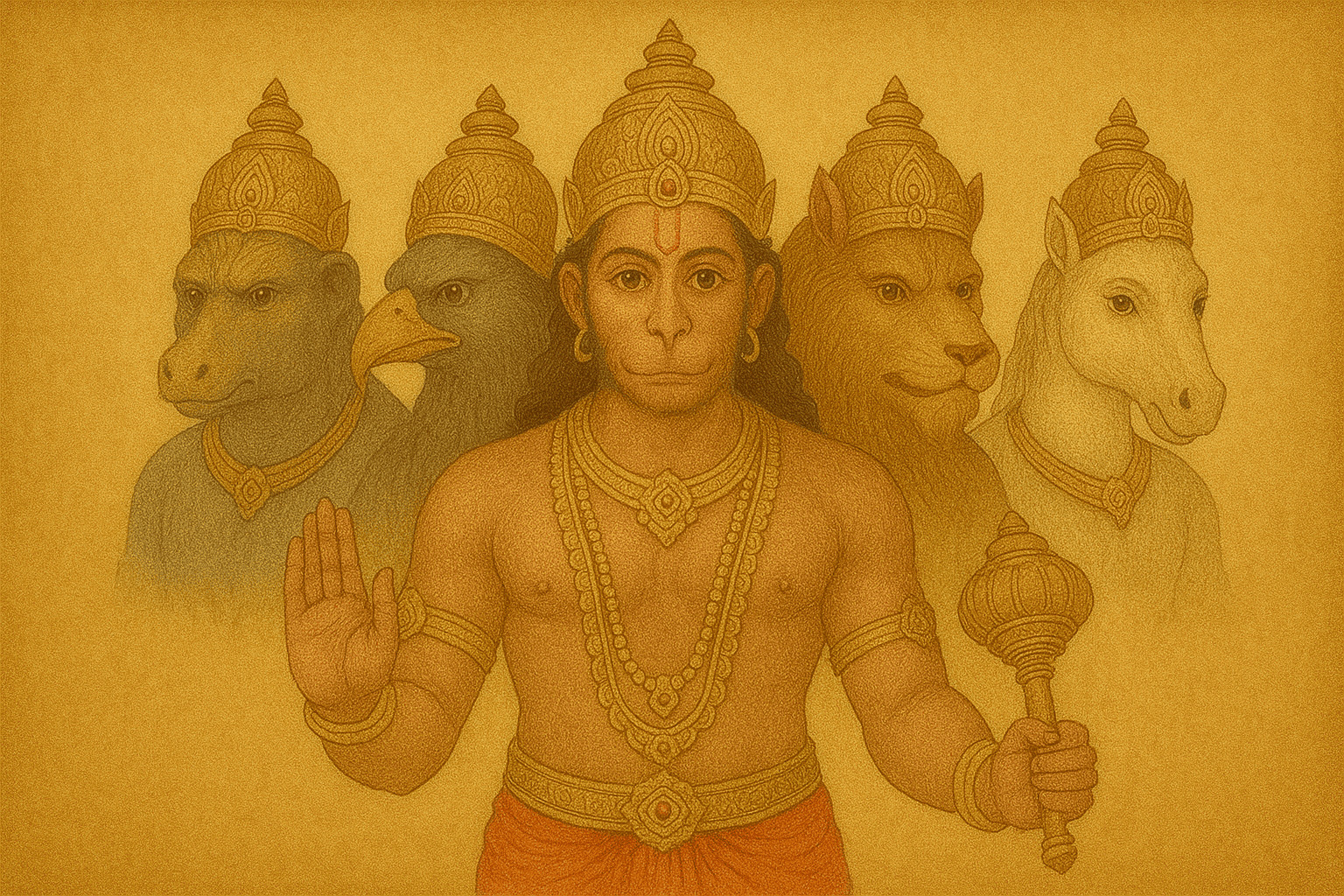
হনুমানের পাঁচটি মস্তক বা পঞ্চমুখী রূপ বিভিন্ন দেবতার শক্তি ও গুণের প্রতীক। এগুলো হলো—
১. বরাহ মুখ – পৃথিবীকে রক্ষা ও স্থিতিশীলতার প্রতীক।
২. গরুড় মুখ – সাপ ও বিষধর থেকে রক্ষা করার প্রতীক।
৩. হনুমান মুখ – শক্তি, ভক্তি ও সাহসের প্রতীক।
৪. নারসিংহ মুখ – অশুভ শক্তির বিনাশ ও ধর্মরক্ষার প্রতীক।
৫. হয়গ্রীব মুখ – জ্ঞান, প্রজ্ঞা ও বিদ্যার প্রতীক।
রাম ও রাবণের মধ্যে যুদ্ধ চলাকালীন, অহিরাবণ নামে এক শক্তিশালী অসুর, যাকে অনেক মতে রাবণের ভাই বা ঘনিষ্ঠ সহযোগী বলা হয়, তাকে সাহায্য করতে আসে। অহিরাবণ ছিল পাতাল লোকের রাজা এবং সে শক্তিশালী জাদুবিদ্যায় পারদর্শী ছিল। এক রাতে, রাবণকে যুদ্ধে জিততে সাহায্য করার জন্য, সে গোপনে রাম ও তাঁর ভাই লক্ষ্মণকে ঘুমের মধ্যে অপহরণ করে পাতাল লোকেতে নিয়ে যায়, তাদের বলি দেওয়ার উদ্দেশ্যে।
যখন হনুমান জানতে পারেন কী ঘটেছে, তিনি দ্রুত পাতাল লোকেতে যান তাঁদের উদ্ধার করতে। কিন্তু অহিরাবণকে পরাজিত করা সহজ ছিল না, কারণ তার জীবন পাঁচটি জাদুকরী প্রদীপের সাথে যুক্ত ছিল, যা পাঁচটি ভিন্ন দিকে রাখা ছিল, এবং তাকে মারতে হলে একই সময়ে সব প্রদীপ নিভিয়ে দিতে হতো। এই সমস্যার সমাধান করতে, হনুমান একটি বিশেষ রূপ ধারণ করেন যেখানে তাঁর পাঁচটি মুখ ছিল, প্রতিটি মুখ আলাদা দিকে মুখ করে ছিল। এই রূপে তিনি একই সাথে বরাহ, গরুড়, হনুমান, নরসিংহ এবং হয়গ্রীব হয়ে ওঠেন। এই পাঁচটি মুখের সাহায্যে তিনি একসাথে পাঁচটি প্রদীপ নিভিয়ে দেন। প্রদীপগুলো নিভে যাওয়ার সাথে সাথে অহিরাবণ তার শক্তি হারায়, এবং হনুমান তাকে পরাজিত করে নিরাপদে রাম ও লক্ষ্মণকে ফিরিয়ে আনেন।
The Pancha Kailash refers to five highly revered Kailash mountain pilgrimage sites, each considered an earthly manifestation of Mount Kailash, the mythical abode of Lord Shiva.
-
Name - Mount Kailash
Location - Tibet (China)
Notable Features - The original and most sacred Kailash; circumambulation (parikrama) is considered highly auspicious.
-
Name - Adi Kailash
Location - Pithoragarh, Uttarakhand, India
Notable Features - Resembles Mount Kailash; associated with Parvati Sarovar and Gauri Kund.
-
Name - Kinnaur Kailash
Location - Kinnaur, Himachal Pradesh, India
Notable Features - Sacred to both Hindus and Buddhists; known for the 79-ft vertical rock pillar.
-
Name - Shikhar Kailash (Shivling Peak)
Location - Uttarakhand, India
Notable Features - Near Om Parvat; less known, difficult trek.
-
Name - Manimahesh Kailash
Location - Chamba, Himachal Pradesh, India
Notable Features - Associated with Manimahesh Lake; believed to be created by Lord Shiva.
পঞ্চ কৈলাশ বলতে পাঁচটি অত্যন্ত পবিত্র কৈলাশ পর্বতের তীর্থস্থানকে বোঝায়, যা ভগবান শিবের পৌরাণিক আবাস কৈলাস পর্বত-এর পার্থিব রূপ হিসেবে পূজিত।
-
নাম - মাউন্ট কৈলাস
স্থান - তিব্বত (চীন)
বিশেষ বৈশিষ্ট্য - মূল ও সর্বাধিক পবিত্র কৈলাস; পরিক্রমা (পারিক্রমা) অত্যন্ত শুভ বলে মানা হয়।
-
নাম - আদি কৈলাশ
স্থান - পিথোরাগড়, উত্তরাখণ্ড, ভারত
বিশেষ বৈশিষ্ট্য - কৈলাস পর্বতের মতো দেখতে; পার্বতী সরোবর ও গৌরীকুণ্ড এর সাথে যুক্ত।
-
নাম - কিন্নর কৈলাশ
স্থান - কিন্নর, হিমাচল প্রদেশ, ভারত
বিশেষ বৈশিষ্ট্য - হিন্দু ও বৌদ্ধ—উভয়ের কাছেই পবিত্র; ৭৯ ফুট উঁচু খাড়া শিলা স্তম্ভের জন্য বিখ্যাত।
-
নাম - শিখর কৈলাশ (শিবলিং শৃঙ্গ)
স্থান - উত্তরাখণ্ড, ভারত
বিশেষ বৈশিষ্ট্য - ওম পর্বতের কাছে; কম পরিচিত, তবে দুর্গম ট্রেকপথ।
-
নাম - মণিমহেশ কৈলাশ
স্থান - চাম্বা, হিমাচল প্রদেশ, ভারত
বিশেষ বৈশিষ্ট্য - মণিমহেশ হ্রদের সাথে যুক্ত; বিশ্বাস করা হয় ভগবান শিব এটি সৃষ্টি করেছেন।
-
Location - Badrinath
Deity - Lord Vishnu (Badrinarayan)
State - Uttarakhand
-
Location - Dwarka
Deity - Lord Krishna (Dwarkadhish)
State - Gujarat
-
Location - Puri
Deity - Lord Jagannath
State - Odisha
-
Location - Rameswaram
Deity - Lord Shiva (Ramanathaswamy)
State - Tamil Nadu
-
স্থান - বদ্রীনাথ
দেবতা - ভগবান বিষ্ণু (বদ্রীনারায়ণ)
রাজ্য - উত্তরাখণ্ড
-
স্থান - দ্বারকা
দেবতা - ভগবান শ্রীকৃষ্ণ (দ্বারকাধীশ)
রাজ্য - গুজরাট
-
স্থান - পুরী
দেবতা - ভগবান জগন্নাথ
রাজ্য - ওড়িশা
-
স্থান - রামেশ্বরম
দেবতা - ভগবান শিব (রামনাথস্বামী)
রাজ্য - তামিলনাড়ু
The Pancha Bhoota Sthalas are five famous Shiva temples in South India, each representing one of the five elements (Pancha Bhootas) in nature — Earth, Water, Fire, Air, and Space.
-
Element (Bhoota) - Earth (Prithvi)
Temple Name - Ekambareswarar Temple
Location - Kanchipuram
State - Tamil Nadu
-
Element (Bhoota) - Water (Jala)
Temple Name - Jambukeswarar Temple
Location - Thiruvanaikaval (near Tiruchirappalli)
State - Tamil Nadu
-
Element (Bhoota) - Fire (Agni)
Temple Name - Annamalaiyar Temple
Location - Thiruvannamalai
State - Tamil Nadu
-
Element (Bhoota) - Air (Vayu)
Temple Name - Srikalahasteeswara Temple
Location - Srikalahasti
State - Andhra Pradesh
-
Element (Bhoota) - Space (Akasha)
Temple Name - Nataraja Temple
Location - Chidambaram
State - Tamil Nadu
ভারতের পঞ্চভূত স্থল মন্দির হলো পাঁচটি বিখ্যাত শিবমন্দির, যা প্রকৃতির পাঁচটি মৌলিক উপাদান — পৃথিবী, জল, আগুন, বায়ু ও আকাশ — এর প্রতীক।
-
উপাদান (ভূত) - পৃথিবী (পৃথ্বী)
মন্দিরের নাম - একাম্বারেশ্বর মন্দির
স্থান - কাঞ্চিপুরম
রাজ্য - তামিলনাড়ু
-
উপাদান (ভূত) - জল (জল)
মন্দিরের নাম - জম্বুকেশ্বর মন্দির
স্থান - তিরুবানাইকাভাল (তিরুচিরাপল্লির কাছে)
রাজ্য - তামিলনাড়ু
-
উপাদান (ভূত) - আগুন (অগ্নি)
মন্দিরের নাম - অন্নামালাইয়ার মন্দির
স্থান - তিরুভান্নামালাই
রাজ্য - তামিলনাড়ু
-
উপাদান (ভূত) - বায়ু (বায়ু)
মন্দিরের নাম - শ্রীকালহস্তীশ্বর মন্দির
স্থান - শ্রীকালহস্তী
রাজ্য - অন্ধ্র প্রদেশ
-
উপাদান (ভূত) - আকাশ (আকাশ)
মন্দিরের নাম - নাটরাজ মন্দির
স্থান - চিদম্বরম
রাজ্য - তামিলনাড়ু
The five Panch Kedar temples in India (all located in Uttarakhand) are:
- Kedarnath
- Tungnath
- Rudranath
- Madhyamaheshwar
- Kalpeshwar
ভারতের পাঁচটি পঞ্চকেদার মন্দির (সবগুলো উত্তরাখণ্ডে অবস্থিত) হল—
১. কেদারনাথ
২. তুঙ্গনাথ
৩. রুদ্রনাথ
৪. মধ্যমহেশ্বর
৫. কল্পেশ্বর
- Somnath – Gujarat
- Mallikarjuna – Andhra Pradesh
- Mahakaleshwar – Madhya Pradesh
- Omkareshwar – Madhya Pradesh
- Kedarnath – Uttarakhand
- Bhimashankar – Maharashtra
- Kashi Vishwanath – Uttar Pradesh
- Trimbakeshwar – Maharashtra
- Vaidyanath (Vaijnath) – Jharkhand
- Nageshwar – Gujarat
- Ramanathaswamy – Tamil Nadu
- Grishneshwar – Maharashtra
১. সোমনাথ – গুজরাট
২. মল্লিকার্জুন – অন্ধ্রপ্রদেশ
৩. মহাকালেশ্বর – মধ্যপ্রদেশ
৪. ওমকারেশ্বর – মধ্যপ্রদেশ
৫. কেদারনাথ – উত্তরাখণ্ড
৬. ভীমাশঙ্কর – মহারাষ্ট্র
৭. কাশী বিশ্বনাথ – উত্তরপ্রদেশ
৮. ত্র্যম্বকেশ্বর – মহারাষ্ট্র
৯. বৈদ্যনাথ (বৈজনাথ) – ঝাড়খণ্ড
১০. নাগেশ্বর – গুজরাট
১১. রামনাথস্বামী – তামিলনাড়ু
১২. ঘৃশ্নেশ্বর – মহারাষ্ট্র
Whenever and wherever there is a decline of righteousness (dharma) and a rise of unrighteousness (adharma), O Bharata (Arjuna), at that time I manifest Myself.
For the protection of the virtuous, for the destruction of the wicked, and for the establishment of righteousness, I manifest Myself age after age.
যখনই এবং যেখানে-যেখানেই ধর্মের (ন্যায়ের) অবনতি ঘটে এবং অধর্মের (অন্যায়ের) বৃদ্ধি হয়, হে ভারত (অর্জুন), তখনই আমি নিজেকে প্রকাশ করি বা অবতীর্ণ হই।
সাধুদের রক্ষা করার জন্য, দুষ্টদের বিনাশ করার জন্য এবং ধর্ম প্রতিষ্ঠার উদ্দেশ্যে আমি যুগে যুগে আবির্ভূত হই।