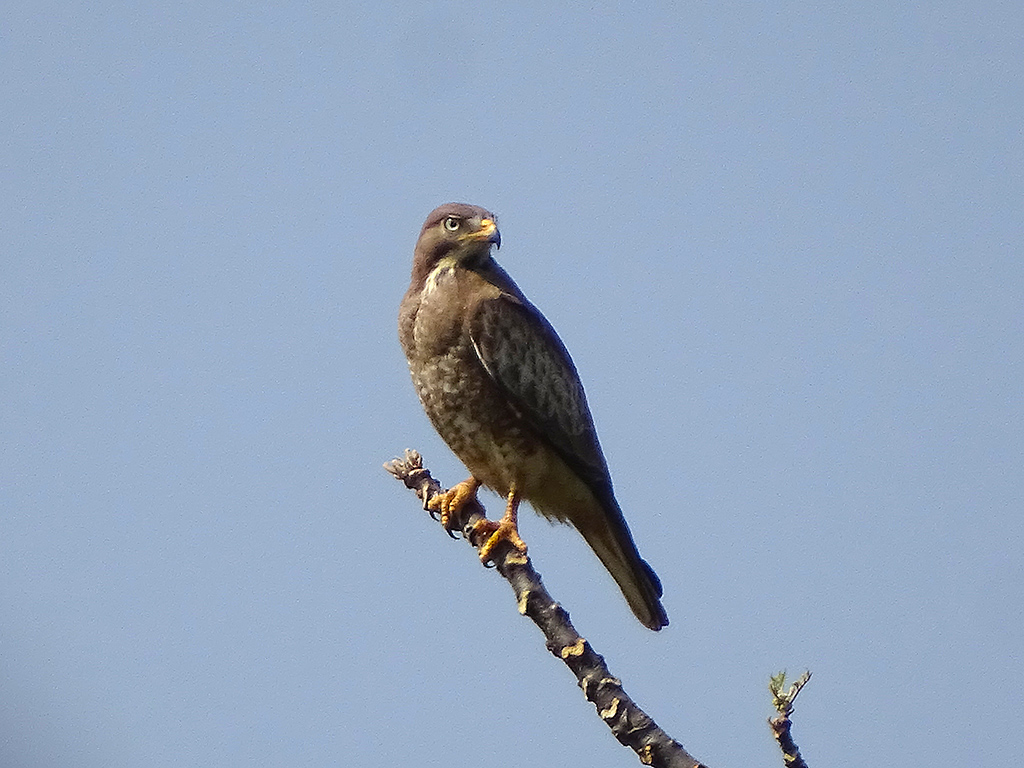
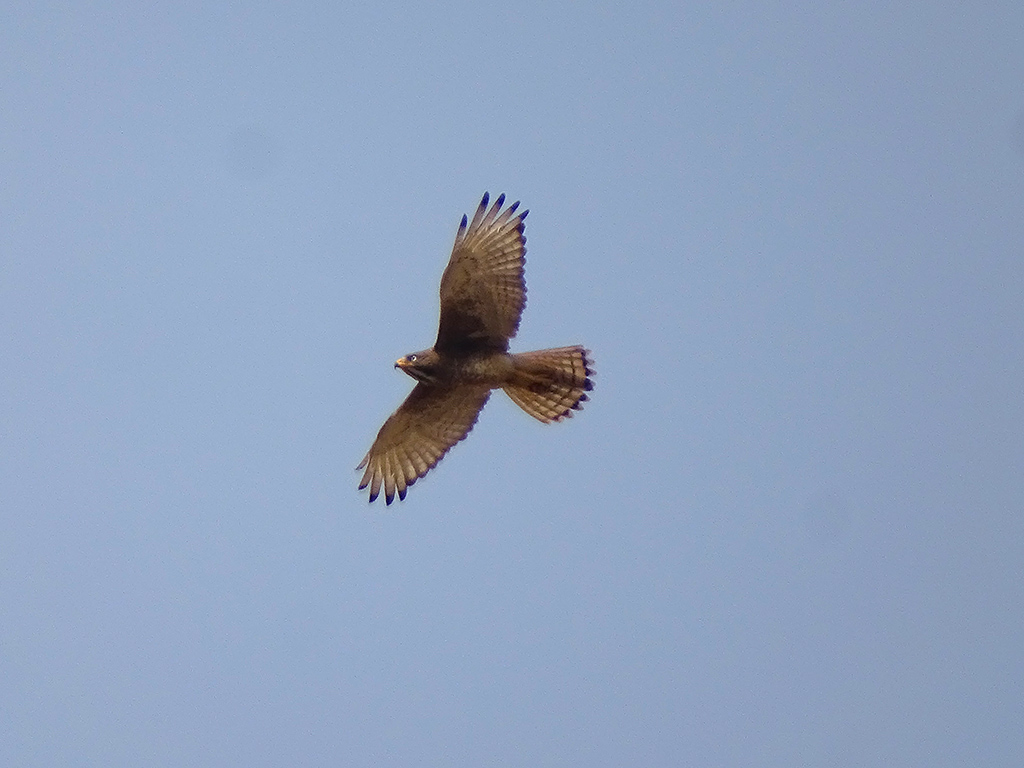
White-eyed buzzard
Jayamangali blackbuck reserve,Karnataka
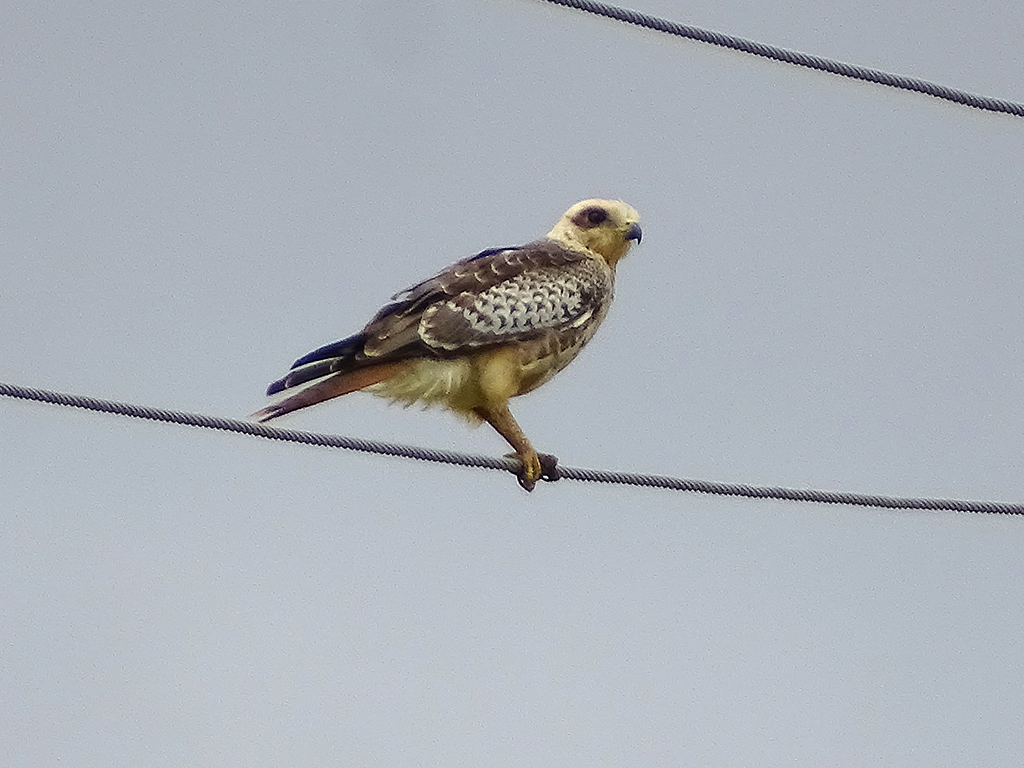
Juvenile The third individual was from Jayamangali Blackbuck Reserve. It was a juvenile White-eyed Buzzard. As expected, its eyes were black, and you can see its immature plumage. Being a juvenile, it was a bit playful. In the afternoon, it was trying to find prey on the ground while sitting on the top of a tree or an electric wire. Since we were inside the car, it allowed us to get relatively close. After capturing this picture of the White-eyed Buzzard in my early birding days, I felt like visiting Jayamangali was truly worth it.
Ammana Kere, Chikkaballapur,Karnataka
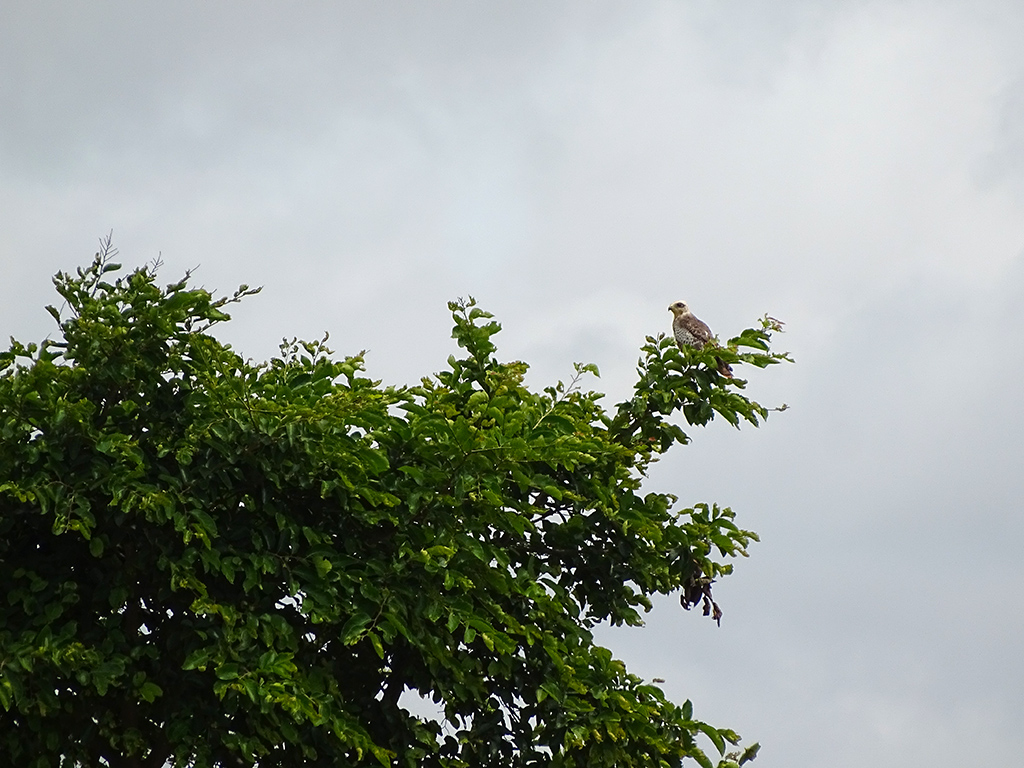
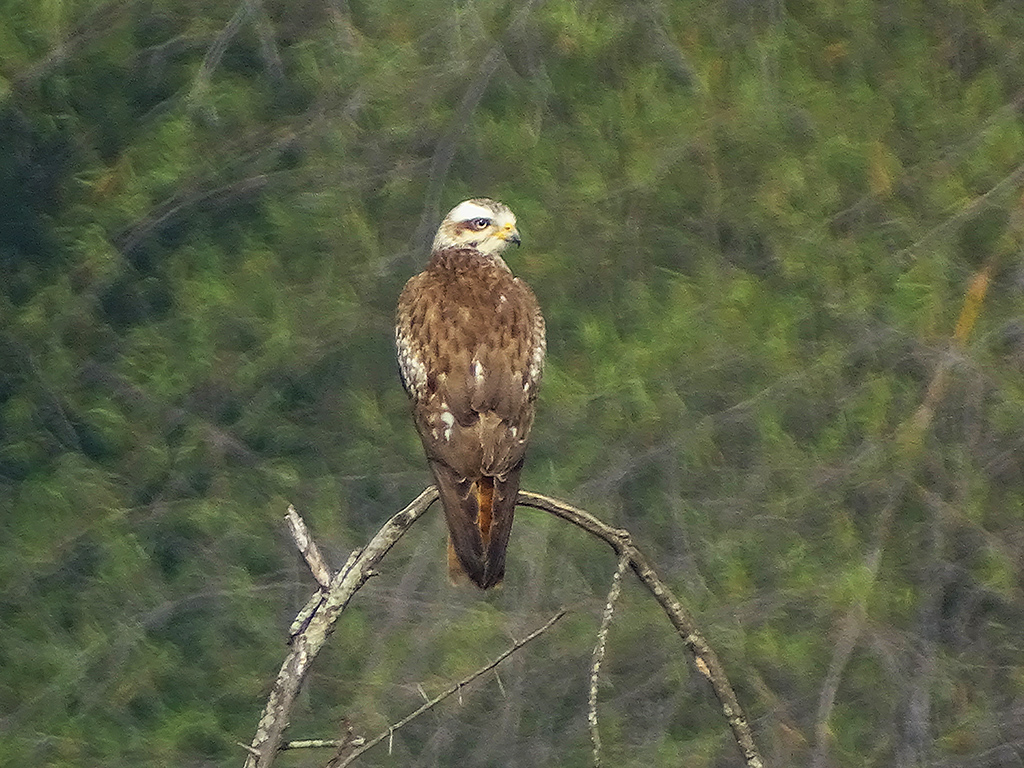
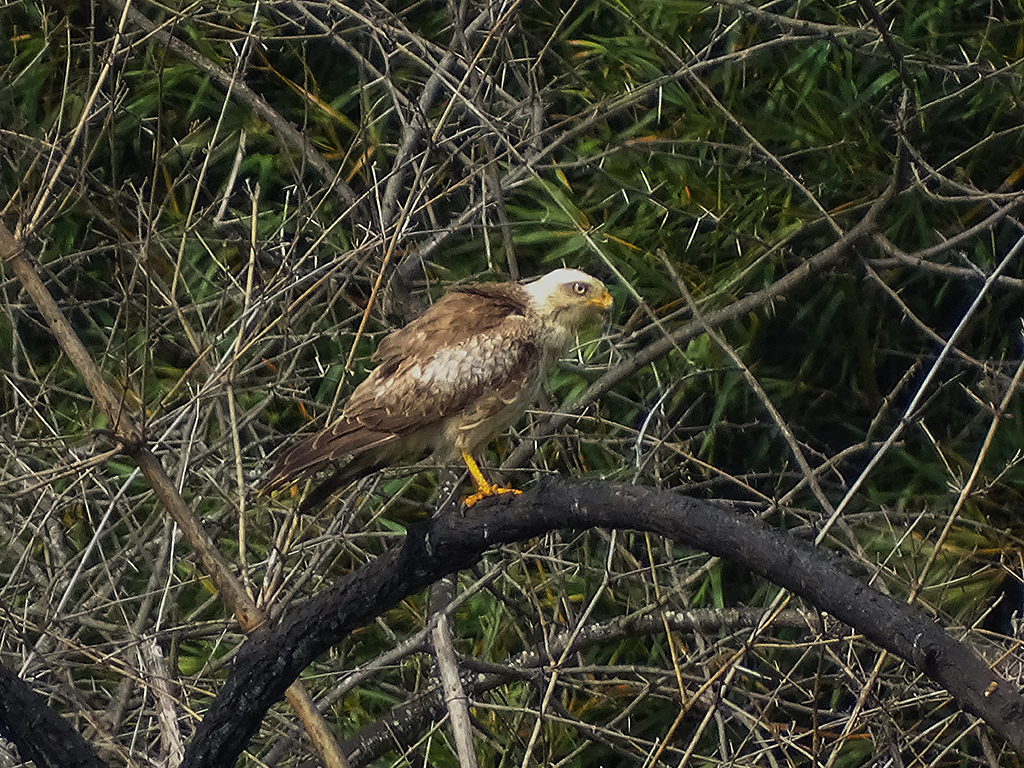
Sub-adult If you notice the sub-adult, the white of its eyes is becoming more prominent. I remember the day we went to Sidlaghatta for the White Stork—on the same day, I found this buzzard sitting on an open perch. From afar, I initially thought it was a juvenile Brahminy Kite, but when I realized it wasn’t, it flew out of range, as they often do. Somehow, I ran behind it and managed to get some record shots.
Byatarayana Doddi Kere,Karnataka
The White-eyed Buzzard is one of the shyest raptors I have ever seen, whether an adult or a juvenile. It has excellent eyesight and gets alert easily, even if you try to hide while taking a photograph. In Bangalore, this raptor is very common in various grasslands and is often found perched on a tree or wire. Adult The first two individuals are adults, where you can clearly see the white eyes. I found this individual in Bayataranyadoddi. As mentioned before, it was very shy and barely gave me time to photograph it. This bird also has great camouflage when it sits inside a tree. I still remember the excitement of the first time I saw it in Hasserghatta Grassland. However, I couldn’t take a picture at all. Once it became alert, it flew from one tree to another, covering a huge distance between them. I thought to myself, Bro, we are humans—we can’t run as fast as you can fly! Just give me a single shot.