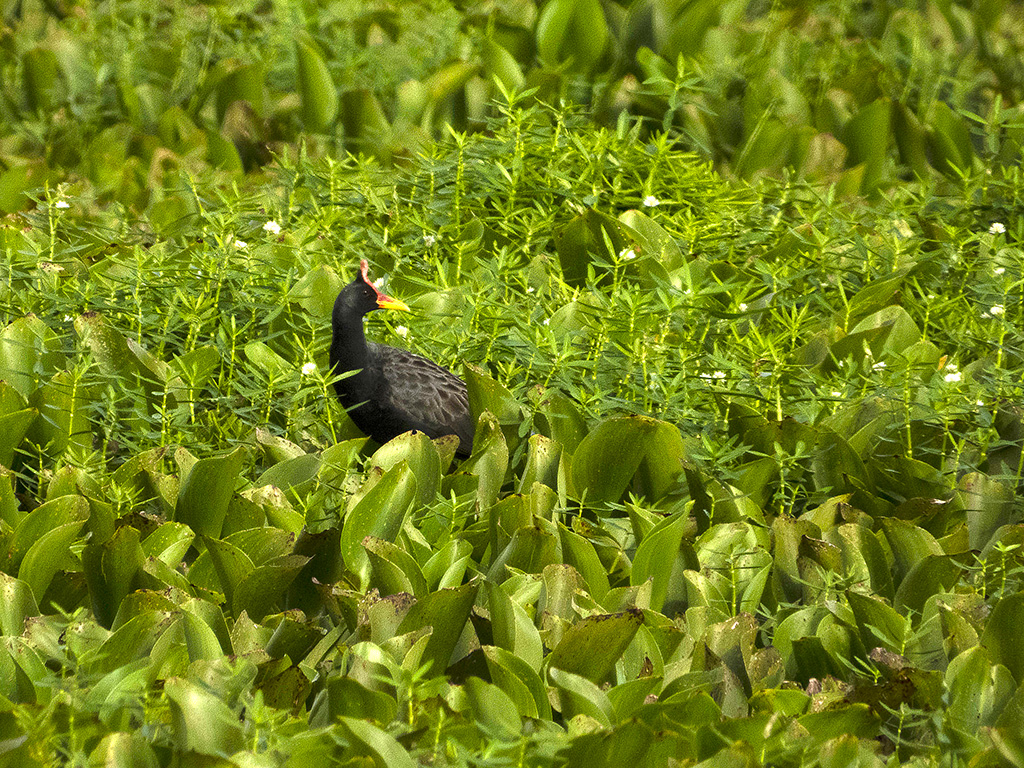
Watercock
Muthanallur Lake,Karnataka
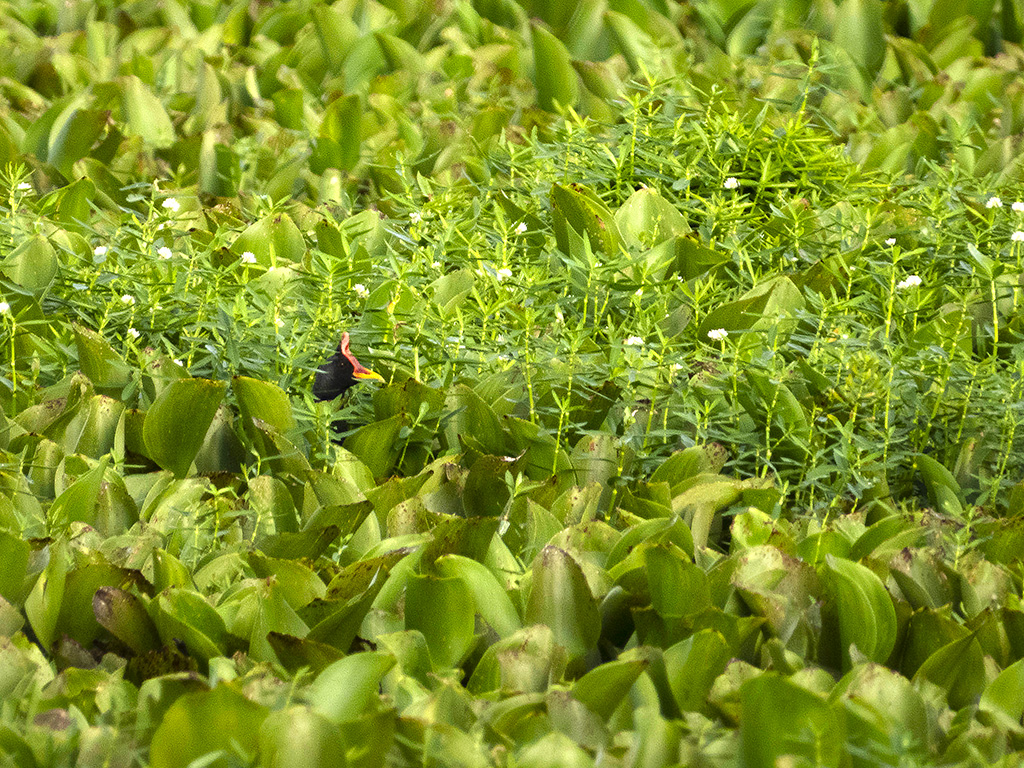
The watercock, a remarkably shy and beautiful bird, is not easy to photograph. First of all, it rarely comes out of the reeds or hyacinth plants, and even when it does, it loves to stay hidden, often popping its head out to check if anyone is observing it. The male has a glossy black body with distinctive patterns, and the most striking feature is its red beak, which has a pointed upper part resembling a crown. When it hides in the grass with only its head exposed, you need to zoom your lens carefully to spot the bird by its unmistakable red beak.
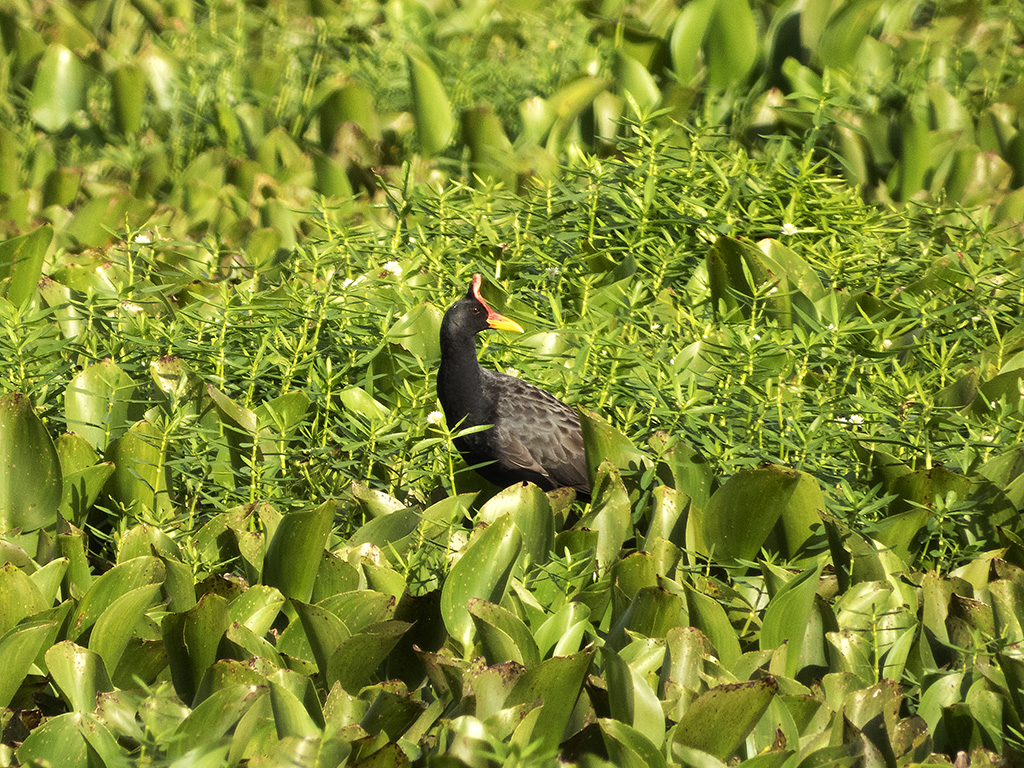
In June 2024, at Muthanallur Lake, this bird has become a star these days. People visit the lake specifically to spot it, even though it is difficult to find due to its distance and its playful hide-and-seek behavior. After waiting for almost an hour, it suddenly appeared for about a minute, and I managed to capture this picture. It was such a joy to see this bird, and through my camera, I was able to capture it to view on my website anytime. I will definitely visit again to take a closer shot because this bird is a gem and not easy to find in India.
Information of Watercock
| IUCN (International Union for Conservation of Nature): | Least Concern |
|---|---|
| Approximate size(adult): | Length about 45–50 cm; weight ~400–550 g. A large rail with dark brown to black plumage in males, a reddish facial shield, and long legs. Females are smaller, brownish, and streaked with pale underparts. Juveniles resemble females. |
| Resident/ Migrate from: | Resident species in South and Southeast Asia, including India, Sri Lanka, Bangladesh, and Myanmar. Some northern populations show partial migratory movements. |
| Migrate to: | Northern populations move southwards during winter to warmer wetlands in India and Southeast Asia. |
| Breeding season: | May to July in India, coinciding with the monsoon. Courtship involves displaying the facial shield, calls, and posturing. |
| Breed in: | Builds a nest of reeds and grasses in dense marshes or waterlogged areas, usually over shallow water. Clutch size is 5–7 eggs, incubated mainly by the female. Both parents care for the chicks. |
| Habitat: | Prefers freshwater marshes, swamps, reed beds, and wet grasslands. Usually skulks in dense aquatic vegetation, making it secretive and hard to spot. |
| Diet: | Omnivorous — feeds on aquatic insects, snails, small fish, seeds, and plant matter. Forages by wading through shallow water or probing mud with its bill. |