Slaty-breasted rail
Happy Valley, Baruipur,West Bengal
Baruipur Happy Valley used to be one of my favorite bird-watching destinations while I lived in Kolkata. For me, if I couldn’t spot this extremely colorful rail anywhere else in Kolkata, I was sure to find it in Baruipur. I observed many individuals there multiple times while birdwatching in that area. Sometimes it would be shy, other times it wouldn’t be. The best times were in the morning and afternoon, when there was no harsh sunlight. It would emerge from the reeds, walk around the edges of any water body, and forage for snails from the ground.


It is a medium-sized bird that is not too difficult to photograph. However, like other birds, its behavior changes depending on the location. I saw the same bird in Bangalore, where I found it to be very shy and unwilling to stay still long enough for a single picture. But back in Kolkata, I observed it focusing on its own activities despite the presence of photographers. It was pretty amazing to witness this rail.
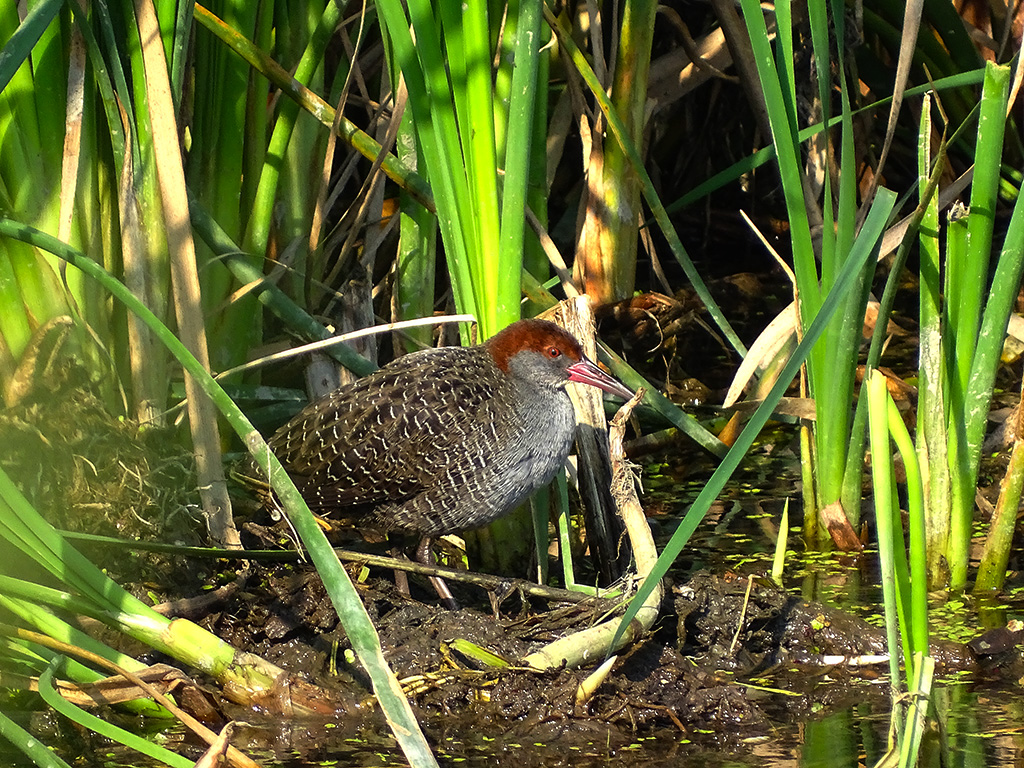

I took this picture in the morning during the golden light, on the same day I photographed the Eastern Water Rail in Baruipur. It felt like a double dhamaka for me, and I ended up birding with a smiling face.
