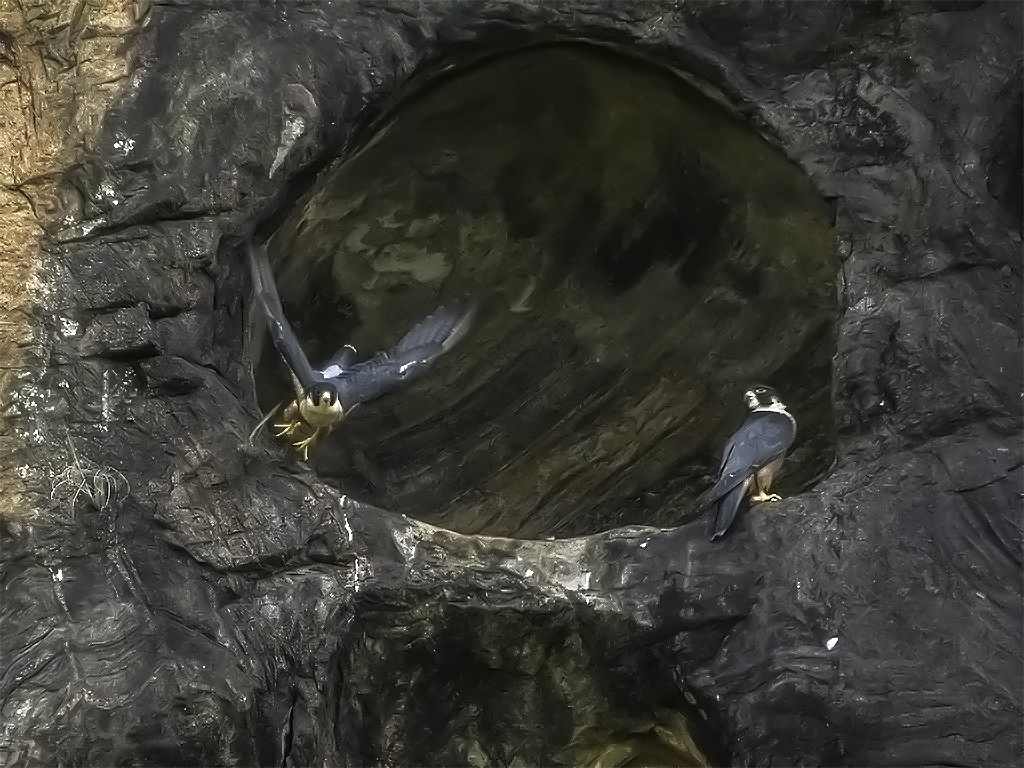
Shaheen falcon
Ramadevara Betta Vulture Sanctuary,Karnataka
We learned one thing from this incident: a parent bird has a responsibility to its chick until it starts flying. Once the chick begins to fly, it becomes the individual’s responsibility to hunt for itself. At that point, the parents no longer share food, as doing so would make the chick dependent, and as a falcon, this goes against its natural rules. Not only falcons, but most birds follow this same rule. I have the full video of this event; you can check it out on my YouTube channel, Mahadev Putra.
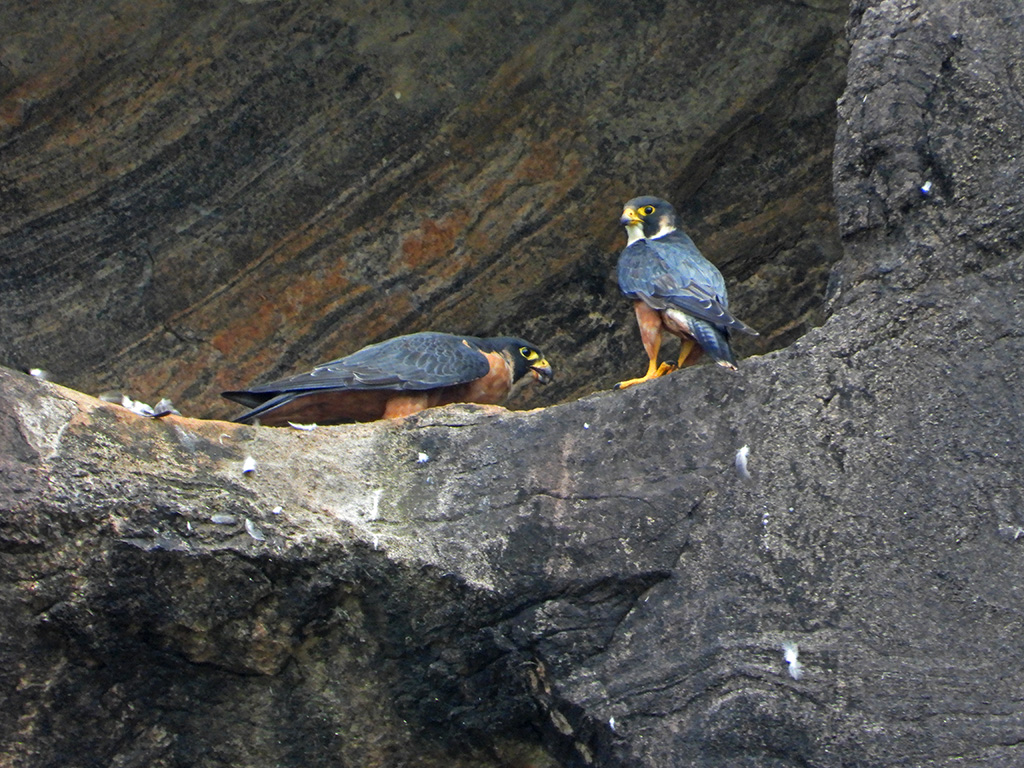
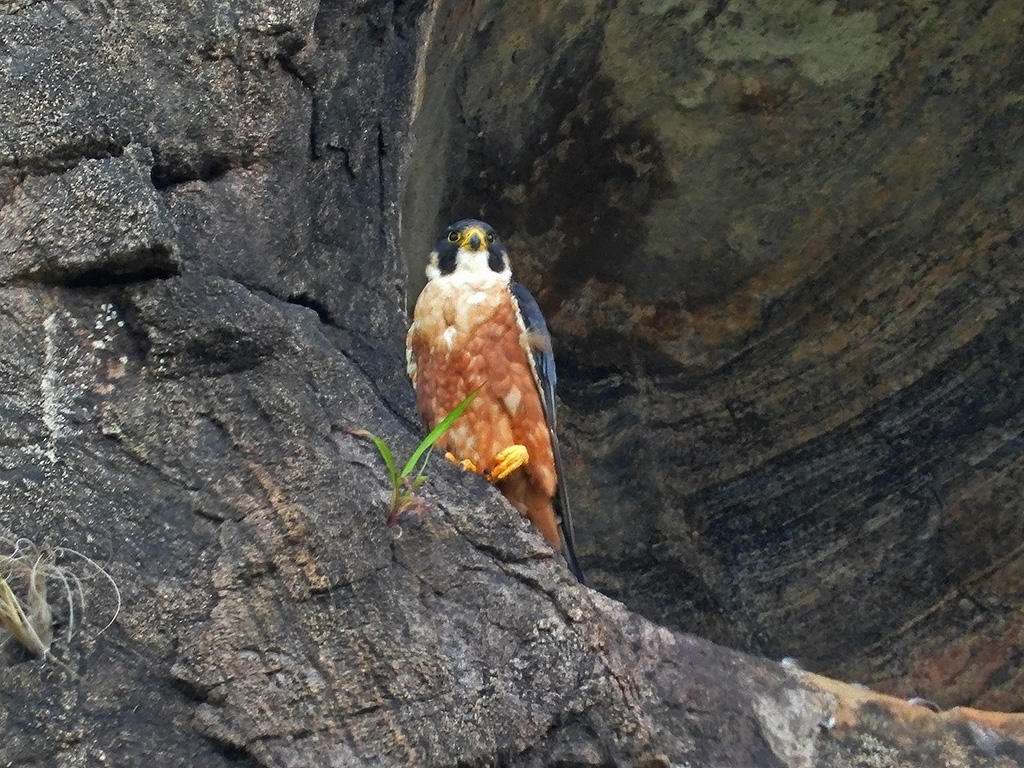
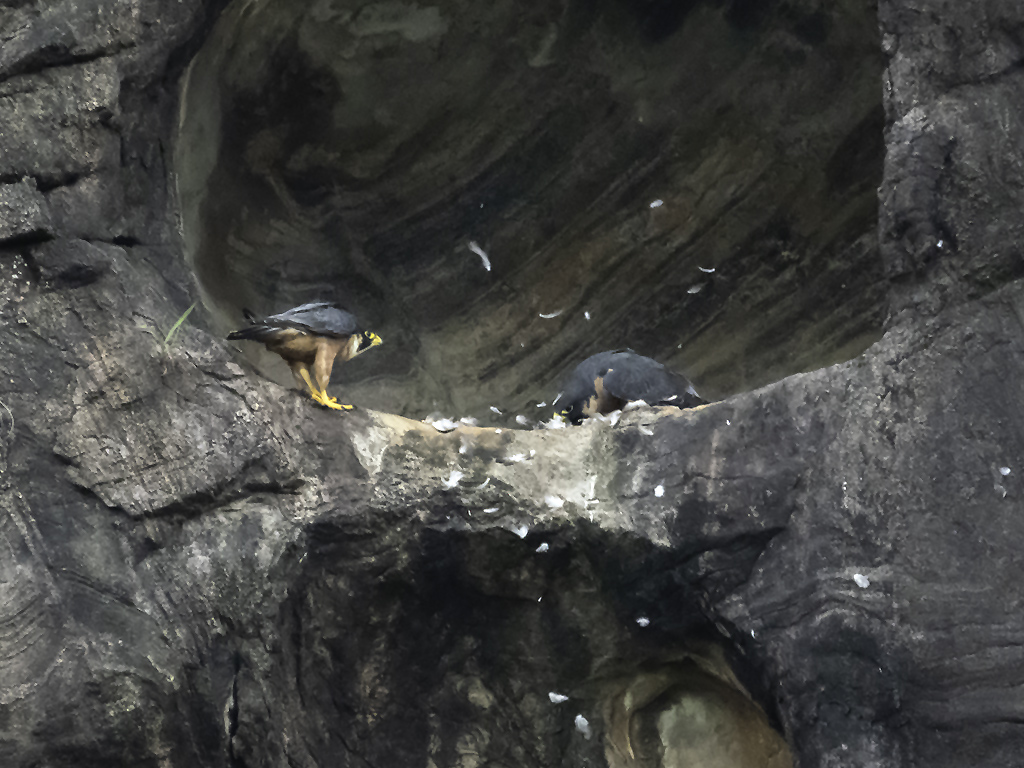
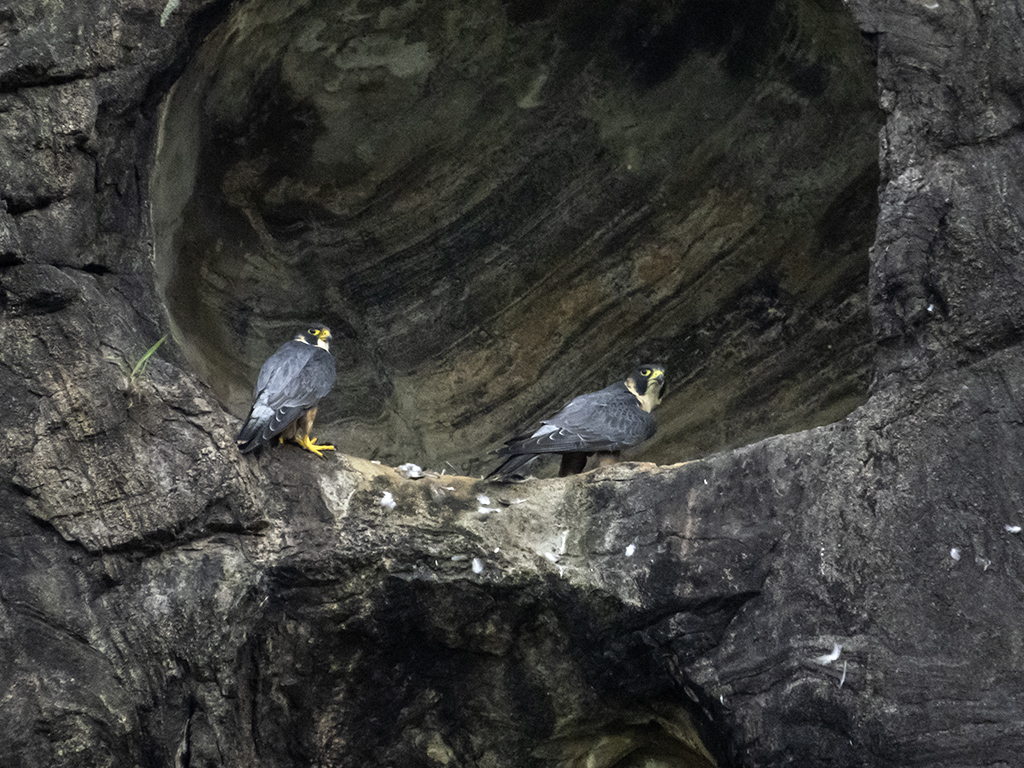
After 70% of the meal was finished, the adult allowed the sub-adult to share a piece of food. The sub-adult was delighted to have it, even though it did not fill its stomach. We continued watching and photographing the event. We observed the size difference between the adult and the sub-adult, as well as the color tones of both birds. The Shaheen is a subspecies of the Peregrine Falcon, which is why they share similar appearances and behaviors. However, the reddish chest and belly of the Shaheen distinguish it from the Peregrine.
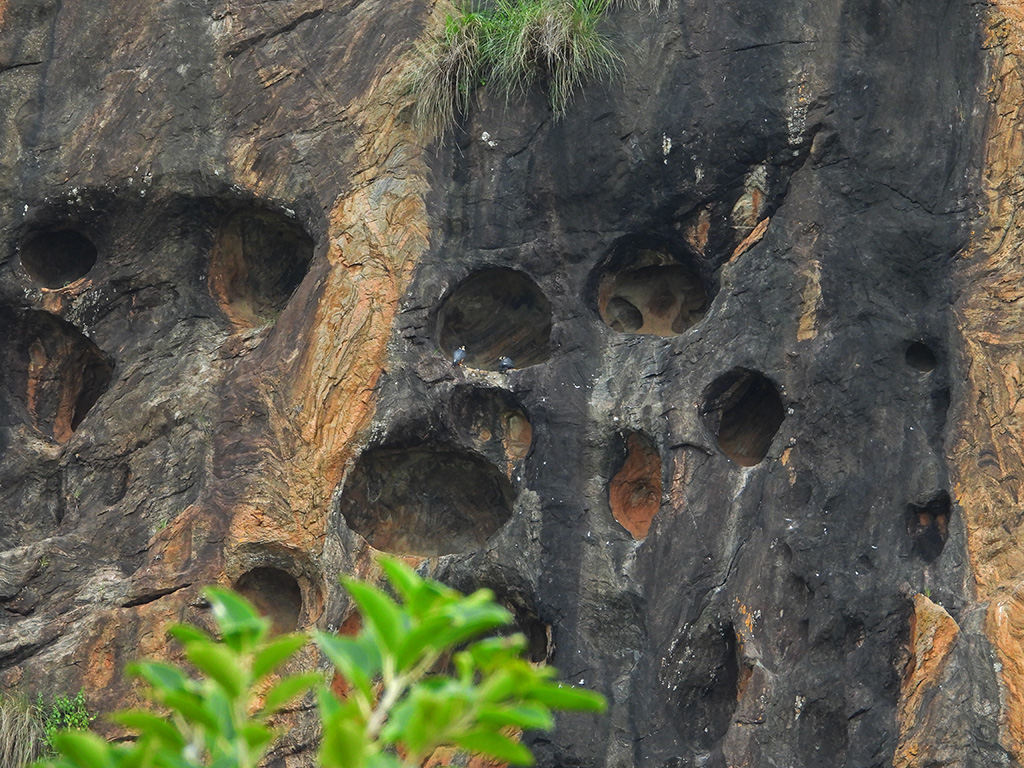
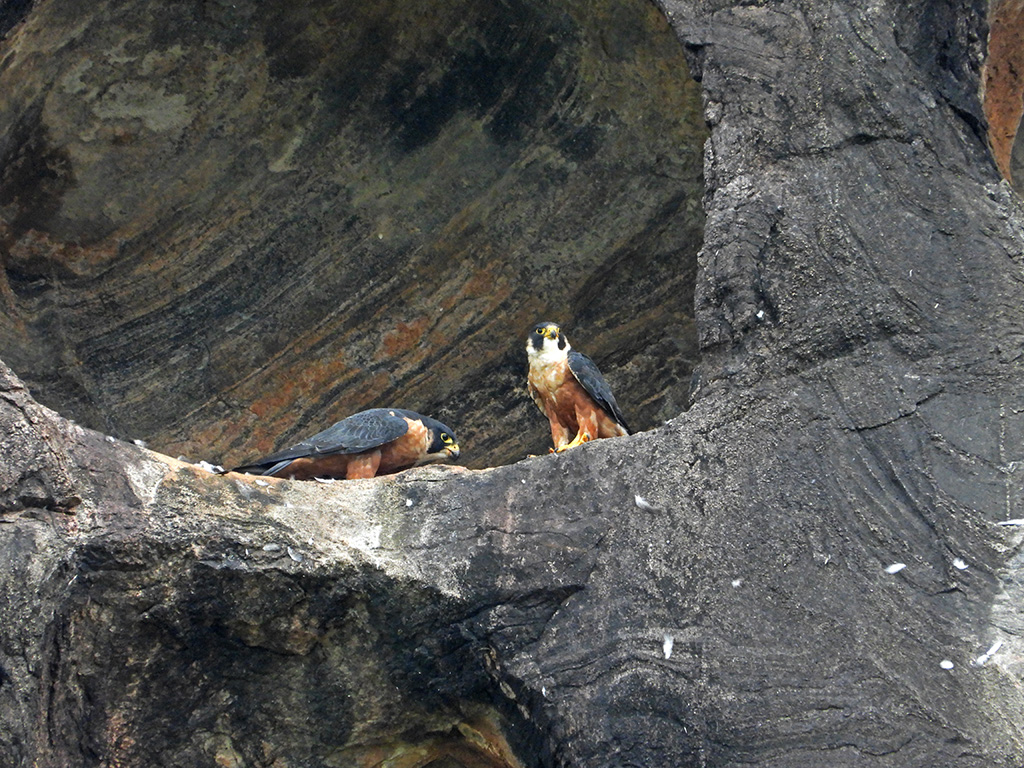
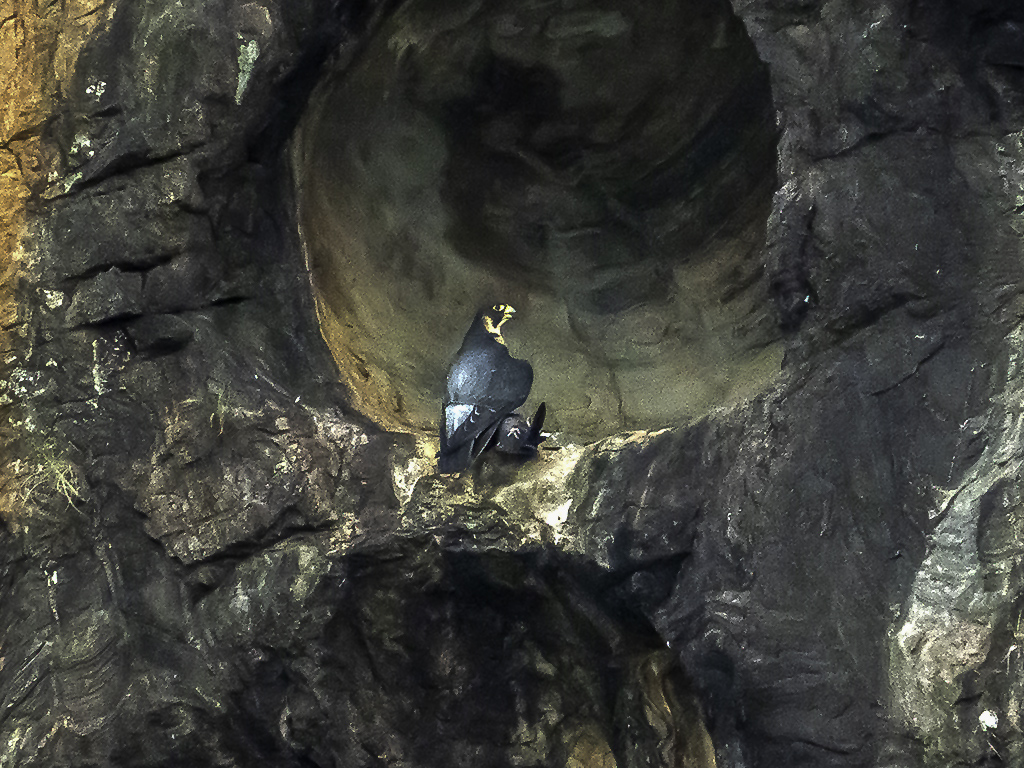
It took more than 30 minutes to finish its meal. By that time, a subadult from the same family came and expected a share. However, the adult was completely against sharing and continued to extract feathers and eat the meat. The subadult kept watching, hoping its parent would share. It was such an amazing experience to witness and understand the entire story.
It flew away and landed on the adjacent hill. I also noticed that it was carrying another bird while flying. I showed it to the other fellow birders, and we saw that it was a Shaheen falcon with a pigeon kill. We were all speechless. What a moment! It was now its turn to pluck the pigeon's feathers and eat. That was the first time I saw a Shaheen, and it was with a kill.
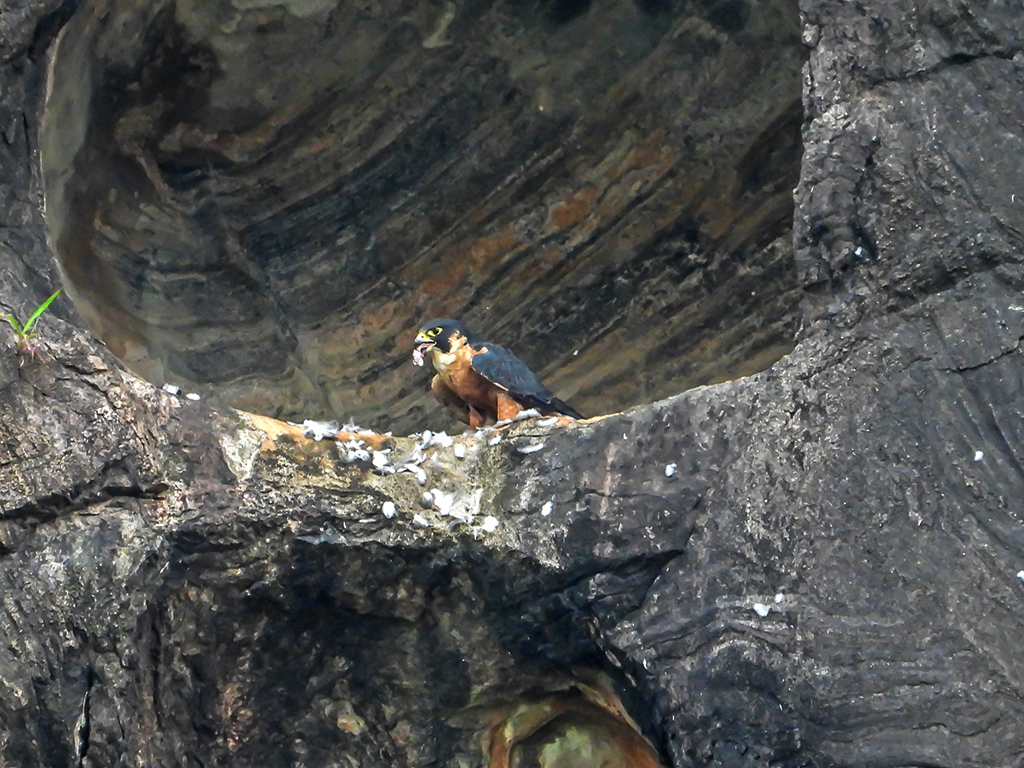
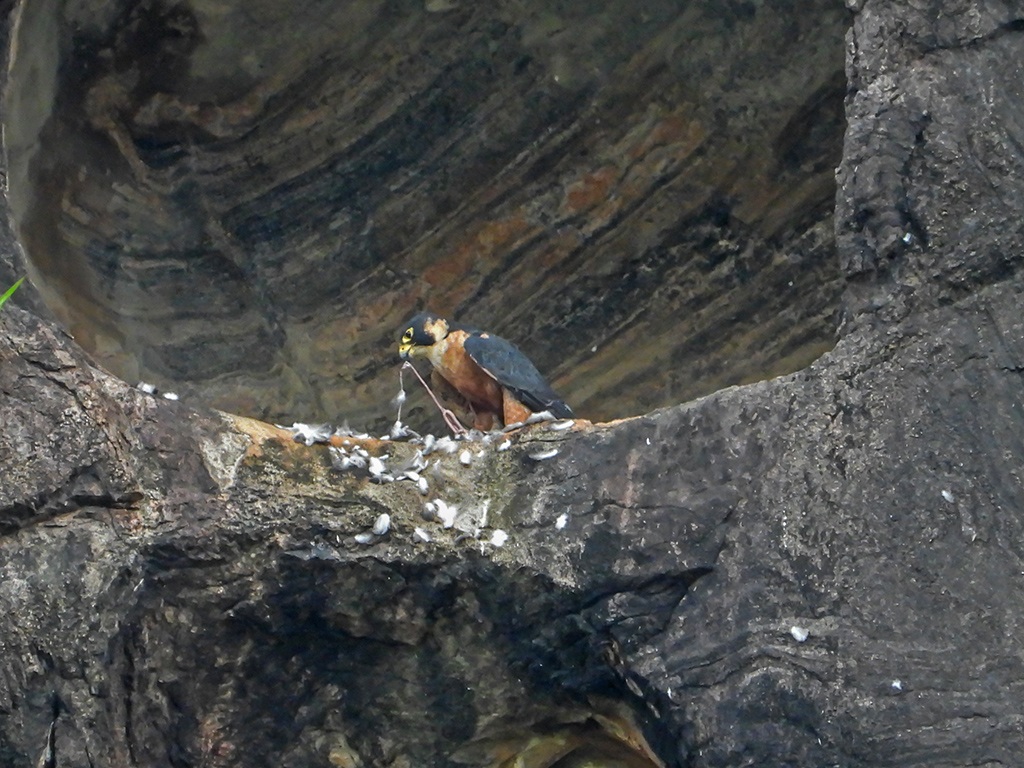
This is one of my favorite birds in the lineup—an absolutely fantastic raptor and, moreover, a falcon. It was an unexpected sighting during our tour of the Ramdevabetta Vulture Sanctuary. We went on an educational walk organized by the Karnataka Forest Department with the aim of observing vultures. While we were all busy photographing a pair of Indian vultures on the hills, I suddenly noticed the unusual flight pattern of a bird. At that moment, I didn’t realize it was a Shaheen falcon.