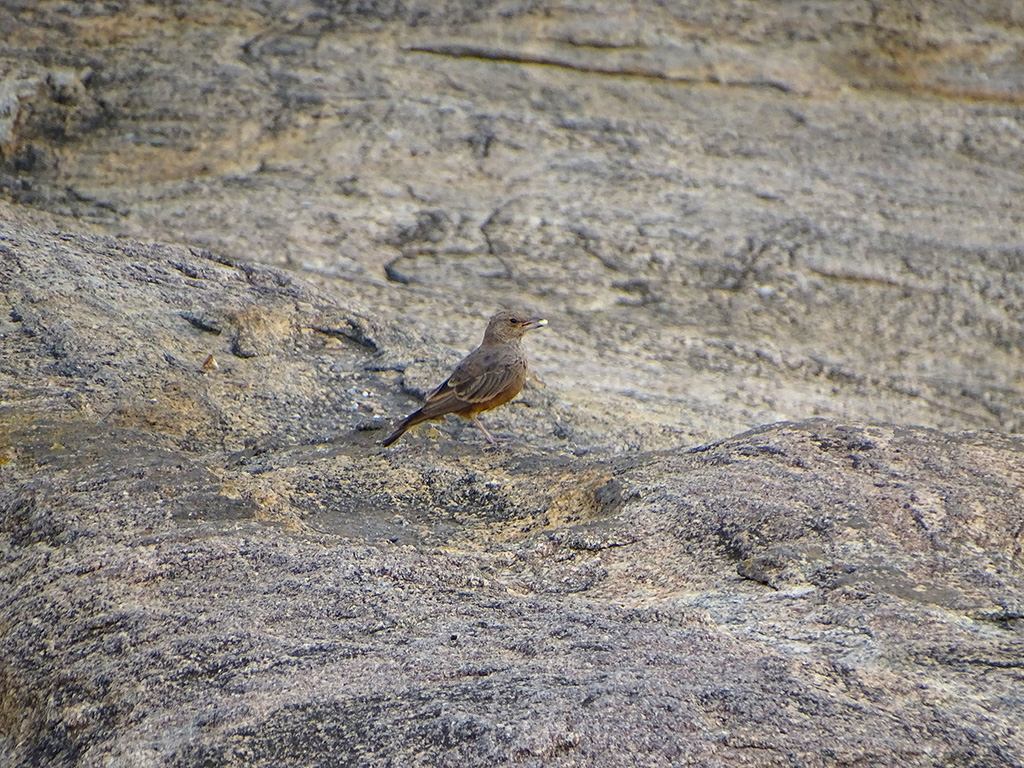
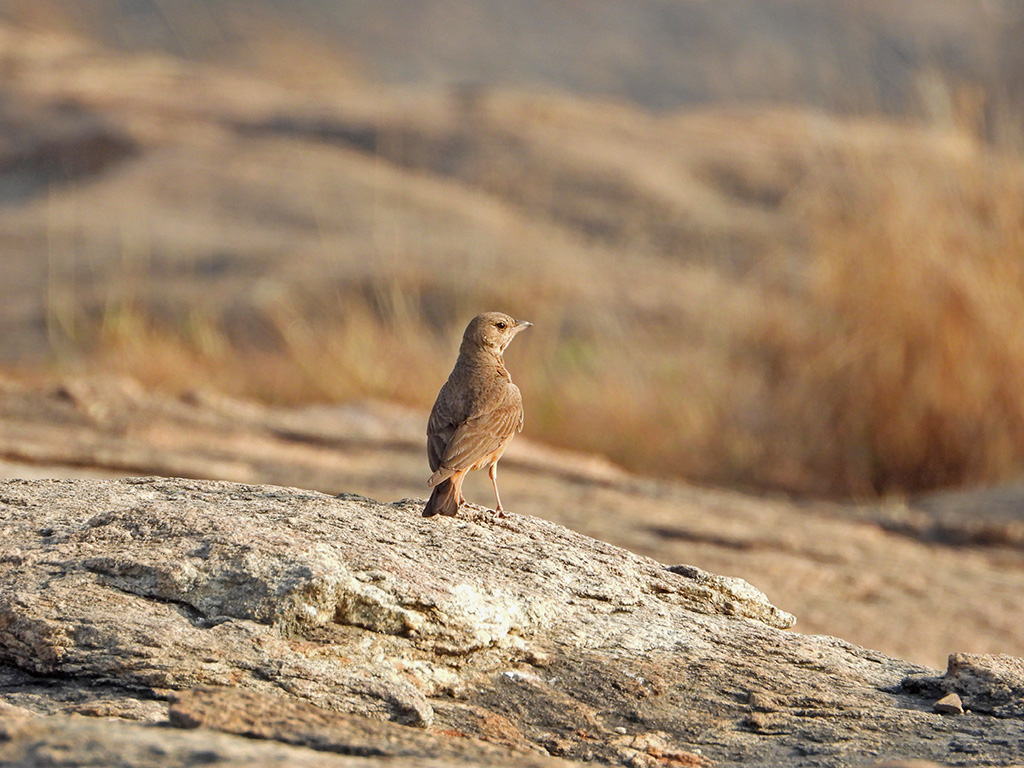
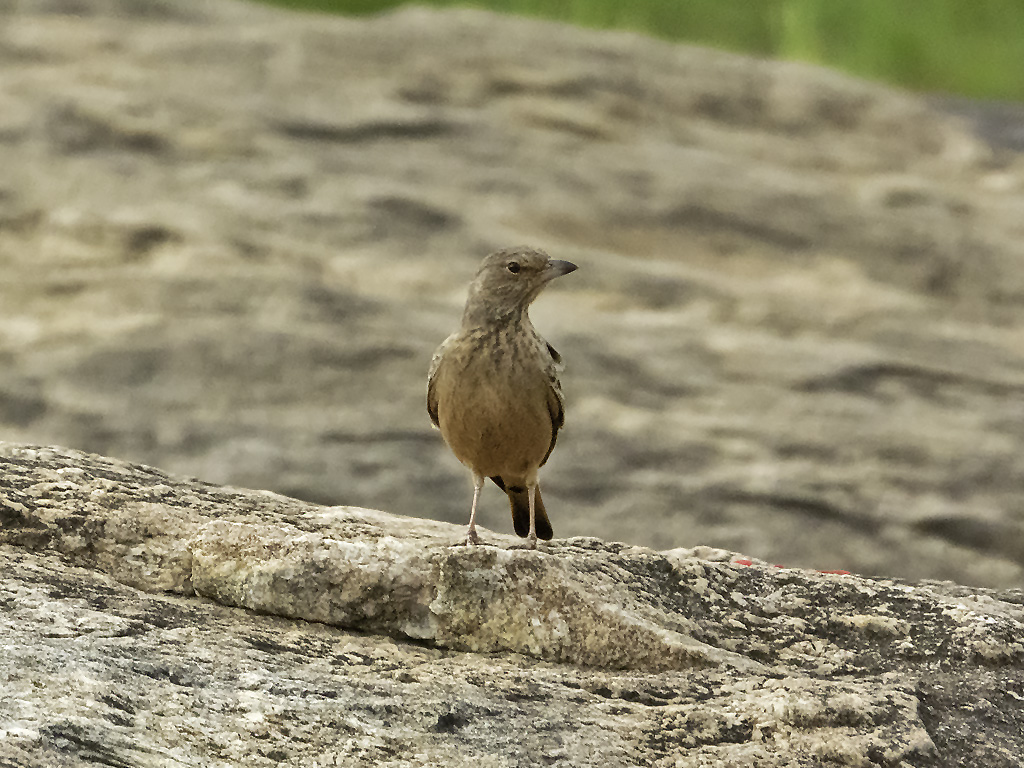
Rufous-tailed lark
Bannerghatta Hilltop,Karnataka
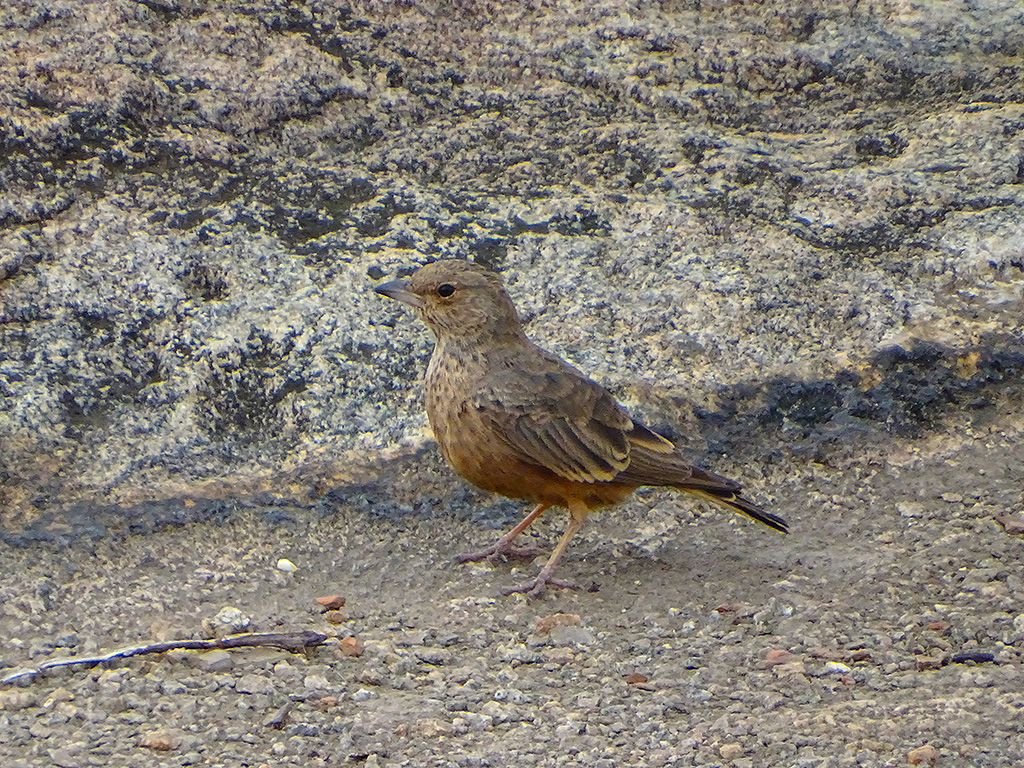
Hampi,Karnataka
I like this bird because of its rufous color and steady appearance. I knew it could be found in Hampi, so when I went there, I hoped I might see the bird. However, it wasn’t a top priority, so I didn’t stress over it. Additionally, this bird isn’t necessarily found in a specific location where you can be certain of seeing it. In the end, after a long day of birdwatching, as we were returning via the canal-side road, we found it chirping on a rocky mound.
The light was very low, and the camera battery was almost drained. But we couldn’t miss the bird, right? Pampayya sir told us to go get the bird we were searching for. It allowed us to get close and take some pictures. Suddenly, it started chirping, probably calling its partner, and after a few minutes, it flew away. I was happy to see this bird.
Information of Rufous-tailed lark
| IUCN (International Union for Conservation of Nature): | Least Concern |
|---|---|
| Approximate size(adult): | A small lark measuring 16–18 cm in length. It has pale sandy-brown upperparts, rufous tail, streaked back, and whitish underparts. Short, strong bill adapted for seeds and insects. |
| Resident/ Migrate from: | Resident across peninsular India and Sri Lanka. It is non-migratory, with only local movements in response to habitat conditions. |
| Migrate to: | Non-migratory, but may move locally during droughts or post-breeding dispersal. |
| Breeding season: | Breeds mainly from March to July. Nests are scrapes on the ground, often hidden under sparse vegetation. Clutch size is typically 2–3 eggs. |
| Breed in: | Prefers dry open scrublands, rocky plains, and arid grasslands, often avoiding dense vegetation. |
| Habitat: | Found in open dry habitats, stony plains, low scrub, and agricultural fallows, often near human settlements. |
| Diet: | Omnivorous, feeding on seeds, grains, and insects. Forages on the ground, often scratching or pecking in open areas. |