Red spurfowl
Thattekad,Kerala
here was a time when I used to run after any spurfowl like crazy. I would see photos of red spurfowls on social media and wonder how people managed to capture them in such flawless frames! At that time, I didn’t know much about their habitat or how common they are in South India. When I came to Valley School, I saw one for the first time inside the bushes and heard its call. That day, I eagerly hoped it would come out, but it didn’t. I managed to get a record shot, but that only made me more determined. I kept thinking about where and when I might see it again.
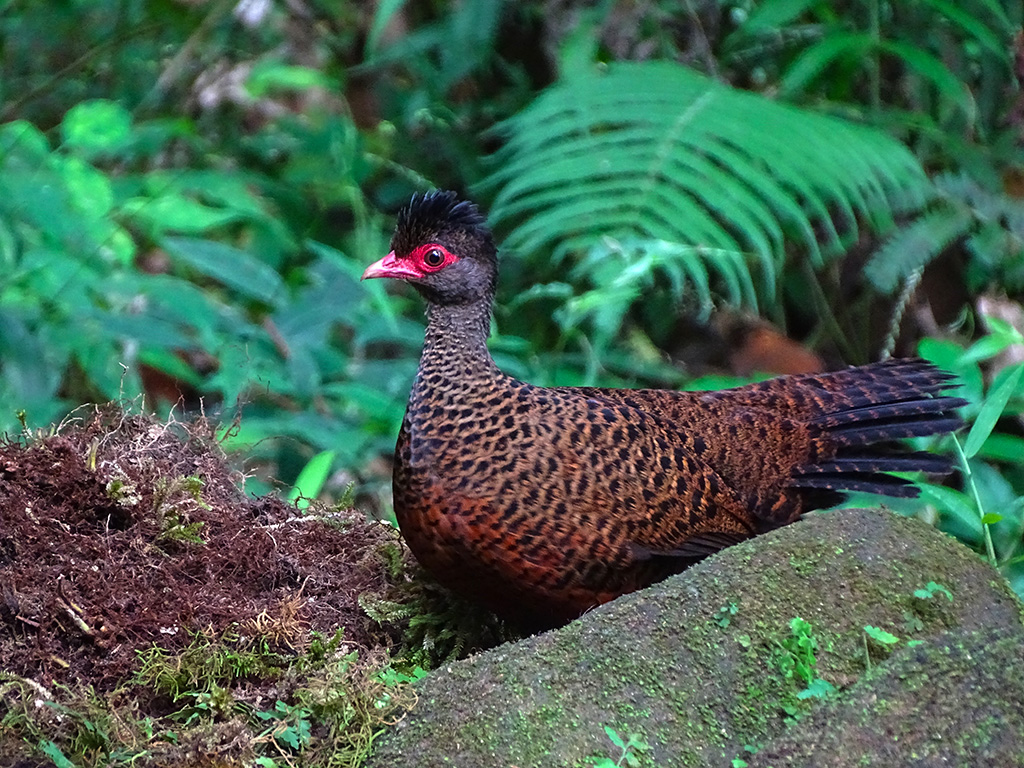
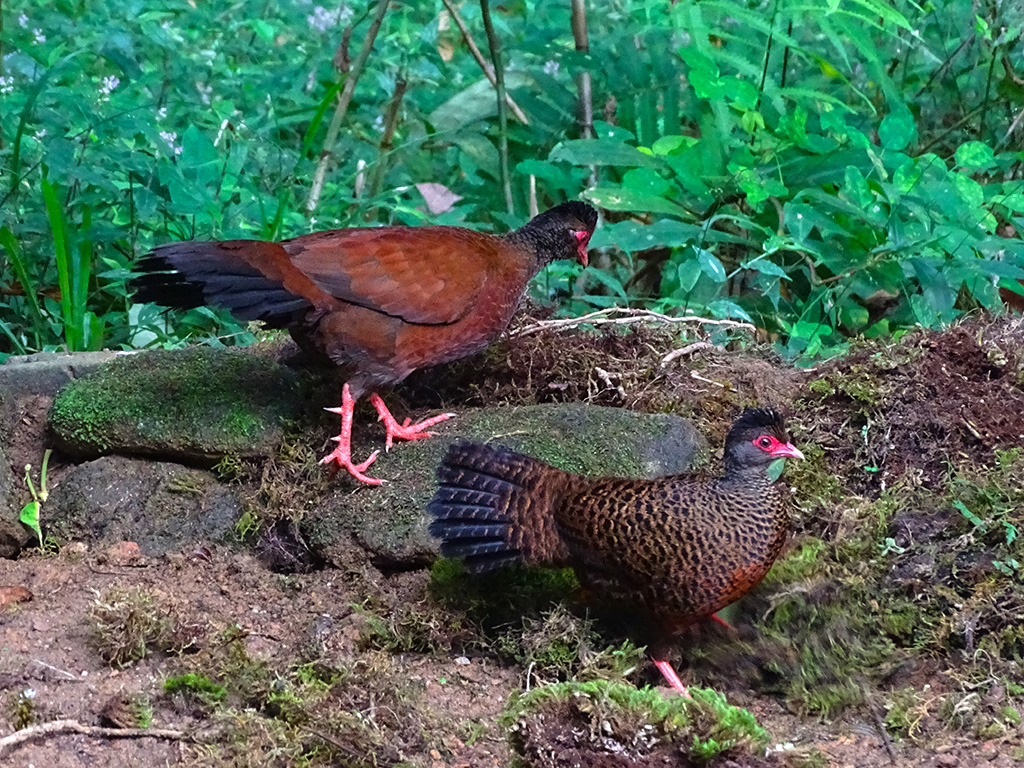
Then I heard about the Ramnagara hide in Karnataka, but I couldn’t find anyone to accompany me there. People who visited the hide, unfortunately, never returned for a second trip. So, I kept waiting for my turn. Finally, in December 2023, we made plans to visit my dream birding destination in India: Thattekad, Kerala. This time, I was confident that I would get to see this bird at the hide for sure. We went to the Eldhose hide for an evening birding session. And guess what!!!
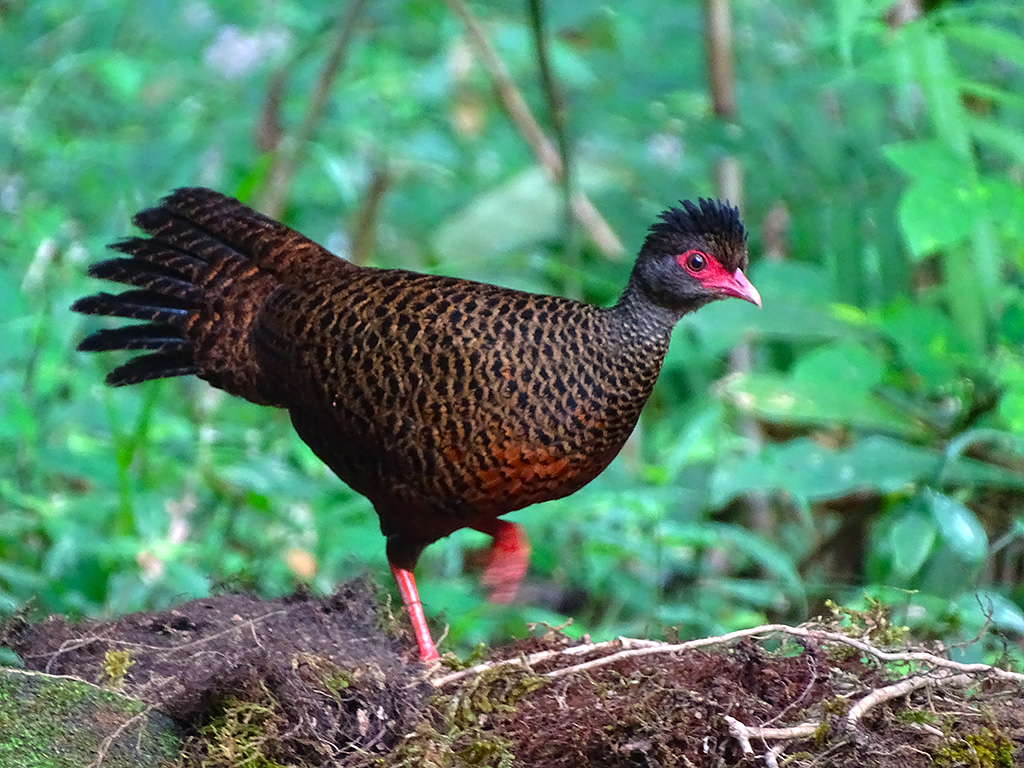

At the start of the show, surprisingly, it called from its hiding spot. It gave me goosebumps when I first saw it inside the bushes. We all knew it would come in front of us, and it didn’t take two minutes before it appeared after the female arrived. Oh boy, what a beauty it was! It gave us ample time while foraging on the ground. Its movements and colors filled my heart with pure joy.


The female arrived first and started consuming the worms placed on the trunk. After 10 minutes of eating, it went back into the jungle. Later, I realized it had gone to call its male partner, and they both returned. It is relatively easy to photograph it, as its behavior is somewhat similar to that of a rooster. However, if you encounter it in the jungle and it tries to run away, capturing it becomes challenging. Within a fraction of a second, it hides itself in the bushes and then reappears amidst the clutter.

