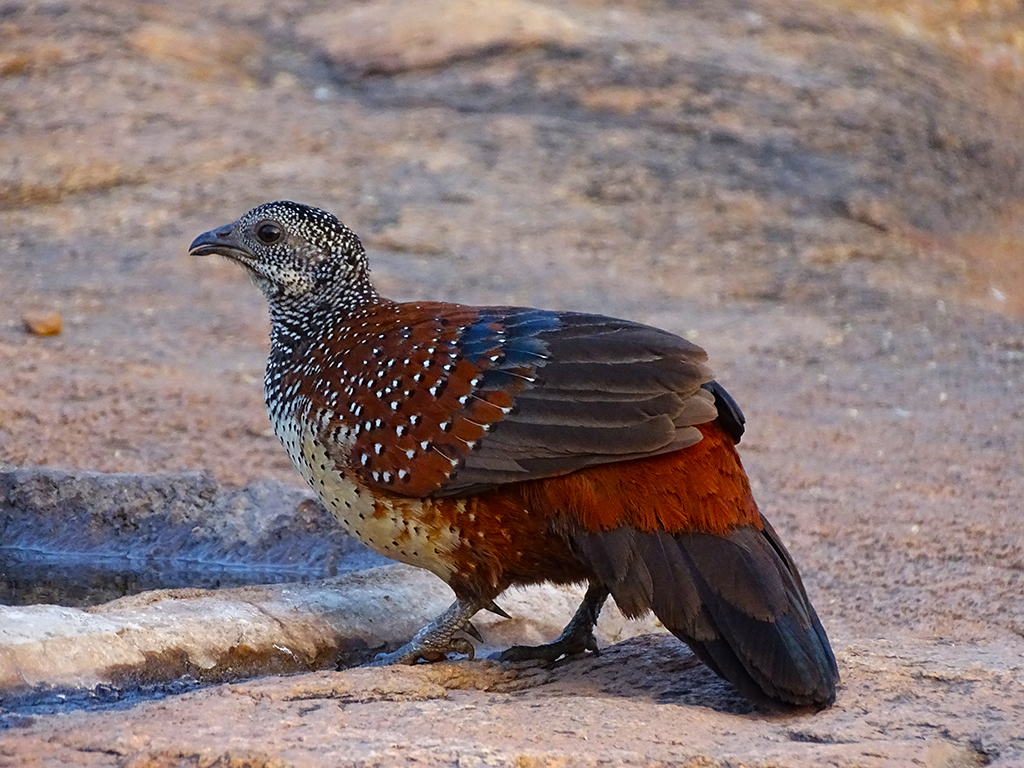
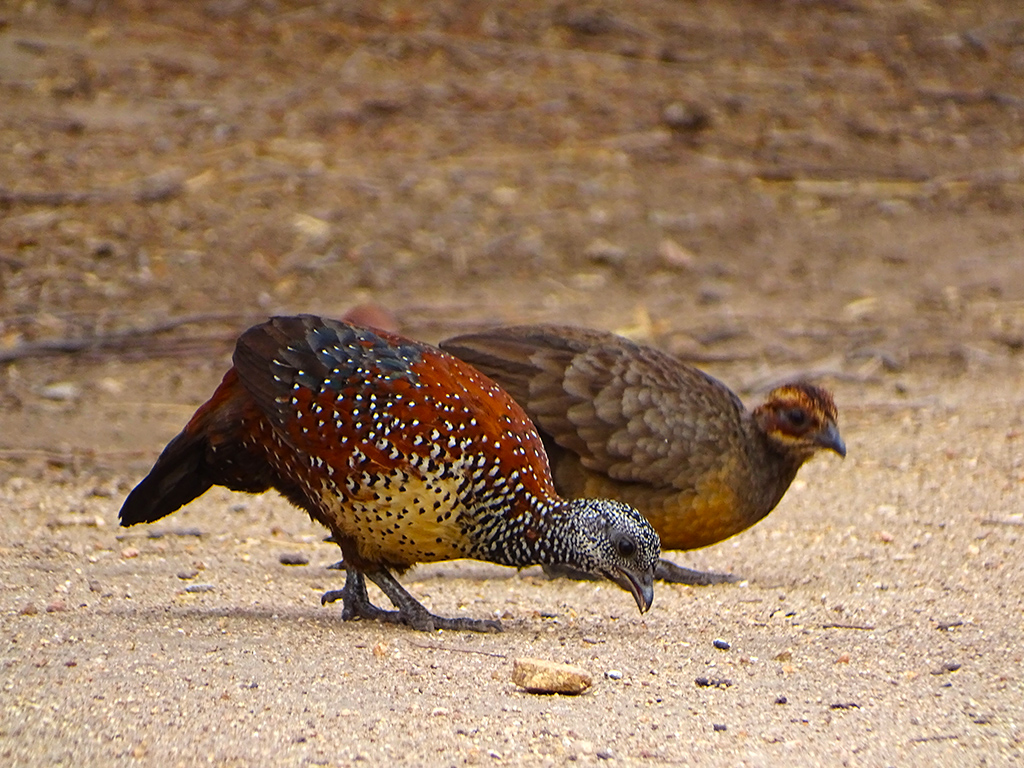
Painted spurfowl
Muthyala Maduvu, Anekal,Karnataka
Again Muthyala Maduvu rocked and shocked me, when i found it in one of my favourite local bird watching destination near by Bangalore. I was not prepare for that at all. Obviously it was very shy and never come out ove it gets alert. You will continuously chasing and it will continuously running away. It mostly target bamboo patches and rocky path. The day I found it in Pearl valley before going to Hampi, I felt so blessed and happy taking that record back to my home.
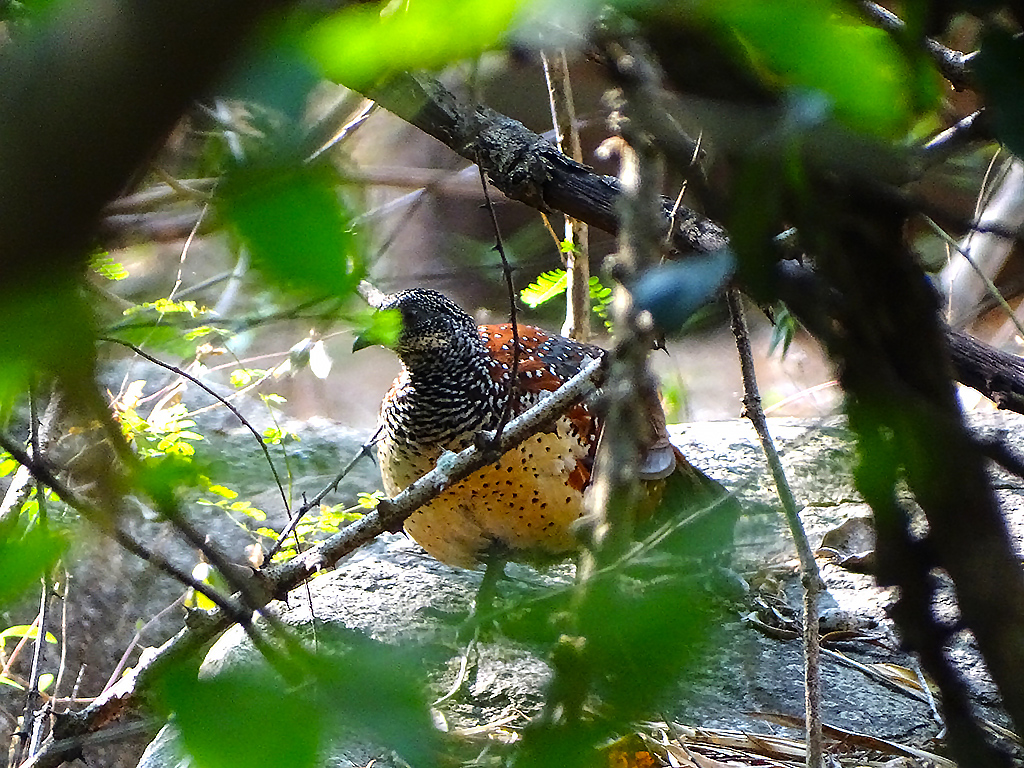
Daroji nature camp,Karnataka
There was a time, this bird used to be an wonder to me when i first saw a glimpse on the way to Telkupi deul in Purulia, West bengal back in 2019. One flash was enough to recognise this bird due to it's vibrant color. That time my camera was not ready because i did not know its habitat. So it always made me thirsty. This pair has been seen in Daroji Sloth Bear Sanctuary in our Hampi birding trip. There were 2 or more pairs appeared to the ground and start foraging in front of us. Hampi is full of painted spurfowl, if you search at the rocks in temple area or any other rocky patch or forest, you will definitely see those as a pair. It will give you ample amount of time and chance in bird hide area but in open area it acts a bit shy and always try to hide themselves into the bush.
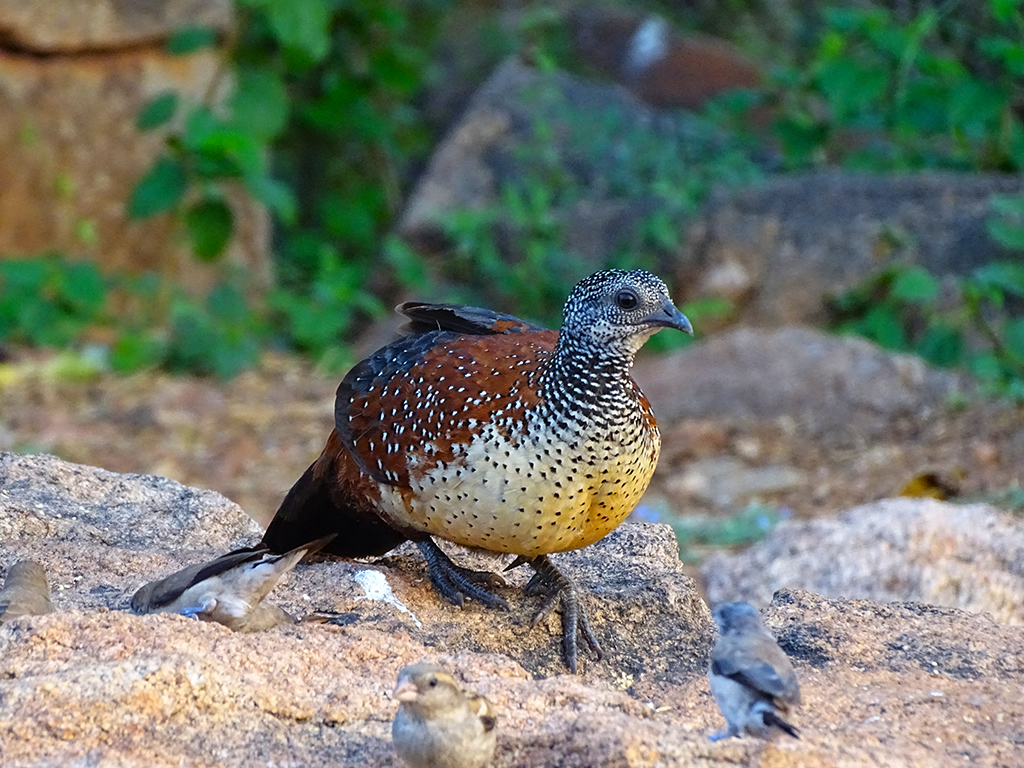
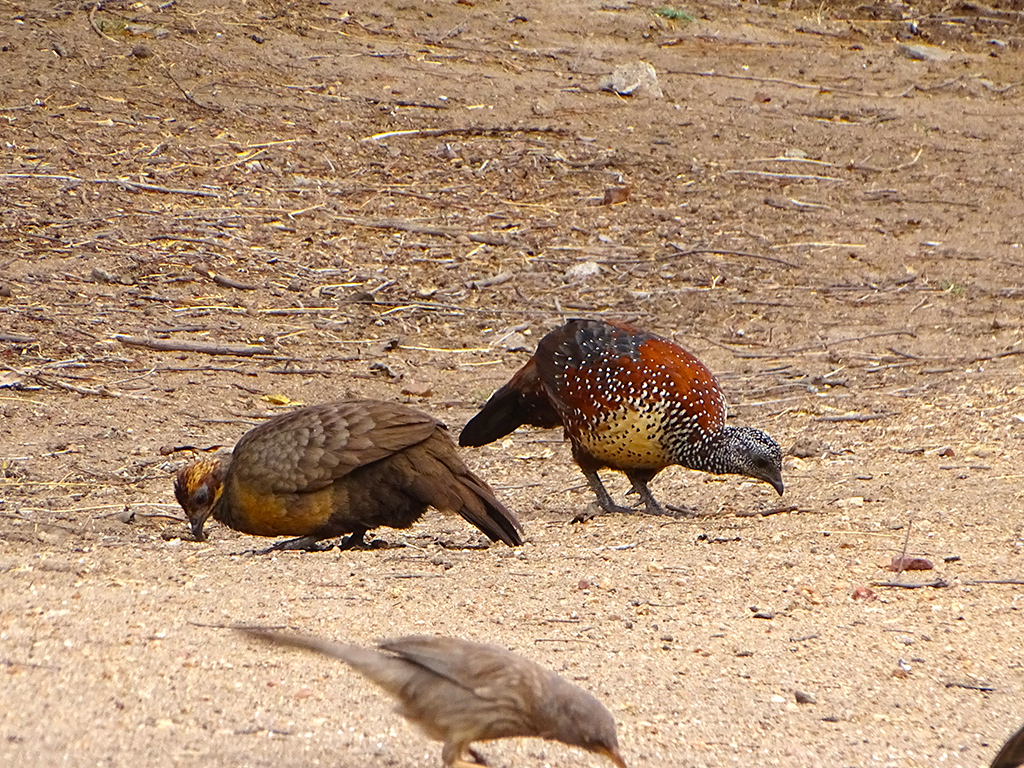
This individual male came in Daroji nature camp bird hide in Hampi. Female said to be hidden due to breeding season. But this time it was so nearby that you can film it in your mobile too. I will say, it is such a beautiful and vibrant birds found mostly in Southern part of India, specially many places in Karnataka.