Painted sandgrouse
Hampi,Karnataka
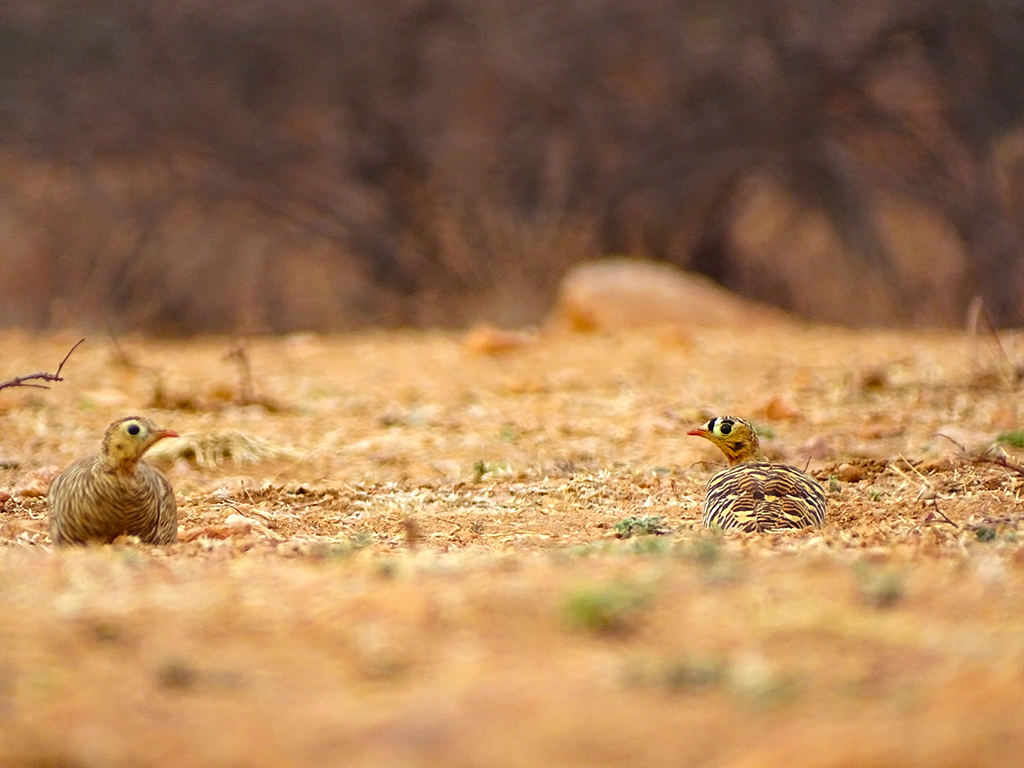
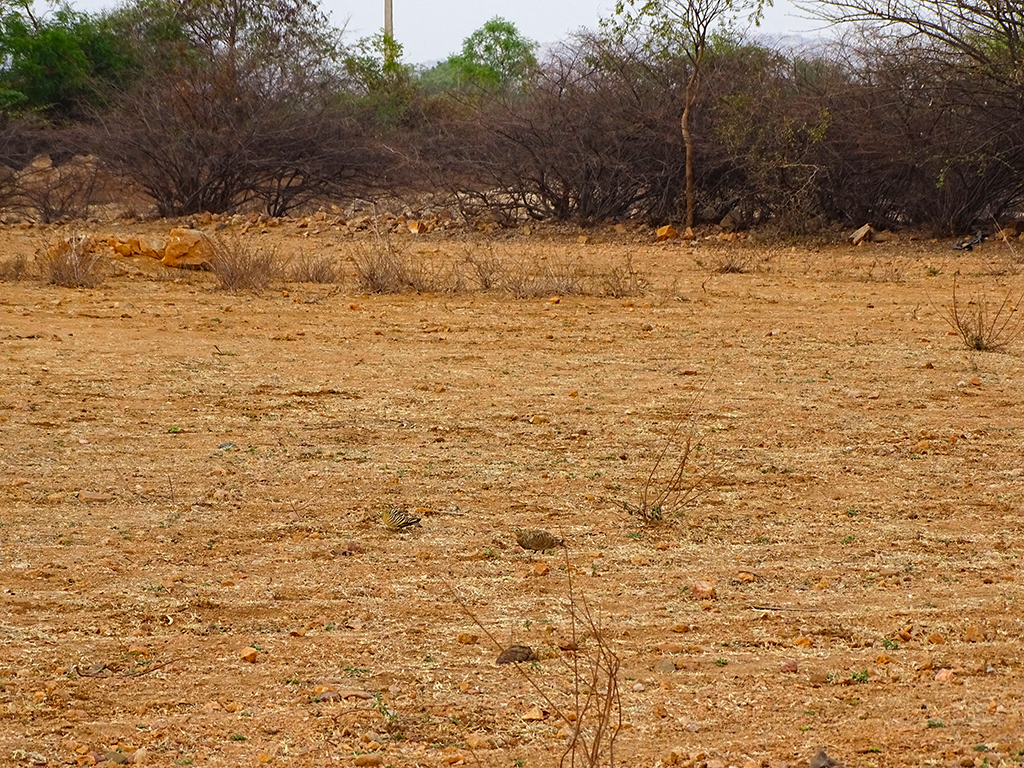
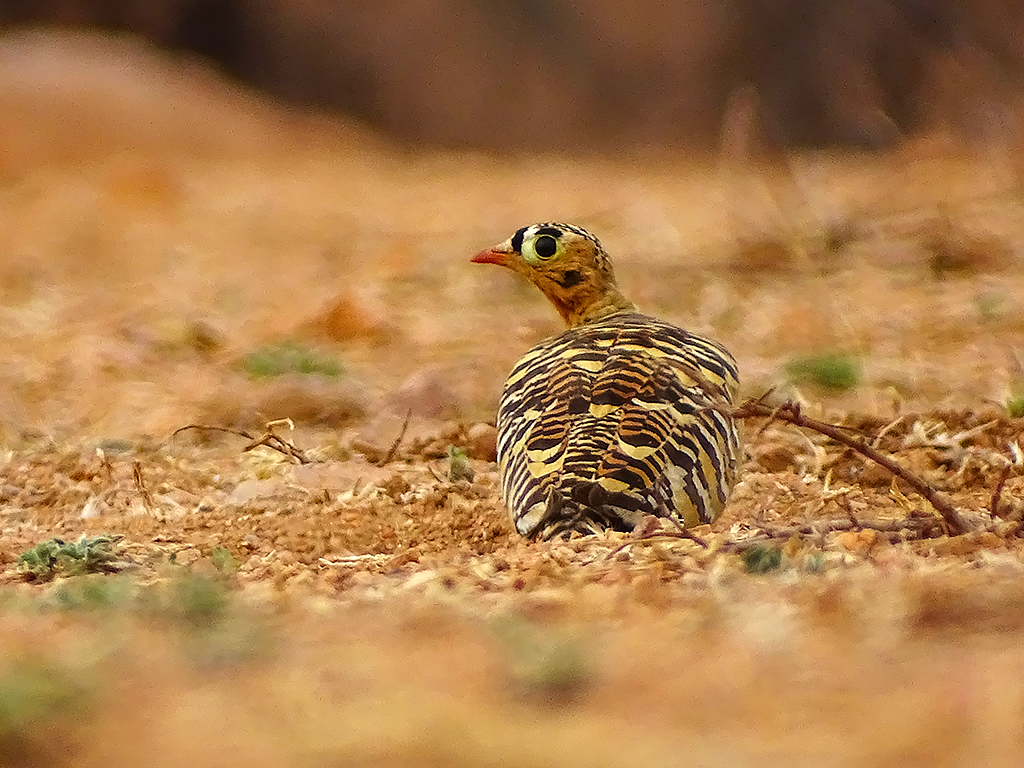
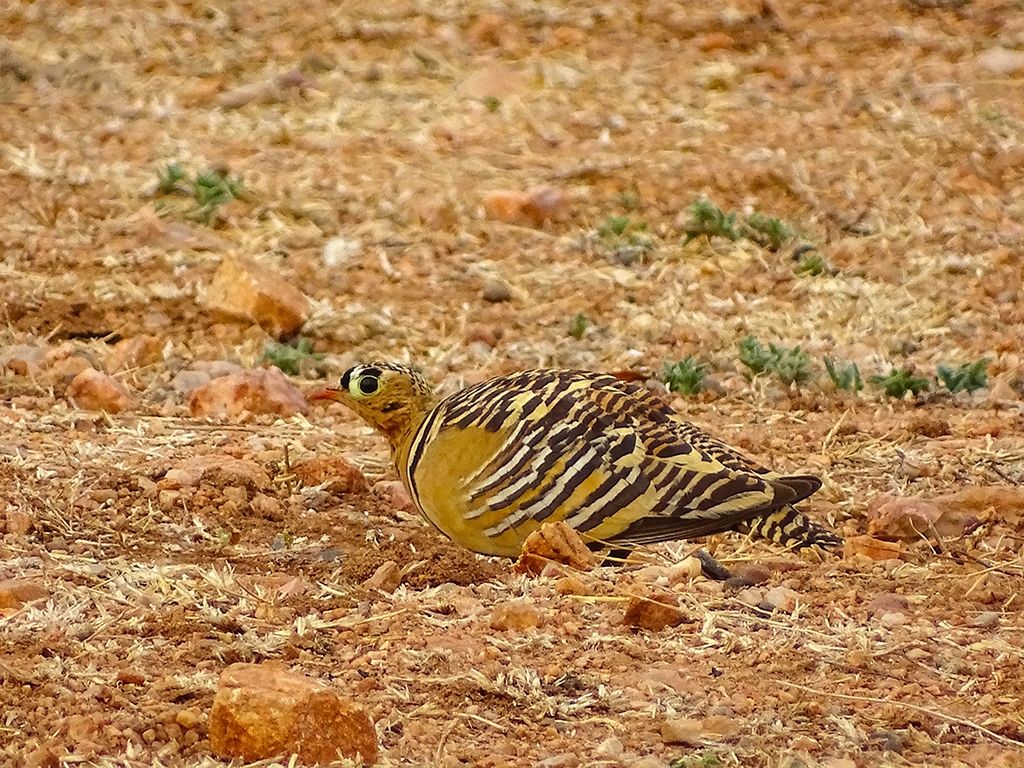
Pic 1 and Pic 2 show female Painted Sandgrouse. After we finished our visit to Daroji Sloth Bear Sanctuary, we exited through the main sanctuary gate, and our driver took us to a nearby field to see these beautiful sandgrouse. Our excitement was at its peak because they were Painted Sandgrouse. Moreover, the driver was so confident that he would easily find this stunning bird, which made me even more excited. Time seemed to slow down for me. In a large, barren field, he began searching for the bird. You wouldn’t believe it, but it took him only two minutes to find it. He pointed it out to us, and we saw a pair of sandgrouse foraging on the ground.
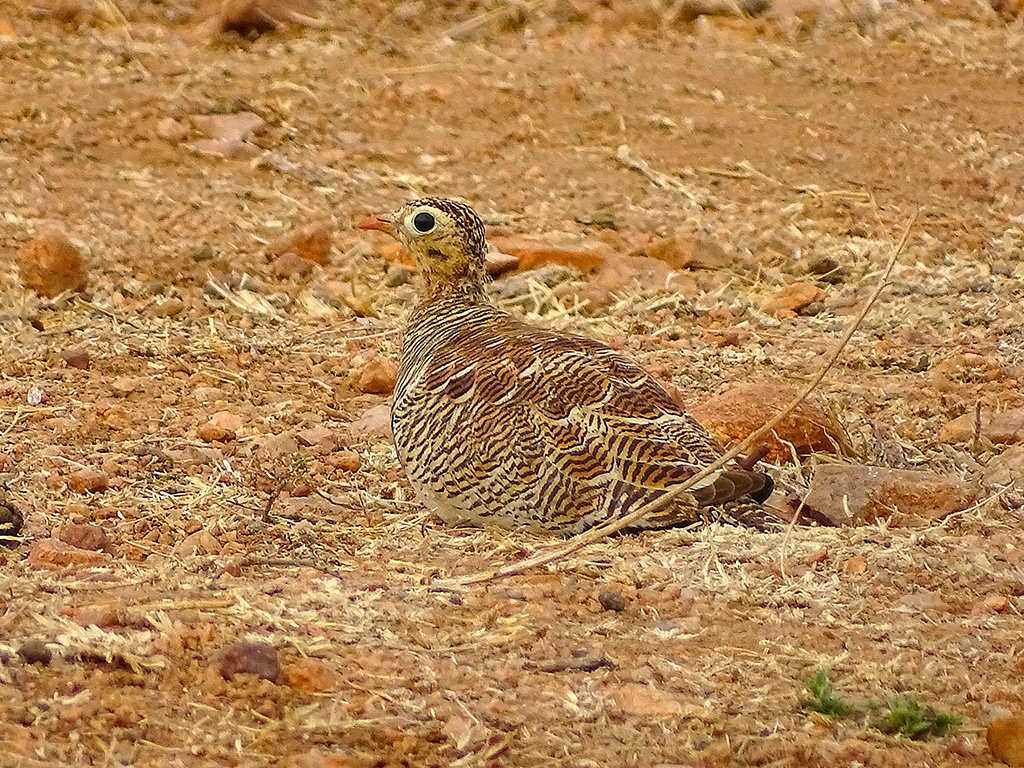
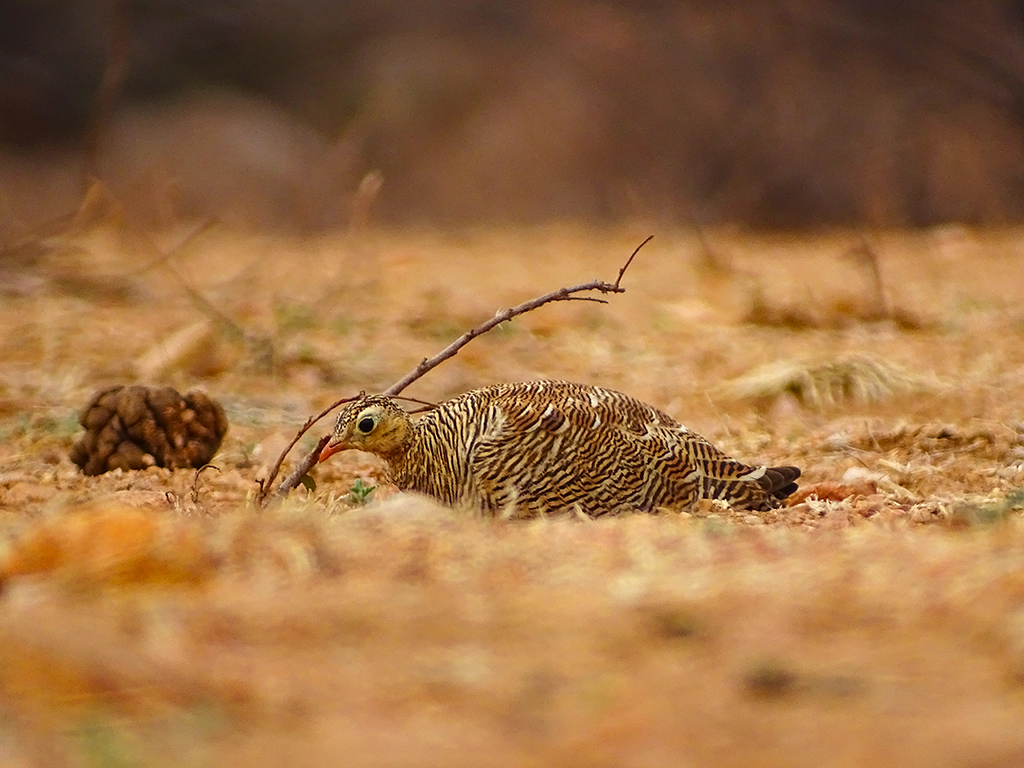
Pics 3 and 4 were beautiful, Male. Like Bhigwan, you shouldn’t get out of the car, as it may fly away, especially when the couple doesn't have chicks with them. So, we started taking pictures from the car window. After we got a few good shots, the driver told us to get out of the car and take more shots. I then got out of the car, lay on the ground to get some eye-level shots while maintaining a certain distance. These were the results we got.
In the last picture, can you identify the birds due to their camouflage? One thing I noticed with a few birds, including sandgrouse, is that if you don't step out of the car, you can approach them from extremely close. The beautiful birds captured all our attention during our evening birding. Thank you, God.