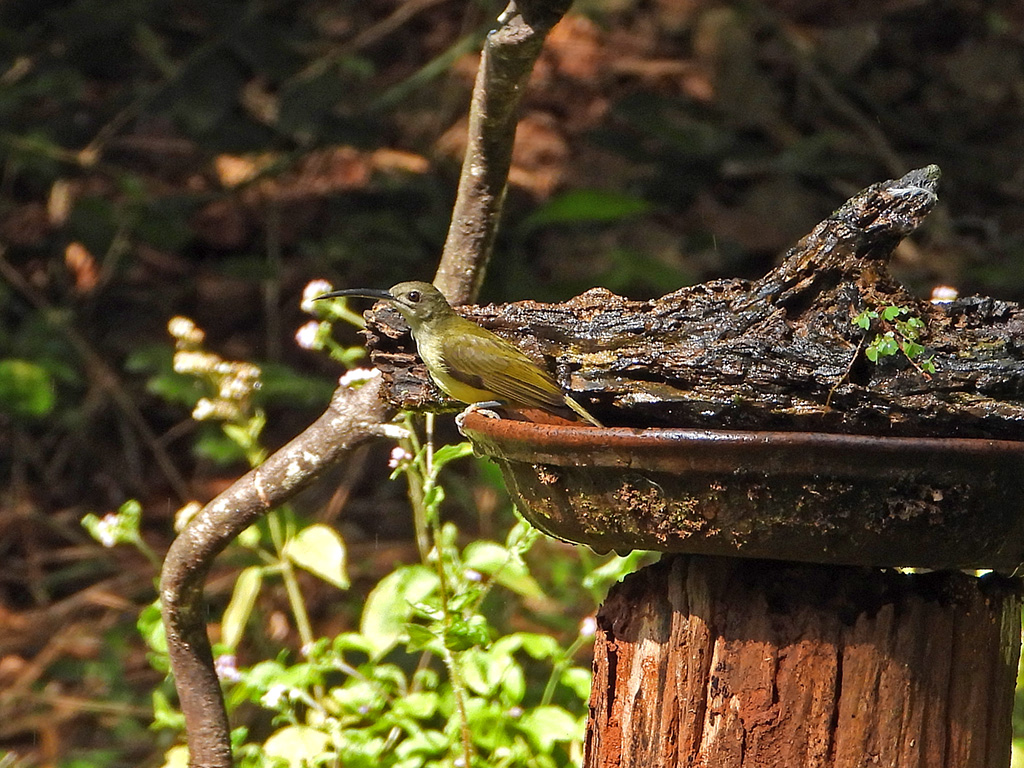
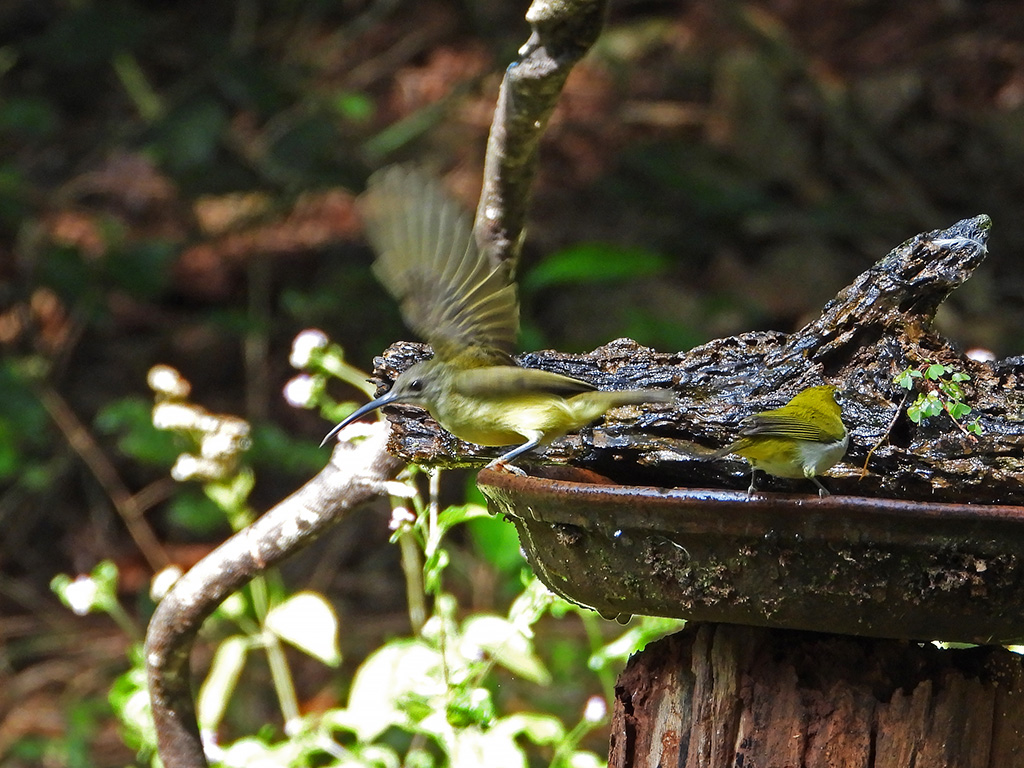
Little spiderhunter
Old magazine house, Dandeli,Karnataka
The same thing happened to me with the spider hunter. It appeared for about 10 seconds, did some restless activities, and then never came back. That's why I was able to capture a few record shots, which I have shared here. Next time, I will try again to upload some good photos for sure.
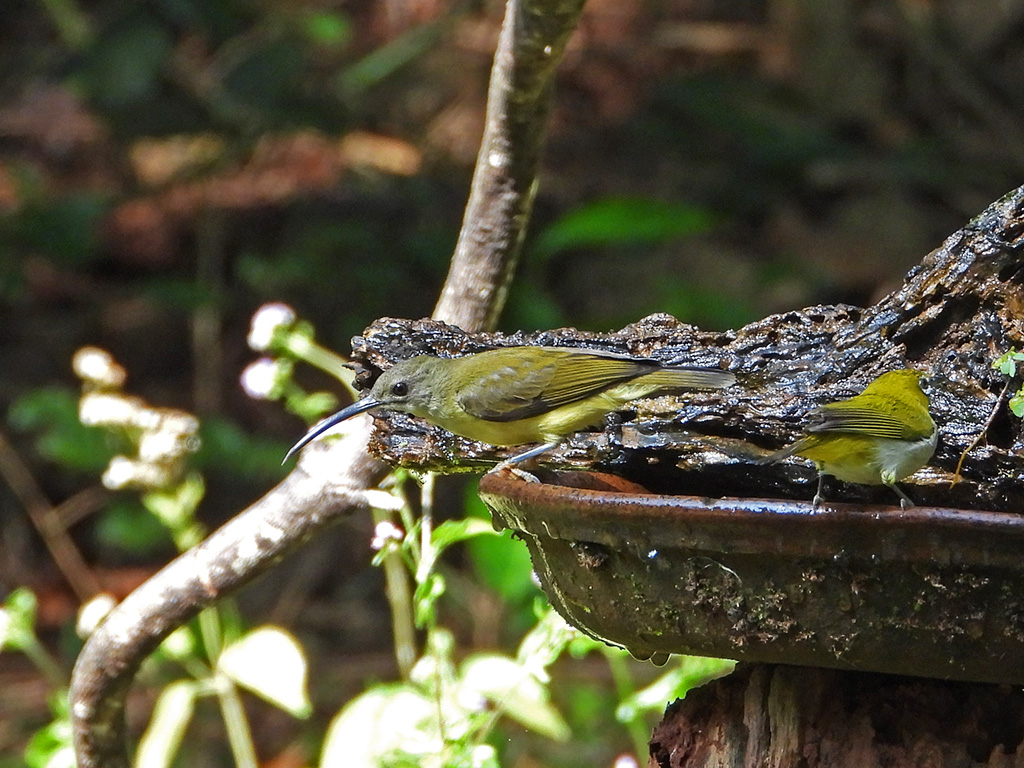
The spider hunter is one of the most restless birds, even though it belongs to the sunbird family. However, spotting this bird at the Old Magazine House hide is considered lucky because it doesn't visit regularly. It only appears for a few seconds and is not a constant presence. It typically comes to feed on nectar, but other birds often disturb it. As a result, it becomes difficult to capture a good picture. Perhaps if you focus well, you can manage to get one. But if you know the Old Magazine House hide, you'll be aware that birds often come in groups all of a sudden, which can be confusing when deciding which one to photograph.
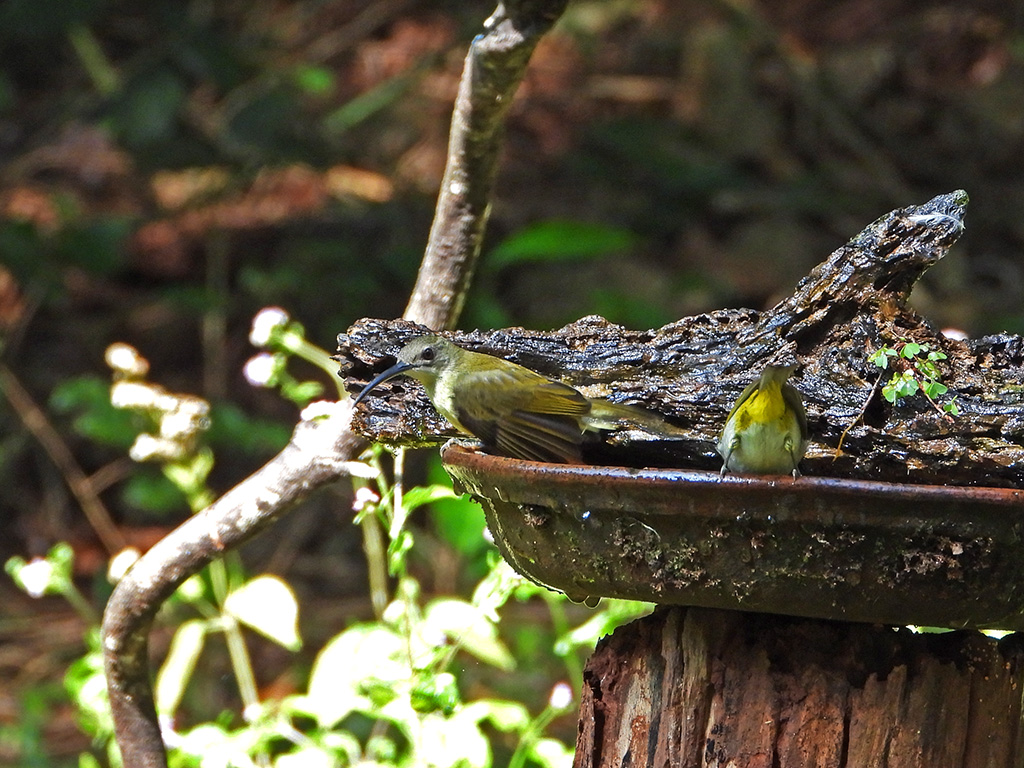
Information of Little spiderhunter
| IUCN (International Union for Conservation of Nature): | Least Concern |
|---|---|
| Approximate size(adult): | Length about 13–15 cm; weight ~10–12 g. Small, slender bird with olive-brown upperparts, yellowish underparts, and a long, curved bill adapted for nectar feeding. |
| Resident/ Migrate from: | Resident across South and Southeast Asia. Populations are largely sedentary, with no major migration. |
| Migrate to: | Non-migratory; only local dispersal may occur in search of flowering plants. |
| Breeding season: | Generally March to September, depending on local flowering and food availability. |
| Breed in: | Nests in hanging cup-shaped structures, often suspended from branches or creepers, made of plant fibers and spider silk. Clutch size is 2–3 eggs. Both parents feed the chicks. |
| Habitat: | Prefers evergreen and semi-evergreen forests, bamboo thickets, plantations, gardens, and forest edges. Often found near flowering trees and shrubs. |
| Diet: | Primarily nectar, supplemented with insects and spiders, especially during breeding to provide protein for chicks. Uses long curved bill to probe flowers. |