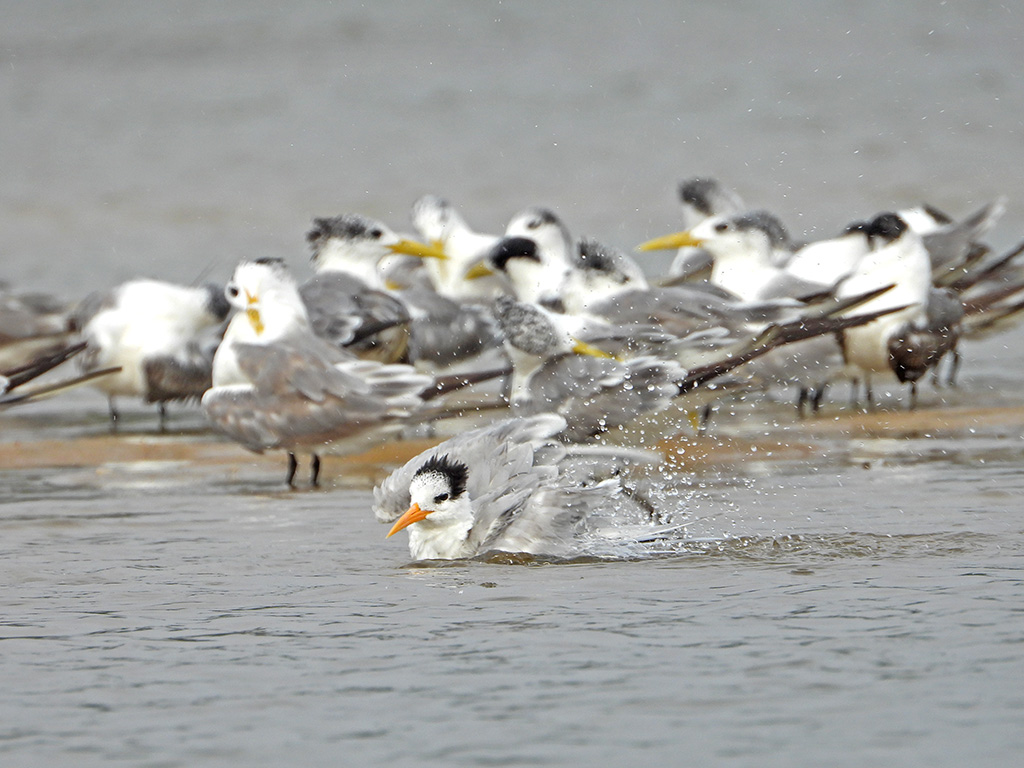
Lesser crested tern
Kundapur Backwater, Udupi,Karnataka
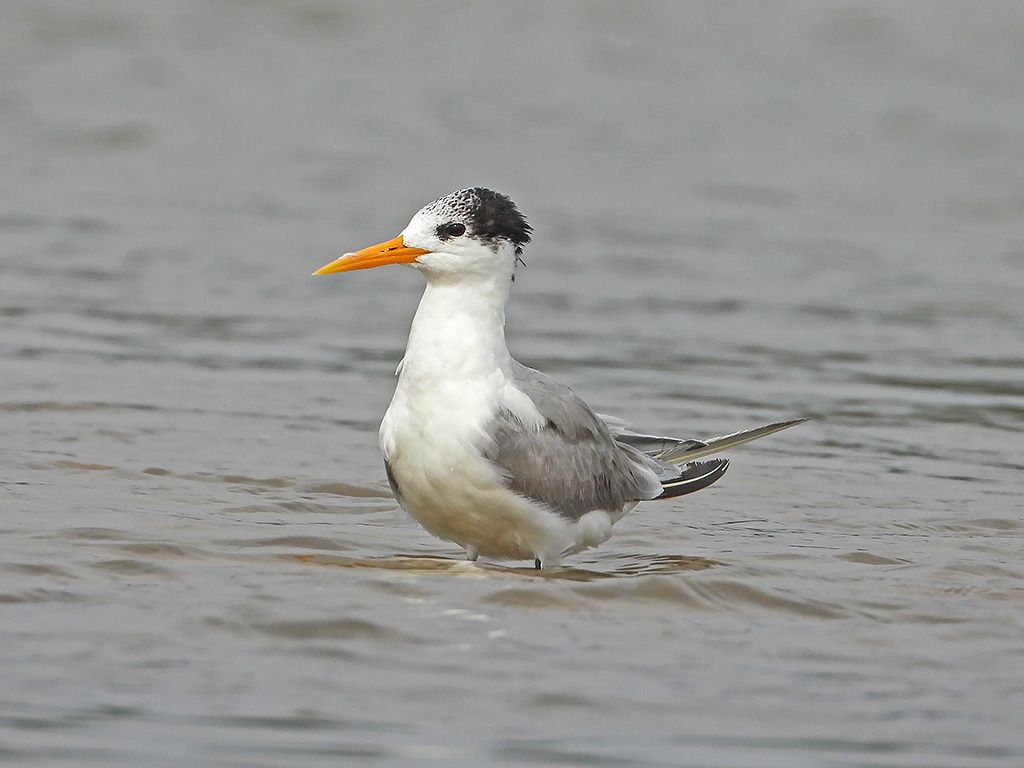
Information of Lesser crested tern
| IUCN (International Union for Conservation of Nature): | Least Concern |
|---|---|
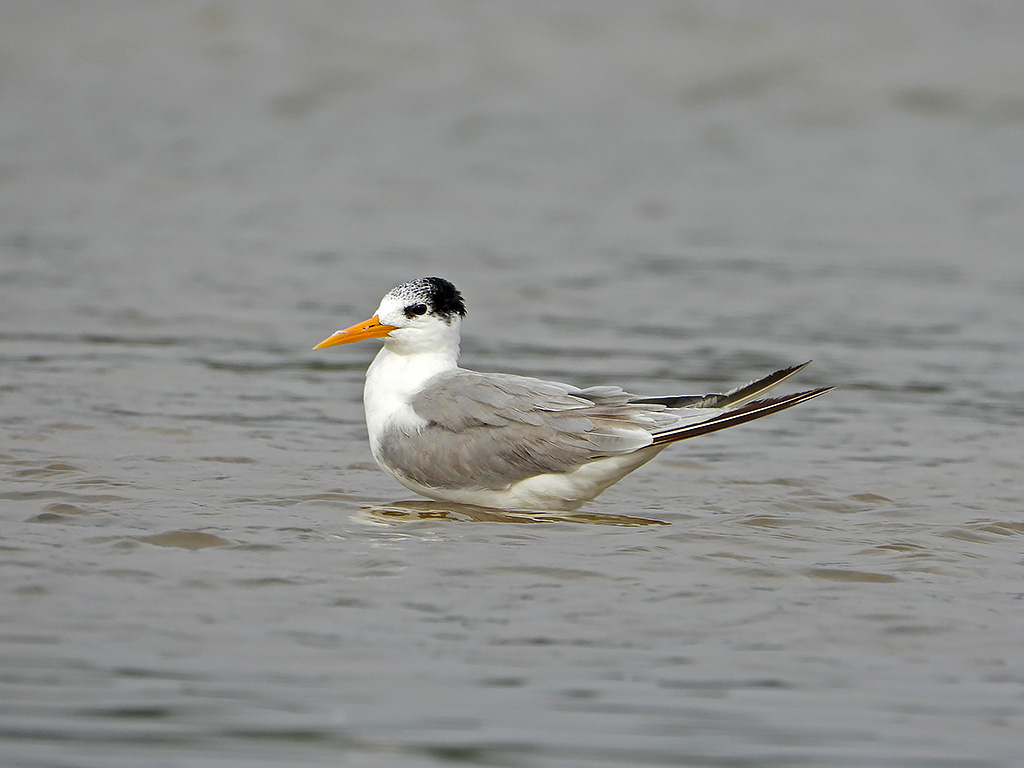
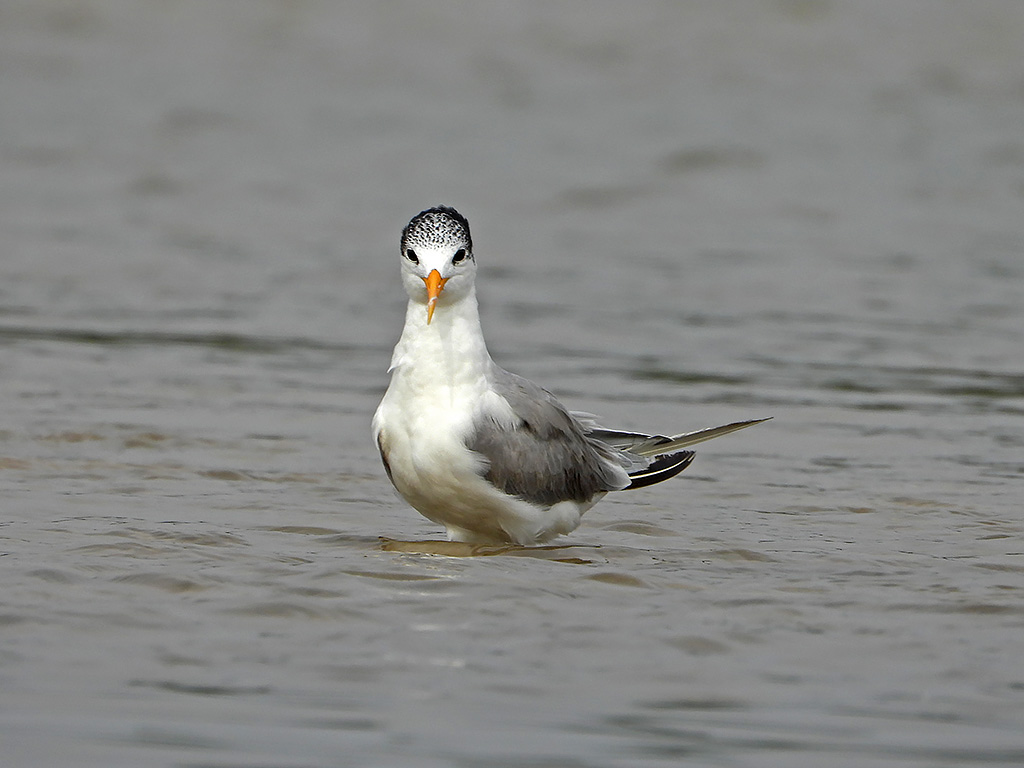
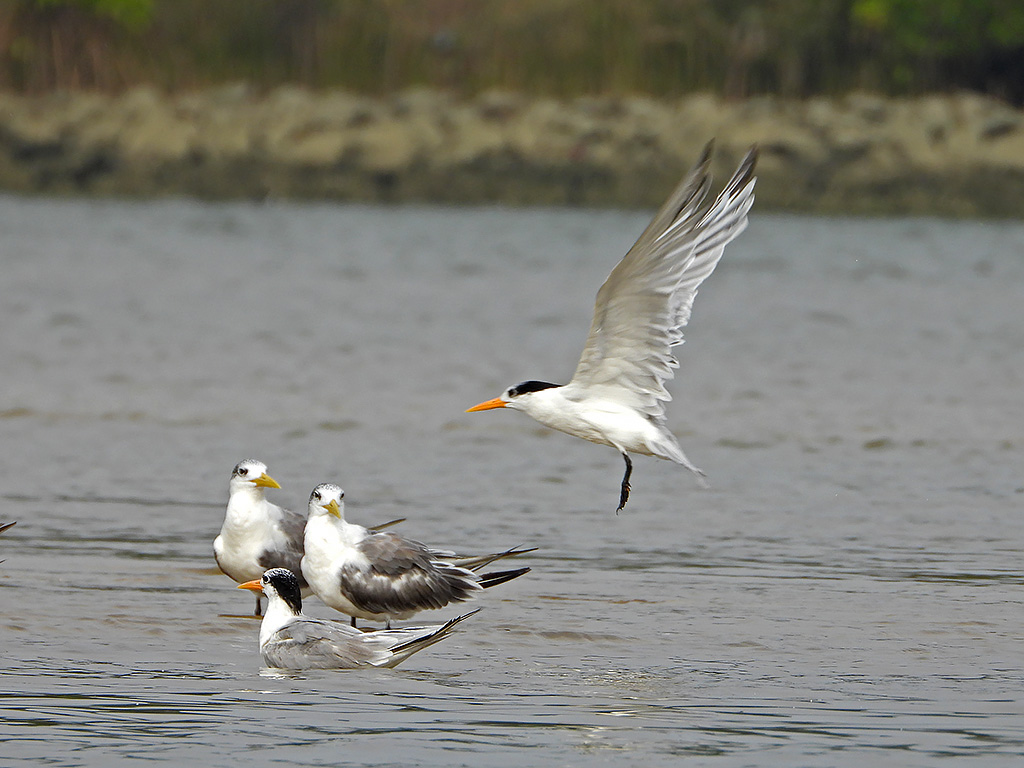
| Approximate size(adult): | Medium-sized tern, about 38–43 cm in length with a 95–105 cm wingspan. It has a pale grey back, white underparts, a black cap, and a distinctive orange bill. The legs are black, and in flight, it shows pale silvery-grey wings. |
| Resident/ Migrate from: | Partially migratory seabird — resident in tropical coastal regions but migrates locally depending on food availability and breeding cycle. |
| Migrate to: | Some northern and western populations move southward to coastal Africa, the Arabian Sea, and South Asia, especially during the non-breeding season. |
| Breeding season: | Generally April to July, though it varies regionally. Breeds colonially on sandy islands, laying one or two eggs directly on bare ground or shallow scrapes. |
| Breed in: | Coastal islands, sandbars, coral reefs, and lagoons — particularly across the Red Sea, Persian Gulf, Indian Ocean, and Bay of Bengal regions. |
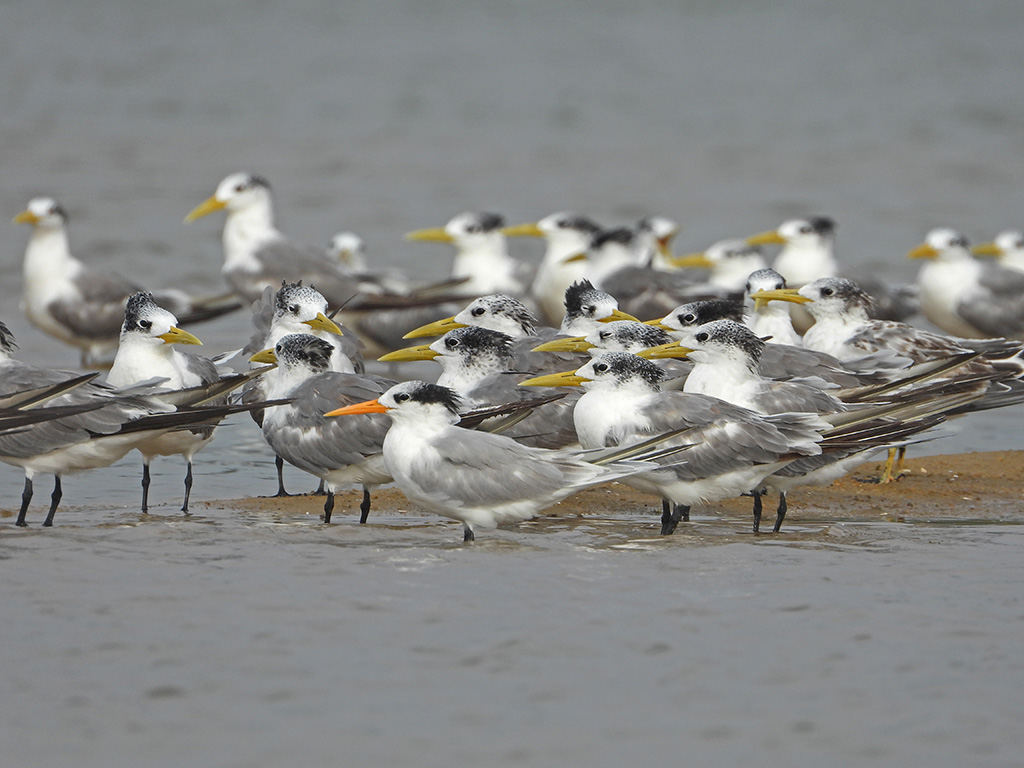
| Habitat: | Found in coastal waters, estuaries, sandy beaches, and offshore islands. Rarely moves far inland. Often seen flying over shallow seas or resting in large mixed flocks with other terns and gulls. |
| Diet: | Feeds mainly on small fish, especially anchovies and sardines, caught by plunge-diving into the sea. Also consumes crustaceans and small squids occasionally. Forages both singly and in groups, often near fishing boats. |