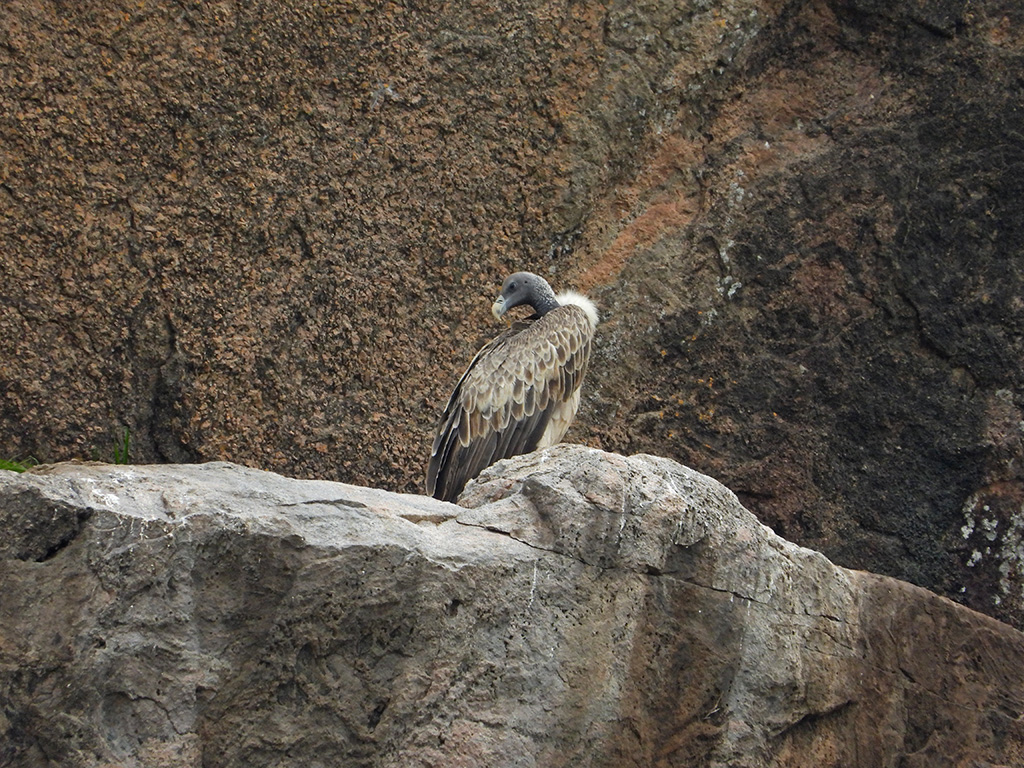
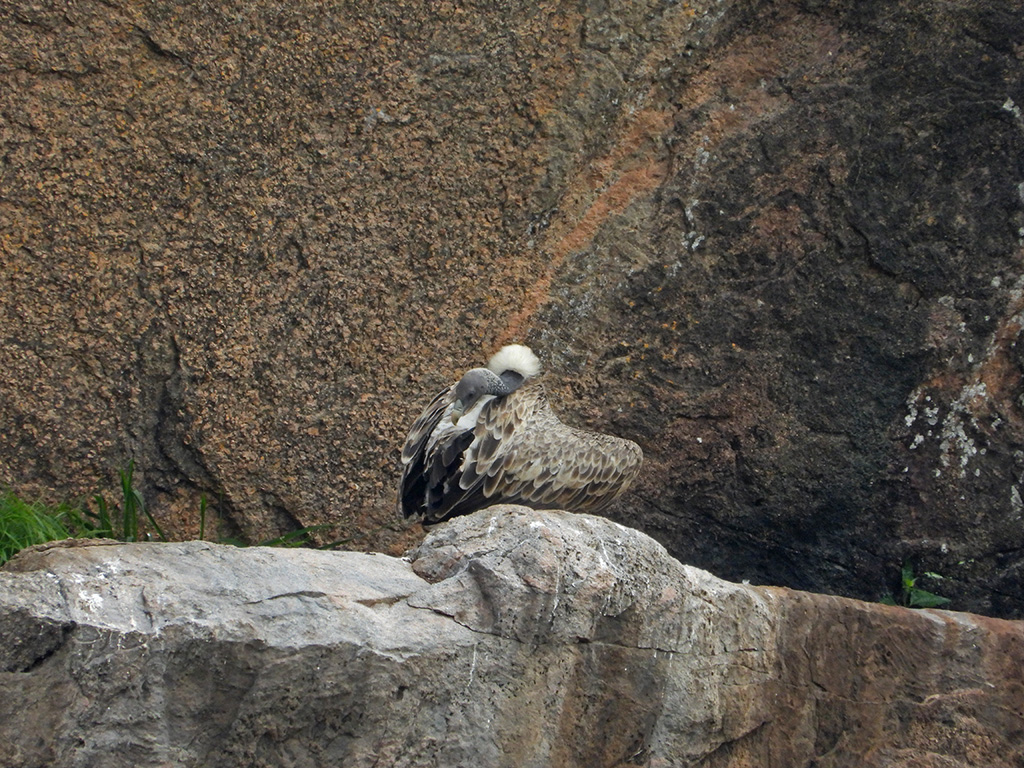
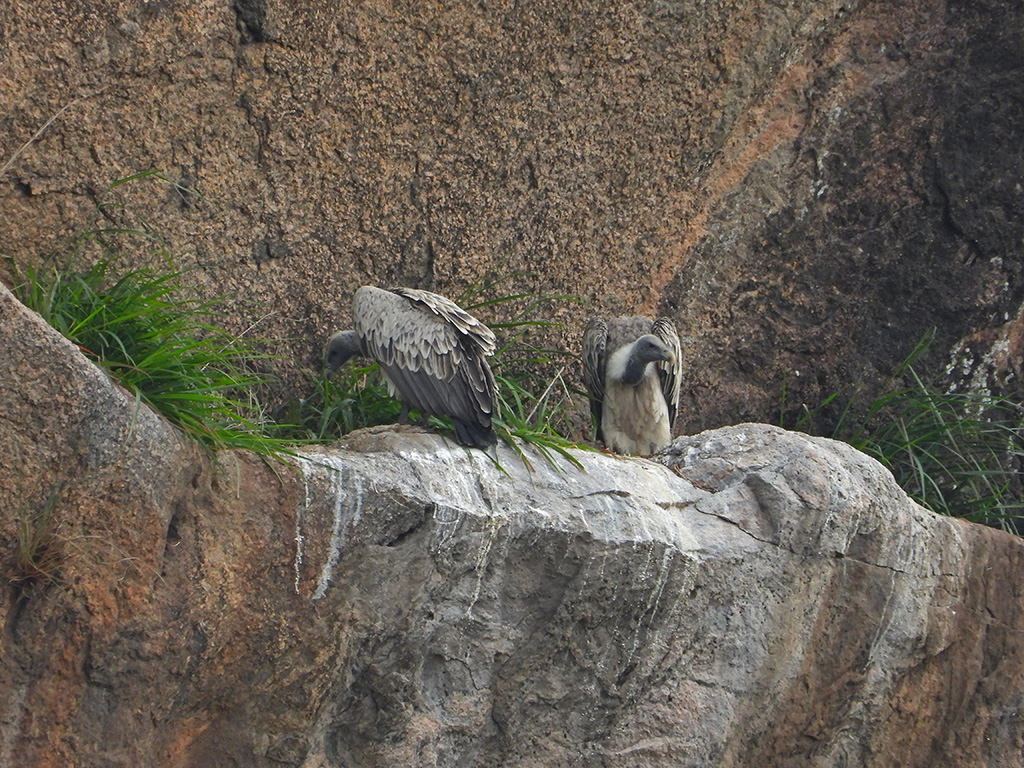
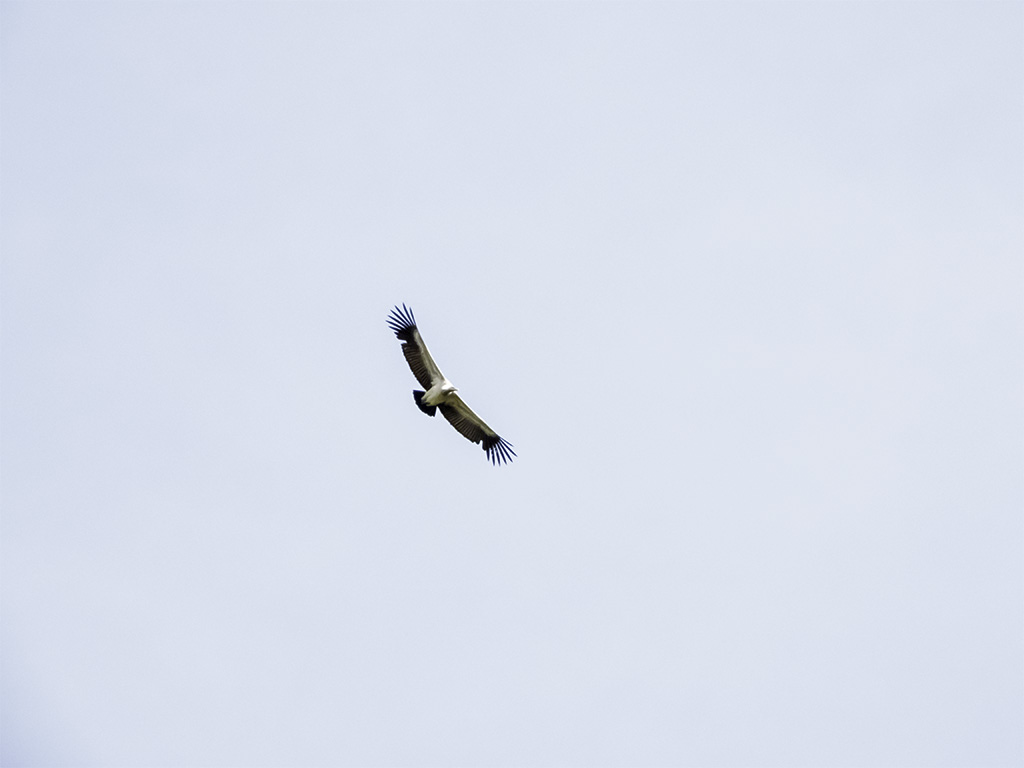
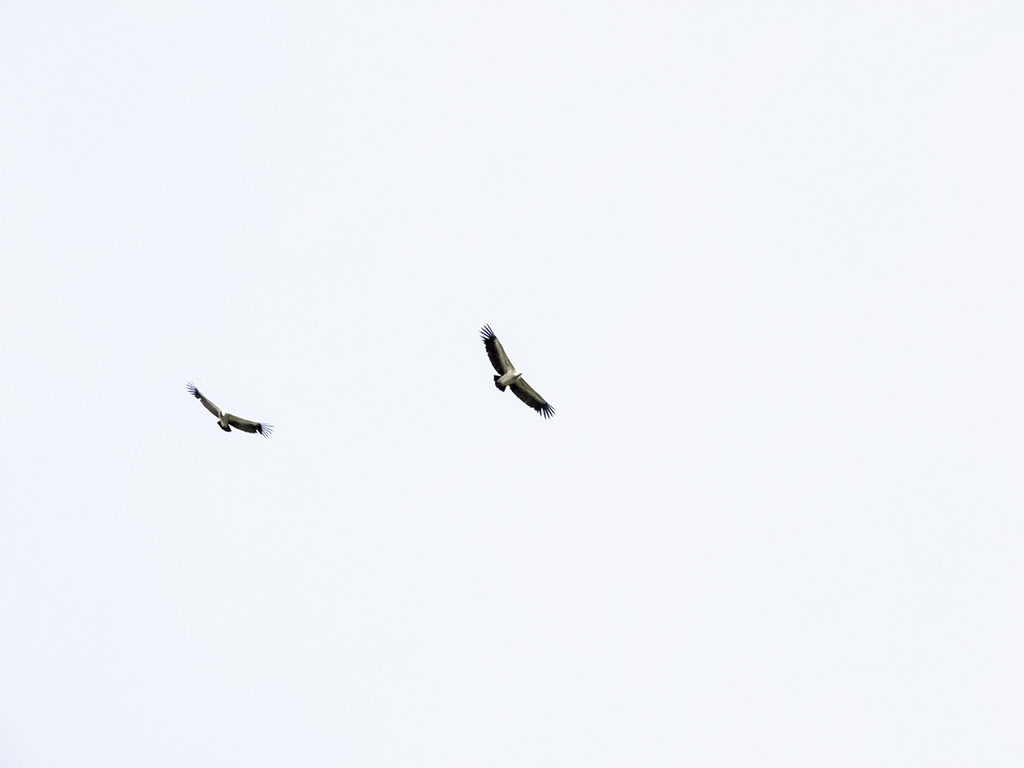
Indian vulture
Ramadevara Betta Vulture Sanctuary,Karnataka
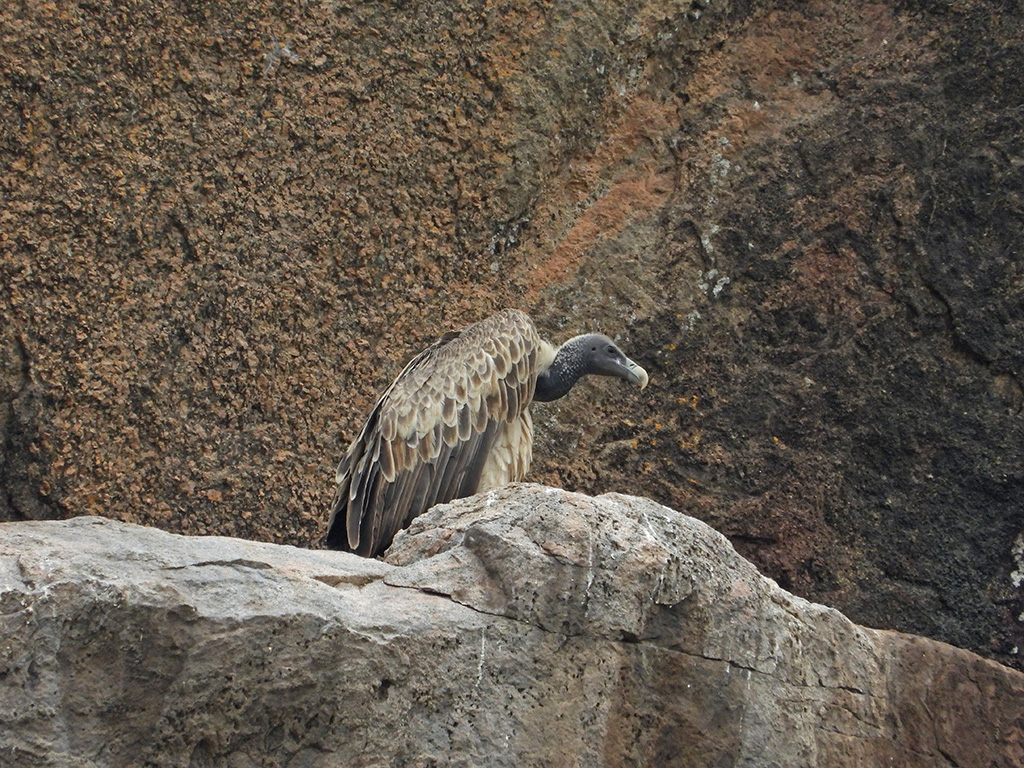
Information of Indian vulture
| IUCN (International Union for Conservation of Nature): | Critically Endangered |
|---|---|
| Approximate size(adult): | A large vulture, about 93–110 cm in length with a wingspan of 2.3–2.6 m. It has pale brown upperparts, paler underparts, a bald head and neck with yellowish skin, and a hooked beak adapted for tearing flesh. Both sexes appear similar. |
| Resident/ Migrate from: | Resident species, largely restricted to India, Pakistan, and Nepal. Does not undertake long-distance migration. |
| Migrate to: | Non-migratory, though it may make local movements in search of carcasses. |
| Breeding season: | Breeds mainly from October to April. Nests are built on tall trees in colonies, made of sticks and lined with leaves. Clutch size is typically 1 egg, with both parents involved in incubation and chick-rearing. |
| Breed in: | Prefers dry deciduous forests, open woodland, and semi-arid regions with tall trees suitable for nesting. Often breeds in communal colonies. |
| Habitat: | Found in open country, forest edges, scrublands, and human-influenced landscapes. Scavenger, often seen soaring high in the sky searching for carcasses. |
| Diet: | Obligate scavenger, feeding almost entirely on dead animals (carrion). Plays a crucial ecological role in removing carcasses and preventing the spread of disease. |