Indian nightjar
Hampi,Karnataka
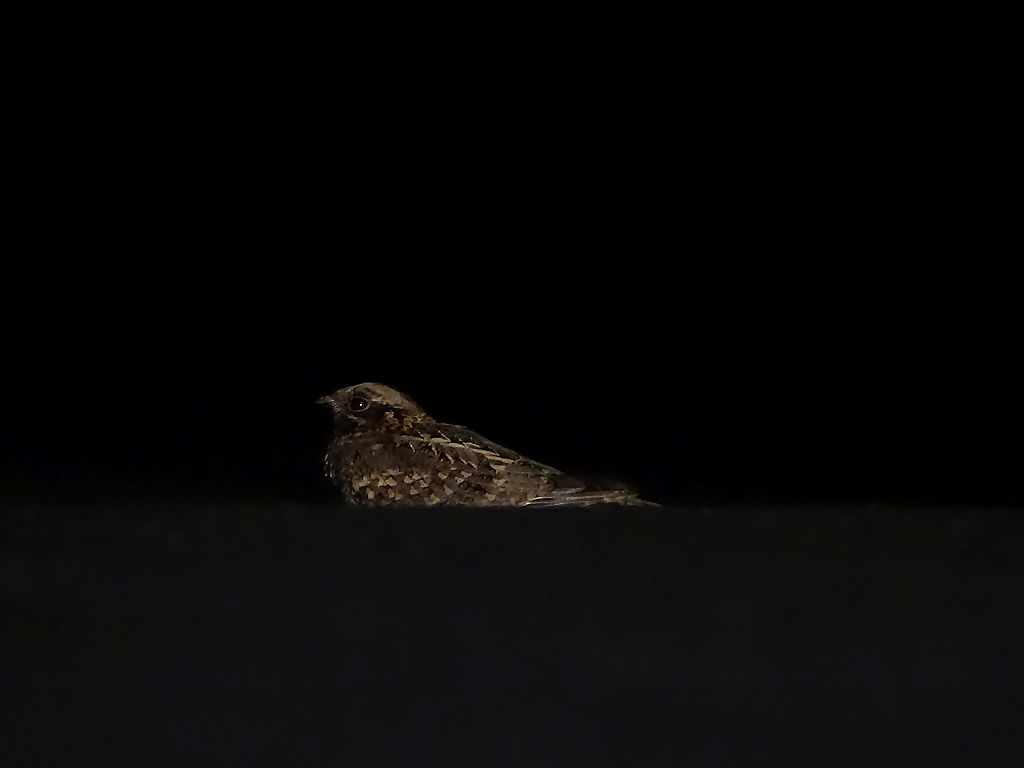
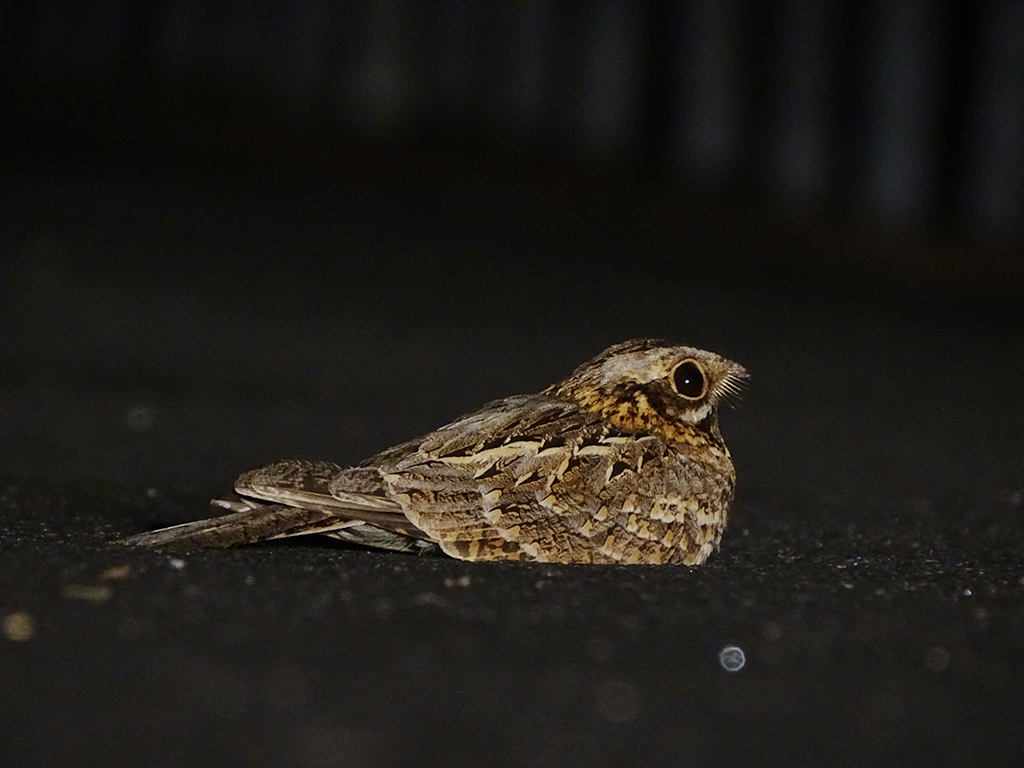
The Indian Nightjar is such a beautiful bird. Although it is said to be found all over India, I saw it for the first time on the Hampi canal-side road, sitting in the middle. I was equally excited. Imagine Pampayya sir driving the car after dusk, and every 500 meters, we would spot it sitting in the middle of the road. It has red eyes and can be seen in low light. I was amazed to see such a large number of Nightjars in Hampi. On one side of the road, there is barren land, and on the other side, there is the Tungabhadra canal. As we drove closer to the bird, it would fly away each time, always towards the ground. I asked why they don’t fly towards the canal side, but always towards the ground. Pampayya sir explained that they know their path and come to the road for insects. If they need to return, they will always fly towards the ground. Another thing I noticed was that they always face the canal side, with their backs towards the field, and they sit perpendicular to the road. They never sit parallel to the road. When they need to fly, they always take off backwards, flying towards the ground from where they were sitting. That was truly surprising to me.
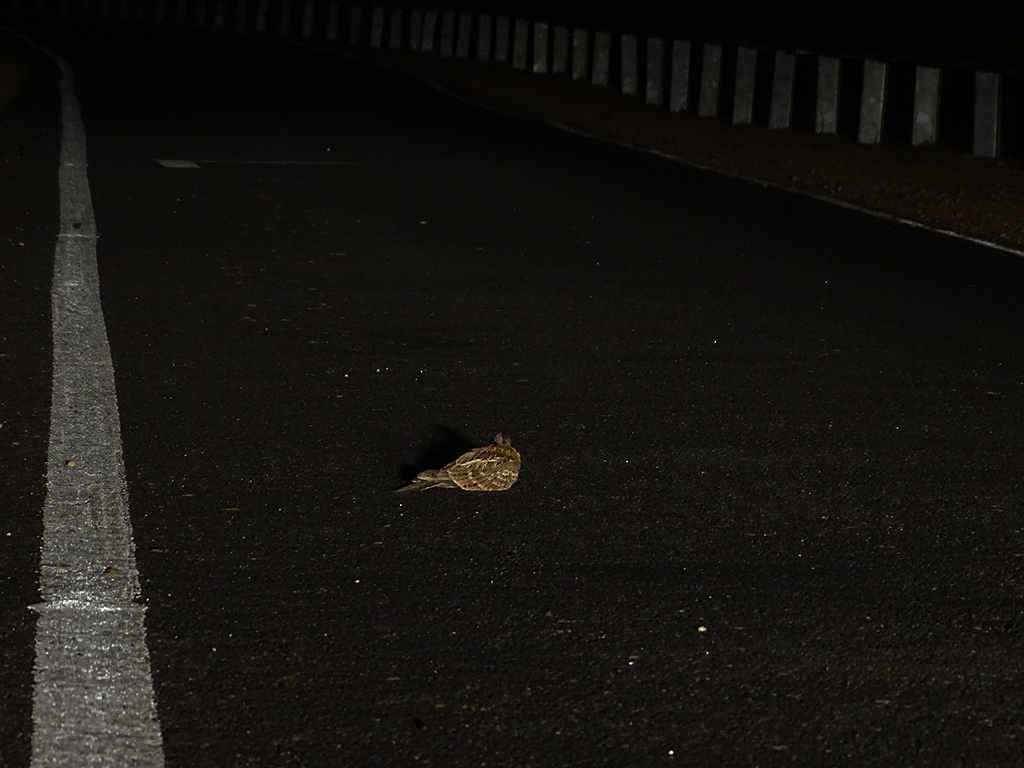
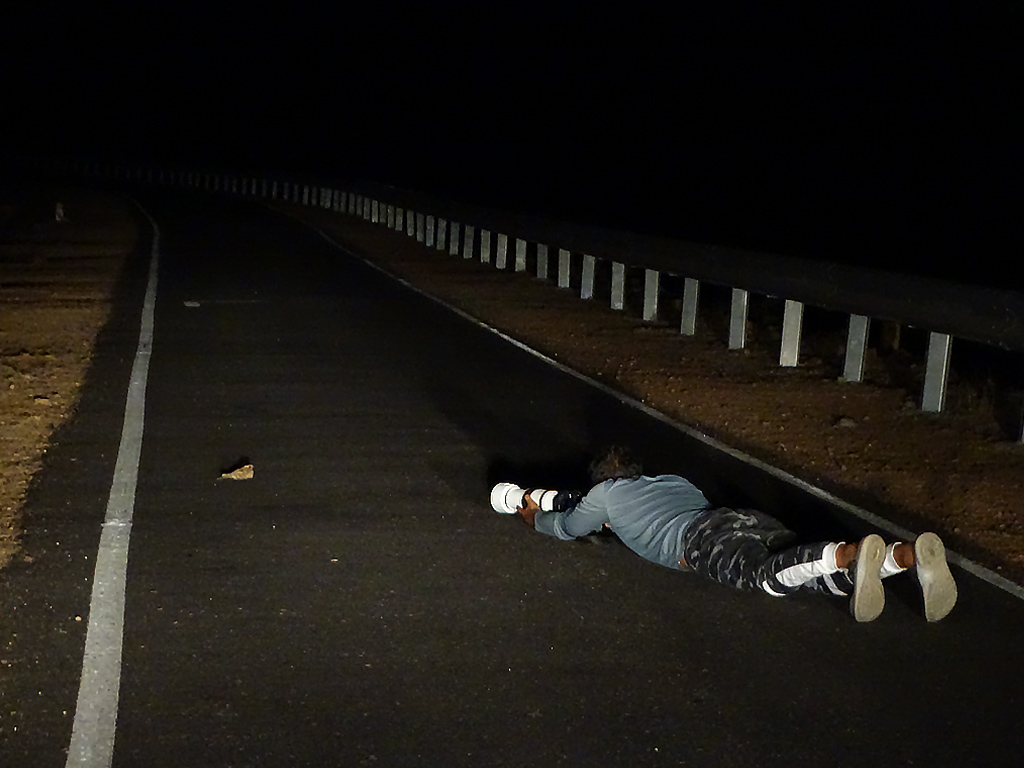
At first, I faced challenges photographing this bird with my point-and-shoot camera. You won’t believe the bird allowed us to get so close, but of course, we had to crawl along the road, which is pretty normal for this hobby. Pampayya Sir encouraged us to get even closer to capture better shots. You won’t believe that I crawled so close that I first took a picture and video with my phone. Then, I took more pictures with my camera. In the picture, you can see my friend got so close to the bird.