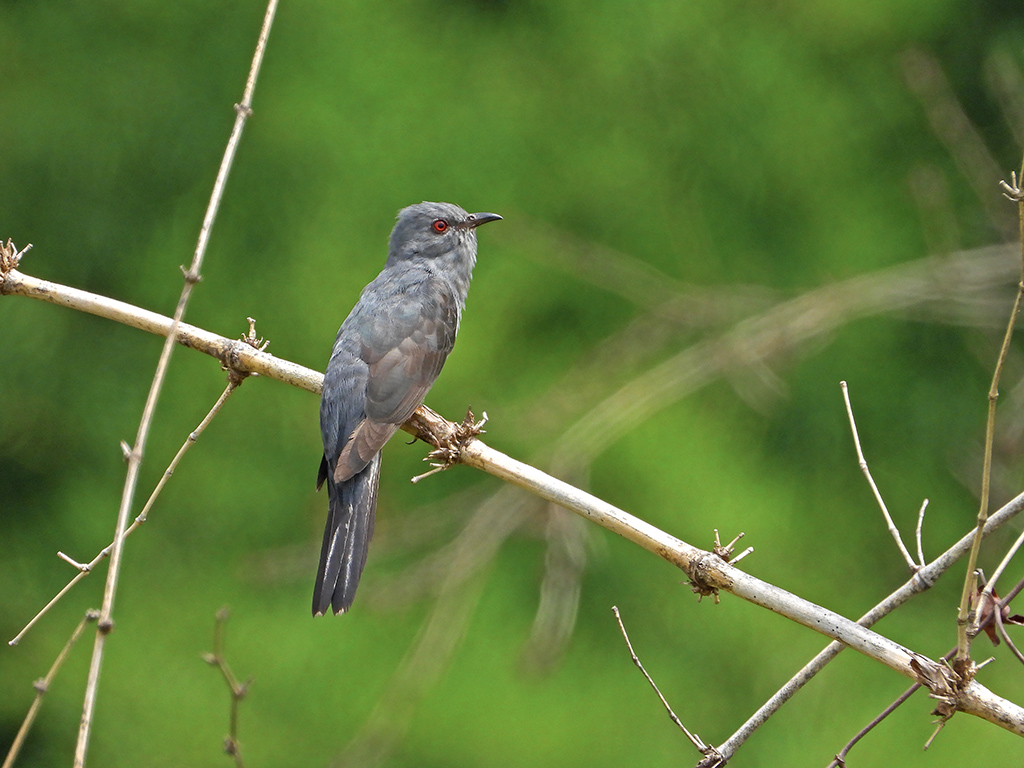
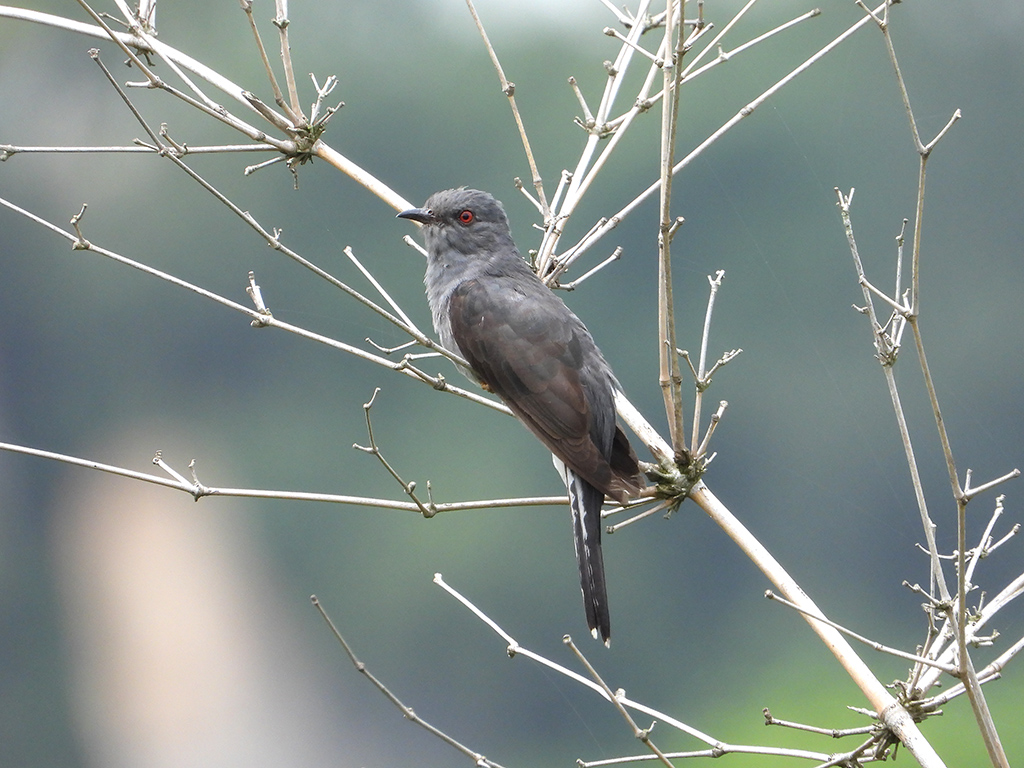
Gray-bellied cuckoo
Ragihalli State Forest,Karnataka
Varthur lake,Karnataka
A very common cuckoo is found throughout Karnataka, but I am unfortunate not to encounter it very frequently. I mean, I could have had more records than I currently do. Anyway, it is a beautiful, greyish male bird with red eyes, mostly found in hilly jungles or near lakes because it primarily feeds on caterpillars found in such areas. It is usually identified by its distinct and loud calls echoing through its habitat.
I found this individual in the Varthur Lake area one casual morning while searching for a Red-throated Pipit. It caught a caterpillar and had it for breakfast. Don’t worry about camouflage, as they don’t rely on it and usually sit on an open perch. I have seen it in a few other lake areas and in the Bannerghatta area, always perched in open spaces.
Information of Gray-bellied cuckoo
| IUCN (International Union for Conservation of Nature): | Least Concern |
|---|---|
| Approximate size(adult): | A small cuckoo, about 21–23 cm in length; has a slate-grey head and upperparts, pale grey underparts, and rufous underwings. The tail is graduated with white-tipped feathers. |
| Resident/ Migrate from: | Partly resident and local migrant within South Asia. Northern populations may migrate seasonally. |
| Migrate to: | Moves southward during winter within the Indian subcontinent and occasionally to Sri Lanka and southern India. |
| Breeding season: | April to July in most parts of India, coinciding with the monsoon onset. |
| Breed in: | Open woodlands, scrublands, grasslands, and cultivated areas. It is a brood parasite, laying eggs in nests of small birds such as prinias and warblers. |
| Habitat: | Prefers dry open forests, thorn scrub, bush country, and edge habitats up to 1500 m elevation. Often found in rural and semi-urban areas. |
| Diet: | Feeds primarily on insects, especially caterpillars, beetles, and grasshoppers; occasionally eats other small invertebrates. |