Note: Bird migrations and movements can have exceptions due to specific reasons and may change from day to day. Here, I will provide general or generic information on the topic. This information is intended to educate bird enthusiasts by providing fundamental knowledge about Indian birds.
Information of Garganey
IUCN (International Union for Conservation of Nature):
Least Concern — widespread but declining in parts of its range due to wetland loss.
Approximate size(adult):
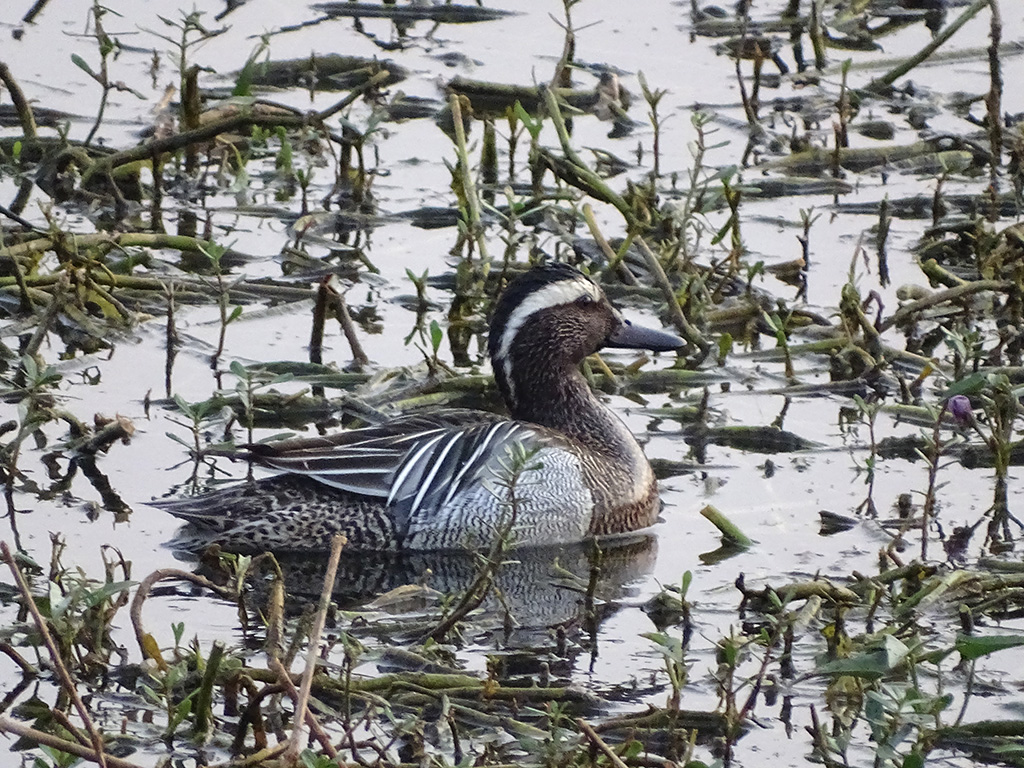
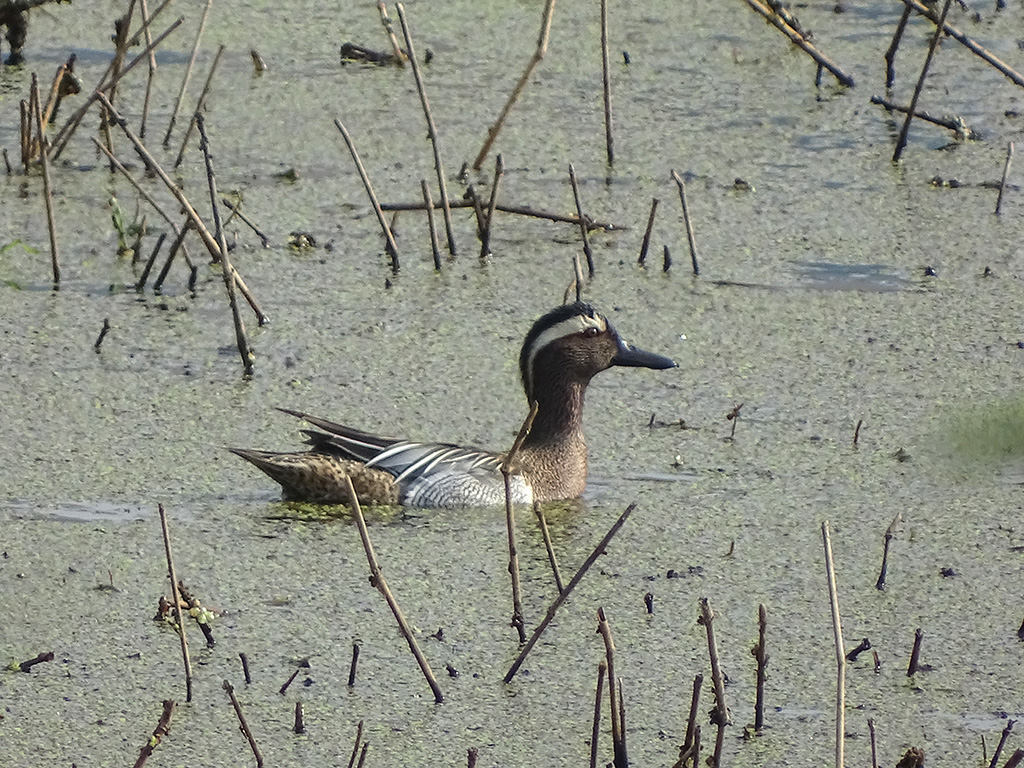
37–41 cm in length with a wingspan of 63–69 cm; a small, slender duck with long neck and narrow bill; males show a bold white eyebrow in breeding plumage.
Resident/ Migrate from:
Strongly migratory; breeds in Europe and western to central Asia.
Migrate to:
Winters in South Asia, Southeast Asia, and sub-Saharan Africa; a common winter visitor across Indian wetlands.
Breeding season:
May to July in the breeding range.
Breed in:
Nests on the ground near freshwater marshes, lakes, and reedbeds; clutch usually 8–11 eggs; female alone incubates.
Habitat:
Prefers shallow freshwater wetlands, flooded grasslands, marshes, and seasonal ponds; often seen in large flocks during migration and winter.
Diet:
Omnivorous; feeds mainly on aquatic insects, larvae, crustaceans, molluscs, along with seeds and aquatic vegetation.