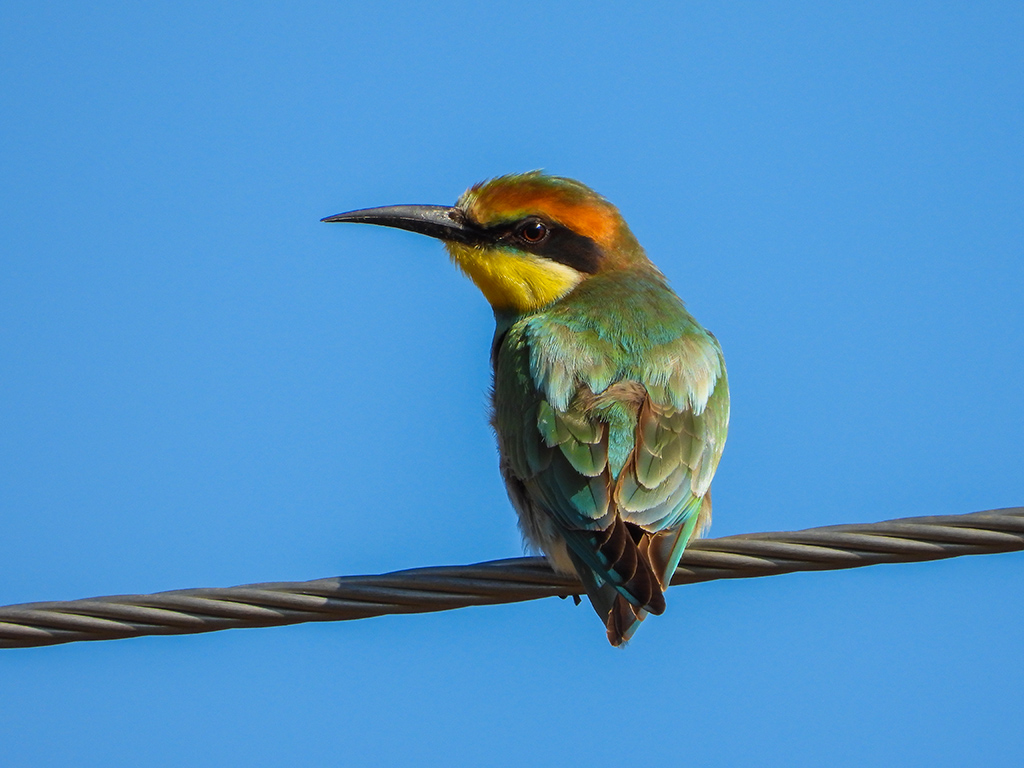
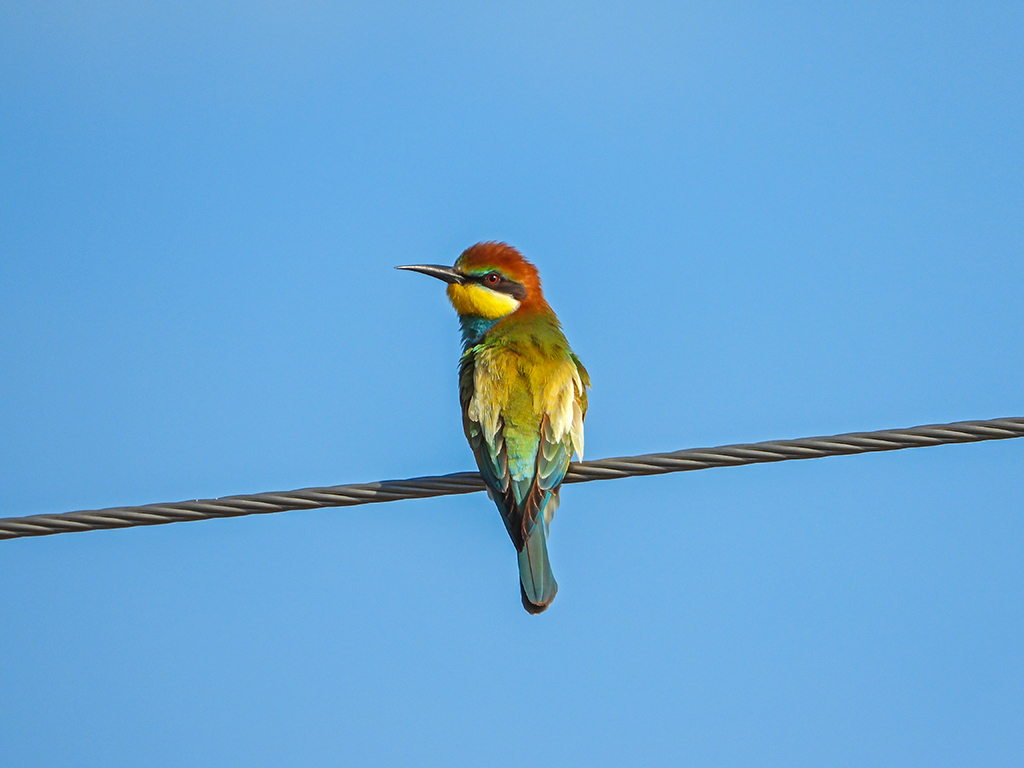
European bee-eater
Kolar gold factory,Karnataka
On my YouTube channel, Mahadev Putra, I have uploaded a full video of our experience in Kolar. Feel free to check it out!
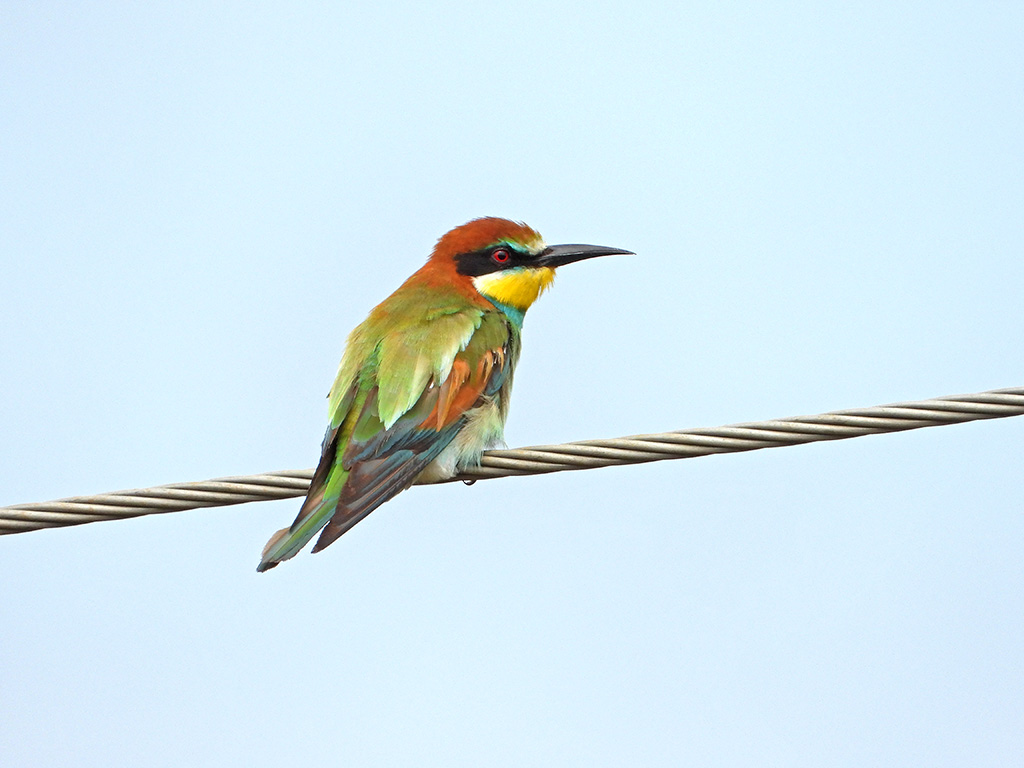
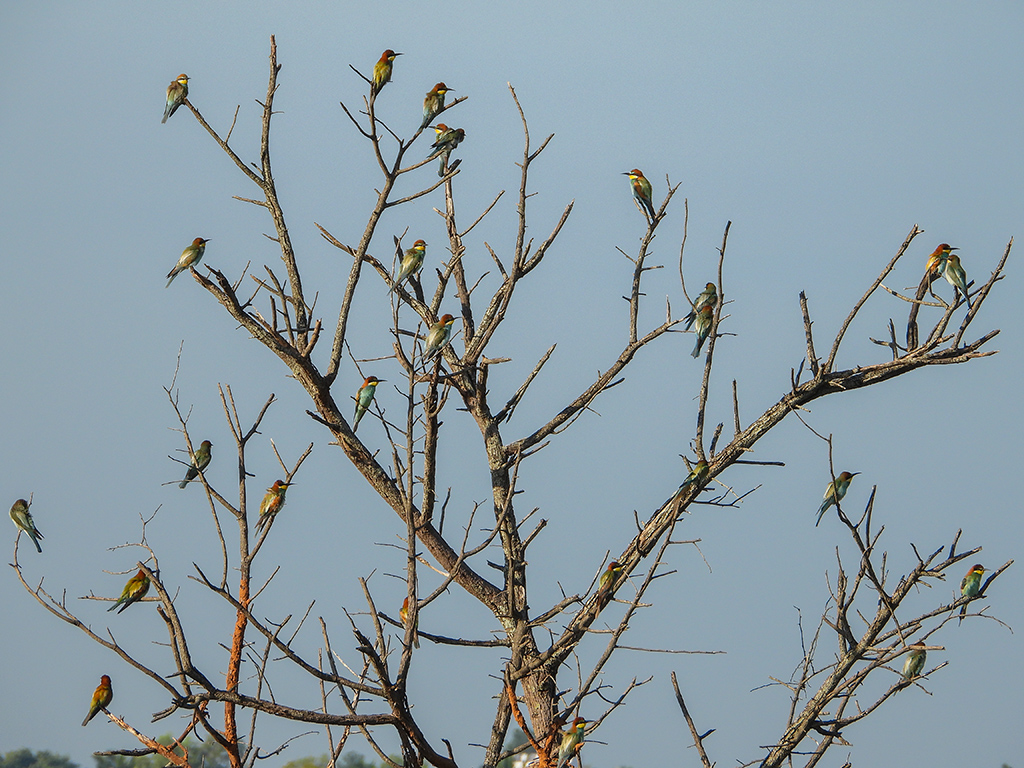
We visited Kolar for 2-3 days, even though it is 80 km away from Bangalore. Day by day, we noticed that their numbers decreased due to some rain and storms. However, a few still stayed behind. I hope some of them become residents, as even after four months, we heard about their presence. That particular land is an ideal habitat for bee-eaters. It has small trees with perches, a high-voltage transmission tower where they can sit and preen, soil suitable for mud baths, and insects flying all around, providing them with an adequate food supply.
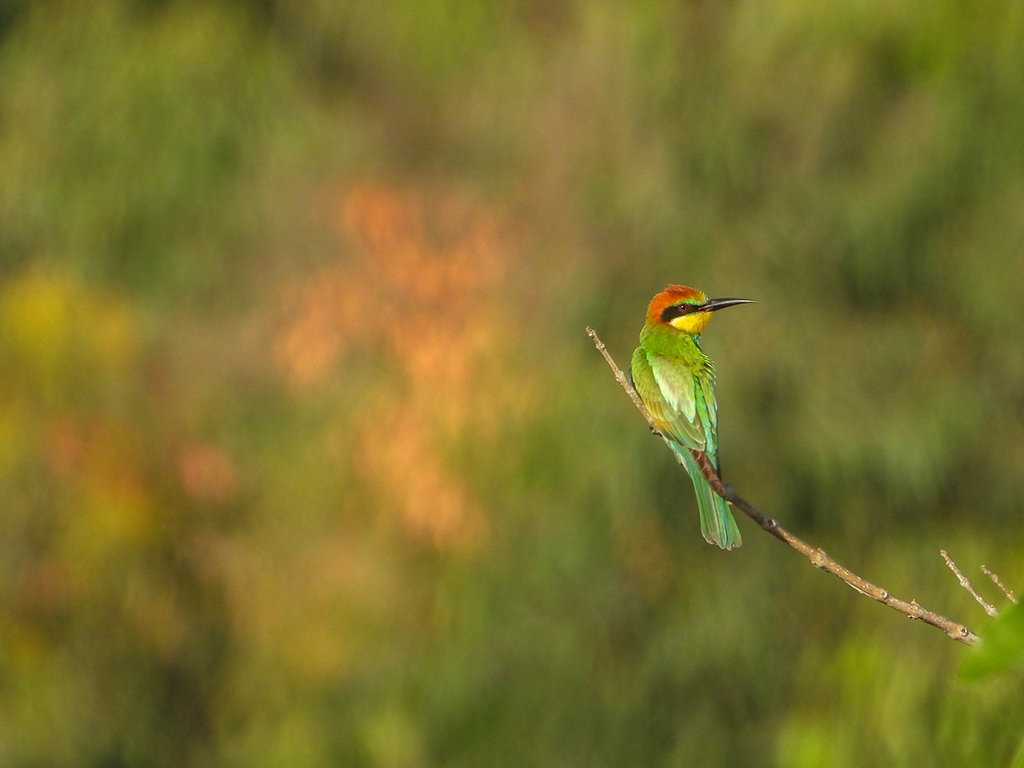
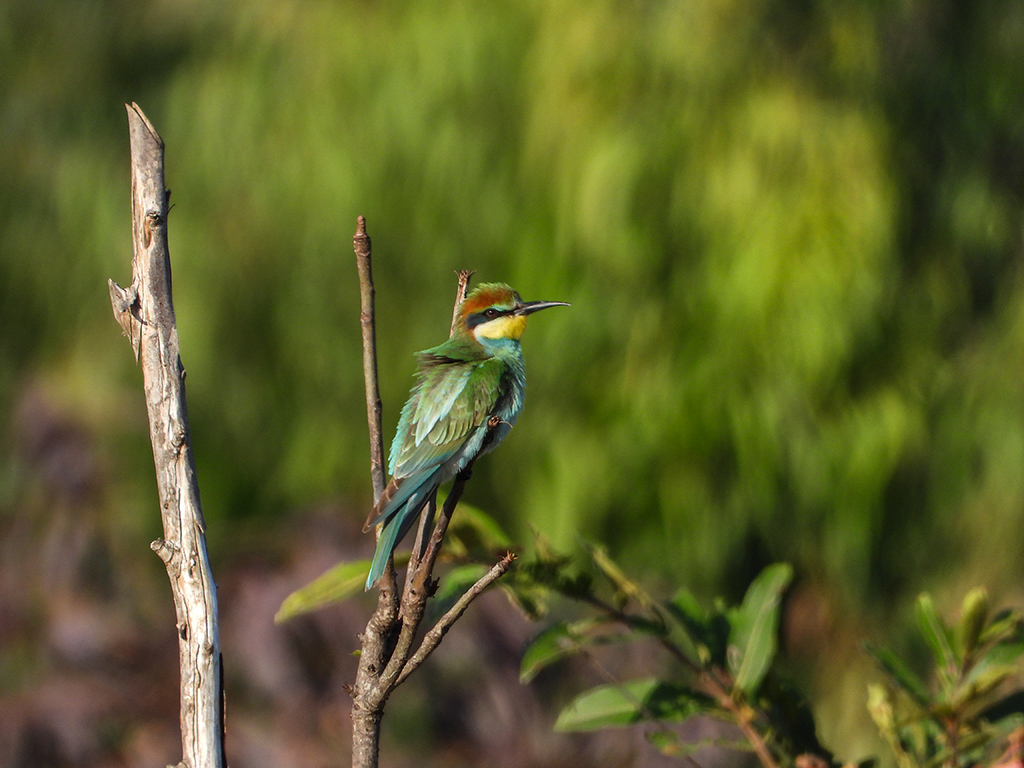
It was an amazing experience to witness this beautiful species in such large numbers. At first, I couldn’t believe my eyes. These birds are so vibrant in color, and their feathers shine even more in the sunlight. Their behavior is very similar to other bee-eaters, but their unique color combination sets them apart. In the mornings, they would chirp all over the grassland, fly around, perch on wires, and hunt insects or bees mid-air. It was such a treat for the eyes to watch the spectacle.
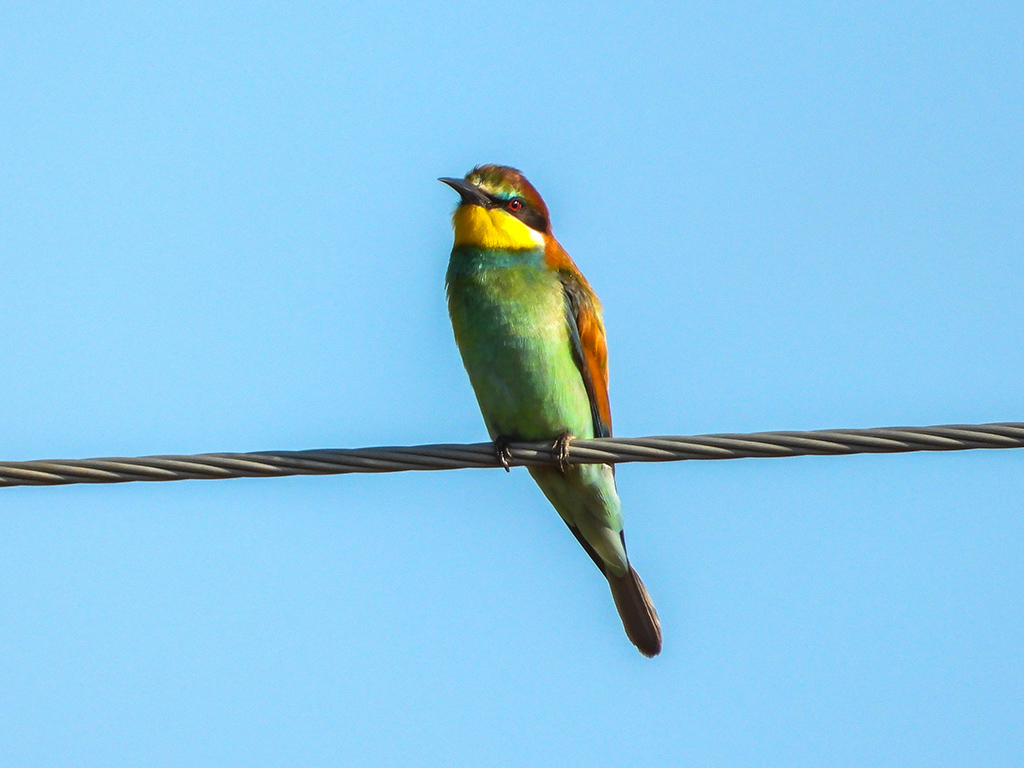
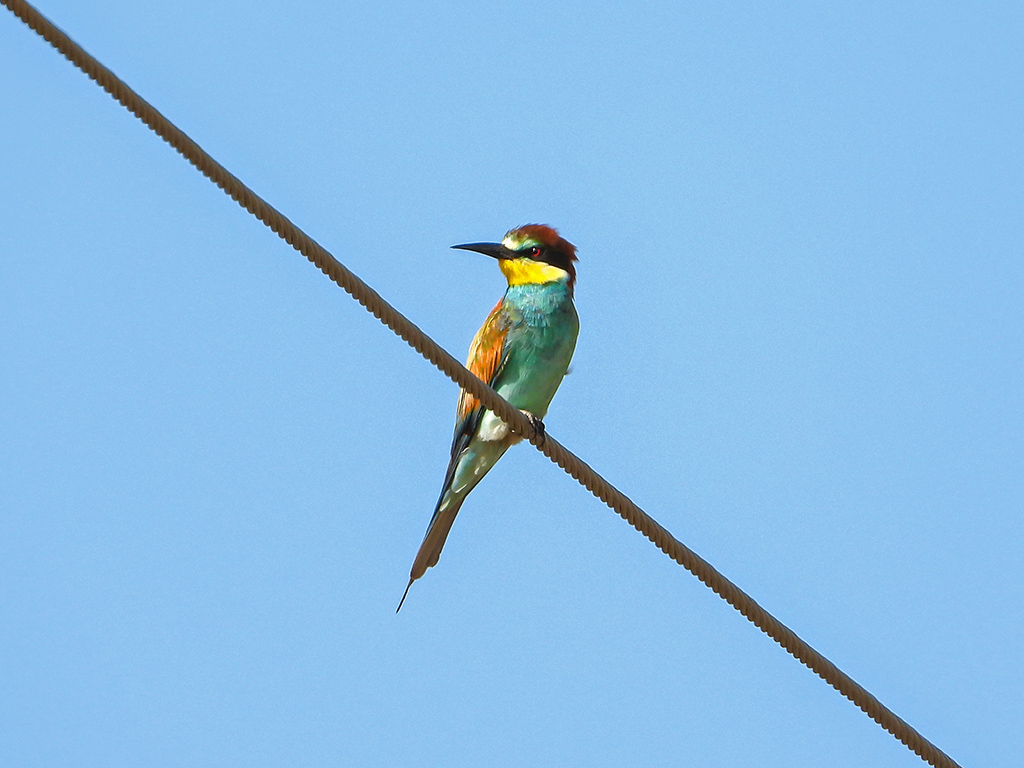
This is one of the most beautiful migratory birds we were eager to see. The European bee-eater occasionally visits a few places near Bangalore. We tried many times to photograph it but, for some reason, couldn't succeed. This time, we learned about Shankar Ji, a police officer in the KGF region of Kolar district, who is also an explorer in that area. He regularly shares updates about new bird sightings in some groups. So, we planned a visit to that place with the assistance of Shankar Ji.