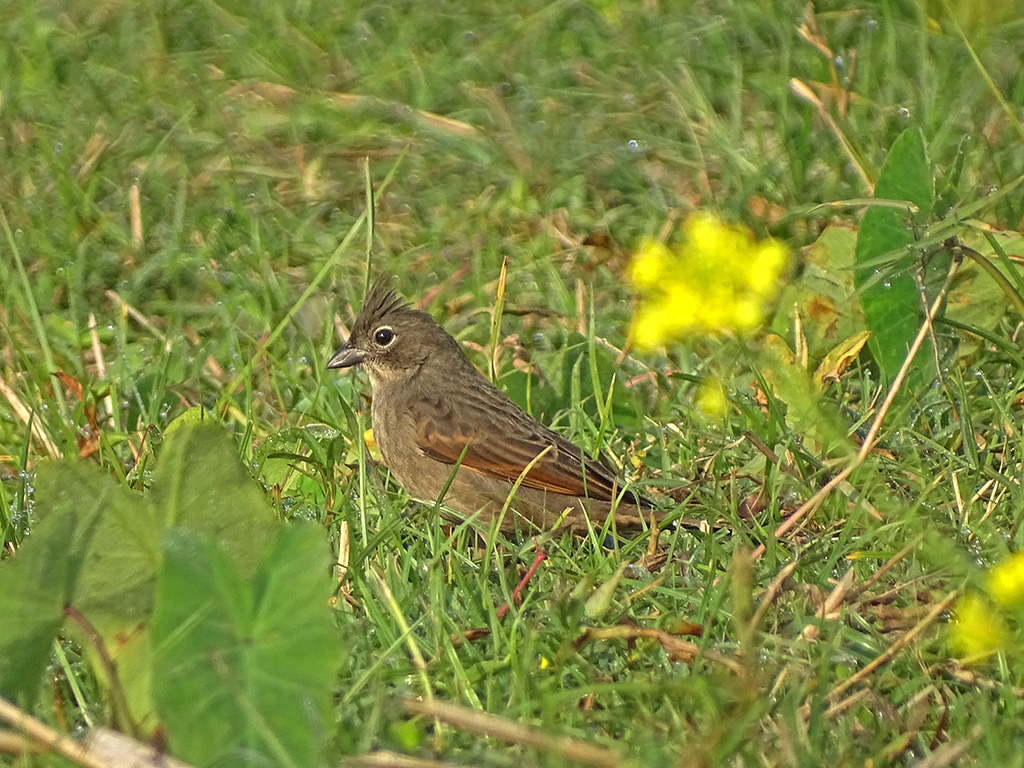
Crested bunting
Saswad,Maharashtra
The male Crested Bunting is one of the most beautiful buntings found in India and can be easily distinguished by its plumage. It is also the only bunting with a crest on its head. During the monsoon, people visit Saswad and the western parts of India to photograph this stunning bird. Although it occasionally visits other regions in India, especially plateau areas, its presence there is not always guaranteed. This monsoon, during our Saswad-Bhigwan trip, we specifically targeted this species in the foothills of Saswad. We were fortunate to spot both male and female Crested Buntings on wires, perches, and even high extension towers at times. Thanks to the sunny weather, we were able to observe its glossy feathers and even saw it chirping occasionally to call its mate. It was truly an amazing experience to witness this beautiful bird.
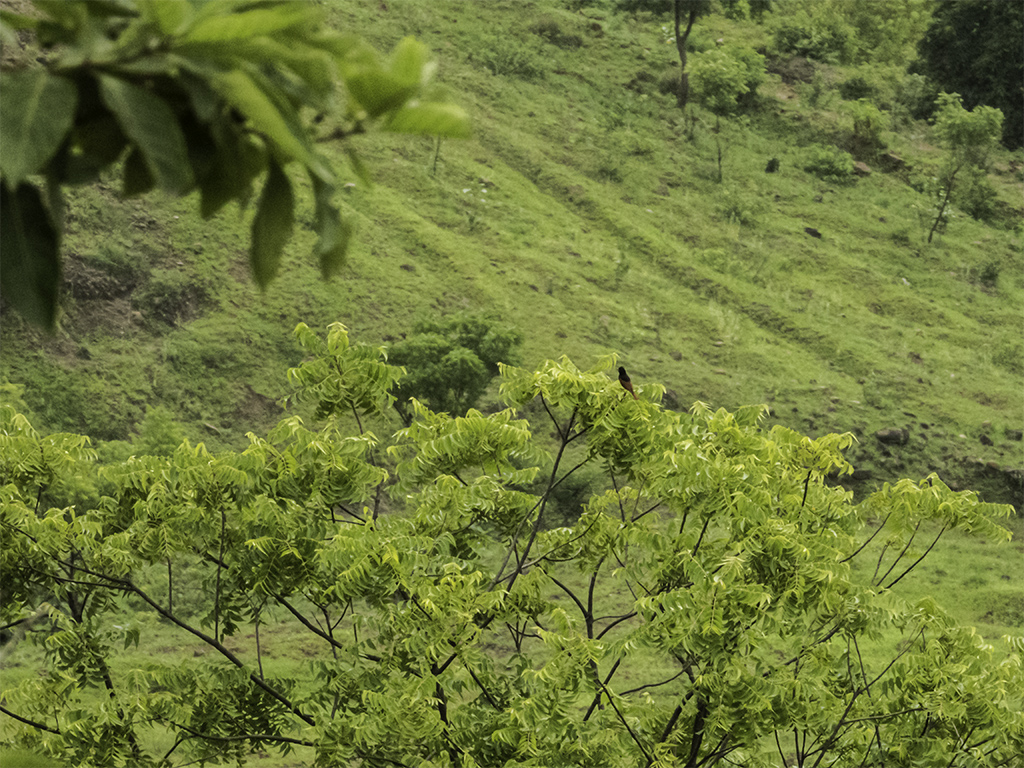

We observed it in multiple areas of the Saswad foothills. It feeds on the ground most of the time and hides itself within the tall grasses while eating. We have also seen males and females foraging on the ground together. Sometimes, we found it to be very shy, not allowing us to approach even from a distance, while at other times, it would sit on high-voltage extension towers, chirping nearby. I often get confused about the bird's behavior, wondering exactly what disturbs it when humans are nearby.


Halisahar Loco Shed yard,West Bengal
Back in 2018, a year after I started bird watching, I found this female individual in Halisahar, Kolkata. Let me tell you, the Crested Bunting is extremely rare in Kolkata, although it is distributed in Purulia, where sightings are more common. That day, I had gone to Halisahar specifically for the Black-headed Bunting. I was completely surprised and confused to see this individual because it was the first time I had ever seen a Crested Bunting, even though it was a female. Once I identified it, I was super excited because no one else had recorded this species in Halisahar during that particular season. I had a small Sony camera that gave me some trouble, but I still managed to take a few beautiful pictures of the female Crested Bunting.
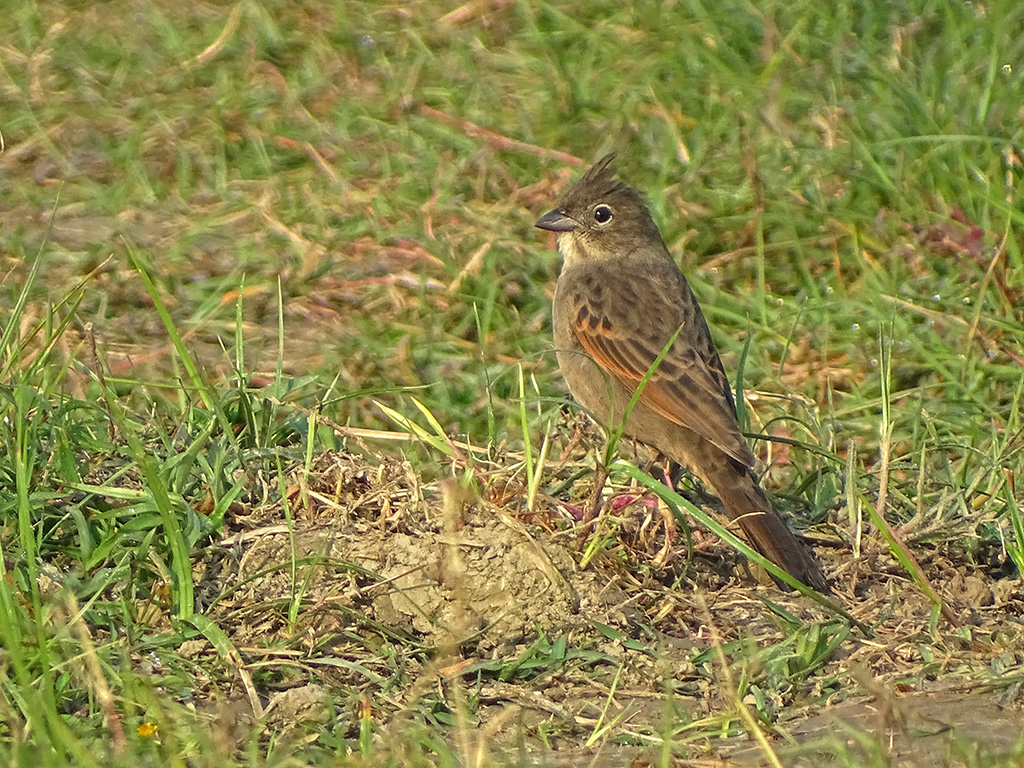
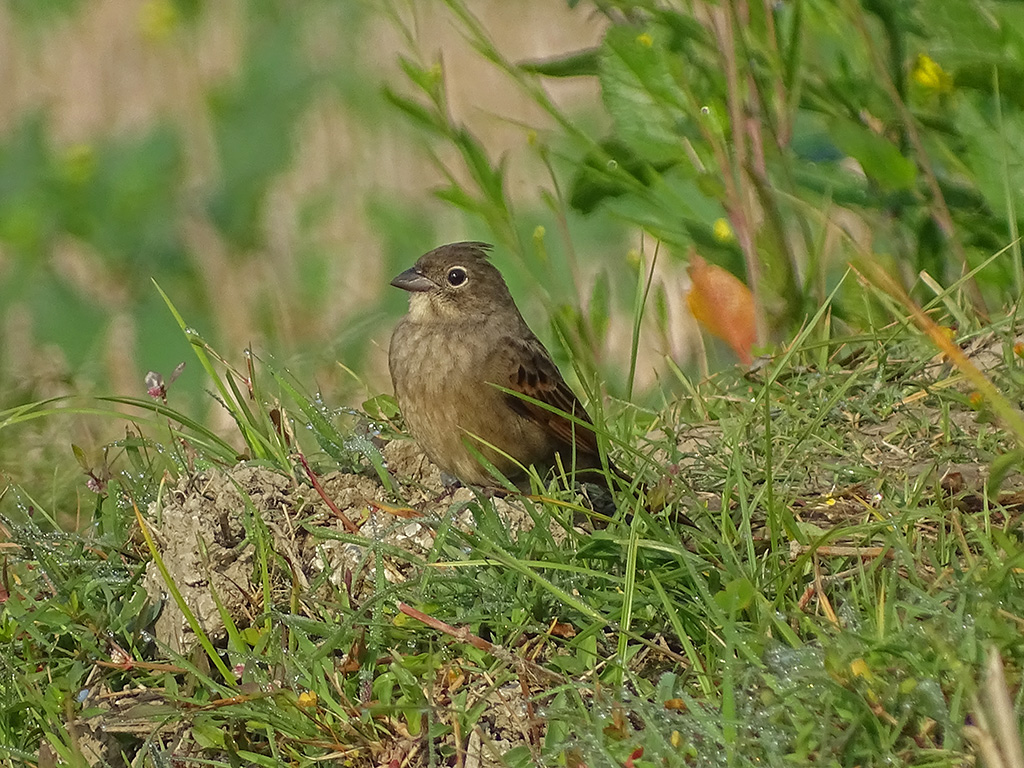
It was a field where they used to cultivate mustard. There were a few abandoned fields as well. In some areas, they cultivated other crops. While searching for a blue-throat, I suddenly saw a small bird hopping on the ground. It was so small that it was difficult to observe clearly. At first, I thought it was a blue-throat, but then I noticed the missing throat band. Suddenly, it noticed me and raised its crest. That’s when I recognized it as a female crested bunting. I was worried that if it flew away, I wouldn’t be able to find it again, so I crawled and tried to approach it. It was about 20 feet away from me and kept moving further as I tried to get closer. However, it didn’t fly away since it wasn’t disturbed or scared. While foraging, it didn’t stay in one place and kept moving around. These were the pictures I managed to capture that day. I was happy to spot a lifer, even though at the time, the concept of a lifer was very new to me—I didn’t even know what it meant.