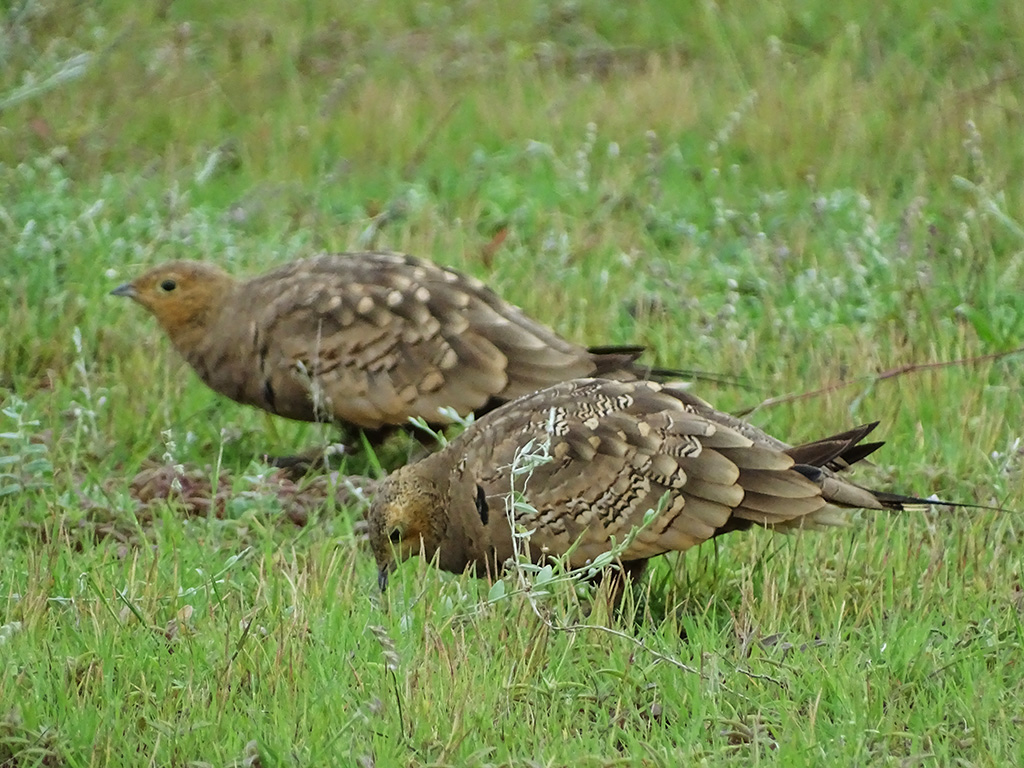
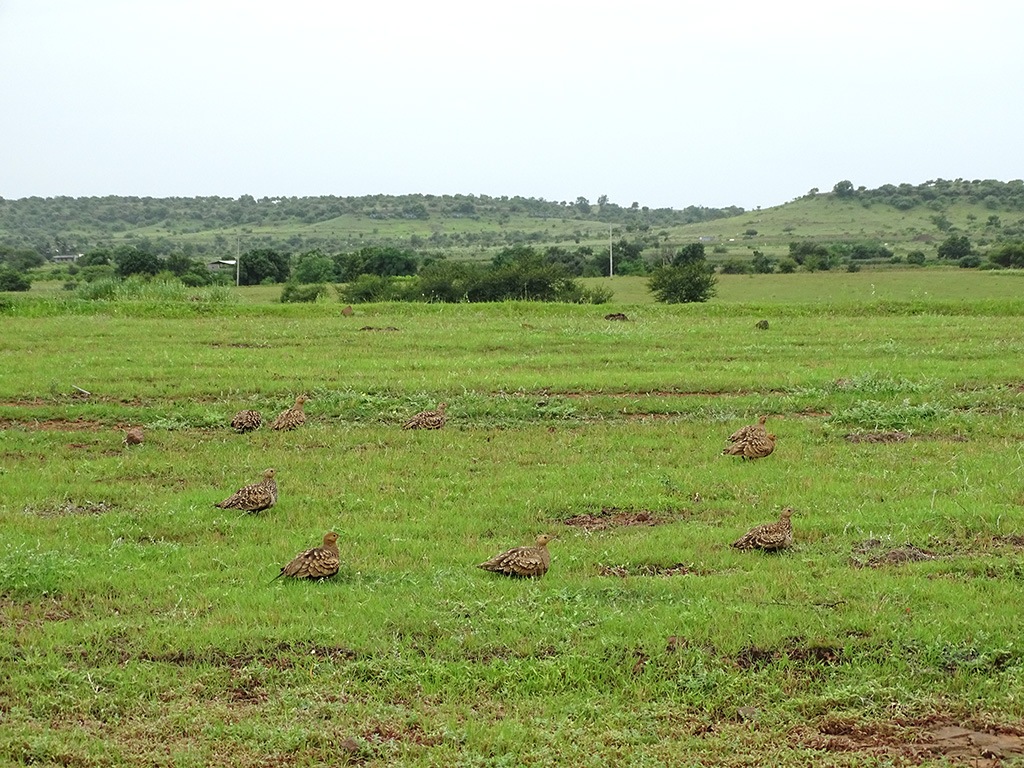
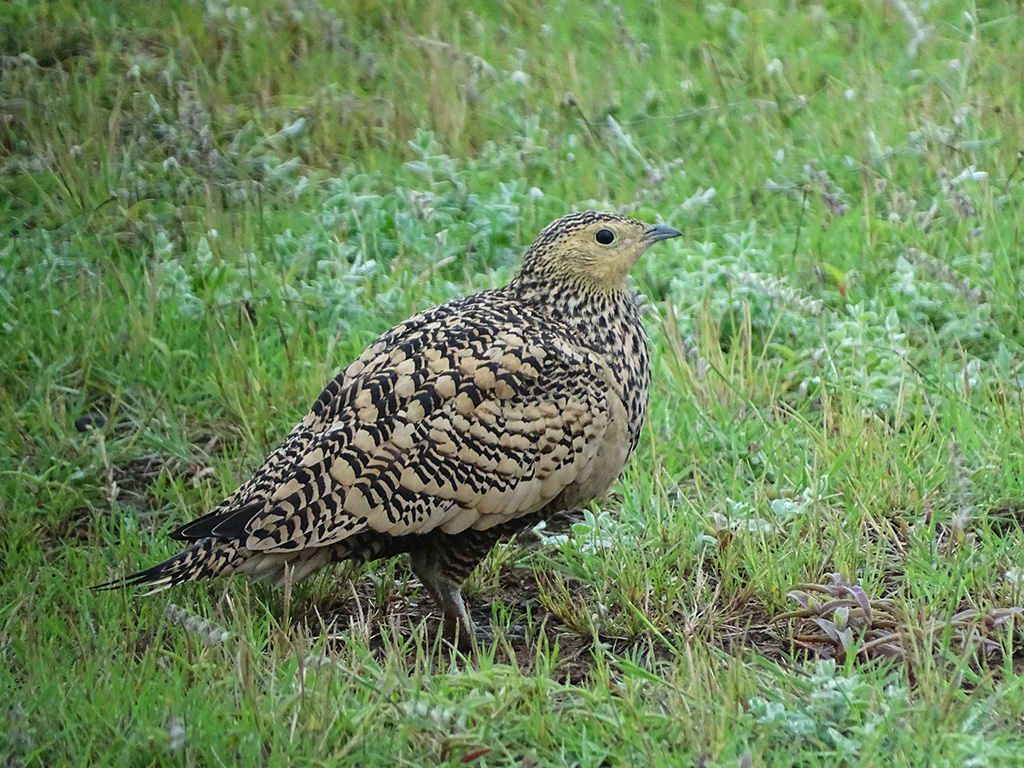
Chestnut-bellied sandgrouse
Bhigwan Bird Sanctuary,Maharashtra
Sometimes I wonder the creation of god. How beautiful, how creatively made. I feel amazed to see these unusual looking birds in India. Most of the people does not think that this kind of birds do exist in our country.
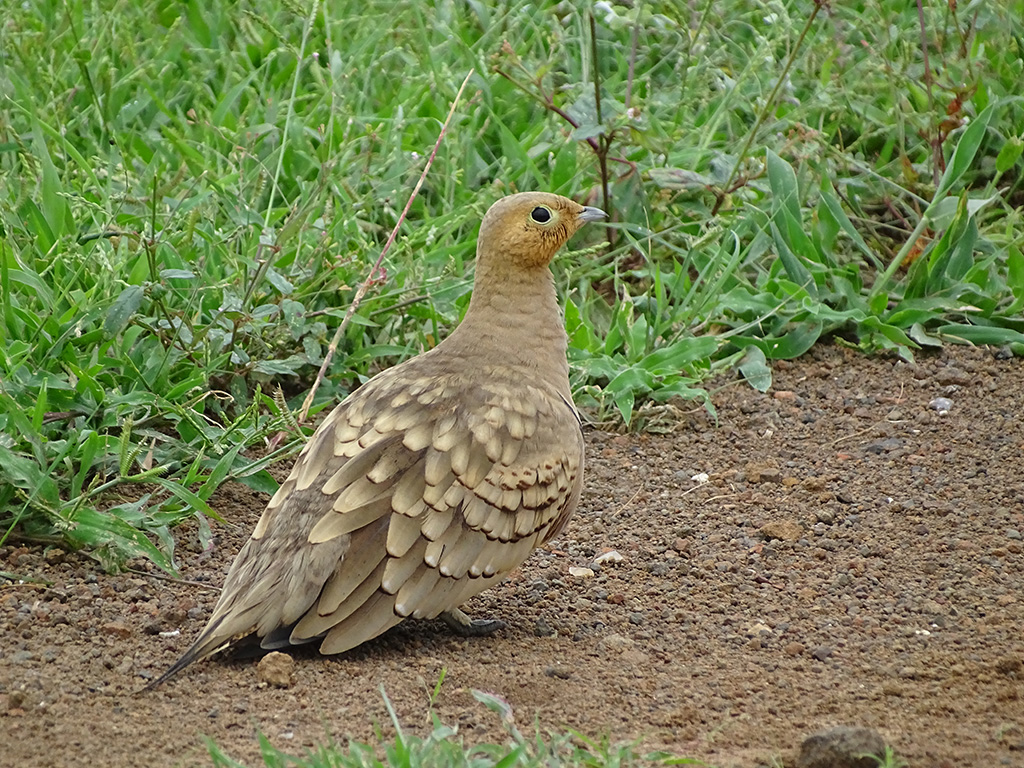
They mostly stay in groups of male and female. they don't call or make noise at all. And when they fly after getting scared you will hear the sound of weaving their wings and call with a mild tone.
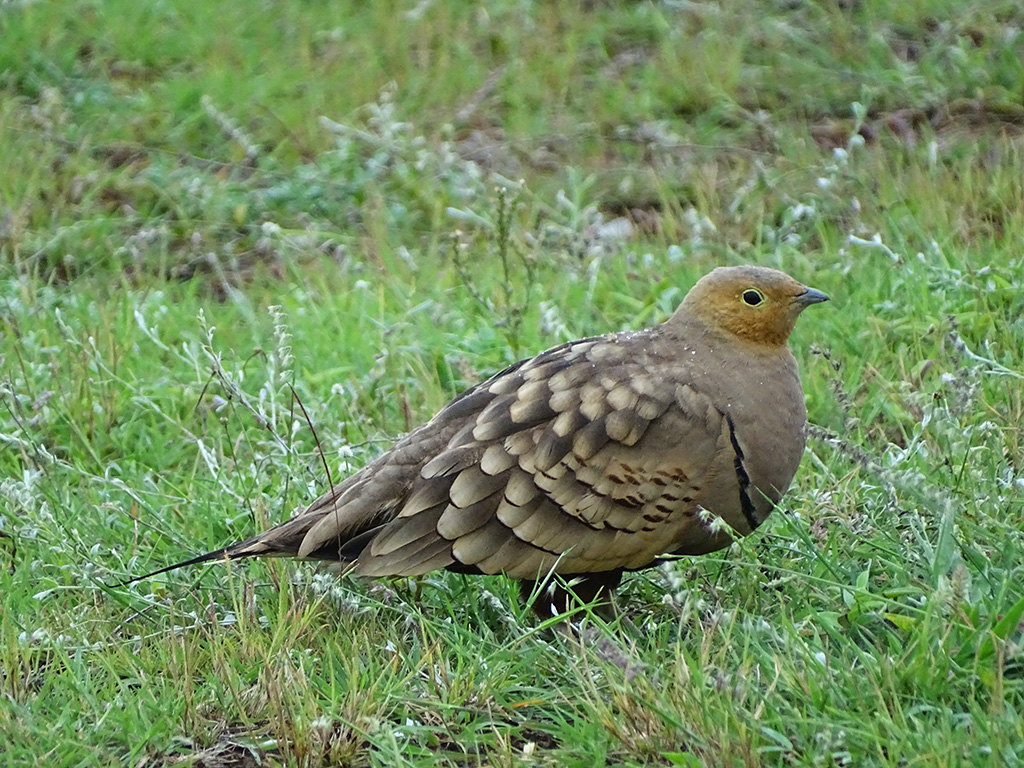
This is mostly found in West and Southern part of India. I have taken these pictures from Maharashtra, Bhigwan. Absolutely amazing looking highly camouflaged birds. They will just stop moving once you reach near them, and you barely can find them.
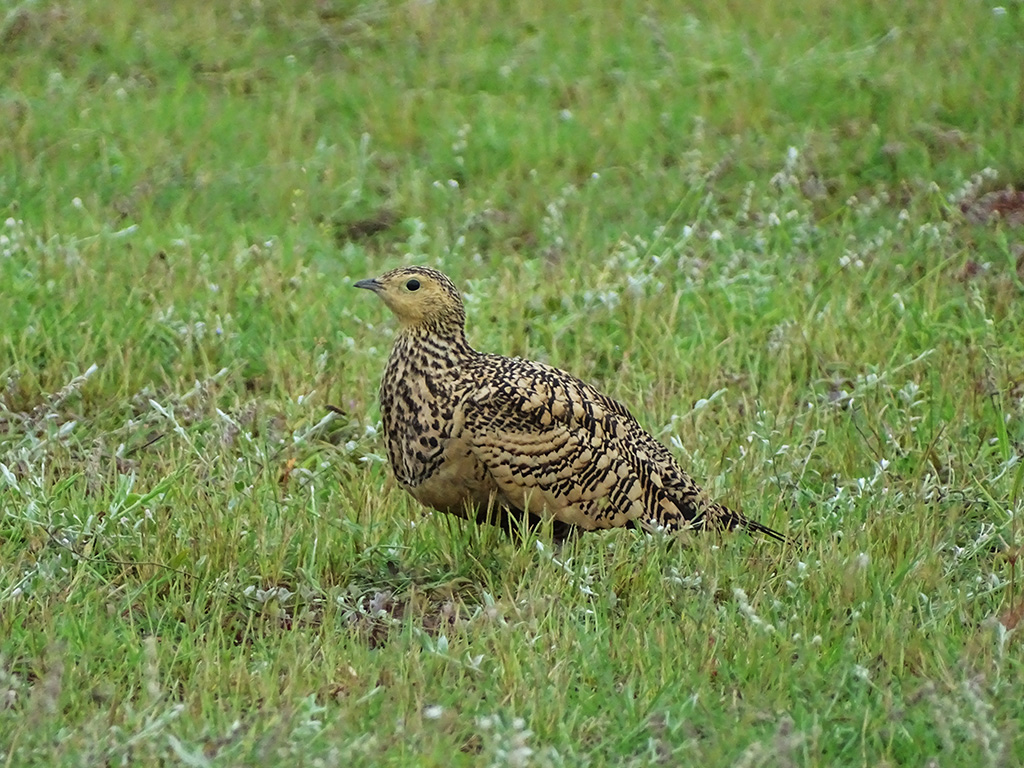
Information of Chestnut-bellied sandgrouse
| IUCN (International Union for Conservation of Nature): | Least Concern |
|---|---|
| Approximate size(adult): | A medium-sized sandgrouse, about 30–33 cm long with long, pointed wings and tail. Males have a chestnut belly and breast-band, pale head and neck, and greyish upperparts, while females are duller and heavily barred. |
| Resident/ Migrate from: | Resident species, found year-round across India, Pakistan, the Middle East, and parts of Africa, with local movements depending on water availability. |
| Migrate to: | — (Largely resident, with nomadic movements in arid zones) |
| Breeding season: | Mainly March to October, varying with rainfall. Nests are shallow scrapes in bare ground, often near sparse vegetation. Lays 2–3 eggs. |
| Breed in: | Dry open plains, semi-deserts, scrublands, and sandy areas across peninsular India and northwest Africa. |
| Habitat: | Prefers arid and semi-arid regions, gravel plains, and fallow agricultural fields. Often seen in flocks near waterholes, especially in the morning and evening. |
| Diet: | Granivorous, feeding mainly on seeds, grains, and small plant material; occasionally takes insects. Regularly visits water sources to drink. |