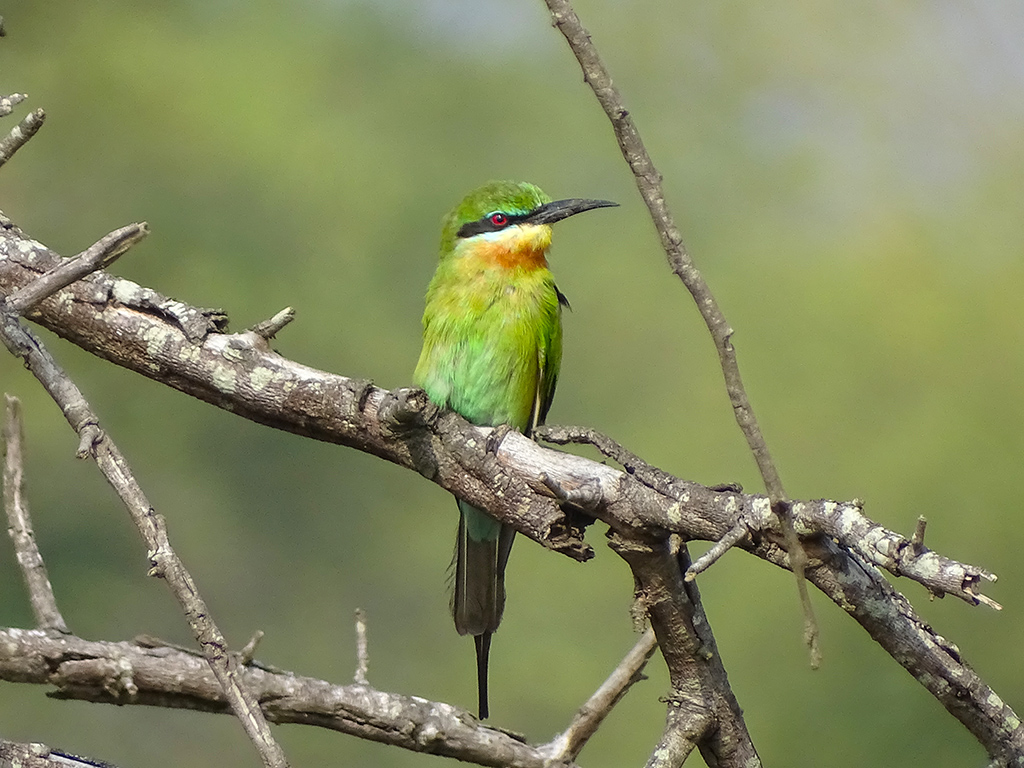
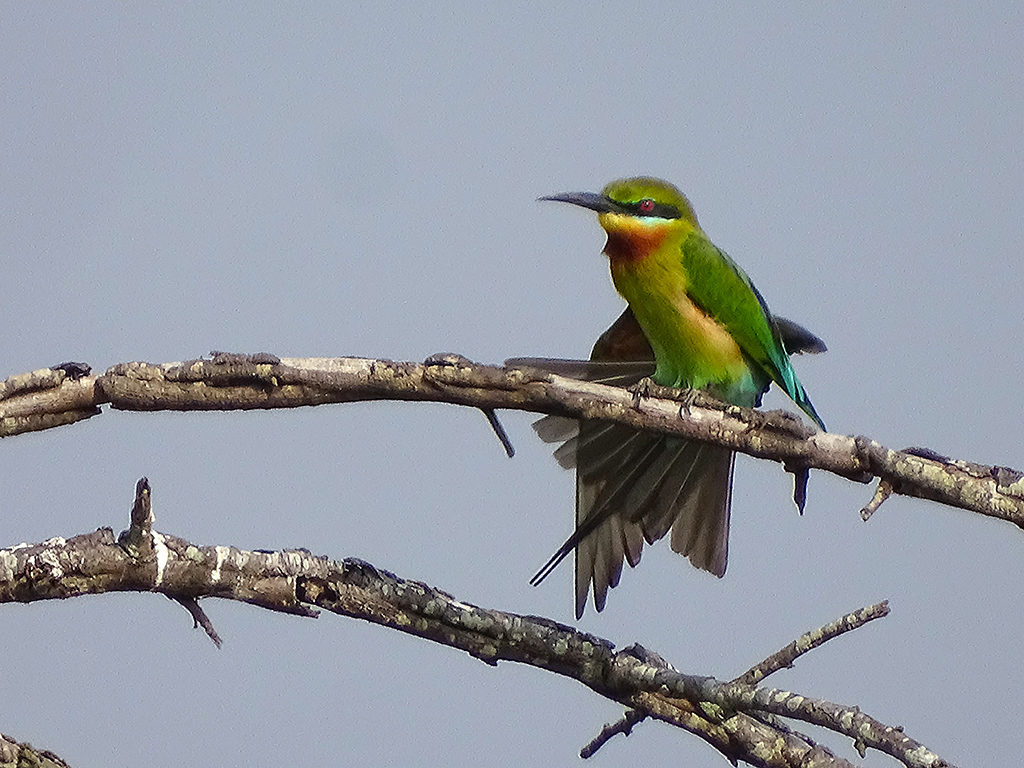
Blue-tailed bee-eater
Ammana Kere, Chikkaballapur,Karnataka
I found a group of bee-eaters in the dry Ammana Kere, hunting for food beneath the scorching sun around 10 a.m. Sometimes they were preening and stretching, and their glossy feathers flashed brightly. It was truly amazing to watch the activities of these beautiful birds.
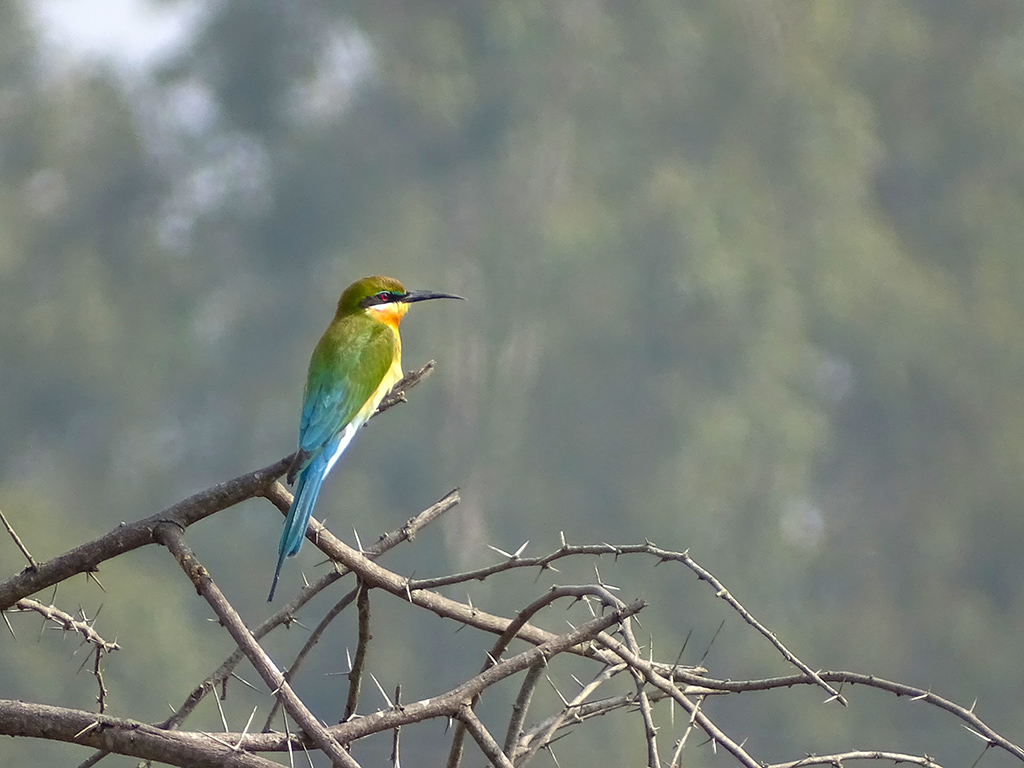
A steady, colorful bee-eater with a vibrant necklace and glossy blue tail can easily be found, often sitting on wires or the clean branches of trees, or playing with dust from the ground. Like other bee-eaters, it hunts dragonflies, moths, grasshoppers, or other insects flying around in the field. This bird is not very shy and gives ample time for photography. Even if it flies away, it often returns and perches in nearly the same spot where it sat before.
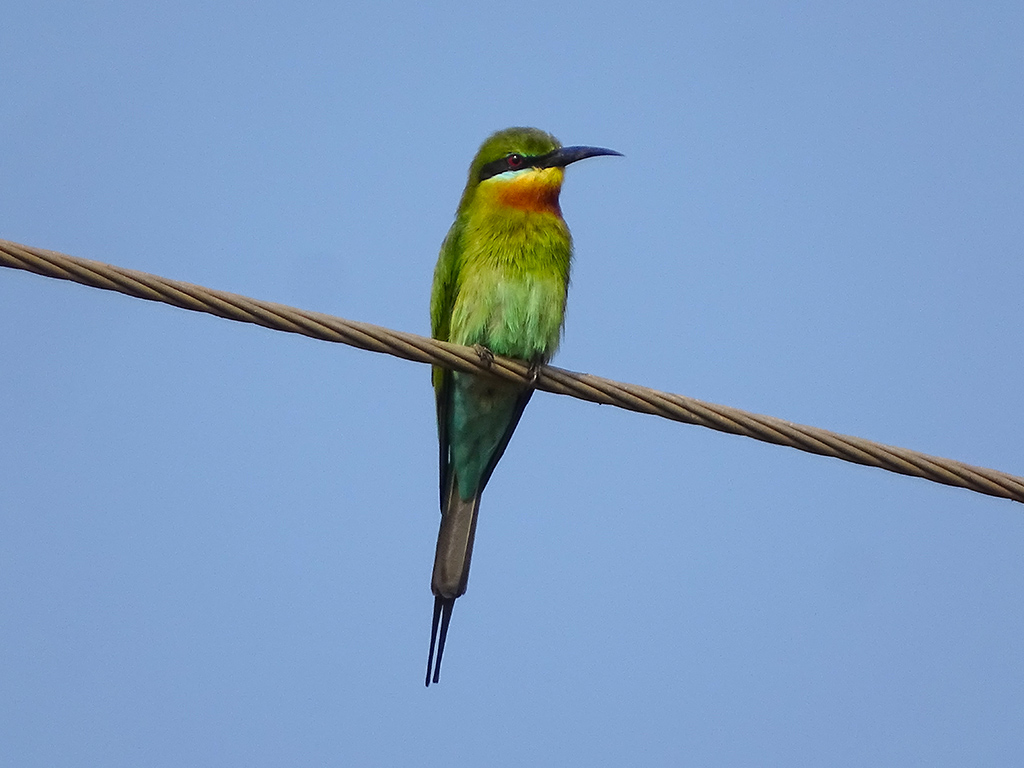
Information of Blue-tailed bee-eater
| IUCN (International Union for Conservation of Nature): | Least Concern |
|---|---|
| Approximate size(adult): | A slender, medium-sized bird about 23–26 cm long, including its elongated central tail feathers. It has a green body, blue rump and tail, golden-brown throat and crown, and a black eye stripe. Both sexes look similar. |
| Resident/ Migrate from: | Partly migratory species — breeds in South and Southeast Asia, including parts of India, Bangladesh, and Myanmar. |
| Migrate to: | Many populations migrate southward during the non-breeding season to Sri Lanka, the Maldives, and the Malay Peninsula. Northern Indian populations move to southern India in winter. |
| Breeding season: | March to June in India. Nests colonially by digging tunnels in sandy banks, cliffs, or flat ground, where they lay 4–7 white eggs. Both parents share incubation and feeding. |
| Breed in: | Prefers open sandy riverbanks, coastal sand dunes, and agricultural plains with nearby water and sparse vegetation. |
| Habitat: | Found in open country, river valleys, grasslands, and coastal regions, often near water bodies. Perches on exposed twigs or wires to hunt flying insects. |
| Diet: | Specializes in flying insects, especially bees, wasps, dragonflies, and butterflies. Removes stingers of bees and wasps by striking them against a hard surface before eating. |