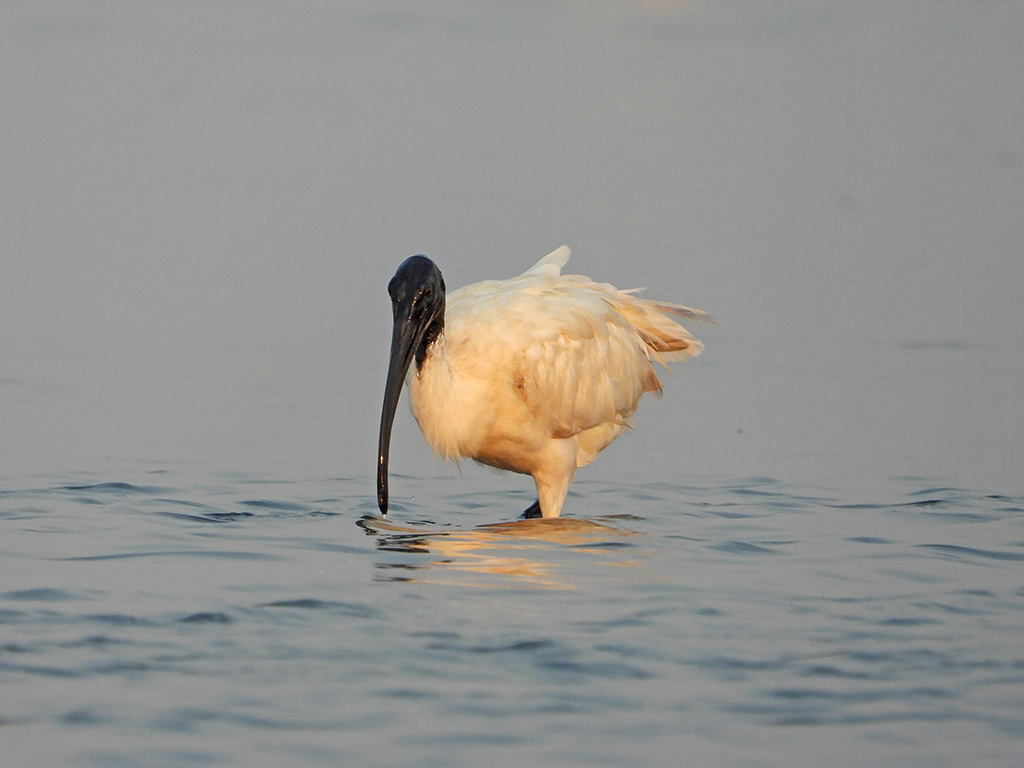
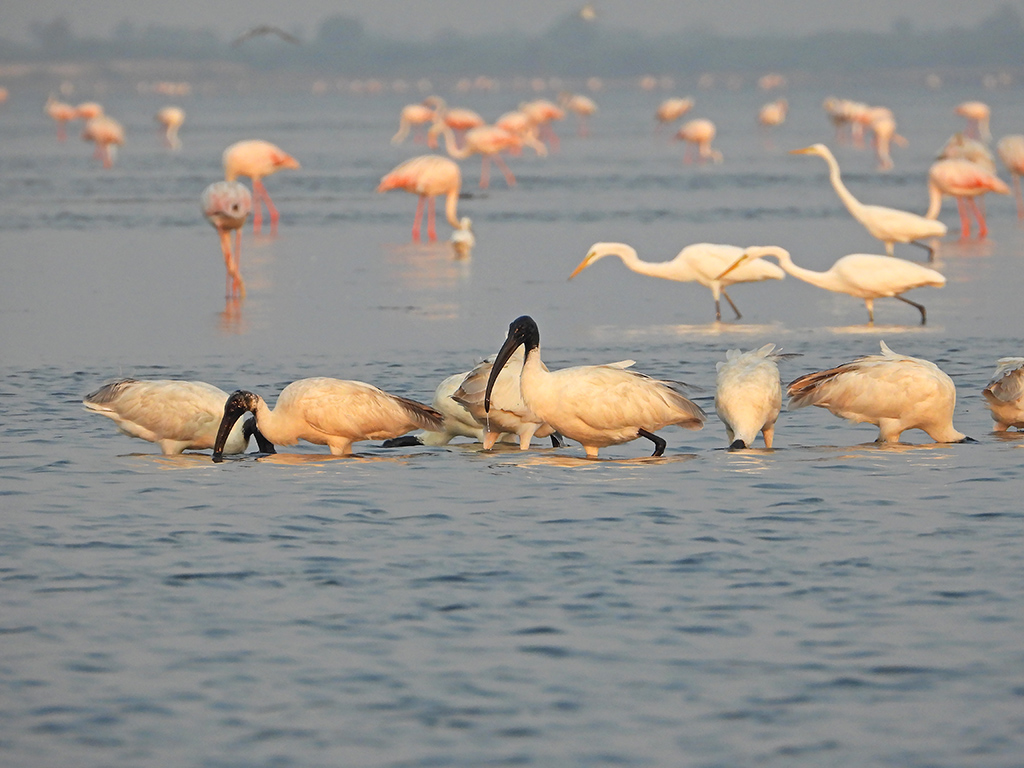
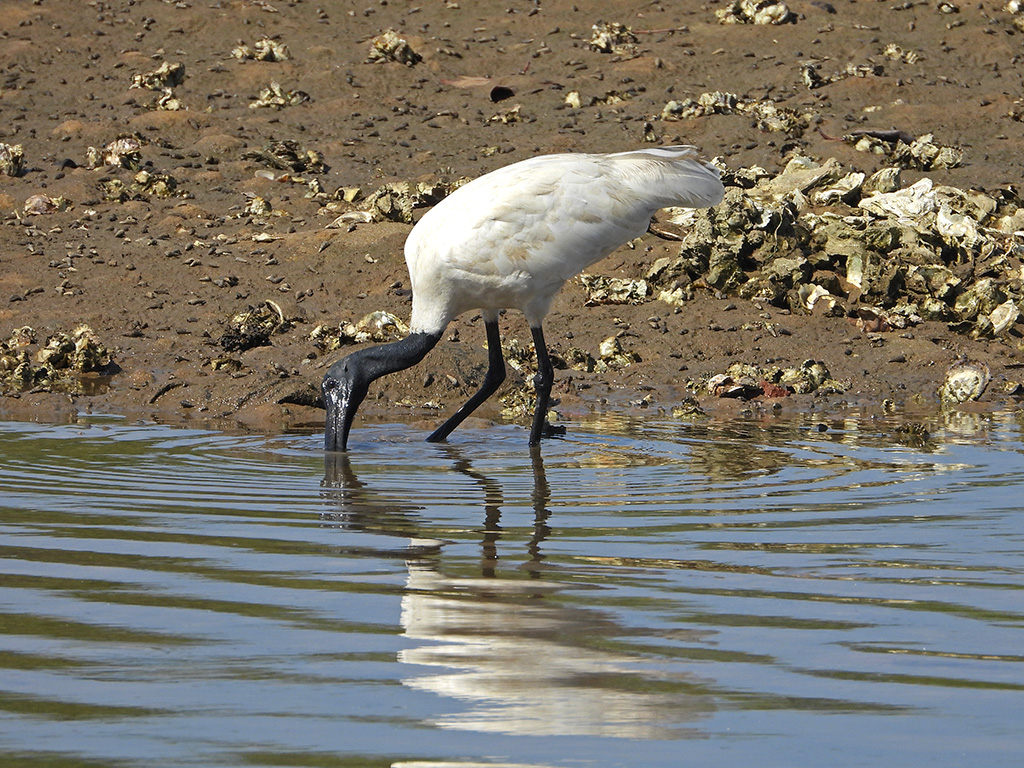
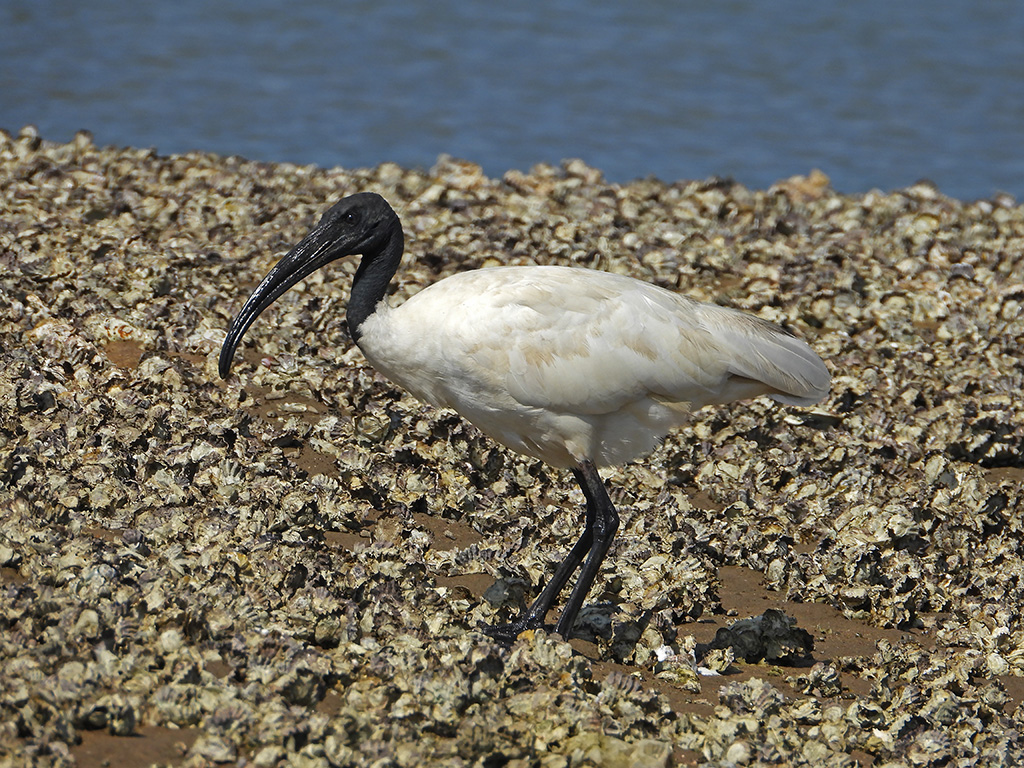
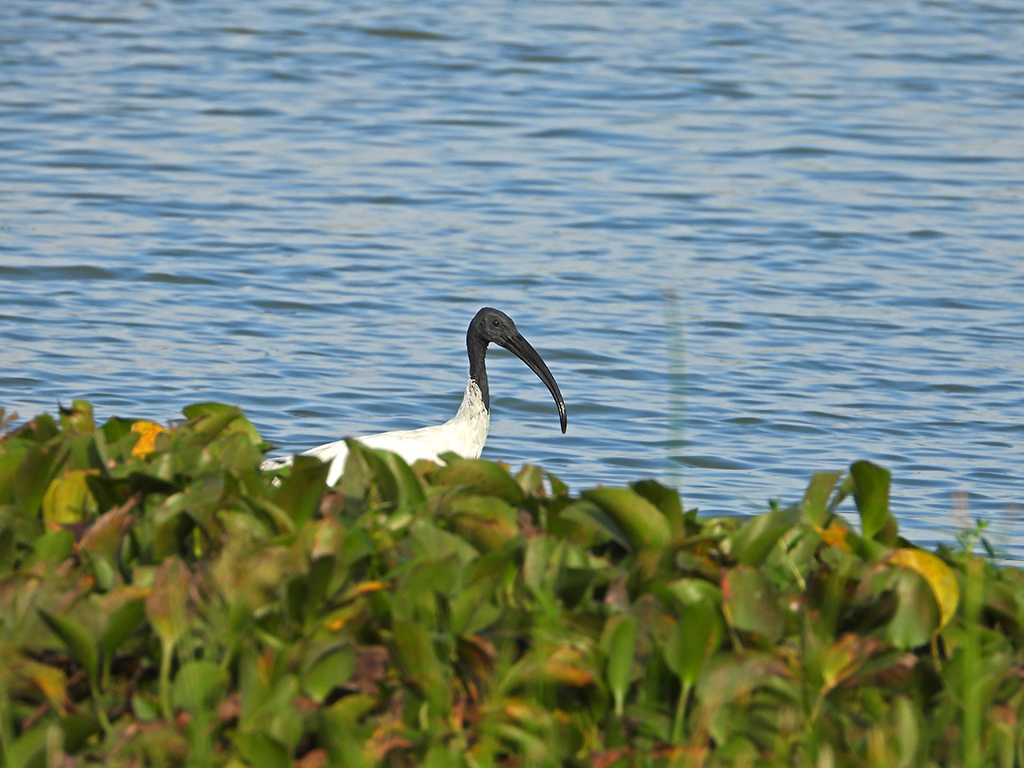
Black-headed Ibis
Pulicat Lake,Tamil Nadu
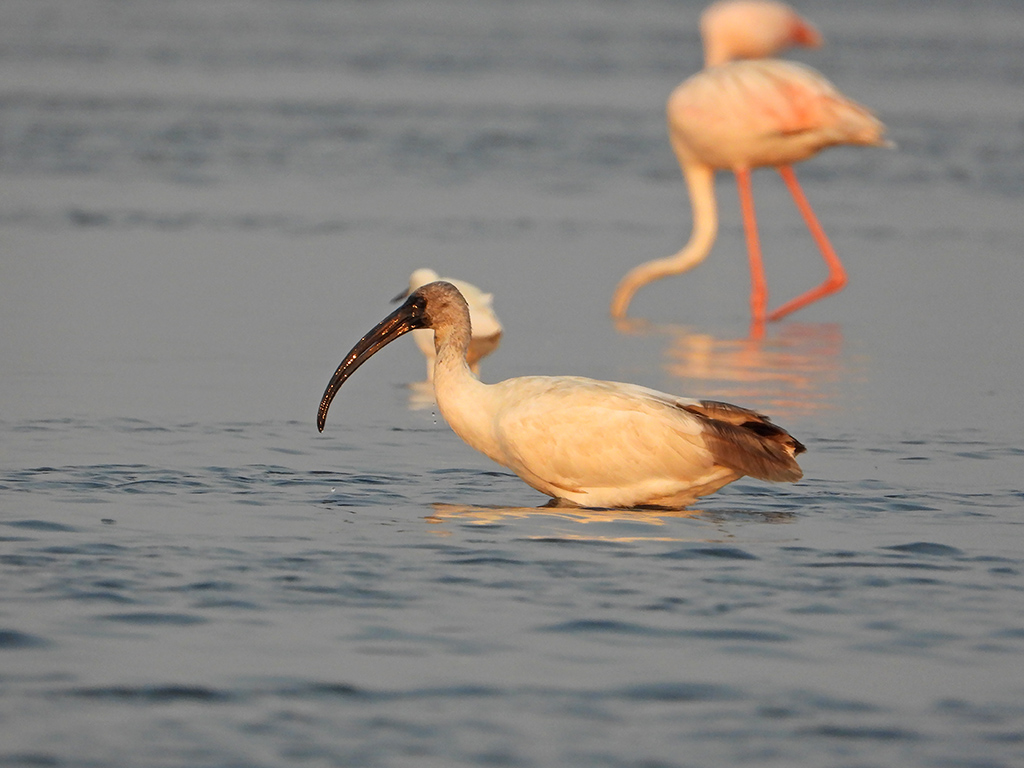
Kundapur Backwater, Udupi,Karnataka
Begur Kere,Karnataka
It was a bright, sunny day when I went to Begur Lake to search for some winter migrant waders. I found a few little stints. Just as I was about to finish birding, I suddenly noticed a black head popping up from the hyacinth. It seemed a bit shy, and I wanted to observe it from a distance, but as soon as it saw me, it flew away. Due to the good light conditions, I thought of capturing a full-body picture, but it was in vain. Even though it is not a rare bird, I moved on to look for another one.
Information of Black-headed Ibis
| IUCN (International Union for Conservation of Nature): | Near Threatened |
|---|---|
| Approximate size(adult): | Approximately 65-76 cm in length; wingspan up to ~ 130 cm. |
| Resident/ Migrate from: | Mostly resident in its core breeding range (South & Southeast Asia); some populations are partially migratory or nomadic, moving with water availability. |
| Migrate to: | Seasonal movement within range in response to habitat conditions; some populations may move to eastern China, SE Asia, or more southern or coastal areas during non-breeding times. |
| Breeding season: | Largely during the monsoon / rainy season. Timing varies by region. |
| Breed in: | Breeds in colonies (often with other waterbirds). Nests built in trees or shrubs over or near water, using sticks etc. Lays 2-4 eggs. |
| Habitat: | Freshwater and saltwater wetlands: marshes, lakes, rivers, flooded grasslands, paddy/rice fields, irrigation canals; also lowland coastal lagoons/mudflats. Occurs from sea level up to ~ 950 m in some localities. |
| Diet: | Varied aquatic and semi-aquatic prey: fish, frogs, other water creatures; insects, crustaceans; probes mud or shallow water with long curved bill. |