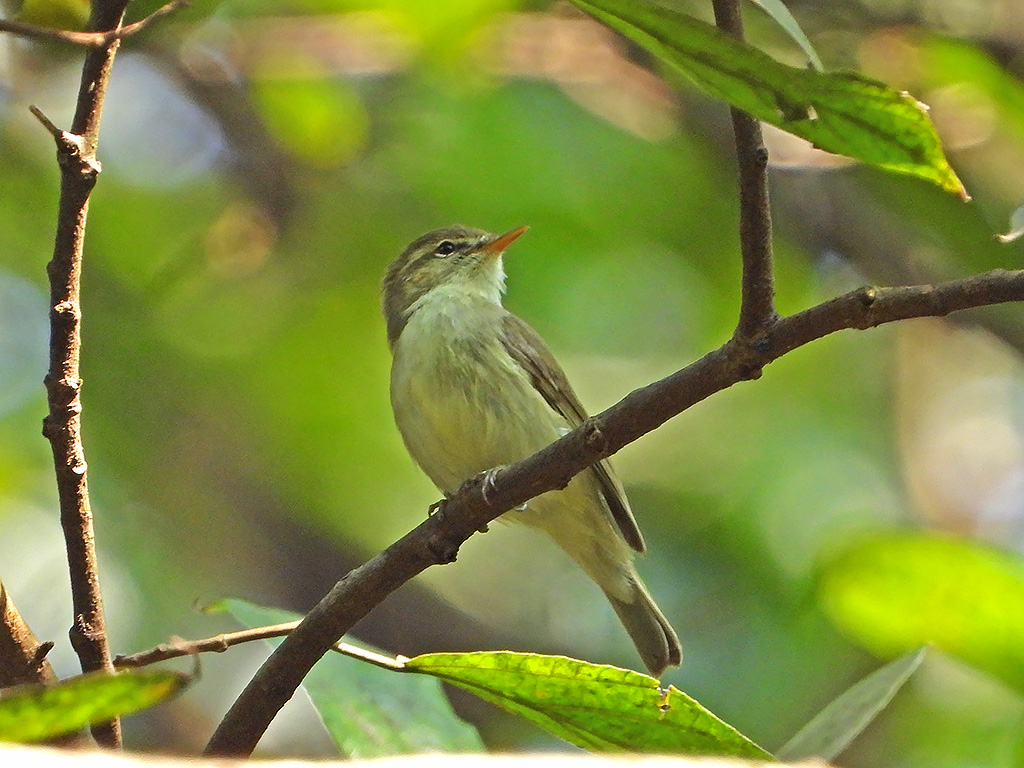
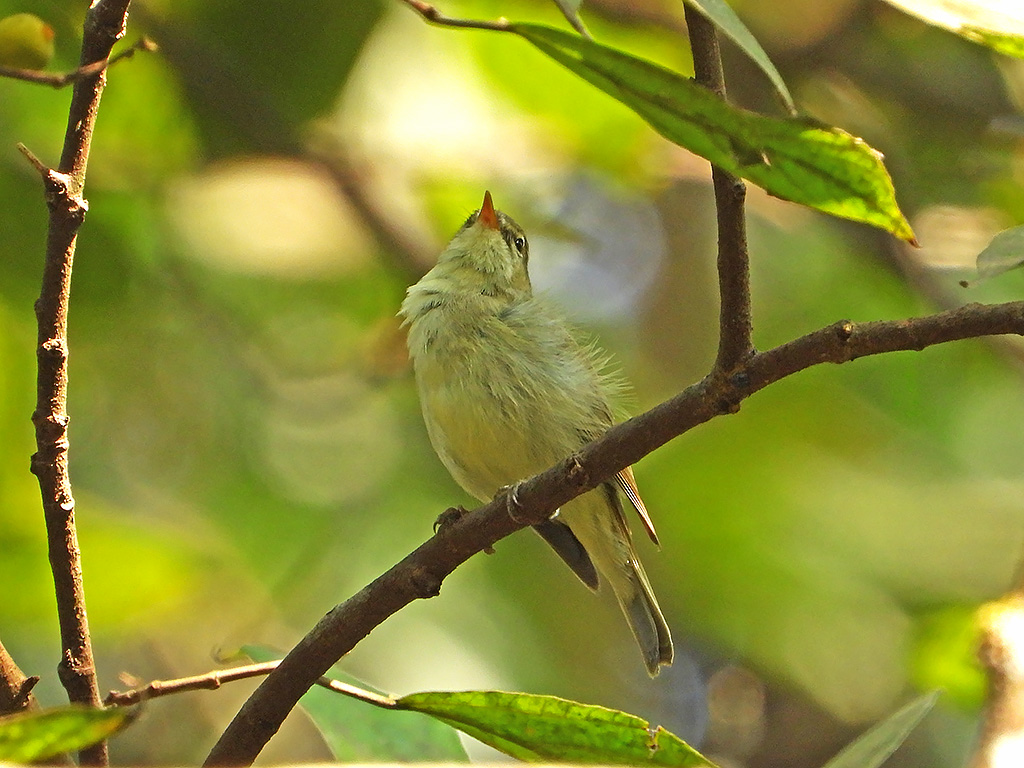
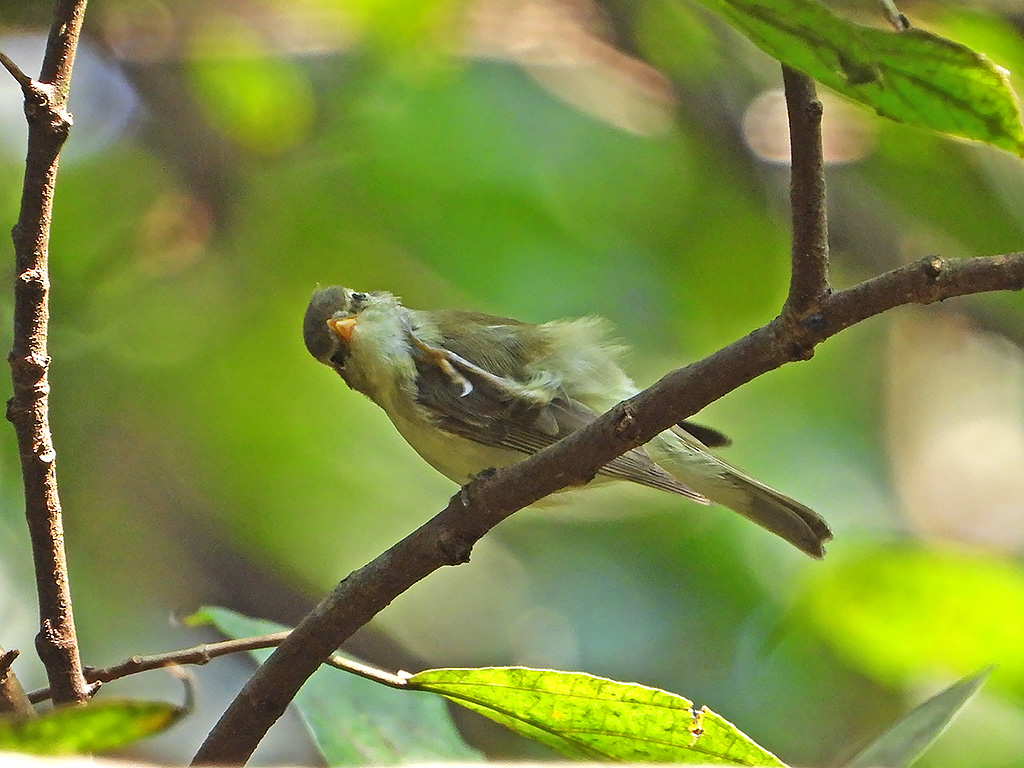
Western crowned warbler
Old magazine house, Dandeli,Karnataka
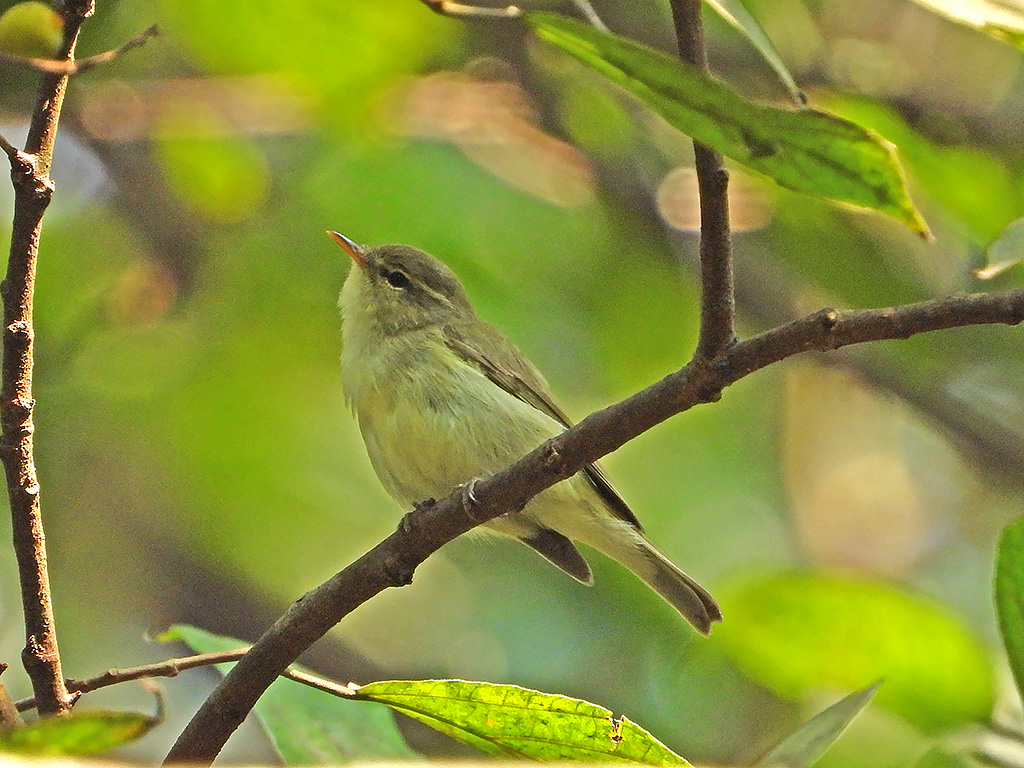
But it was so nice to witness this tiny, beautiful bird for a long time. I remember that, for half the time, the bird was not visible to my fellow birders. I pointed it out and said, "Hey, see, it is still preening!" Yet, they still couldn't see it. Now you understand how tiny and well-camouflaged it was. The feature of the bird that attracts people the most is its eyebrows and orange beak, even though the crown is supposed to be its main feature. However, it's rare to get a clear view of the crown because the bird moves on high-level branches and, most of the time, only offers a belly shot.
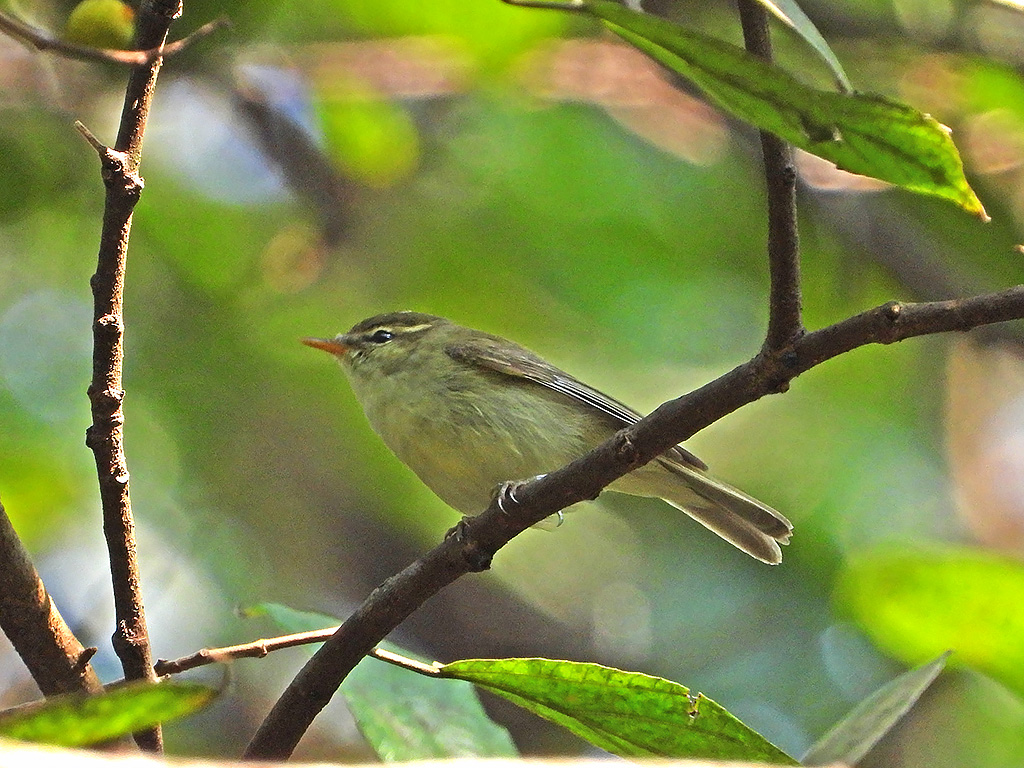
I had heard about this warbler many times but never thought of taking pictures because of its agility and size. Sometimes, you visit a bird-watching destination without having a particular bird on your wishlist, and suddenly, you find the species right in front of you. That was the story behind this picture. Surprisingly, that day, this individual sat on a specific branch and started preening. The situation was too tough to capture a decent posture. Even though it was not moving from branch to branch, its face was not stable due to continuous preening.
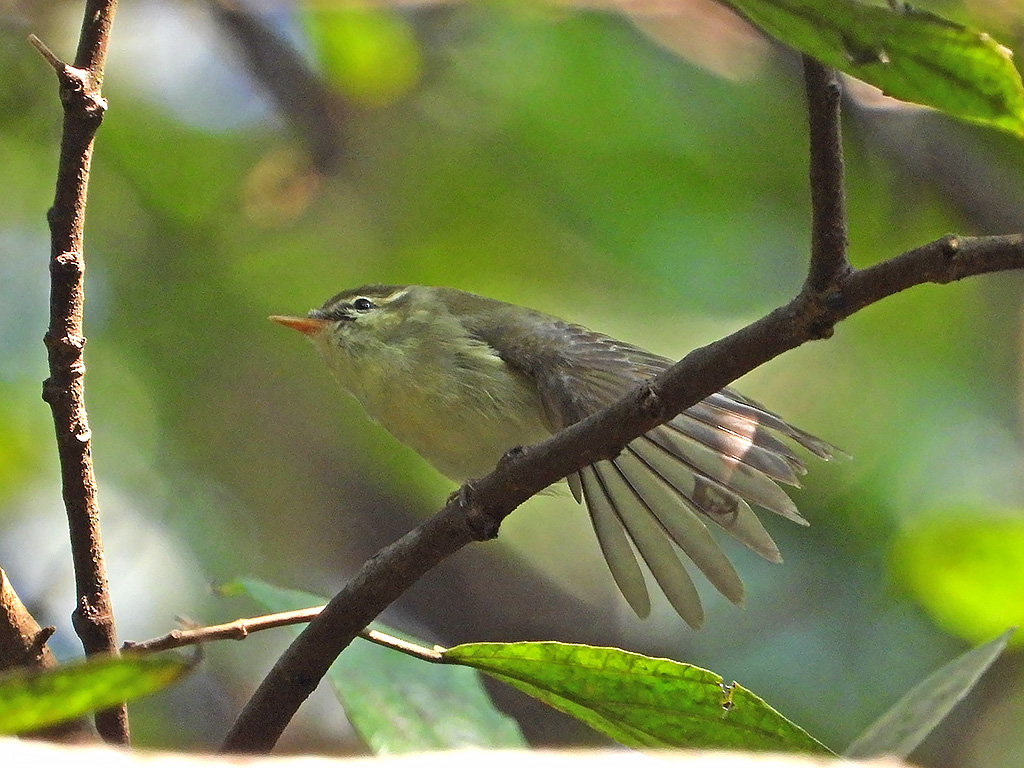
Information of Western crowned warbler
| IUCN (International Union for Conservation of Nature): | Least Concern |
|---|---|
| Approximate size(adult): | A small passerine, about 12–13 cm in length and weighing around 6–9 g. It has olive-green upperparts, yellowish underparts, a prominent grey crown stripe bordered with black, and pale supercilium. Both sexes look similar. |
| Resident/ Migrate from: | Migratory species — breeds in Himalayan forests and hills of northern India, Nepal, and Pakistan. |
| Migrate to: | Winters in southern India and Sri Lanka, often descending to lower elevations during the colder months. |
| Breeding season: | Breeds mainly from April to July. Builds a cup-shaped nest on the ground or low shrubs, lined with grass and moss. Clutch size is typically 3–5 eggs. |
| Breed in: | Prefers temperate broadleaf and mixed forests, often in hilly and montane regions with dense undergrowth. |
| Habitat: | During winter, found in scrublands, open forests, gardens, and plantations. Often forages actively in mixed-species flocks, hopping through foliage in search of insects. |
| Diet: | Insectivorous — feeds on caterpillars, beetles, spiders, and small insects. Hunts by gleaning from leaves and branches, often moving quickly through the canopy. |