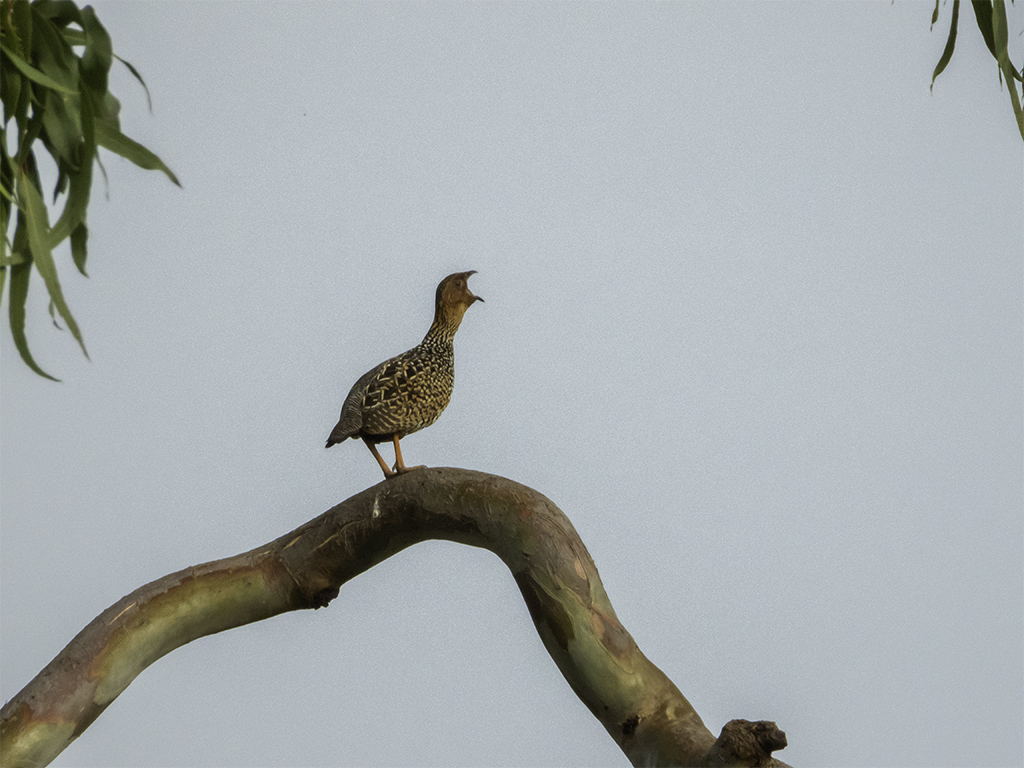
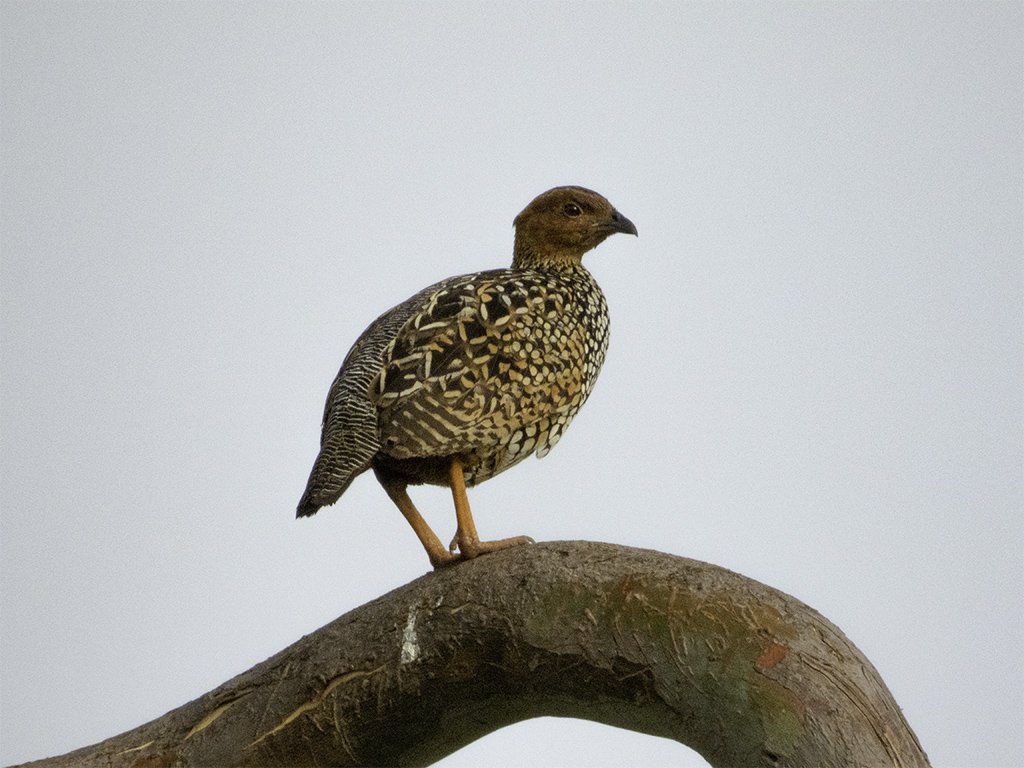
Painted francolin
Saswad,Maharashtra


It was a fine morning, marking the start of our Saswad bird-watching tour. We were heading toward a grassland on foot in search of the Broad-tailed Grassbird. Along the way, I heard a loud and unique call. I couldn't immediately recall what it was, but Kundan, our guide, identified it as the call of a Painted Francolin. I was surprised and said, "Wait, what?" The bird kept calling repeatedly from the surrounding area. I stopped and asked Kundan why we weren’t approaching this bird. He replied that it was quite common in the area and could be spotted frequently. He also mentioned that Bhigwan would provide a better opportunity for a good shot of the Painted Francolin. Reluctantly, I controlled my excitement and continued toward the grassland to focus on the Grassbird. While we were photographing the Grassbird, we kept hearing the Painted Francolin's continuous, loud call nearby. Its persistent call was quite distracting. Understanding my enthusiasm, Kundan Bhai pointed out an individual sitting on a clean tree branch. I quickly ran toward it, as I had already managed to capture a good shot of the Grassbird.

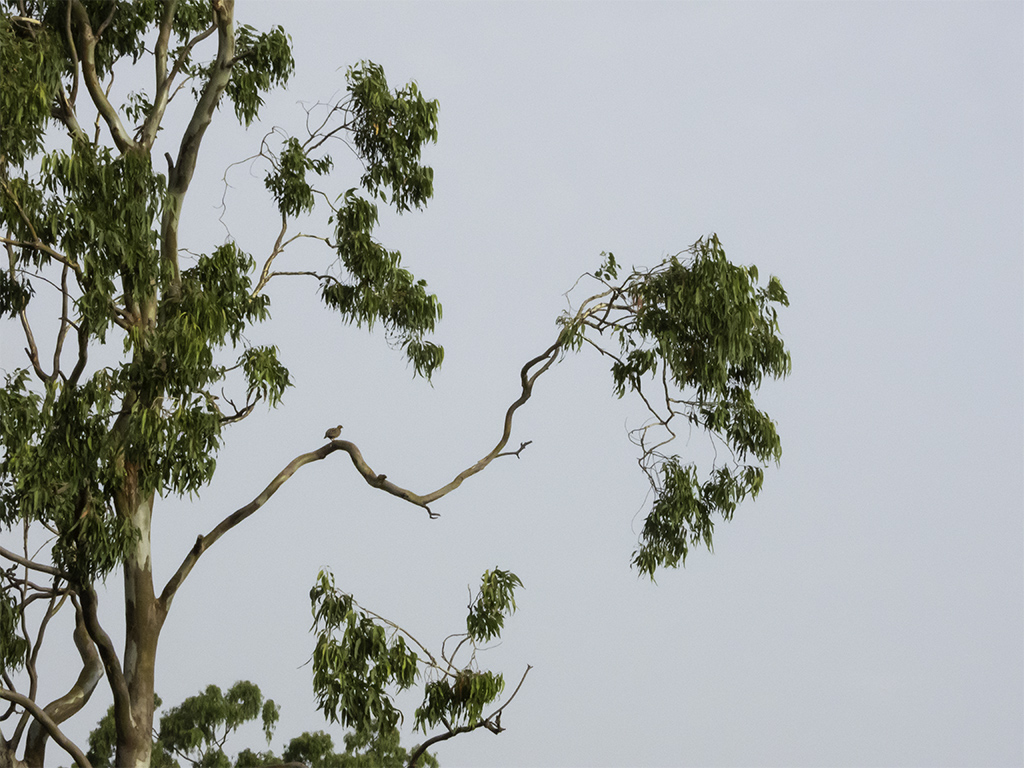
Trust me, when it calls near you, it’s never just a single individual. There will be two, three, or even four calling from different directions, and the most frustrating thing is their camouflage. They might be calling from the ground or a bushy tree just 10 meters away from you, but you won’t see them unless they perch on a pole or a clean branch of a tree. Trust me. As I approached the tree, I saw this beautiful francolin sitting and calling. Even though its call is rough and loud, the posture it adopts while calling is mesmerizing to watch. It stayed for about five minutes before flying away. The painted francolin is not a very shy bird if you’re approaching it from a car. However, when walking, it sometimes won’t allow you to get closer than 100 meters. If you’re camouflaged, though, they might let you get quite a bit closer.