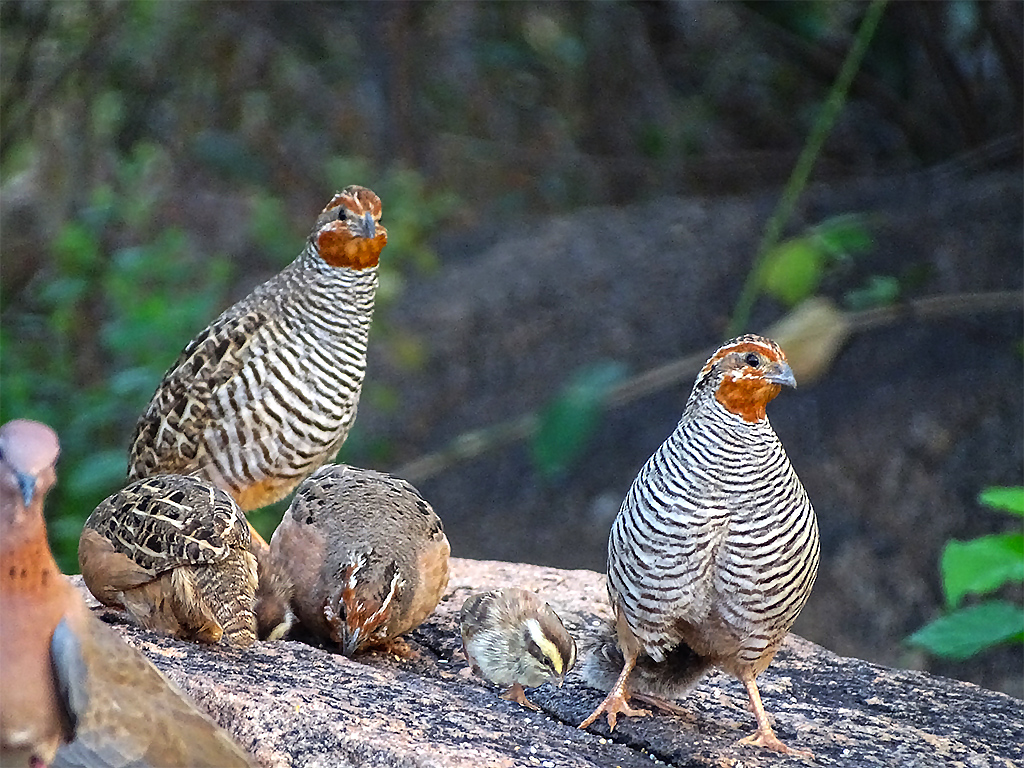
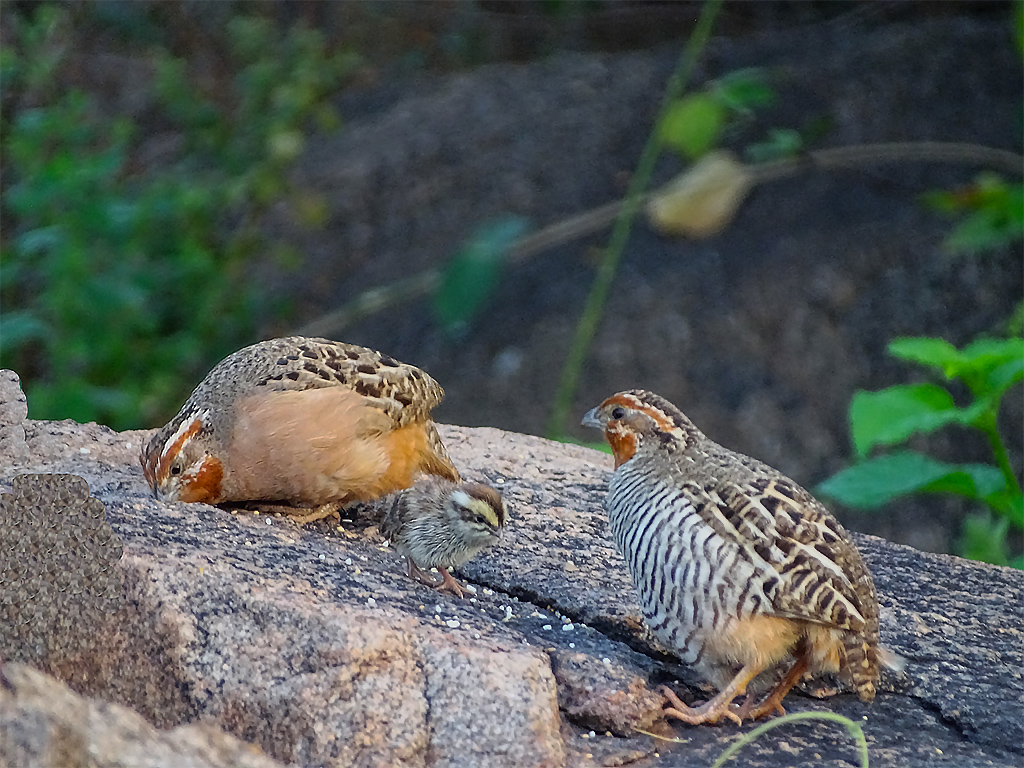
Jungle bush quail
Jayamangali blackbuck reserve,Karnataka
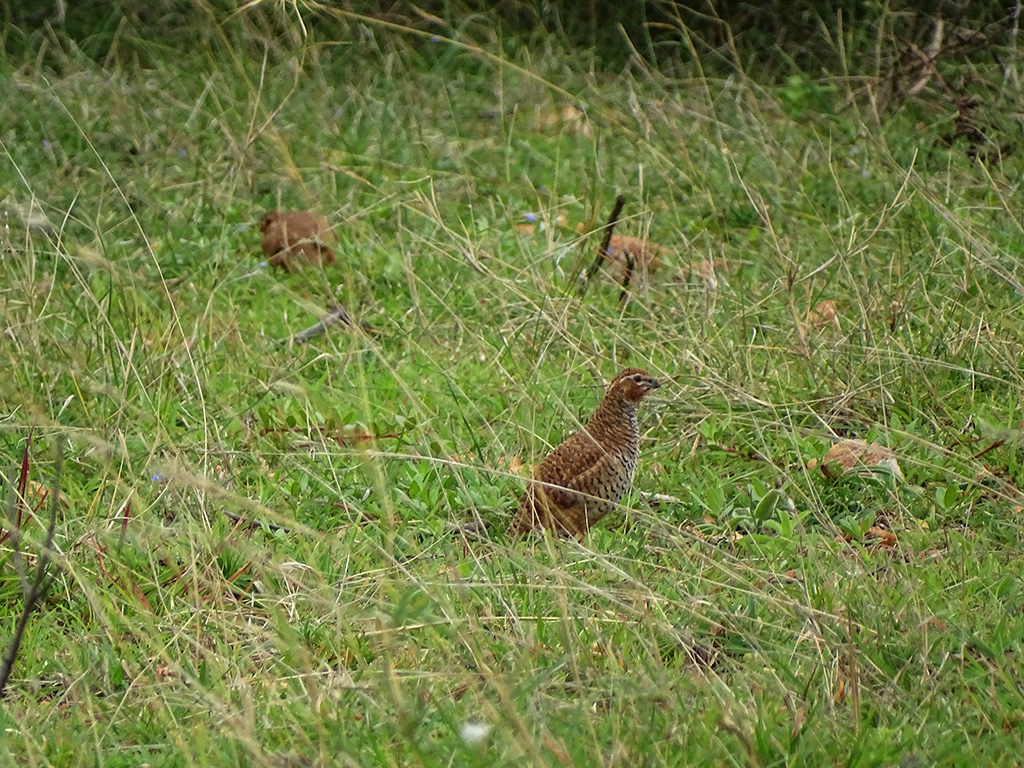
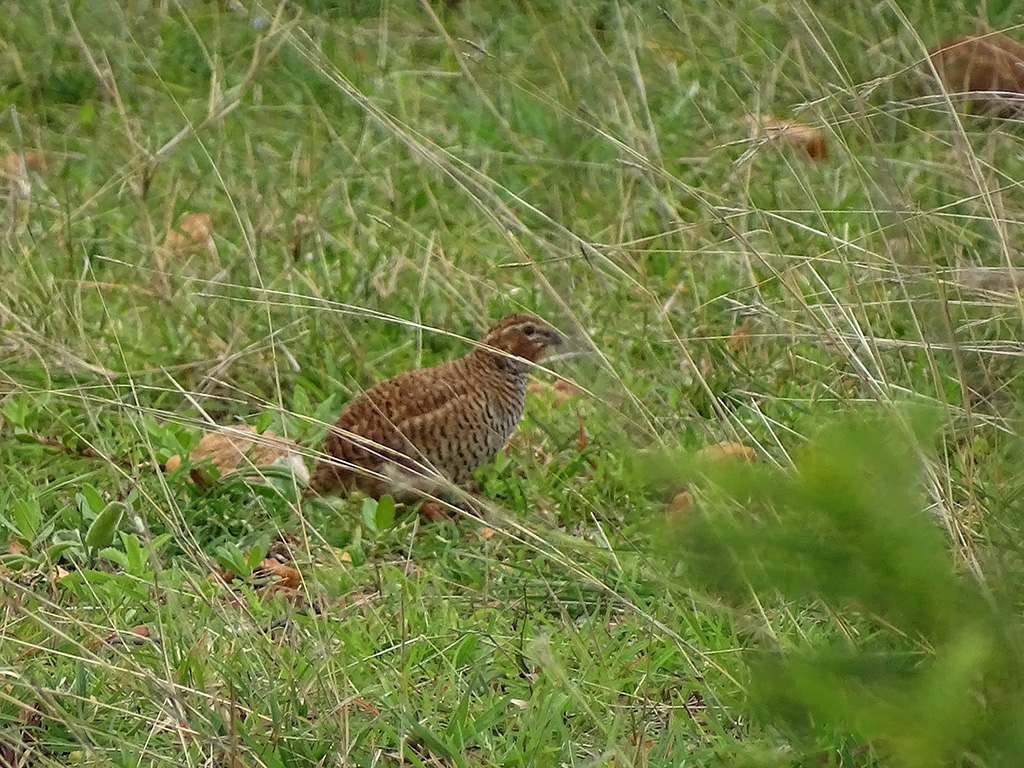
Daroji nature camp,Karnataka
Pics 1 and 2 show male Jungle Bush Quail. Quail are my all-time favorite birds, whether it’s the king, rock, jungle, painted, or any other variety. In September 2022, I saw a female Jungle Bush Quail in Satara, Maharashtra, but I wasn't able to photograph it properly, despite it being in its natural habitat. Somehow, I managed to capture a record shot, which I kept in my gallery. This time, I encountered the quail in Hampi. The sight, along with the entire family of Bush Quail, was incredible. They appeared for about five minutes in front of me, and I was so amazed that I took a few pictures. These are glimpses of that moment. By the way, did you notice one chick hiding beneath its father? That’s how they do it.
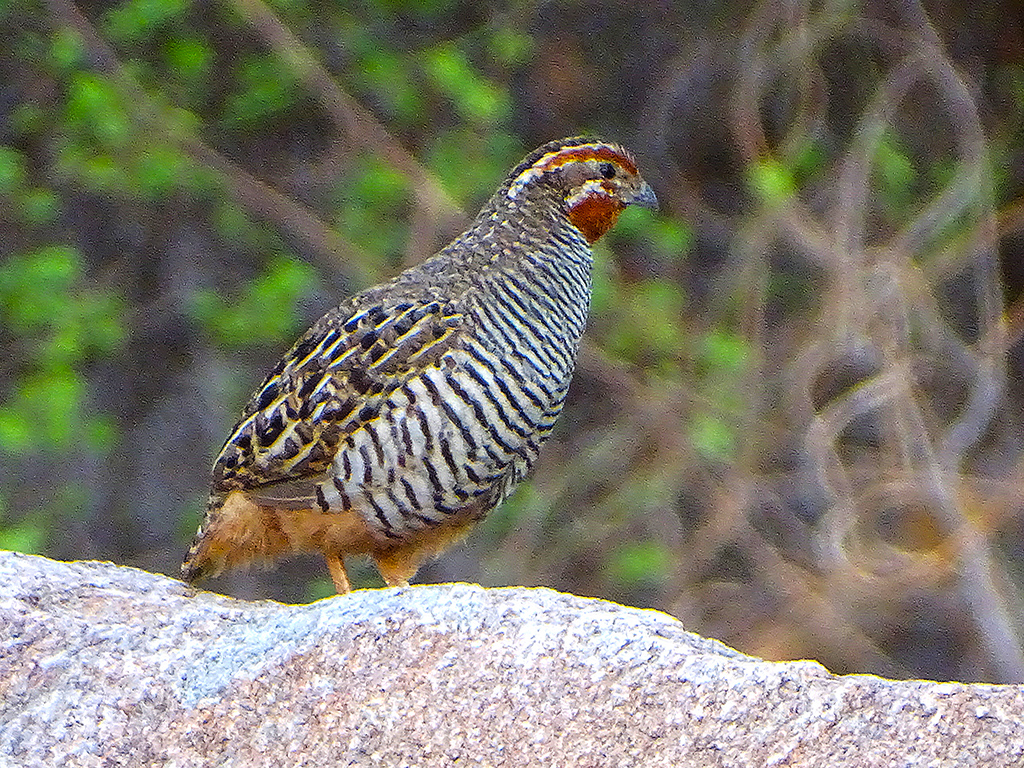
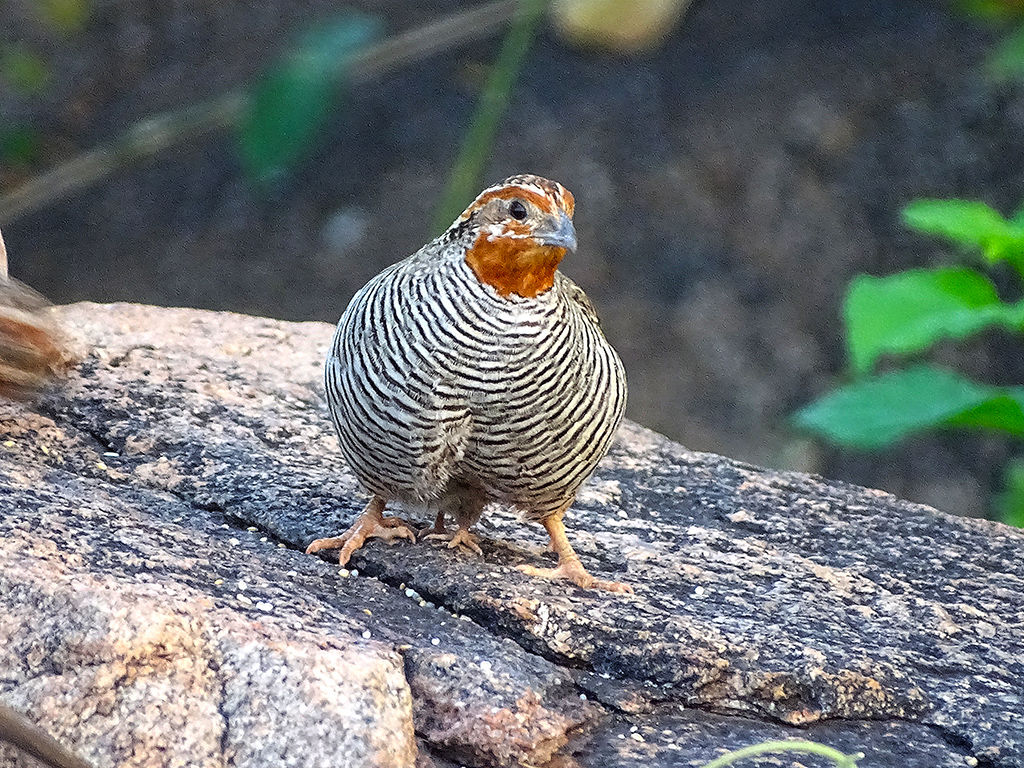
Pic 3 and Pic 4 feature female jungle bush quails. Notice the difference in color patterns between the male and female. As a point-and-shoot camera user, it was really challenging for me to capture some of these pictures. Here are a few.
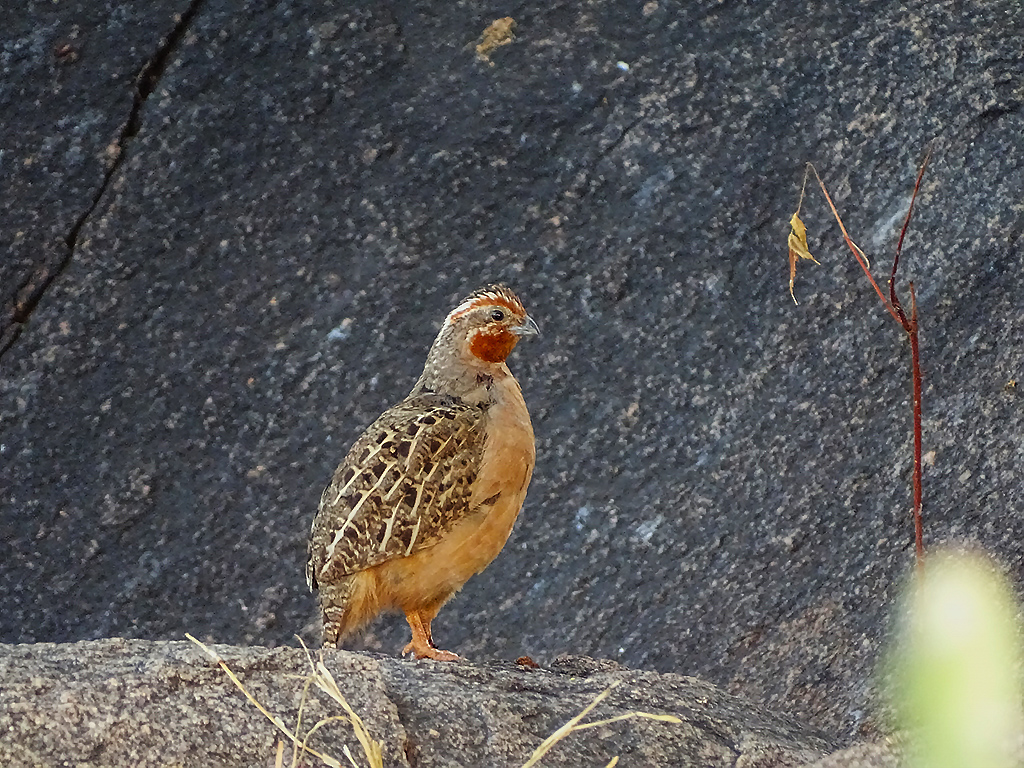
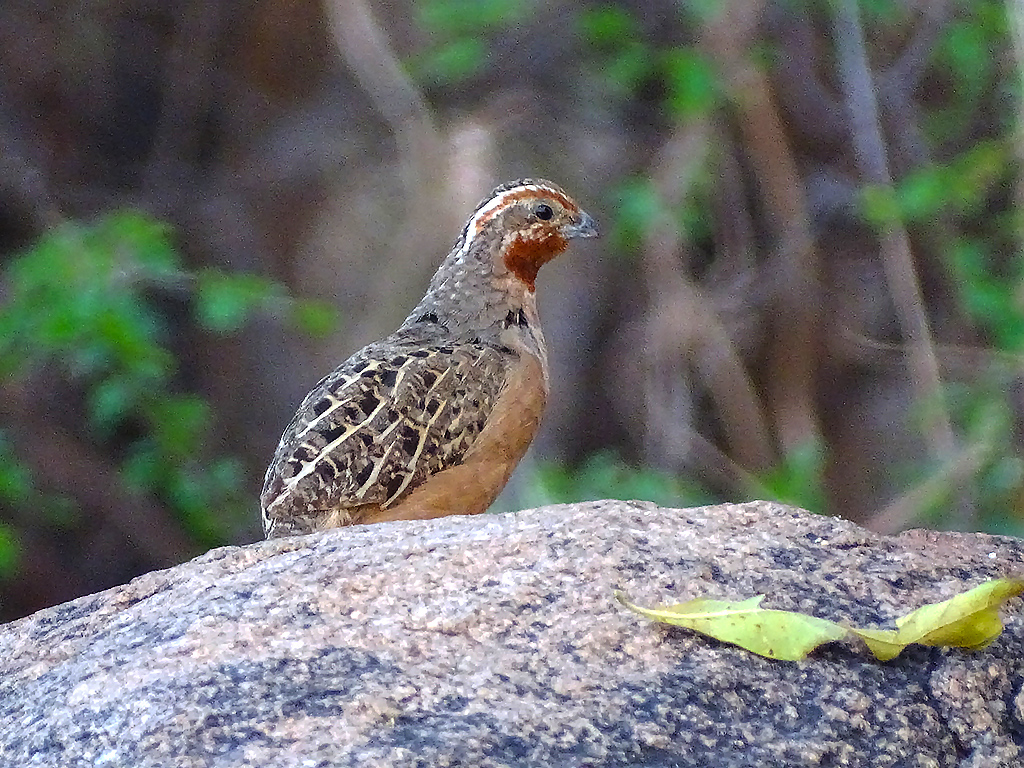
Pic 5 and Pic 6 are pictures of the quails with their chicks. There were a total of 3 chicks from 2 individual couples. All the quails are very restless, and when they are with their chicks, it becomes difficult to manage decent shots. However, I managed to capture these pictures, where you can see the chicks are equally trained to forage from the ground alongside their parents. The show was incredible though.