| IUCN (International Union for Conservation of Nature): | Least Concern
|
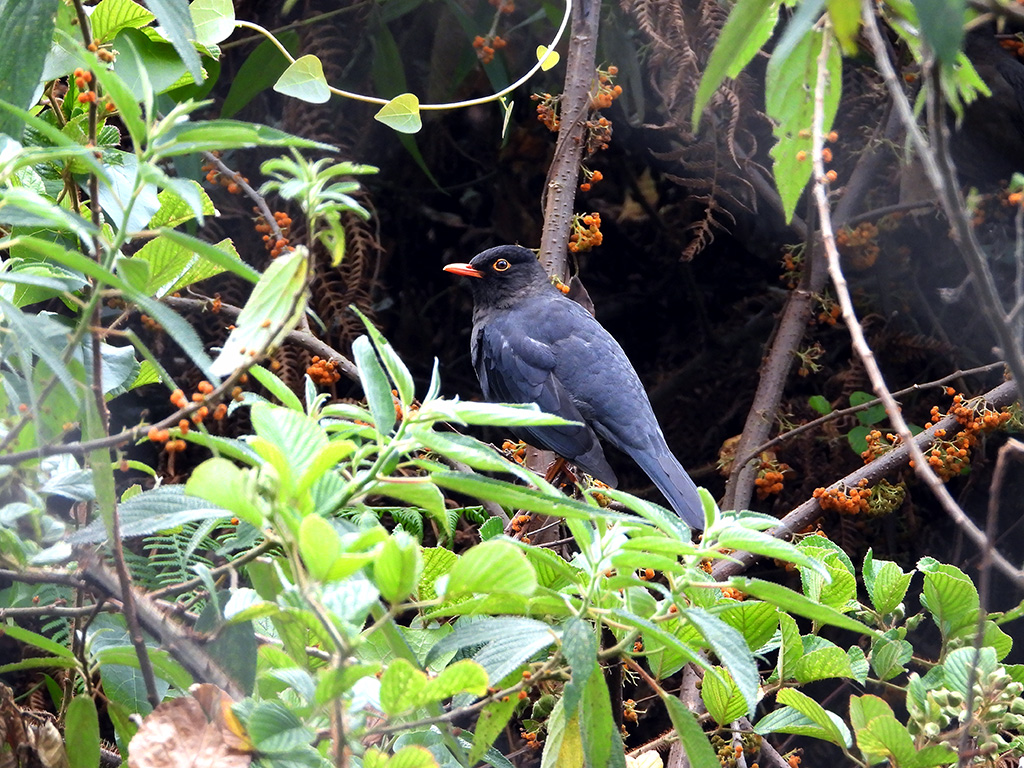
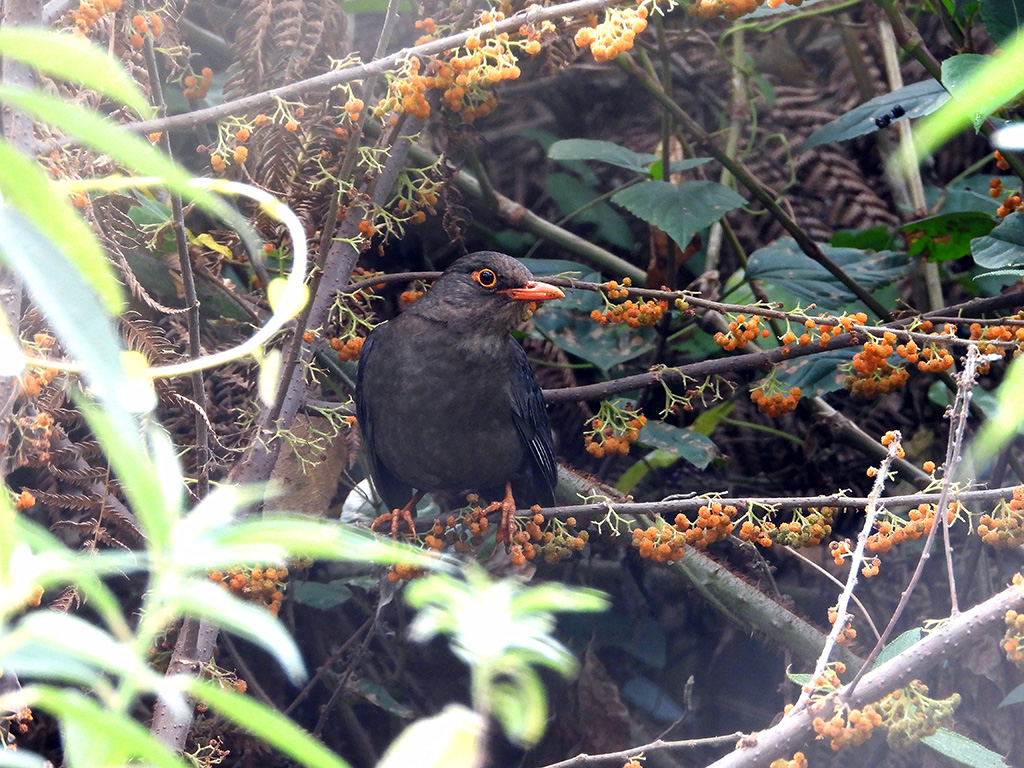
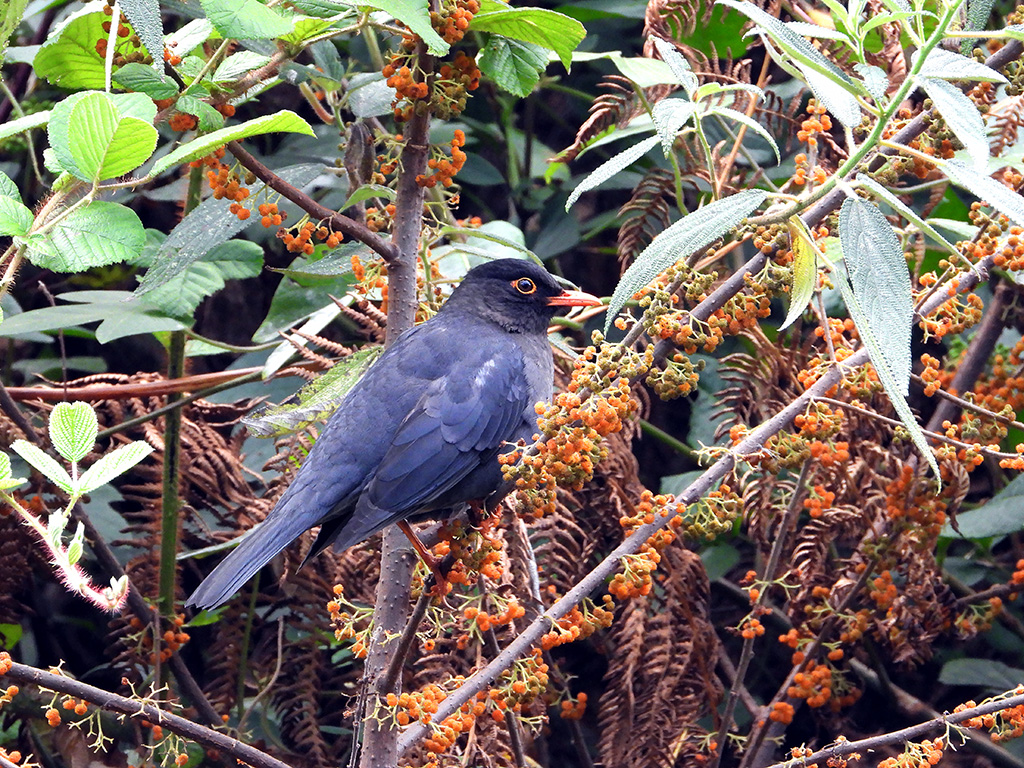
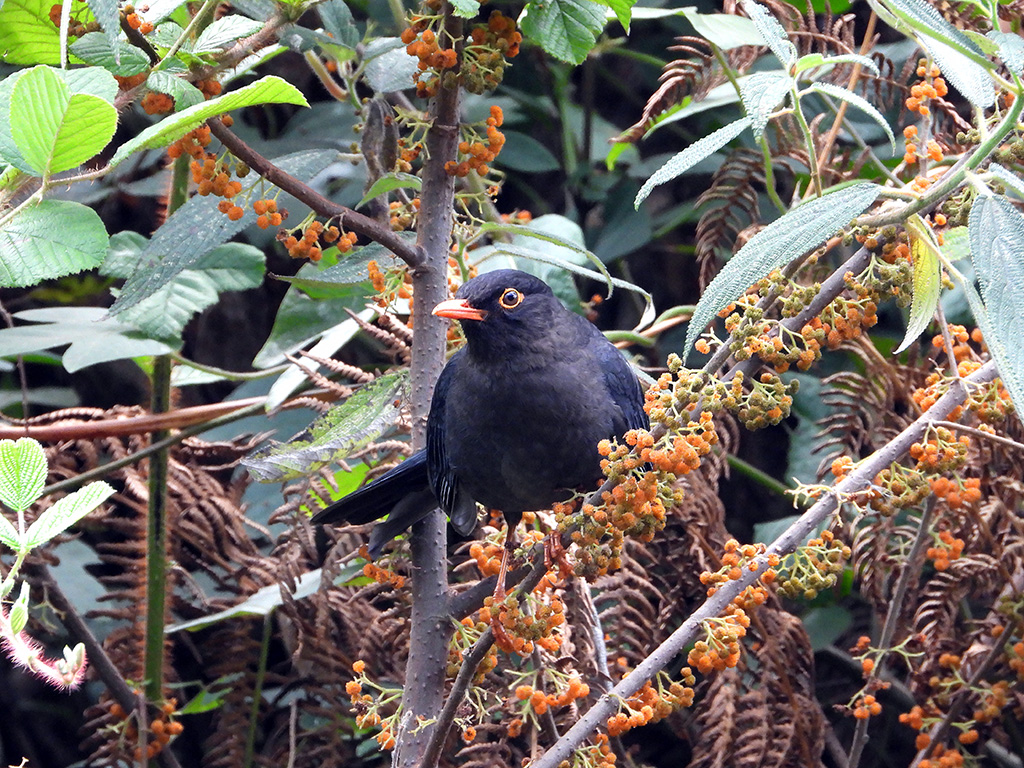
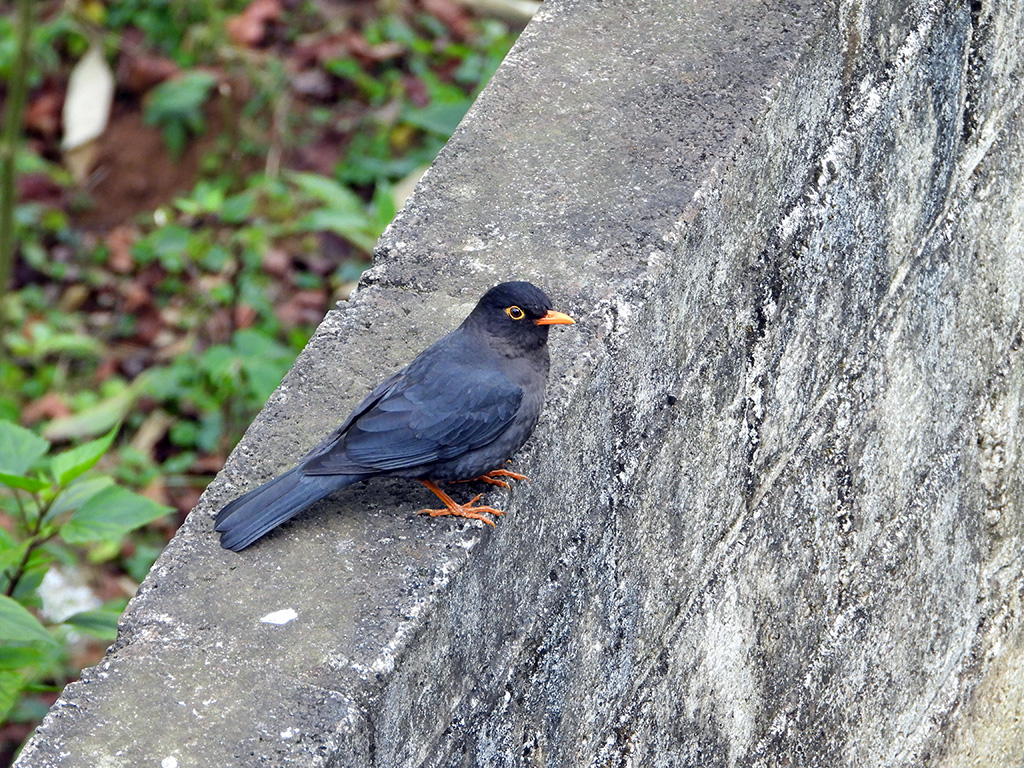
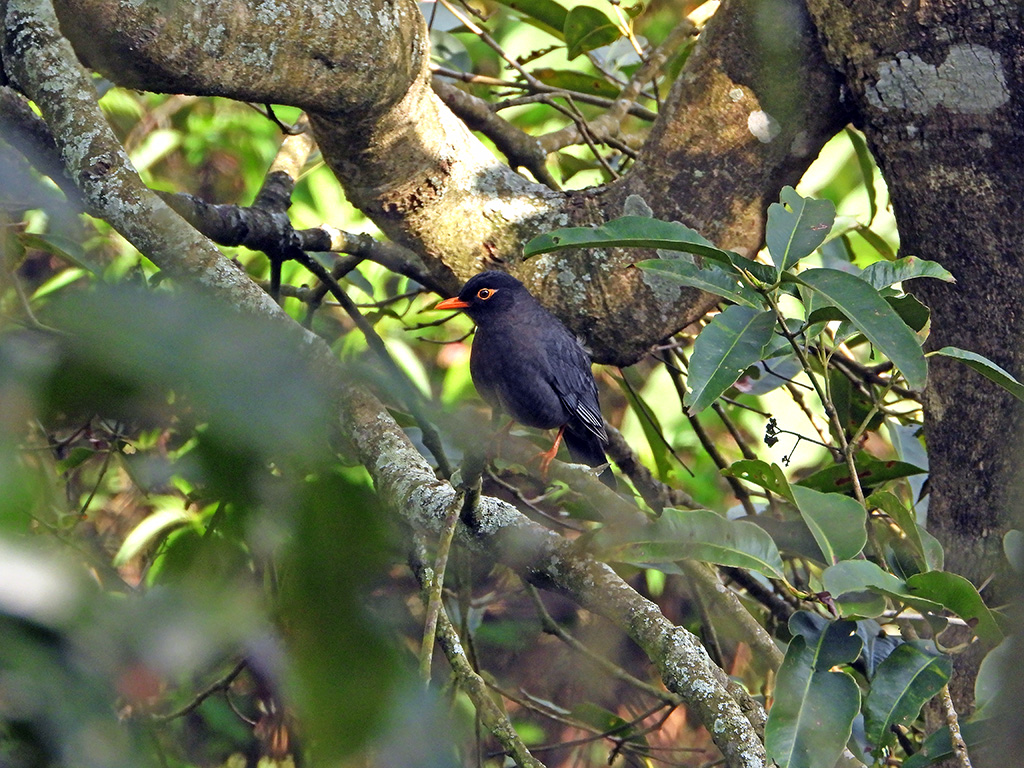
| Approximate size(adult): | About 22–25 cm long. Males are sooty-black with a yellow bill and eye-ring, while females are brownish with lighter underparts. Juveniles are mottled brown.
|
| Resident/ Migrate from: | A resident species in most of its range; some local seasonal movements occur along altitudinal gradients in the Himalayas and Western Ghats.
|
| Migrate to: | Not a long-distance migrant; may move to lower altitudes during winter.
|
| Breeding season: | Typically March to July. Builds a cup-shaped nest of grass, roots, and mud, placed on trees, ledges, or buildings. Lays 2–4 bluish-green eggs with reddish-brown spots.
|
| Breed in: | Found breeding in forested hills, gardens, orchards, and wooded valleys, especially across the Western Ghats, Nilgiris, and parts of the Himalayas.
|
| Habitat: | Inhabits evergreen and moist deciduous forests, plantations, parks, and hill stations — often seen foraging on the ground or perching quietly in shaded areas.
|
| Diet: | Omnivorous — feeds on insects, worms, berries, fruits, and occasionally seeds. Forages mainly on the ground, turning leaf litter to uncover prey.
|