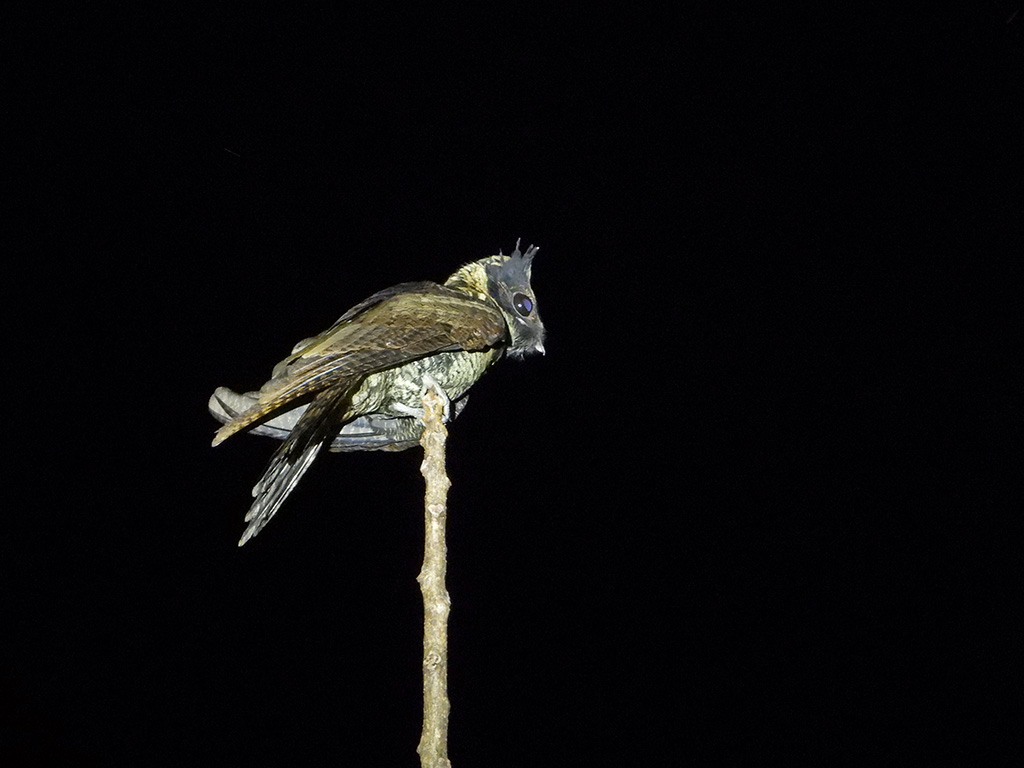
Note: Bird migrations and movements can have exceptions due to specific reasons and may change from day to day. Here, I will provide general or generic information on the topic. This information is intended to educate bird enthusiasts by providing fundamental knowledge about Indian birds.
Information of Great eared nightjar
IUCN (International Union for Conservation of Nature):
Least Concern — widespread but uncommon and highly secretive.
Approximate size(adult):
31–41 cm in length; one of the largest nightjars, with long wings, very large ear-like feather tufts, and beautifully camouflaged grey-brown plumage resembling tree bark.
Resident/ Migrate from:
Mostly resident, though some populations show short-distance seasonal movements.
Migrate to:
Generally non-migratory, with minor local movements depending on weather and food availability.
Breeding season:
Usually February to July, varying across its range.
Breed in:
Lays a single egg directly on the forest floor, often on leaf litter under dense canopy; no nest is built; both parents provide care.
Habitat:
Prefers dense forests, evergreen forests, forest edges, and wooded ravines; usually roosts on the ground or low branches during daytime.
Diet:
Nocturnal insectivore; feeds mainly on large moths, beetles, grasshoppers, and other flying insects, caught during silent flight.